

What’s the Big Deal About Notebook Sizes Anyway?
Look, you’re probably here because you just got handed a purchase order for 10,000 notebooks. Your boss or the school principal said “get notebooks” and then walked away. And now you’re staring at a supplier catalogue or a website dropdown that says things like “Long,” “Short,” “Crown,” “A4,” “A5.”
What do they even mean?
It feels like a secret code. Pick the wrong one and you’ve got 10,000 useless books. The principal wants a 200-page notebook that fits in a kid’s bag. The corporate office wants a diary that looks professional on a desk. They are NOT the same thing.
This isn’t just about paper. It’s about function, cost, and not looking like an idiot when the shipment arrives. If that pressure sounds familiar, this is where a good manufacturer starts to make sense. Let’s break the code.
The Real-World Notebook Sizes You Need to Know
Forget the technical jargon for a second. In the bulk notebook world – the one schools, offices, and distributors actually live in – we talk about shapes, not just letters.
I’ll be direct. There are four main characters in this play.
The Long Notebook: 27.2 cm x 17.1 cm. The classic. The workhorse. This is what most Indian schools mean when they say “notebook.” It’s tall, it fits lined pages perfectly, and it’s the default for a reason. If you’re supplying a government school or a local college, nine times out of ten, this is what they’re expecting.
The Short Notebook: 19.5 cm x 15.5 cm. Smaller. Squarer. Think of it as the portable one. It’s for younger kids with smaller bags, or for quick notes, scribbles, or a pocket diary. The price per unit is usually lower, which matters when you’re buying for 5000 students.
The Crown Size (or King Size): 23.6 cm x 17.3 cm. The middle child. Not as tall as the Long, but wider than the Short. It’s a good, balanced size that’s becoming more popular. It feels substantial without being unwieldy.
The Account Book: 33.9 cm x 21 cm. The giant. This isn’t for carrying around. This is for the office desk, the ledger, the serious record-keeping. If someone asks for this, they mean business – literally.
Here’s a thing most people don’t realize: the binding changes with the size. A Long notebook with 200 pages needs a different spine than a Short one. A manufacturer that knows this won’t give you a floppy, falling-apart book. One that doesn’t? Headache.
A4, A5, B5… What’s the International Story?
Okay. So you’ve got the local sizes down. Now your boss says, “We might have an export order.” Or a new corporate client from Bangalore wants “A4 diaries.”
Cue the panic. Right?
International sizing (the A-series) is a whole different language. It’s based on a mathematical ratio – fold an A0 sheet in half, you get A1. Fold that, you get A2. It’s elegant, but confusing when you just need to ship notebooks to Dubai.
A4 Notebooks: 29.7 cm x 21 cm. This is the global standard for office paper. An A4 notebook is like a professional, universal handshake. It’s what you use for meeting minutes, official reports, client presentations. If you’re doing corporate gifting or supplying multinational offices, you’ll hear “A4.” It’s bigger than our Long size.
A5 Notebooks: 21 cm x 14.8 cm. This is probably the most popular personal notebook size worldwide. It’s the perfect carry-around size for professionals. It fits in most laptop bags, handbags, backpacks. It’s versatile. Think of it as the cosmopolitan cousin of our Crown Size.
The real trick isn’t knowing the dimensions. It’s knowing what the person holding the notebook will DO with it. An architect might want A4 for sketches. A salesperson might want A5 for client notes. A school in the Gulf might want Long notebooks because their curriculum is modeled on the Indian system.
I was talking to a buyer from Kenya last month – over a very patchy WhatsApp call – and he kept saying “A4 exercise books.” Took me ten minutes to realize he meant our Long size. The labels get mixed up. A good supplier asks questions.
Choosing the Right Size: It’s About More Than Measurements
Let’s get practical. You have to place an order. How do you choose?
It’s not a spreadsheet decision. It’s a people decision. You need to picture the notebook in someone’s hands.
For Schools & Colleges: Start with the Long notebook. Seriously. It’s the benchmark. Check if the school bag is standardized (some are). For younger kids (classes 1-5), consider the Short notebook – lighter, easier to handle. The page count matters too. A 1st grader doesn’t need a 320-page monster. A 92-page Short notebook is often perfect.
For Corporate Offices & Diaries: This is where image matters. An A5 or Crown Size diary feels personal, premium. An A4 notebook on a conference table signals formality. For corporate gifting, smaller (A6, pocket size) can be more elegant. The paper quality here needs to be better – a 70+ GSM paper that won’t bleed through with a fountain pen.
For Distributors & Wholesalers: You need a mix. You’re serving multiple masters. You’ll need inventory of Long and Short for the local school market, and probably some A4/A5 for the premium/office segment. The mistake I see? Ordering 80% of one size because it’s cheaper. Then you’re stuck with stock no one wants.
Think about it this way. The size dictates the cost (more paper = more money), the weight (shipping costs), and the perceived value. A tiny, thick notebook feels expensive. A large, thin one feels cheap.
You can’t just guess. You have to know who you’re buying for. Seeing the actual products, the specs laid out clearly, that’s the first step to not messing it up.
A Quick, Real Story
Anitha, 42, runs procurement for a chain of private schools in Hyderabad. She ordered 20,000 “standard notebooks” from a new online vendor last year. The price was great. The shipment came in – they were A4 size. Way too big for the desks. The bags wouldn’t close. Parents complained. She had to sell them at a massive loss and re-order. Her lesson? “Standard” isn’t a size. Now she asks for samples. Of everything.
Moral? Never assume.
Notebook Size Comparison Table
| Size Name | Dimensions (cm) | Common Use Case | Typical Page Counts | Best For… |
|---|---|---|---|---|
| Long Notebook | 27.2 x 17.1 | Standard school subject notebooks, daily writing | 92, 200, 240 | Indian schools, colleges, bulk academic orders |
| Short Notebook | 19.5 x 15.5 | Primary school, scribble pads, pocket notes | 52, 92, 200 | Younger students, lightweight needs, cost-sensitive bulk |
| Crown/King Size | 23.6 x 17.3 | General purpose, balanced note-taking | 92, 200, 320 | Versatile use, retail stationery, some office work |
| A4 Notebook | 29.7 x 21.0 | Official reports, meeting notes, professional work | 200, 240, 320 | Corporate offices, executives, international clients |
| A5 Notebook | 21.0 x 14.8 | Personal journals, client meetings, carrying daily | 92, 200, 240 | Professionals, corporate diaries, gifting, retail |
| Account Book | 33.9 x 21.0 | Ledgers, financial records, large-format writing | 240, 320, 700 | Office administration, shops, record-keeping |
Binding, Paper, and the Hidden Details
Size is just the box. What’s inside matters just as much.
You pick the perfect A5 size for your corporate client. Then you get them stitched-bound notebooks with 40 GSM paper. The pages fall out when they open it. The pen punches through the page. The client is embarrassed giving them to their team.
Game over.
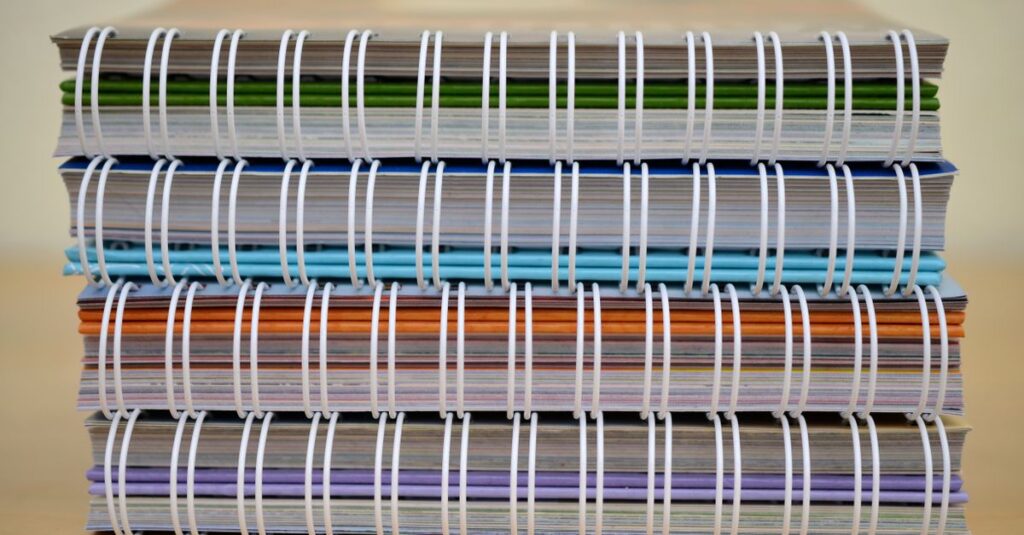
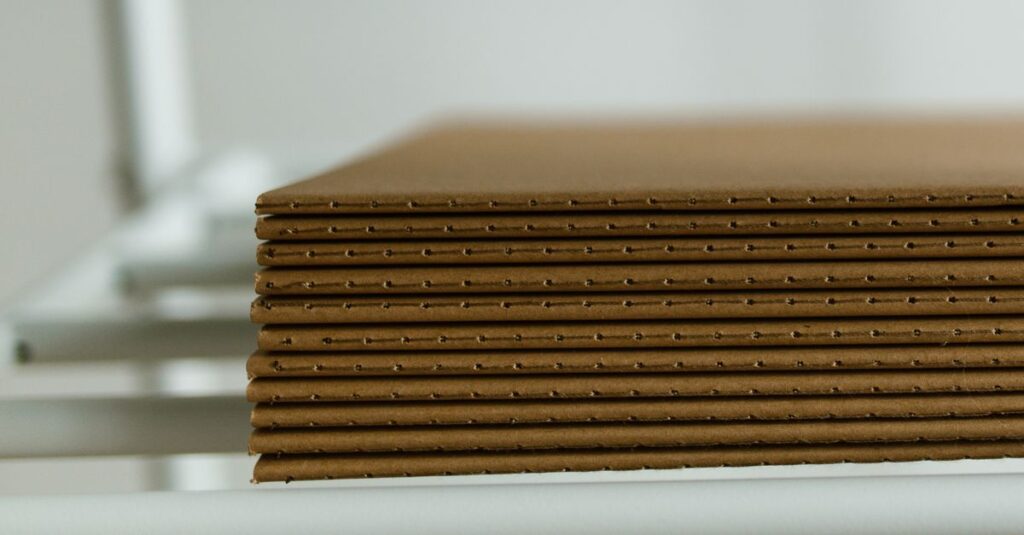
The binding has to match the size and the page count. A 92-page Short notebook can be perfectly side-stitched. A 320-page A4 notebook? It needs center-stitching or perfect binding (that glued spine you see on books). Spiral binding is great for laying flat, but it costs more and isn’t as durable for a schoolbag getting thrown around.
Paper GSM (Grams per Square Meter) – that’s the weight. Thicker paper feels more premium. Thinner paper keeps the cost and weight down. For schools, 54-60 GSM writing paper is the sweet spot. For a corporate diary where someone might use a marker? 70+ GSM. Maybe even 100 GSM for the cover.
And the ruling – single ruled, double ruled, unruled, graph. A math notebook needs graph pages. A drawing book needs blank pages. A standard notebook is single-ruled.
These choices cascade from the size. They’re not separate. A manufacturer that understands this thinks of the notebook as a complete product, not just a pile of paper cut to size. That’s where customization and talking to someone who actually makes the things becomes critical.
Expert Insight
I was reading an old industry journal once – one of those boring trade magazines – and a production manager said something that stuck. He said, “We don’t make notebooks. We make tools for thoughts, for records, for learning. The first failure is if the tool breaks. The second is if it gets in the way of the thinking.”
It sounds lofty. But it’s true. The wrong size, the wrong binding, the wrong paper – it all “gets in the way.” The student struggles to write. The accountant can’t fit the figures. The executive is distracted by the poor quality. The job of a good manufacturer is to be invisible. To provide the tool that doesn’t break and doesn’t get in the way. That’s it.
Frequently Asked Questions
What is the most common notebook size for Indian schools?
Hands down, the Long Notebook (27.2 x 17.1 cm). It’s the default workhorse. If you’re supplying bulk orders to schools or colleges across India, start your planning with this size. It’s designed to fit standard school bags and desk spaces.
What’s the difference between A4 and Long size notebooks?
A4 is an international standard (29.7 x 21 cm). A Long notebook is a specific Indian standard (27.2 x 17.1 cm). A4 is wider and a bit taller. Think of A4 as more for offices and professional reports, while Long size is tailored for the Indian academic system and general writing.
How do I choose between spiral binding and stitched binding?
Spiral binding (metal or plastic coil) lets the notebook lay perfectly flat, which is great for artists or left-handed writers. Stitched binding (thread sewn through the spine) is more durable and traditional, better for notebooks that will be handled roughly, like in a schoolbag. For bulk school orders, stitched is often more reliable and cost-effective.
What does GSM mean in notebook paper?
GSM stands for Grams per Square Meter. It’s a measure of paper weight and thickness. A higher GSM means thicker, heavier, and usually more opaque paper. Standard school notebooks use around 54-60 GSM paper. Premium diaries use 70+ GSM to prevent ink from showing through.
Can I get custom sizes and layouts for a bulk order?
Absolutely. Any reputable bulk notebook manufacturer should offer customization. This includes custom dimensions (within machinery limits), custom cover designs, specific page rulings (like a special graph for engineering), and even your logo printed on every cover. This is standard for corporate orders and private label needs.
The Simple Truth About Getting It Right
It boils down to this: don’t buy a size. Buy a solution.
You’re not procressing centimetres of paper. You’re buying a tool for a student to learn, an executive to plan, a business to record. The wrong size makes that job harder. The right one disappears and lets the work happen.
Ask for samples. Always. Picture the end-user. And work with someone who can explain why a 200-page A5 needs a different binding than a 200-page Long book – not just take your order.
It’s not complicated. But it’s easy to get wrong if you’re just ticking a box on a website. Get it right, and nobody notices the notebook. They just get their work done. And that’s the whole point.
If you’re staring down a bulk order and need to talk specs with someone who’s made millions of these things, that’s a conversation worth having.