You Know The Feeling. You Need To Order Stationery.
It’s a Tuesday afternoon. You’re the procurement manager, and you’ve got a budget to spend. The school year is starting, or the new corporate calendar is about to be printed. You need something for people to write in. You type “diaries” into a search bar. And then maybe “notebooks”. Because honestly, what’s the real difference? The line seems blurry.
I’ve been in the notebook manufacturing game since 1985. Sri Rama Notebooks, that’s us. And this question — diaries versus notebooks — comes up more than you’d think. From a school principal in Rajahmundry ordering for a thousand students to a corporate buyer in Dubai looking for branded executive gifts. They’re not the same thing. Not even close.
And picking the wrong one? It’s a quiet kind of headache. Order notebooks when you needed diaries, and your annual planners are useless. Order diaries for a classroom, and you’ve wasted money on features nobody needs. So let’s just get into it. If you’re trying to figure this out for a bulk order, this is the kind of thing we help with every day.
Let’s Start With The Obvious: What Are We Talking About?
Most people use the words interchangeably. I get it. They both have covers, paper, and you write in them. But from a manufacturing and buying standpoint, they serve completely different masters.
Think of a notebook as a blank slate. Its only job is to provide space. Space for notes, sketches, ideas, calculations. It’s unstructured. A student uses it for physics class. A designer uses it for rough drafts. A meeting attendee scribbles down points. The paper might be ruled, unruled, or graphed, but the structure ends there. The user creates the purpose.
A diary, on the other hand, comes with a built-in purpose: time. It’s a framework for days, weeks, months. Its primary function is organization, not free-form expression. The pages are pre-printed with dates, sometimes hours. It’s a tool for planning, tracking, and remembering appointments. An executive uses it to manage a schedule. A project manager logs deadlines. A personal user jots down daily memories.
The confusion happens because a diary often contains notebook-like pages — notes sections in the back, for instance. But the core, the reason it exists, is that calendrical structure. Without the dates, it’s just a fancy notebook. And honestly? That’s the first filter you should use when ordering.
Expert Insight
I was talking to a procurement head from a big Hyderabad tech firm last year. He said something that stuck with me: “We used to give everyone the same bulky corporate diary. Expensive leather, gold-edged pages. Half the team never opened it. The developers? They wanted plain, thick-paper notebooks for their stand-ups and code architecture. We were paying for a calendar they already had on their phones.” The more capable someone is with digital tools, the harder it becomes to force a physical diary on them. The need shifts to raw, unstructured space. I don’t have a cleaner way to put it than that.
The Manufacturing Difference: It’s Not Just A Print Job
Okay, so you know the use case difference. But this is where my world — the manufacturing side — really separates the two. Ordering 10,000 units of one versus the other means two entirely different production processes.
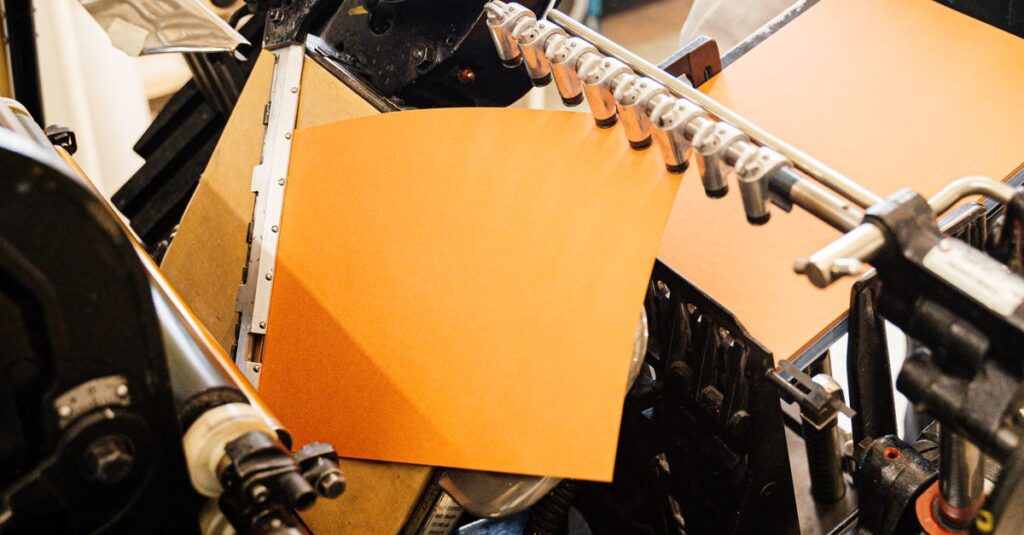
Notebook manufacturing is, at its heart, about consistency and volume. You’re cutting paper to size (King Size, Long, Short), deciding on the ruling (Single Ruled, Unruled), choosing a binding (stitched, spiral, perfect), and printing a cover. The interior pages are identical, page after page. Our factory can run off 30,000-40,000 bound notebooks a day because once the machine is set, it’s a rhythm. The complexity is in the paper quality and binding durability, especially for school notebooks that get thrown in bags every day.
Diary manufacturing is a headache of coordination. Every page is different. You need:
- Calendar Pages: Meticulously laid out with correct dates, holidays (which change by country if you’re exporting!).
- Additional Sections: Year planners, monthly views, weekly spreads, contact pages, metric conversion charts.
- Custom Data: Company logos, addresses, values printed on specific pages.
It’s more like printing a book than producing a stationery staple. The binding has to be robust because it’ll be opened and closed daily. The paper needs to be good, but often a slightly lighter GSM works because you’re writing less per page. The cost per unit is inherently higher. The lead time is longer. You can’t just decide to order diaries for your sales team next week. This stuff needs planning.
Take Meera, 38, a stationery distributor in Bangalore. She told me about a client who wanted 5000 “notebooks” for a conference. She assumed standard A5 notebooks. A week before delivery, the client asked, “Where are the date tabs for Q1 planning?” Miscommunication. They meant diaries. She had to scramble, eat a cost, and I got a panicked call on a Sunday. It was a mess that could’ve been avoided by one precise conversation upfront.
The Bulk Buyer’s Dilemma: Who Actually Needs What?
This is the practical heart of it. As a buyer for a school, corporation, or distributor, your job is to match the tool to the task without blowing the budget. So let’s break down who should be getting what.
Schools & Colleges (Notebooks, almost always): Your need is for affordable, durable, functional writing space. Students use subjects, not day-planners. They need notebooks that can survive a backpack, with paper that doesn’t bleed through. Customization here is about branding the cover with the school logo and maybe specifying subject-wise ruling. The economic scale of bulk notebooks is what makes institutional supply possible. Diaries? Maybe for the administrative staff. Not for the classroom.
Corporate Offices (The Split Decision): This is the tricky one. Executive teams, sales managers, client-facing roles? A high-quality corporate diary is a classic gift and a practical tool. It signals formality and organization. But for the internal teams — engineers, designers, marketing brainstormers — bulk, branded notebooks are far more useful and cost-effective. They’re for capturing ideas, not managing Outlook calendars. Most companies we work with now do a mixed order.
Government Institutions / Distributors (Volume & Specification): It’s all about the tender spec. The document will spell it out: “5000 units, A4 size, 200 pages, weekly planner diary with government holiday list.” Or “100,000 crown size single ruled notebooks for literacy program.” The difference is locked into the requirement. Your job is to find a manufacturer who can meet the exact spec without cutting corners on paper or binding.
Side-by-Side: The Comparison Table You Actually Need
Let’s make this visual. Here’s the breakdown that matters when you’re placing a purchase order.
| Feature | Notebooks | Diaries |
|---|---|---|
| Primary Function | Free-form writing, notes, sketches | Planning, scheduling, date tracking |
| Internal Structure | Uniform pages (ruled/unruled/graph) | Pre-printed calendar pages (daily/weekly/monthly) |
| Customization Focus | Cover design, logo, paper type, ruling | Cover, logo, inclusion of custom dates/holidays, extra data pages |
| Typical Page Count | 52, 92, 200, 240 pages (focused on note-space) | Often 100-300+ pages (includes many non-daily planner pages) |
| Production Complexity | Lower – consistent page runs | Higher – multiple page layouts, date accuracy critical |
| Ideal For (Bulk) | Students, internal teams, training sessions, general note-taking | Executives, managers, sales teams, as corporate gifts |
| Cost Per Unit (Bulk) | Generally lower | Generally higher due to complex printing |
So, How Do You Decide For Your Next Order?
Cut through the noise. Ask three questions:
1. Is tracking time/dates the main use? If yes, you need a diary. If no, you probably need a notebook.
2. What’s the user’s daily workflow? Are they in meetings planning Q4 targets (diary), or are they in sessions ideating campaigns (notebook)?
3. What’s the budget per unit? Be honest. You can get fantastic quality bulk notebooks at a price that makes mass distribution feasible. A good diary will cost more. Don’t try to get diary features at a notebook price — the paper and print quality will suffer.
And look, here’s an unexpected thing: sometimes the answer is both. We’ve had companies order a slim, elegant diary for the yearly planner, and then bulk packs of matching branded notebooks for the weekly meeting notes. It’s a combo that actually works with how people think now. The diary for the “when,” the notebook for the “what.”
If you’re staring at an order form right now, unsure how to even spec what you need, that’s what our custom printing service is built for. A conversation can save you a warehouse of wrong stock.
Frequently Asked Questions
Can a notebook be used as a diary?
Sure, you can manually write dates in a notebook. But it’s inefficient for planning. The whole point of a manufactured diary is the pre-printed structure, saving time and providing a clear organizational framework. For personal journaling, a notebook is perfect. For business scheduling, it’s a hack, not a solution.
Are diaries more expensive to manufacture than notebooks?
Almost always, yes. The printing is more complex with multiple page layouts, and date accuracy is critical. One wrong holiday can ruin a whole batch. This requires more prepress time, quality checks, and often more expensive binding to handle frequent opening. Notebook production is more streamlined.
What paper GSM is best for diaries versus notebooks?
For standard writing notebooks, 54-70 GSM is common — it’s a balance of smooth writing, opacity, and cost. For diaries, you might go slightly lighter (like 70-80 GSM) for the bulk of the planner pages to keep the book from becoming too thick, but use a heavier cover stock. Executive diaries often use 100+ GSM paper for a premium feel.
We want to brand them. Is customization different?
The process is similar (logo placement, color matching), but the canvas differs. Notebook customization is mainly on the cover. Diary customization can be on the cover, spine, title page, and even on specific interior pages (like the year planner or notes section). There’s just more real estate to brand, which means more coordination.
As a wholesaler, should I stock both?
It depends on your client base. If you serve mostly schools, focus on deep notebook inventory in various sizes and rulings. If you serve corporate clients, a selection of both is smart. Many distributors start with notebooks and then add a few standard diary lines (like week-to-view) based on specific client requests. Don’t guess — ask your customers what they’re looking for.
Wrapping This Up
At the end of the day — and after nearly 40 years in this business — I see it as a question of constraint versus freedom. A diary provides a constraint (the dates) to create organization. A notebook provides freedom (the empty page) to create content.
Your job as the buyer is to figure out which one your people need more of. Are they drowning in meetings and deadlines? Give them the structure of a diary. Are they drowning in ideas and information? Give them the blank space of a notebook.
I don’t think there’s one perfect answer for every organization. Probably there isn’t. But if you’ve read this far, you’re not just ordering paper products; you’re trying to equip a team with the right tools to think and plan. That’s a good thing to get right. And if you’re still figuring out the specs, sometimes it helps to just talk to the people who’ve been making them since 1985.