The thing about “best.” Right?
You Google best notebook brands and you get a list. Leather-bound journals. Minimalist Japanese designs. Gimmicky paper weights and luxury price tags.
Now picture a procurement manager in Chennai, sitting at their desk at 4:30 PM. They’ve got a quote due for 5,000 notebooks for a government school tender. The real question they’re asking isn’t which brand has the prettiest Instagram feed. It’s different. Sharper. It’s: “Which brand won’t make me look stupid in six months when the pages start falling out?”
And the answer? It’s not a single name. It’s a set of rules. Because the best notebook brand for a corporate buyer ordering branded diaries is a fundamentally different animal than the best for a stationery wholesaler moving a few hundred thousand units a month. That’s the part nobody says out loud.
It’s about supply chains, not store shelves. If you’re in that boat, maybe it’s worth starting with a supplier who knows the difference. We wrote about our approach to this kind of manufacturing from the ground up.
What “best” actually means when you’re not the end user
Forget the consumer. We’re talking about boxes. Pallets. B2B logistics. Here, “best” translates to a checklist nobody in marketing will ever write about:
- Consistent Paper Quality: That 54 GSM writing paper? It needs to be the same shade, the same smoothness, in every single notebook from this batch to the next. A school can’t have one class writing on crisp white sheets and the next on greyish, rough paper. It just looks cheap.
- Binding That Lasts: Spiral, perfect, stitched. The choice matters less than the execution. I’ve seen notebooks where the spiral binding unravels after two weeks of a student’s backpack life. That’s not a notebook. That’s a PR disaster waiting to happen for the brand printed on its cover.
- Print Fidelity: This is the big one for corporate orders. Your logo. Your colours. They need to be sharp and identical across 10,000 units. No smudging. No off-registration. If your brand looks fuzzy on a notebook you gave a client, what does that say about your attention to detail?
- Volume Reliability: Can they actually deliver the 40,000 units you need next quarter? On time? Or is their “best” limited to boutique, artisanal runs?
Most lists don’t talk about this. They talk about feel. We’re talking about function at scale.
You know? The silence when you open a box of samples and everything is just… correct. That’s the goal.
The two worlds of notebook buyers (and why they never meet)
Let me tell you about Priya.
She’s 28, a marketing manager for a tech startup in Hyderabad. She needs 500 custom notebooks for a conference swag bag. She wants thick paper, a “premium feel,” maybe some eco-friendly branding. She’ll search for “best custom notebooks” and get a whole different universe of suppliers – digital printers, small batch specialists. Her benchmark is aesthetics.
Now shift to Ramesh.
He’s been a stationery distributor in Surat for twenty years. His phone buzzes with an order from a municipal school board: 75,000 Long Notebooks, single-ruled, 92 pages. His search is different. It’s “bulk notebook manufacturers in India” or “notebook suppliers for schools.” His benchmark is price per unit, delivery timeline, and whether the binding will survive a monsoon in a warehouse.
These two people are both looking for the best notebook brands. They will never see the same search results. They will never call the same factory.
And honestly? Ramesh’s world is where the real volume is. That’s where brands are built on forklifts, not Instagram.
We operate in that world. You can see the kind of volume-focused products that come from it.
Paper, binding, print: The real trinity of quality
Alright, let’s get specific. Forget brand names for a second. When you’re evaluating a supplier, you’re really evaluating three things.
Paper: The soul of the thing
GSM gets all the press. But it’s a distraction. 70 GSM paper isn’t automatically “better” than 54 GSM for a school notebook. It’s heavier, more expensive, and often overkill. The real test is the writing experience. Does the ink bleed? Does the paper have a consistent tooth? Is it bright enough without causing eye strain?
I think about this a lot. In our line, we use a 54 GSM writing paper that’s designed for one job: to make a ballpoint pen glide without feathering. It’s not “luxury.” It’s purpose-built.
Binding: The unsung hero
Stitched binding is classic, strong, lies flat. Spiral binding is flexible, allows the book to fold back on itself – great for drawing books or manuals. Perfect binding gives that clean, square spine – ideal for corporate diaries.
The best brand for you is the one that matches the binding to the use, not just the cost. A student’s rough-and-tumble crown size notebook needs a stitched or double-wire binding. A boardroom diary can get away with perfect binding.
I don’t have a cleaner way to put it than that.
Printing: Where your brand lives (or dies)
Offset printing for large, consistent runs. Digital for short, customized runs. The quality isn’t just in the machine; it’s in the operator’s eye. Colour matching. Registration. A millimeter off on a logo repeat pattern across 10,000 covers is a catastrophe.
Expert Insight
I was talking to a procurement head for a large university last month — over chai, actually — and he said something I keep thinking about. He said, “We don’t buy notebooks. We buy promises. The promise that every student in every classroom has the same tool. The promise that it won’t fail them.”
That shifted my perspective. You’re not sourcing a product. You’re sourcing reliability.
Custom vs. Stock: A side-by-side look
So, you’re stuck between ordering a standard product and going fully custom. Here’s the raw breakdown, no fluff.
| Consideration | Standard Stock Notebooks | Custom Printed Notebooks |
|---|---|---|
| Lead Time | Short (often ready stock) | Longer (design, plating, production) |
| Minimum Order | Low (can be a few cartons) | High (to offset setup costs) |
| Cost Per Unit | Lower | Higher |
| Branding | None or generic | Full control (logo, colours, layout) |
| Flexibility | Limited to existing specs | Total (paper, ruling, cover, size) |
| Best For | Resale, bulk school supply, internal use where branding isn’t key | Corporate gifts, promotional items, branded educational materials, private label |
The choice isn’t about what’s objectively better. It’s about what your project needs. Is the brand the message? Or is utility the message?
If it’s the former, you need a partner who gets custom printing at an industrial scale.
How to actually vet a notebook manufacturer (A practical list)
Okay. You’ve got quotes from three suppliers. They all look similar on paper. How do you pick? Don’t just look at the price. Dig.
- Ask for physical samples from a past bulk order. Not the glossy showpiece. The actual product that shipped. Feel the paper. Try to tear a page out from the binding. Write on it with different pens.
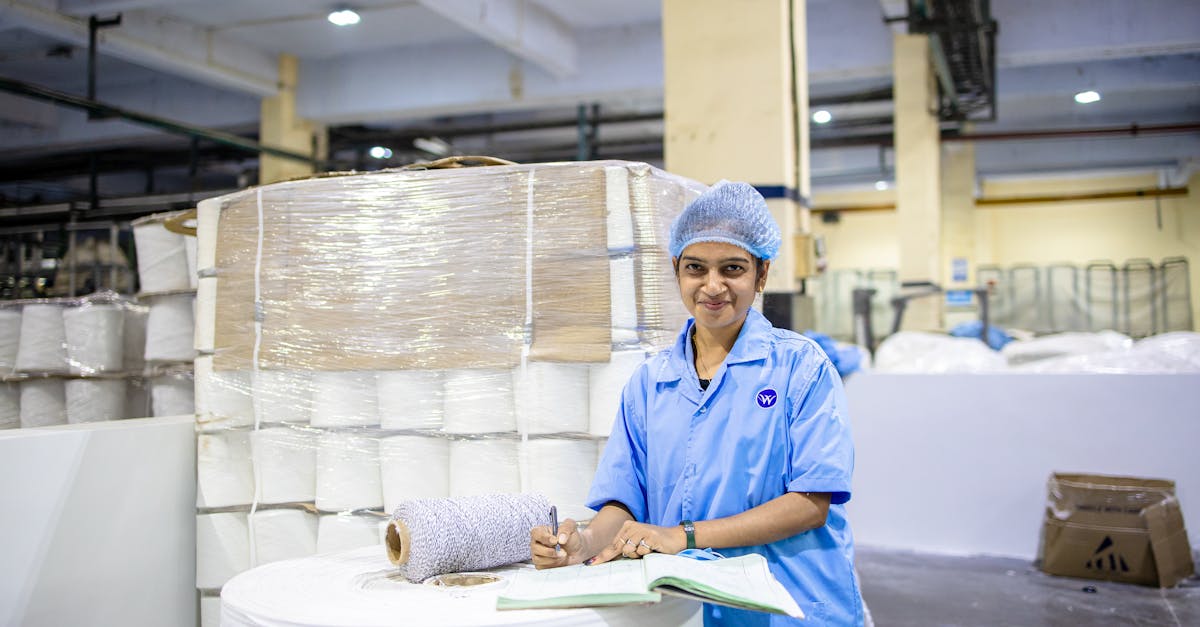
- Visit the factory if you can. I know, it’s a hassle. But seeing the production floor tells you everything. Is it organised? Are the stacks of paper clean and dry? How old are the binding machines? The smell of a well-run printing unit is specific – like ink and sawdust.
- Request client references for a similar order size. Not just any client. Ask for someone who ordered 50,000 units for schools, or 10,000 custom diaries. Call them. Ask about delays, about quality consistency from the first box to the last.
- Check their disaster plan. What happens if the paper shipment is delayed? If a binding machine breaks down? Their answer – or lack of one – is very telling.
Look, I’ll just say it: the cheapest quote is usually cheap for a reason. The paper might be thinner at the center of the reel. The glue in the binding might be a lower grade. You’ll find out six months later, when the complaints start.
And then you’re the one with the problem.
Frequently Asked Questions
What should I look for in a notebook for bulk school supply?
Durability above all. Opt for stitched or double-wire binding – it withstands rough handling. Paper should be a standard 54-60 GSM to balance cost and writeability. The ruling (single, four-ruled for younger kids) must be clear and consistent. The cover needs to be a strong, laminated board. It’s less about fancy features and more about surviving a full academic year in a student’s bag.
How does custom notebook printing work for businesses?
You provide your logo and artwork. The manufacturer creates printing plates (for offset) or sets up digital files. They print your design on the covers and often on the header/footer of each page. You choose the paper, page count, ruling, and binding. There’s a setup cost, so it only makes sense for larger orders (usually 1000+ units). It turns a generic tool into a brand touchpoint.
What’s the difference between GSM and paper quality?
GSM (Grams per Square Meter) is just weight – like the thickness of the page. Paper quality involves brightness, opacity, smoothness, and fibre content. You can have a heavy 80 GSM paper that’s rough and blotchy, and a smooth 54 GSM paper that’s perfect for writing. Always ask for a writing sample, not just the GSM number.
Is it better to source notebooks locally or from a large manufacturer?
It depends on volume and need. Local suppliers are great for quick, small replenishment. For large, consistent bulk orders (think tens of thousands), a dedicated manufacturer offers better price control, quality consistency, and the ability to customize. For schools or corporates sourcing annually, going direct to the manufacturer often makes the most financial sense.
What are the main notebook binding types and which is strongest?
Stitched (saddle-stitched): Strong, lies flat, common for standard notebooks. Spiral/Wire-O: Very durable, allows book to fold back, but the wire can snag. Perfect Binding: Glued spine, gives a clean look (like a paperback), but can crack if forced flat. For sheer ruggedness in a school or heavy-use environment, a well-made stitched binding is hard to beat.
Wrapping this up
So. Best notebook brands.
It’s not a title you find on a listicle. It’s a reputation earned on loading docks and in school storage rooms. It’s built when the tenth box you open is identical to the first. When the diaries you gave your clients last year still look good on their desks today.
The search isn’t for a brand name. It’s for a partner who understands that your name is the one that ultimately matters. Who gets that you’re not buying stationery – you’re procuring a reliable tool for someone else’s work.
I don’t think there’s one answer here. Probably there isn’t. But if you’ve read this far, you already know what you’re looking for – you’re just figuring out who you can trust to deliver it, year after year.
If that’s the kind of conversation you want to have, we should talk. You can always start here and see how we approach these things.