So you need a daily journal diary. But not just one.
You’re looking at a spreadsheet. Maybe you need 500 diaries for the new financial year, or 2000 notebooks for the incoming student batch. And the question isn’t just where to buy them. It’s what actually makes a good one. The kind people will use — not just toss in a drawer. Because if you’re spending company or school budget on these, you want them to stick. Right?
I’ve been in this business — manufacturing notebooks and diaries in Rajahmundry — for decades. And the gap between a generic diary and a daily journal diary that works is bigger than most procurement managers realize. It’s not just about putting dates on pages. It’s about paper that doesn’t bleed, binding that survives a year in a bag, and a layout that doesn’t annoy people by March.
If you’re ordering in bulk, for corporate teams or students, this is the part where most suppliers drop the ball. They see a quantity, not a purpose. Let’s fix that.
The “Daily” Part is a Design Problem, Not a Label
Calling something a daily journal diary sets an expectation. Someone is meant to open it every day. That means the paper has to feel good, not like scraping a pen over cheap pulp. The binding has to lie flat on a desk or in a lap. And the size? It can’t be a hassle to carry.
From a manufacturing standpoint, here’s what actually matters:
- Paper GSM & Quality: Most standard diaries use around 70-80 GSM paper. It’s a decent middle ground — substantial enough to write on both sides without serious show-through, but not so thick it makes the book a brick. For a true journal, where people might use fountain pens or markers, you might need 90 GSM or a specific coating.
- Ruling: Is it single-ruled for notes? Unruled for sketching? Maybe time slots down the side for planning? The ruling dictates the entire user experience. I’ve seen corporate diaries ordered with the wrong ruling — broad ruled for executives who write tiny — and the waste is palpable.
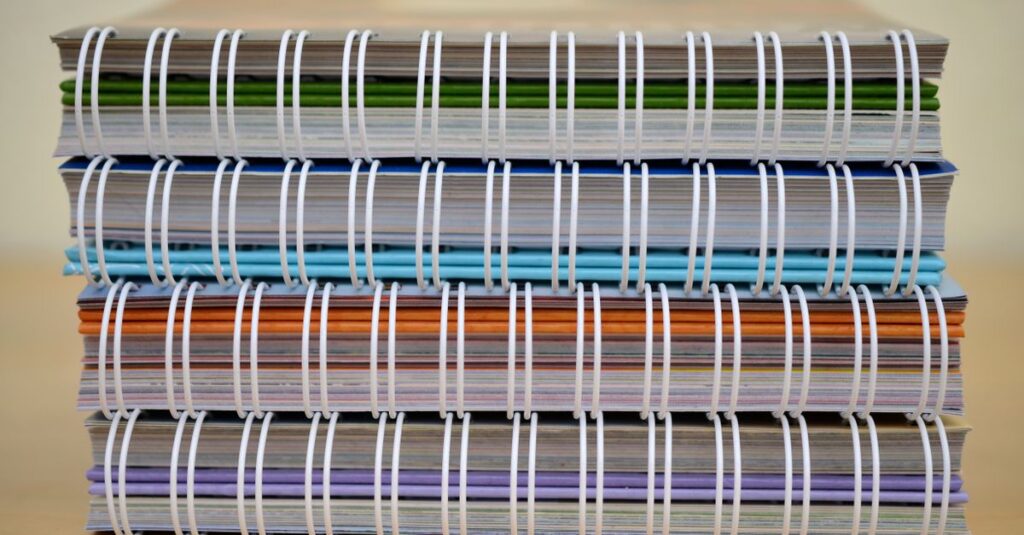
- Binding Durability: This is the silent killer of bulk orders. Perfect binding (glued spine) looks clean but can crack. Spiral binding is functional and lies flat, but the spirals can snag and bend. Stitched binding is the workhorse — durable, but it changes the look and feel. The choice here isn’t aesthetic; it’s about how many times the book will be opened and closed.
Anyway. The point is, the “daily” promise fails at the manufacturing level first.
Bulk Orders: Where Customization Actually Saves You Money
Look, I’ll be direct. Ordering 1000 generic diaries from a catalog is easy. But if 30% of your team isn’t using them by Q2, that’s a 30% waste of your budget. Maybe more. The trick isn’t to buy cheaper; it’s to buy smarter.
Customization is the lever here. And I don’t just mean slapping a logo on the cover (though that’s part of it). I mean tailoring the product to the actual, noisy, messy reality of how people work or study.
Let me give you a real-life snapshot. Not a case study — just a scene.
Priya, 42, is a project manager at a mid-sized firm in Hyderabad. Her company gave everyone the same corporate diary last January. Leather-look cover, gilded edges, the works. By mid-February, hers was on a shelf. Why? The daily pages were too small for her task lists. The “notes” section was at the back, so she was constantly flipping. The paper was so smooth her pen slid around. It felt fancy, but it fought her workflow every single day. She went back to a simple, stitched notebook she bought herself.
That’s the moment bulk buyers miss. You’re not buying a product; you’re buying a user’s habit. And habits form around utility, not prestige.
Expert Insight
I was talking to a procurement head for a chain of schools last month — over WhatsApp, actually — and he said something that stuck. He told me, “We used to buy the cheapest notebooks we could find for students. The failure rate was insane. Pages falling out, covers tearing. We were saving 3 rupees per book and losing 10 in replacement hassles and complaints.”
His shift wasn’t to the most expensive option. It was to a manufacturer who understood that a student’s notebook lives a brutal life. It gets shoved in bags, dropped, left in the rain. The binding needs to be stitched, not just glued. The cover needs to be a specific grade of card. That’s it. It’s not complex. It’s just attention to the reality of use. And most bulk suppliers don’t have the bandwidth — or the care — to think on that level.
Daily Journal Diary vs. Standard Notebook: A Procurement Comparison
For a business or institution, the choice often comes down to this. Do we get a specialized daily journal diary, or do we get sturdy notebooks? The cost difference can be significant at scale. Here’s a blunt breakdown.
| Feature | Daily Journal Diary | Standard Bulk Notebook |
|---|---|---|
| Primary Purpose | Structured daily use (dates, planning, reflection) | General note-taking, subject-specific work |
| Cost per Unit (Bulk) | Higher. Pays for date printing, complex layout, often better paper. | Lower. Simplified manufacturing, common rulings. |
| Customization Depth | High. Can tailor dates, sections, headers, cover design. | Moderate. Usually cover logo, paper ruling, page count. |
| User Engagement | Can drive consistent use IF well-designed. | Flexible. Use depends entirely on the user. |
| Best For | Corporate gifts, executive planners, student academic diaries. | School supplies, office meeting notes, training workshops. |
| Risk | Poor design leads to immediate abandonment. | Less risk of rejection, but also less brand impact. |
The table makes it obvious, I think. A diary is a tool for a specific behavior. A notebook is a blank space. Your choice hinges on what you’re trying to achieve. Is it brand consistency and daily habit? Or is it reliable, affordable utility?
Nine times out of ten, companies choose the diary for the wrong reason — it looks more “corporate.” But if it doesn’t function, that’s all it ever does: look.
How to Vet a Manufacturer for Your Bulk Diary Order
This is the practical part. You’re not just buying a product; you’re buying capability. Here’s what to ask, beyond the price-per-unit quote. These questions filter out the order-takers from the actual partners.
- Ask for paper samples, not just a GSM number. Feel it. Write on it with the pens your team actually uses. Does it bleed? Does it feather?
- Ask about binding on a live production line. Can they show you? A video, a visit? You need to know if those stitches are tight or if that glue is applied evenly.
- Request a dummy. Before you commit to 5000 pieces, get a single physical dummy made to your exact specs. Hold it. Use it for a week. This step catches 90% of design flaws.
- Clarify lead times realistically. Custom printing and binding takes time. A supplier promising impossibly fast turnaround is cutting corners somewhere.
- Check their export packing. If you’re an international buyer, this is critical. How are 1000 diaries packed to survive a sea voyage without damp or corner damage?
I think — and I could be wrong — that most procurement headaches come from skipping these steps. You get seduced by a low price and a shiny mock-up, and the reality lands in your warehouse as a disappointment.
The Unspoken Rule: Durability Over “Premium” Feel
There’s a trend in corporate gifting: make the diary feel luxurious. Thick covers, ribbon markers, fancy boxes. It looks great in the presentation. And then the spine splits in April.
Here’s the thing. In bulk manufacturing, every feature has a trade-off. A hardcover provides structure but adds weight and cost. A ribbon marker is a nice touch, but it’s an extra component that can fail. Gilded page edges can actually make the pages stick together.
The real premium, the one that builds trust with your end-users, is durability. A daily journal diary that looks good and survives the daily grind. That’s a manufacturing challenge, not a design one. It comes down to stitch density, glue quality, and grain direction of the cover board. Things nobody sees but everyone feels.
The companies that get this right are the ones working directly with the factory floor, not just a sales agent. They know the machinery. They know which glue works in humid climates. It’s granular. And it matters.
Frequently Asked Questions
What is the ideal page count for a corporate daily journal diary?
For a true daily-use book covering a full year, you’re looking at 240-320 pages. This accounts for 365 daily entries (often 2 pages per week spread), plus sections for notes, contacts, and goals. Anything less feels flimsy; anything more becomes unwieldy. For a 6-month or academic-year planner, 192 pages is a common sweet spot.
Can we get different rulings within the same diary?
Yes, but it complicates production. This is called “mixed ruling.” A common setup is having a weekly planner section with timed rulings, followed by unruled pages for notes. It requires precise collating during binding, which not all manufacturers can do cleanly. Always ask for a dummy to check the page sequence is correct.
What’s the minimum order quantity for custom daily diaries?
It varies wildly. For simple logo stamping on an existing diary design, MOQs can be as low as 100 pieces. For fully custom layouts, paper, and binding, most reputable manufacturers need at least 500-1000 units to make the setup and plate costs worthwhile. For international buyers, the MOQ might be higher due to container costs.
How long does production take for a bulk custom order?
From final approved design to shipped goods, plan for 4-8 weeks. Two weeks for paper sourcing and prep, 2-3 weeks for printing and binding, and 1-2 weeks for quality check and packing. Rush orders are possible but will increase costs and risk of errors. Don’t let a supplier promise the impossible.
Are there eco-friendly options for bulk diary paper?
Absolutely. You can source diaries made with recycled paper or FSC-certified virgin pulp. The finish might be slightly less smooth, and the cost is typically 15-25% higher. It’s a strong brand statement for corporations and schools focused on sustainability. Just ensure the supplier can provide credible certification for the paper.
You probably already know what you need.
After all this, the decision feels simpler, doesn’t it? It’s not about finding the flashiest daily journal diary. It’s about matching a manufacturing specification to a human need. Will your team use it? Will it last the year? Does the supplier understand the difference between making a product and fulfilling an order?
I don’t think there’s one perfect answer. Probably there isn’t. But if you’ve read this far, you’re not just ticking a procurement box. You’re looking for something that actually works. And that’s the whole game.
Sometimes, it helps to talk it through with someone who’s been on the factory side of these decisions for 40 years. No pressure. Just a conversation.