So, you need to order custom diaries. Now what?
Look. If you’re a procurement manager, a school administrator, or a business owner looking to get custom notebooks printed, you already know it’s not as simple as picking a cover colour. You’re staring at the words “design diary pages” on your to-do list, and the blankness of that phrase is, honestly, a headache. Because it means a hundred tiny decisions you weren’t trained for.
Is it a weekly planner? A project log? An attendance register? The paper can’t be too thin, the binding has to survive a year in a backpack, and the logo needs to look sharp — not pixelated. I’ve talked to dozens of people in your position. The anxiety isn’t about the design; it’s about getting it wrong and ending up with 5,000 useless diaries that everyone quietly shoves in a drawer. You’re not just buying stationery; you’re buying a tool that people will use (or ignore) every single day. That’s pressure.
If this sounds familiar, this might be worth a look. We’ve been untangling this exact puzzle for forty years.
Forget “Design.” Start with Function.
Here’s the first mistake I see all the time: people jump straight to how the page should look. Colors. Fonts. Fancy icons. Wrong place to start. The only question that matters is: What will people actually write here?
Think about it this way. A sales rep needs a weekly planner with big slots for appointments and a notes section for client details. A teacher needs a grid-marked attendance register that’s easy to scan. A college student needs lecture notes pages that won’t bleed through. These are different animals. The design follows the job, not the other way around.
You need to get specific. I mean, painfully specific.
- Daily vs. Weekly vs. Monthly Layout: A daily page is for detail-obsessed project managers. A weekly spread gives that broader picture most offices need. Monthly is just for tracking deadlines.
- Ruling is Everything: Single-ruled (SR) for general notes. Double-ruled (DR) for keeping handwriting neat. Four-ruled (FR) for young students learning letters. Unruled (UR) for designers or sketchnotes. It changes the entire feel of writing.
- Information Blocks: Do you need a “Priority” box? A “Follow-up” section? A place for a signature? Map out the data first.
I was on a call last week with a logistics company. They wanted a custom diary for their drivers. We spent 20 minutes not talking about design, but about the exact information logged at each delivery stop. Time. POD number. Customer signature. That’s design. Everything else is decoration.
The Paper & Binding: Where Good Diaries Live or Die
Okay. You’ve sketched your page layout. Now, what’s it printed on? And how does it hold together? This is where bulk buyers get nervous — and they should. Because a beautiful design on paper that ghosts like a spectre is a waste of money.
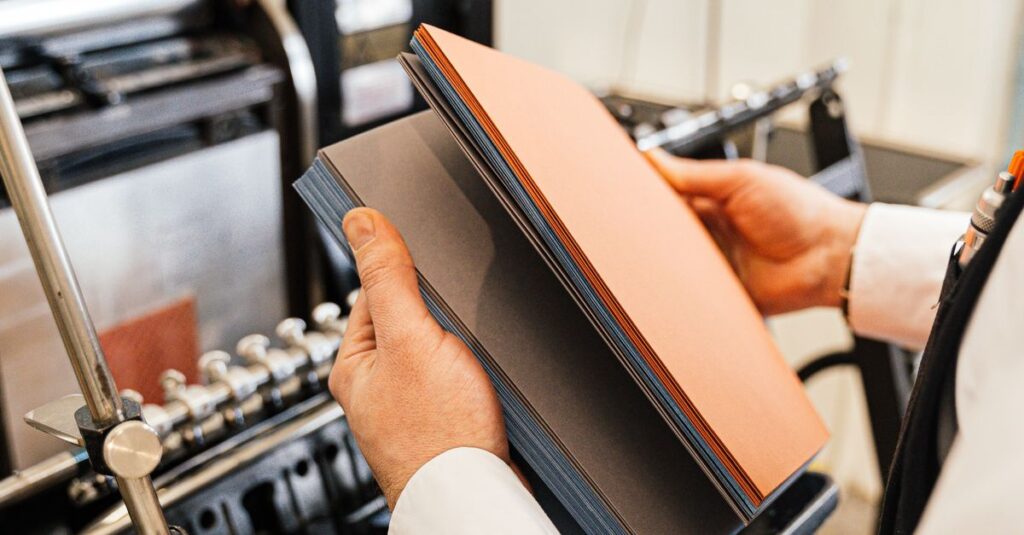
Let’s talk paper weight. GSM (Grams per Square Metre). Our standard writing paper is around 54 GSM. It’s the sweet spot for most writing pens — smooth, but with enough body that a ballpoint won’t poke through. But if you’re using fountain pens or need a more premium feel, you go heavier. 70 GSM, 80 GSM. It costs more, but the perceived value skyrockets. For a corporate gift diary? Go heavier. For a school notebook distributed in the thousands? 54 GSM does the job perfectly.
Then there’s binding. This isn’t just about durability; it’s about how the diary behaves on a desk.
- Stitched Binding: The classic. Pages are gathered into sections, sewn together, then glued into the spine. Lays flat-ish. Professional. Durable for most office use. This is your workhorse.
- Spiral Binding (Wire-O or Plastic): Flips all the way over and lays completely flat. Fantastic for manuals, cookbooks, or notebooks that need to be folded back. Feels more casual. The wire can bend if thrown in a bag.
- Perfect Binding: That sleek, square-spine look like a paperback book. Very corporate, very clean. Doesn’t lay flat easily. Best for thinner diaries or ones where presentation is the primary goal.
Expert Insight
I was reading an old industry journal once — the kind with yellowing pages. A binder said something that stuck with me: “The binding is the handshake. The paper is the conversation.” It’s true. A weak binding breaks the promise immediately. But even with a great binding, if the paper feels cheap or fights the pen, the conversation is over. You have to get both right. Most people only think about one.
A Real-Life Snapshot: How It Actually Works
Let me give you a picture that’s not from a brochure. Meet Anjali, 42, an admin head for a chain of private schools in Hyderabad. Her job every April: order 8,000 custom planners for the new academic year. She’s got the principal wanting a “modern look,” the teachers wanting more weekly planning space, and the accountant telling her to cut the budget by 15%.
She finds last year’s diary in her drawer. The calendar pages were perfect. But the notes section at the back was always blank. The cover lamination started peeling by November. She circles three things with a red pen: “Durable cover,” “Remove unused pages,” “Add parent-teacher meeting template.”
That’s her brief. Not a mood board. A list of failures and one new need. That’s what we work from. (We ended up switching her to a tougher matte-laminate cover and replaced the blank notes pages with a pre-printed meeting log. Cost actually went down.)
Corporate vs. Academic Diaries: A Side-by-Side Look
Your purpose dictates everything. Choosing the wrong template is like wearing a tuxedo to a construction site. Here’s how the needs break down.
| Feature | Corporate / Executive Diary | Academic / School Planner |
|---|---|---|
| Primary Focus | Time management, networking, professional image | Academic scheduling, assignment tracking, communication |
| Key Pages | Yearly calendar, monthly goals, weekly appointments, contacts, expense log | Academic year calendar, term schedules, weekly class periods, homework tracker, parent notes |
| Paper Quality | Often higher GSM (70+) for premium feel, may include coloured inserts | Durable 54-70 GSM to handle frequent erasing and student use, often brighter white |
| Binding Priority | Presentation (Perfect or stitched), lies flat on boardroom table | Durability (Stitched or robust spiral), survives backpacks |
| Customization | Embossed logo, premium finishes, branded colour schemes | School crest, house systems, specific bell schedules, policy pages |
| Page Layout | Clean, minimalist, time slots from 8 AM to 8 PM | Structured by period, space for teacher signatures, colourful |
See? Different tools for different jobs. A CFO doesn’t need a “Spelling Test Score” column. A third-grader doesn’t need an “ROI Metrics” section. It seems obvious, but you’d be shocked how many first drafts mash them together.
The Manufacturing Reality: What “Custom” Really Means
Let’s pull back the curtain. You send a PDF. What happens next? I think a lot of buyers picture a single artisan hand-tooling each book. The reality is a beautifully orchestrated industrial process. And understanding it helps you set realistic expectations.
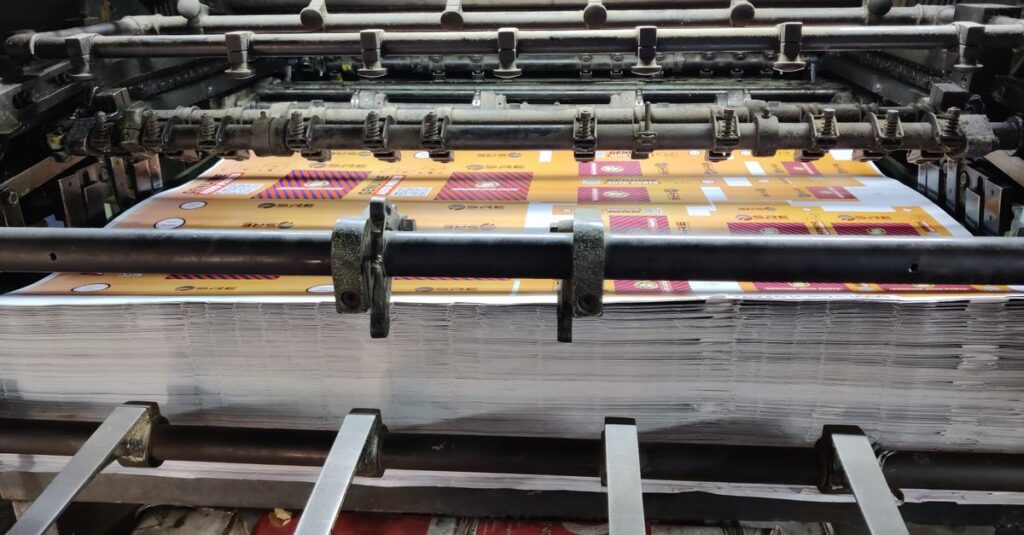
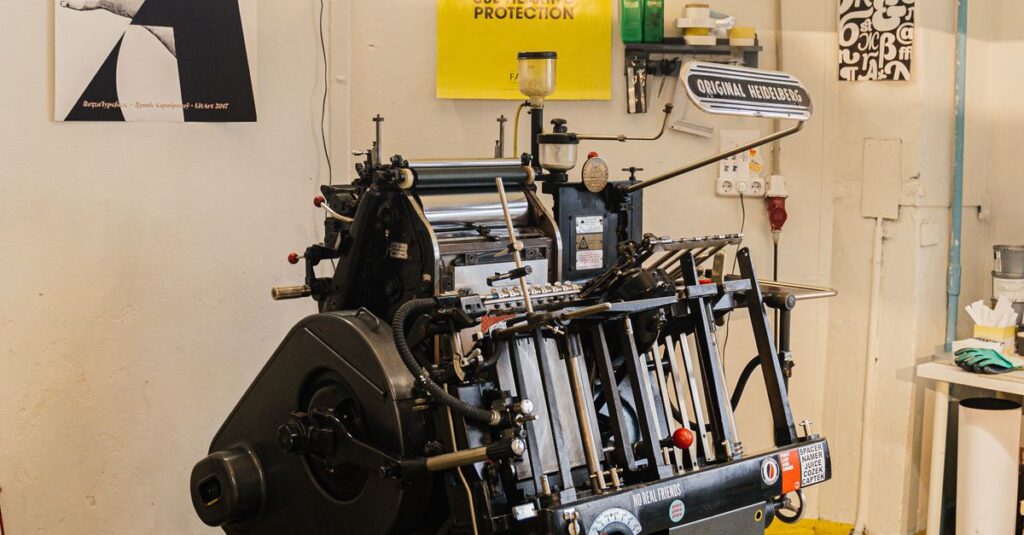
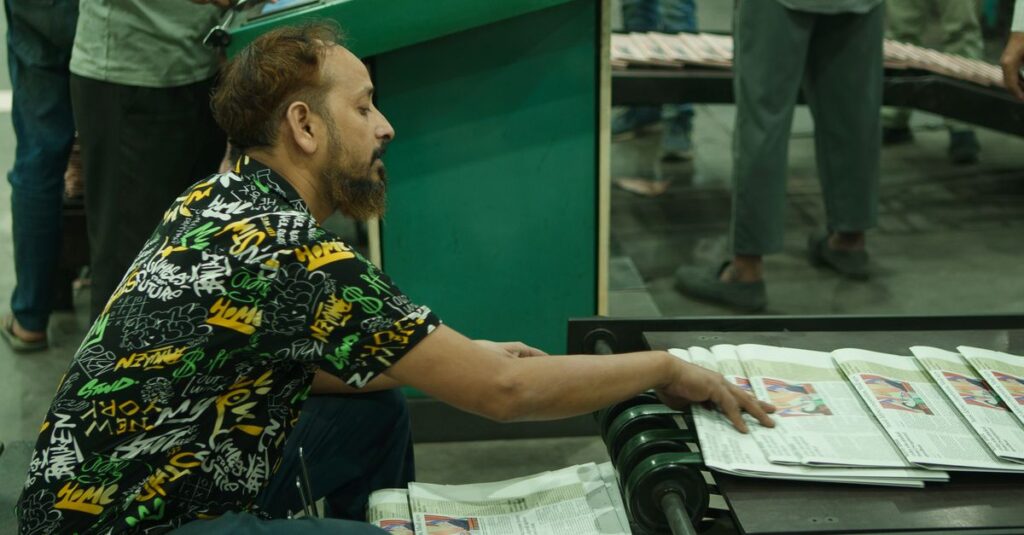
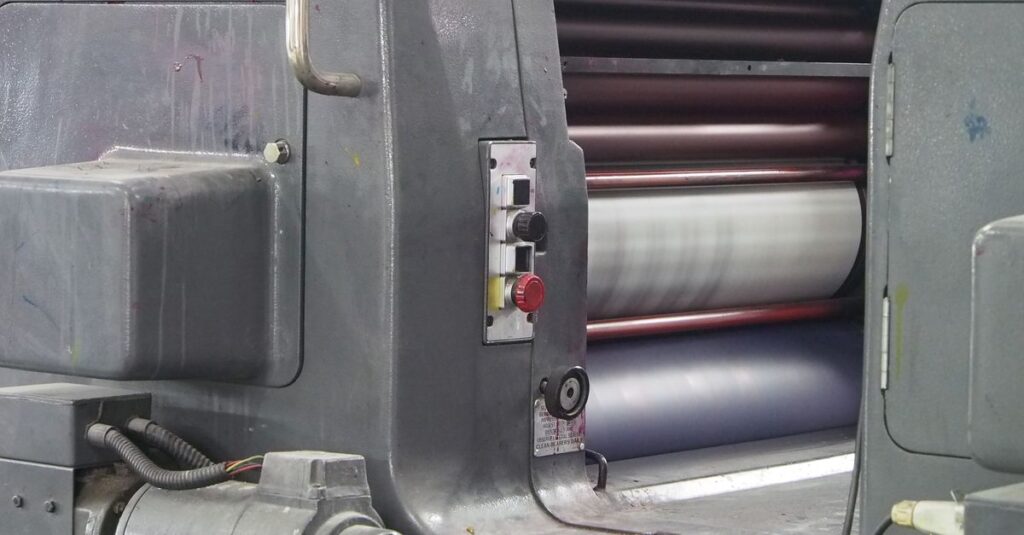
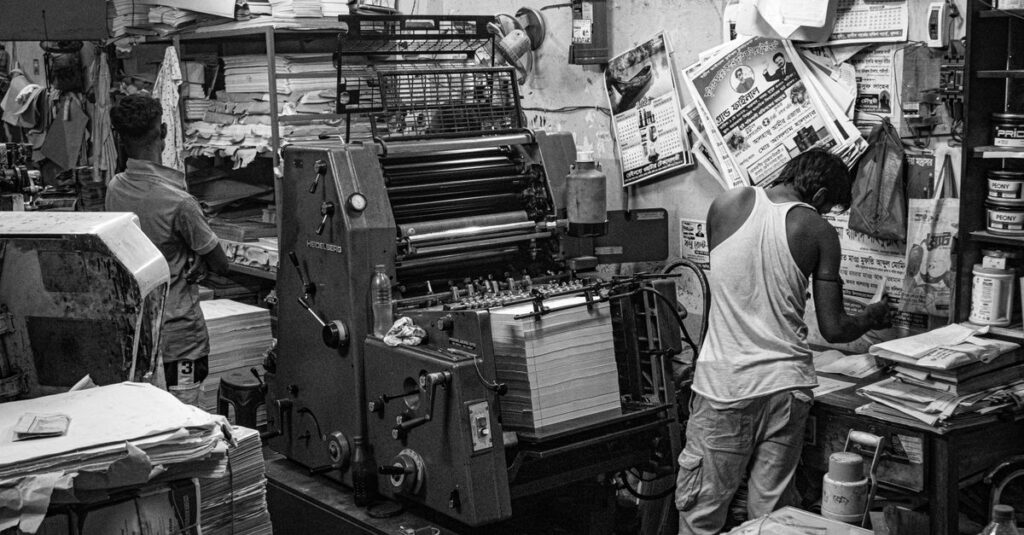
First, prepress. Our team checks your file. Is the bleed correct? Are the fonts embedded? Is the logo high-resolution? This step kills 90% of quality issues before they start. Then, plates are made for the offset press — that’s for runs in the thousands. The giant rolls of paper fly through, getting your custom design printed on every page. It’s loud. It smells like ink and machinery. It’s kind of awesome.
Then, cutting. Folding. Gathering. This is where your 52-page notebook gets assembled from individual sheets. Then, to the binding line — the stitchers clatter away, or the spiral wire gets twisted on. Finally, trimming, where three sides are guillotined to a perfect, crisp edge. The consistency across 30,000 units is what you’re paying for. Seeing the scale of it makes you realize why a sample is non-negotiable.
The thing is — and I need you to hear this — true customization isn’t a menu toggle. It’s a conversation. It’s us asking, “Why that layout?” Maybe there’s a simpler, cheaper way to get you the same result. Nine times out of ten, there is.
Your Practical Checklist Before You Order
Don’t start a call with a manufacturer empty-handed. Get this stuff down first. It’ll save you weeks.
- Define the User: Who touches this daily? Be specific (e.g., “field sales executives driving 200km a day”).
- Core Function: In one sentence: “This diary is to track daily customer visits and sales.”
- Must-Have Pages: List them. Calendar, weekly planner, notes, reference maps. No more than 5.
- Page Count & Size: 92 pages? 200? King Size (23.6×17.3cm) or more portable Short (19.5×15.5cm)?
- Material Non-Negotiables: “Must lie flat.” “Paper must not bleed with highlighters.” “Cover must be wipe-clean.”
- Budget & Quantity Reality: Have a ballpark. 1,000? 10,000? It changes the production method and cost per unit dramatically.
Look. I know this feels like a lot. It is. But doing this homework means you walk into the conversation as a partner, not just a buyer. You get a better product, and we can give you a accurate price and timeline faster. Everybody wins.
Frequently Asked Questions
What is the most important factor when designing diary pages for bulk orders?
Function over form, every single time. The page layout must solve a specific problem for the end-user. A beautiful but confusing layout will be abandoned. Start by asking: what information is being recorded, how often, and by whom? The design flows from those answers. Durability (paper and binding) is a close second.
Can I get a single sample diary before placing a large order?
Absolutely. In fact, you should insist on it. A reputable manufacturer will produce a physical prototype based on your design. This lets you test the paper quality, binding strength, and print clarity firsthand. It’s the only way to catch issues like colour mismatch or a flimsy feel before committing to 5,000 units.
How long does it take to manufacture custom diaries?
It depends on complexity and quantity, but plan for a 4-6 week timeline from final approved artwork to shipped goods. This includes prepress, printing, binding, and quality checks. Rush jobs are possible but cost more. The biggest delay is usually back-and-forth on the initial design — which is why having a clear brief is so crucial.
What is the minimum order quantity (MOQ) for custom diary pages?
This varies. For a standard custom notebook with unique interior pages, most factories (including ours) have an MOQ around 500-1,000 pieces. The cost per unit drops significantly at higher volumes (like 5,000+). If you need a smaller batch with just a logo on a standard page layout, MOQs can be lower.
What file format should I provide for the diary page design?
Print-ready PDFs are the industry standard. Ensure all images are high-resolution (at least 300 DPI), fonts are embedded or outlined, and you include 3mm bleed on all sides where colour goes to the edge. A native Adobe InDesign or Illustrator file is also helpful for our prepress team if minor adjustments are needed.
Wrapping This Up
Designing diary pages isn’t about being a graphic designer. It’s about being a translator. You’re translating the daily needs of a team, a school, or an entire company into a physical object that makes those tasks easier. It’s part psychology, part logistics, and part simple practicality.
The goal isn’t a trophy that sits on a shelf. It’s a tool that gets worn out, filled up, and relied upon. If you focus on that — the wear and the use — the rest of the decisions start to make themselves. The right paper, the tough binding, the intuitive layout… they all follow.
I don’t think there’s one perfect design. Probably there isn’t. But if you’ve read this far, you already know the problem you need to solve — you’re just figuring out how to build the solution. And that’s the whole game. If you want to talk through a specific project, that’s what we’re here for.