Honestly, Who Still Buys a Diary With a Pen?
You know that sound? The soft *thunk* of a diary landing on a desk, the quiet *snap* of a pen being clipped to its spine. It feels official. It feels… different.
Every procurement manager I talk to asks some version of the same thing — “We’ve got digital calendars. Why do people still want a diary with a pen?” And the answer is never about just keeping dates. It’s about weight. About handing someone a piece of your brand’s identity that they’ll touch every day for a year. It’s a thing. And things matter, especially when everything else is pixels on a screen.
The emotional problem here isn’t that people can’t find a diary. It’s that most corporate diaries are cheap, flimsy afterthoughts. A logo slapped on a generic cover, a pen that leaks by March. The unspoken signal you’re sending? “We don’t care about the details.” And in business, that’s a dangerous message. Getting the details right is the whole point.
So let’s talk about the thing itself.
What Exactly Is a “Diary With a Pen”? (It’s Not Just a Notebook)
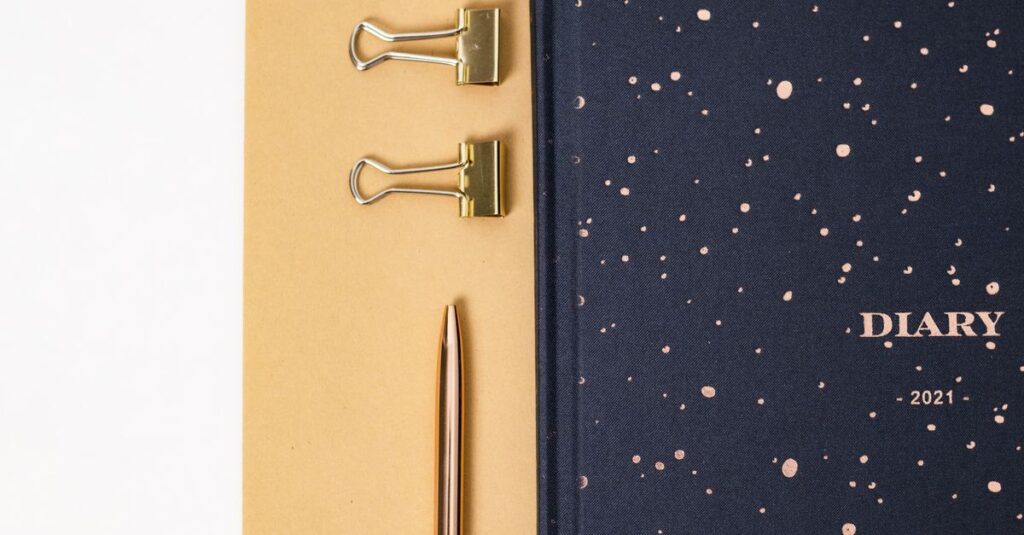
Here’s where people get tripped up. A diary with a pen is a system. It’s a bound book, usually A5 or desk size, with dated pages for the year, plus a functional pen that’s attached. The pen isn’t an accessory — it’s part of the product’s DNA. Lose the pen, and you’ve just got a dated notebook. The whole thing falls apart.
I’ve seen this in our own factory for decades. The binding has to be strong enough to hold the pen loop without tearing. The cover stock needs to be rigid. The pen has to write smoothly, every time, without skipping. These are non-negotiable. And yet, I get samples from other suppliers where the pen loop is glued on with what feels like school paste. It peels off in a week.
Three things make a corporate diary work:
- The Attachment: It can be a leather loop, a plastic sleeve, or a metal clip. The key is durability. It needs to survive being stuffed into a laptop bag, thrown on a car seat, used daily.
- The Pen Quality: This is the most overlooked part. A scratchy, inconsistent pen makes the entire diary feel cheap. It’s the primary point of contact. We use a specific 0.7mm ballpoint refill for a reason — reliable, dark ink, no smudging on most paper.
- The Paper: It can’t be too thin. Show-through is the enemy of a premium feel. We standardize on 70-80 GSM paper for diaries. Thick enough to handle pen and light marker, smooth enough for fast writing.
The goal isn’t to create a museum piece. It’s to create a tool that gets used, hard, and still looks professional at the December meeting. Which is harder than it sounds.
The Corporate Psychology Behind the Physical Diary
I was talking to a client last year — a financial services firm in Hyderabad. They ordered 500 custom diaries. I asked why, with their whole office on Slack and Google Workspace. The head of HR told me something I keep thinking about.
“We give them to our top performers,” she said. “The digital calendar is for the company. This diary is for their own plans. Their side projects, their personal goals. It’s a signal that we trust them with their own time.”
Right.
It’s not about replacing technology. It’s about complementing it. The digital calendar is for meetings everyone can see. The diary with a pen is for the notes beside the meeting. The to-do list that doesn’t need to be a notification. The sketch of an idea. It’s private, offline, and it creates a different kind of focus. The kind that doesn’t get interrupted by a ping.
And for the company giving it? It’s 365 days of brand visibility. On a desk. In meetings. In client offices. A well-made diary doesn’t get thrown away. It gets kept. That’s the power of custom printing done right — it becomes part of someone’s workflow.
Look, I’ll be direct. The cheap diary you bulk-buy from a generic catalog? It ends up in a drawer. The good one stays on the desk. The difference is in the details you probably aren’t being shown.
How We Actually Make Them: A Peek Inside the Factory
Okay, so the “why” makes sense. But how does a diary with a pen get built? Let me walk you through it — not as a sales pitch, but because knowing this helps you spot quality when you’re evaluating suppliers.
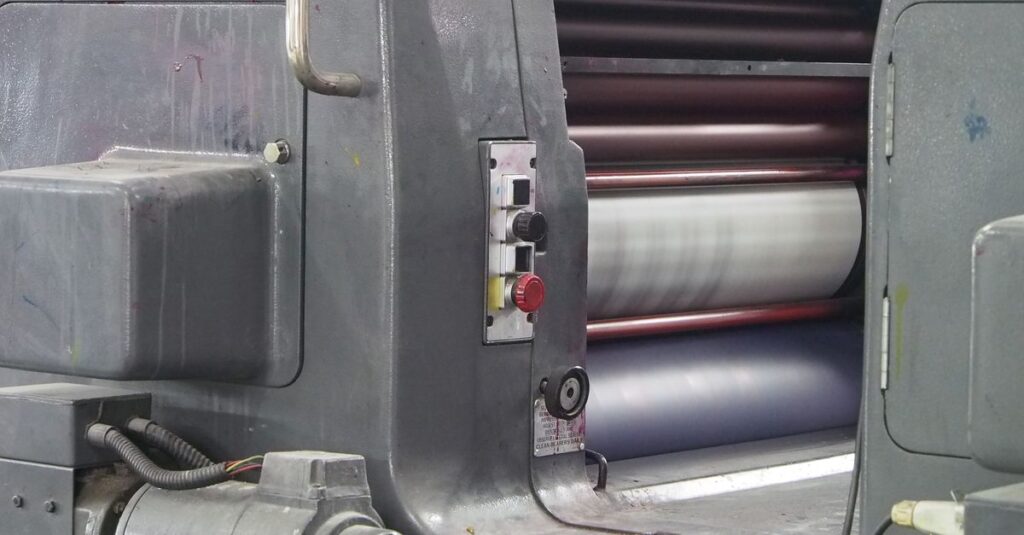
It starts with the cover. For corporate diaries, we almost always use hardbound or thick flexible cover. The material is everything. A grainy, textured paperboard feels premium; a shiny laminated sheet feels… less so. The company logo is hot-foil stamped or offset printed. Stamping gives a raised, metallic look — it’s classic, expensive-feeling.
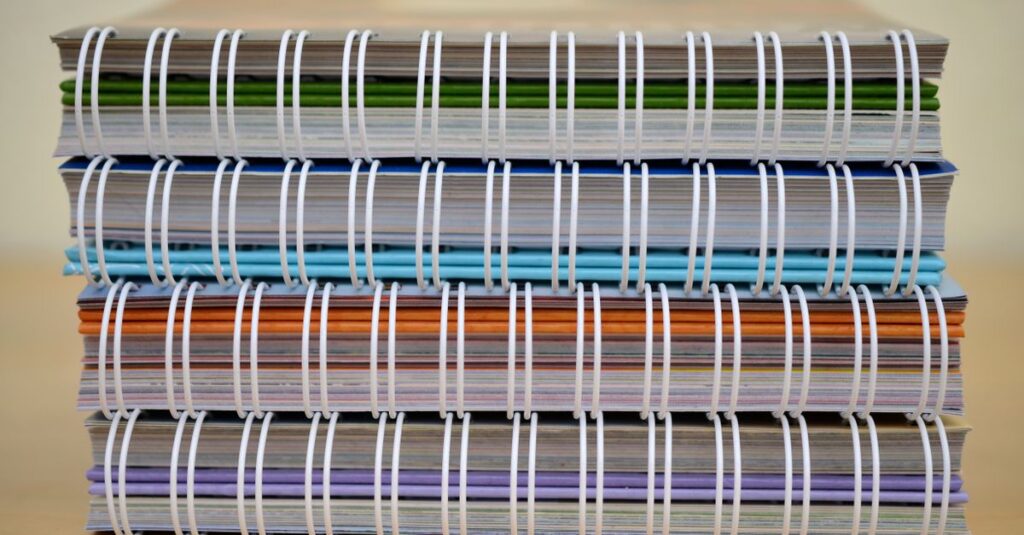
Then the inner block. The pages are printed in sections called “signatures.” These are folded, gathered in order, and then stitched together — not just glued. This is “smyth sewing.” It’s what lets the diary lay flat on any page. Perfect binding (just glue) is cheaper, but it cracks. The spine breaks. A stitched diary lasts.
After stitching, we apply the spine reinforcement — a strip of cloth or paper that adds strength. Then the cover is attached. Only then do we add the pen loop. This is often a strip of genuine or synthetic leather, stitched and glued into the spine for maximum hold. The pen is sourced separately, tested in batches for ink flow, and then paired.
The final step is a hand-check. Someone flips through every diary, checks the pen clip, makes sure the dates are correct. It sounds tedious, but it’s the only way to catch the one defect in a hundred. I think the stat was — I can’t remember exactly — something like 3% of diaries fail this check from other mass producers. Don’t quote me on that. But it’s high. We aim for zero.
Expert Insight
I was reading something last month and one line stuck with me. A design researcher wrote that the most trusted tools are the ones that recede when you use them. You don’t fight the pen. You don’t struggle to open the diary. It just works, and you think about your work, not the tool. That’s the benchmark we use. If someone notices the binding, we’ve failed. If they notice the pen skips, we’ve failed. The diary should disappear, so the planning can happen.
Custom Diary vs. Generic Stock Diary: A Real Comparison
Most businesses start by looking at the price difference and think, “The stock one is fine.” Let’s be clear — they are not the same product. Here’s what you’re actually buying.
| Feature | Custom Corporate Diary | Generic Stock Diary |
|---|---|---|
| Cover | Your design, your brand colors, choice of material (leather, linen, etc.) | Pre-designed template, limited color options, standard paperboard. |
| Internal Pages | Can include custom sections: company maps, product lists, yearly planners, notes pages. | Standard dated pages only. No brand-specific content. |
| Binding | Smyth sewn for lay-flat durability. Reinforced spine. | Often perfect-bound (glued only). May not lay flat and spine can crack. |
| Paper Quality | 70-80 GSM premium writing paper, minimal show-through. | ~60 GSM standard paper. Ink may bleed or show on the other side. |
| Pen & Attachment | Branded pen, tested for reliability. Loop sewn/glued securely. | Unbranded or generic pen. Loop often glued lightly, prone to detachment. |
| Brand Impact | 365-day premium brand reminder. Perceived as a thoughtful gift. | Seen as a basic commodity. Low retention, often discarded. |
| Minimum Order | Usually 250-500 units for custom printing. | Can be purchased in any quantity, even single units. |
See? It’s not just about putting your logo on something. It’s about building a tool that reflects your company’s attention to quality. The generic diary is a cost. The custom diary is an investment.
Who Actually Orders These in Bulk? (Real Use Cases)
Let me give you a snapshot. Not a case study — just a few moments from last quarter’s orders.
Rahul, 42, Procurement Manager for a Bank in Mumbai: Ordered 2000 A5 hardbound diaries. Needed them for senior branch managers. The spec was specific: navy blue leather-look cover, silver foil stamping, a pen that wrote in blue ink only (“black feels too final,” he said). They included a quick-reference guide to internal codes on the first few pages. He told me the feedback was that people actually used the reference section. A small win.
A private university in Chennai: They order 5000 slim, softcover diaries every July for incoming students. It’s part of the welcome kit. The diary has the academic calendar, campus map, and important contacts pre-printed. The pen loop is crucial — students lose pens constantly, but this one stays put. It’s a practical tool that builds habit from day one.
A pharmaceutical distributor in Delhi: Their diary has a special requirement. The pages are slightly thicker to withstand frequent flipping by medical reps. They need to write notes in meetings with doctors, often while standing. The diary has to be sturdy, the pen has to start instantly. No skips. We added a elastic band closure so it wouldn’t flap open in their bags.
Each order has a story. A specific need that a generic product wouldn’t solve. That’s the real job of a manufacturer — to solve the problem the buyer hasn’t fully articulated yet.
The Question of Cost: Why a Good Diary Isn’t Cheap
Here’s the uncomfortable bit. A well-made diary with a reliable pen costs more. The paper is better. The binding takes longer. The pen is tested. The custom printing requires plate setup.
But think about the math differently. If you order 500 diaries at ₹250 each (that’s ₹125,000), and you give them to 500 employees or clients, that’s a year-long daily interaction with your brand for about 68 paise per person per day. Less than a rupee.
Compare that to a digital ad they’ll scroll past in half a second. Or a branded t-shirt they might wear twice.
The value isn’t in the unit cost. It’s in the duration and quality of the engagement. A flimsy diary that breaks in February is a waste of money at any price. A solid one that lasts all year, and makes the user feel a bit more organized, is worth every rupee.
And honestly? Most procurement people know this already. They’re just looking for a supplier who won’t cut corners on the things they can’t easily check.
Frequently Asked Questions
What is the typical lead time for a custom diary with a pen order?
For a standard custom order of 500-1000 units, expect 4-6 weeks from final design approval to delivery. This includes time for material sourcing, printing, binding, assembly, and quality checks. Rush orders are possible but can impact cost. It’s always best to plan your corporate diary order by early Q3 for the new year.
Can you source pens with our company logo printed on them?
Absolutely. We work with pen suppliers who can hot-stamp or print your logo directly onto the pen barrel. This adds another layer of branding. We recommend testing the print durability, as pens get handled constantly. A simple logo in one color tends to last better than full-color complex prints.
What paper GSM is best for a corporate diary?
For a balance of quality, writing experience, and bulk, 70-80 GSM paper is the sweet spot. It’s thick enough to prevent ink bleed-through from standard ballpoint pens, feels substantial, and allows for double-sided printing without heavy show-through. We don’t recommend going below 60 GSM for a premium diary.
What binding method is most durable for a daily-use diary?
Smyth sewing (stitched binding) is the most durable for lay-flat, heavy-use diaries. The pages are physically sewn together in sections, then glued to the spine. This allows the diary to open completely flat and withstand a year of daily opening and closing. Perfect binding (glue only) is cheaper but more prone to pages detaching.
Do you export custom diaries internationally?
Yes, regularly. We ship bulk orders of custom diaries and notebooks to the Gulf, Africa, Europe, and the US. Export orders involve extra planning for shipping logistics, packaging for protection, and documentation. It’s a common process for us — just factor in additional time for sea freight if you’re on a tight schedule.
So, Should You Order a Diary With a Pen?
I don’t have a clean answer for that.
If you’re just ticking a box on a procurement list, maybe not. Get the generic ones and be done with it. But if you’re thinking about what a daily touchpoint with your brand feels like — the weight, the sound, the reliability of the pen — then it’s a different conversation.
The real question isn’t whether your people need a diary. They’ll manage with their phones. It’s whether you want to give them something that makes planning feel a bit more intentional. A bit more separate from the noise.
In a world of infinite digital distraction, a simple, well-made tool can feel like a small act of clarity. And maybe that’s the point.
If you’re evaluating suppliers for a bulk or custom order, it’s worth having a direct chat. Not to sell you something, but to figure out what you actually need. The details are where the good stuff hides.