

Let’s Talk Diary Covers
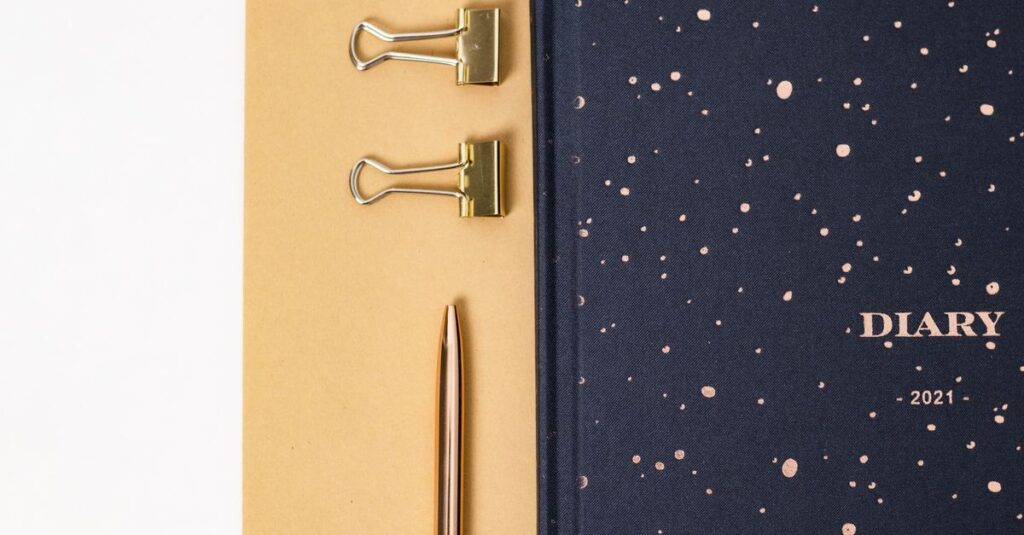
Okay, think about the last time you opened a corporate diary, maybe at a meeting or handed one out to your team. What did you notice first? Right. The cover. It’s the first thing anyone touches, sees, judges. And most corporate diaries? Honestly? They’re terrible. Thin, flimsy things that peel by March or, worse, look cheap before they’re even handed out. I’ve been in this industry long enough to know: the cover isn’t just packaging. It’s the promise. It tells your client, your employee, your student, how much you value the relationship.
If you’re ordering diaries in bulk for your company, school, or to resell, that cover is the single biggest variable between something that gets used all year and something that ends up forgotten in a drawer by February. The feel, the durability, the way it lies flat — it all starts there.
And look, we get hundreds of inquiries at Sri Rama Notebooks where people ask about page count or price per unit, but the smartest buyers — the ones who’ve been burned before — they always start with the cover. Because they know. So let’s cut through the noise and talk about what actually makes a good diary cover, especially when you’re ordering a few hundred, or a few thousand, of them.
It’s Not Just Cardboard: What Actually Is a Diary Cover?
Right. Most people just call it “the cover” and leave it at that. But when you’re sourcing for your business, you need to know what you’re paying for. The cover is the structural spine of the whole diary. It’s the part that takes the daily abuse — getting tossed in a bag, shoved on a shelf, opened and slammed shut a dozen times a day.
Think about it this way: the paper inside can be the smoothest, highest GSM in the world, but if the cover caves in, the whole thing feels useless. A good cover does three things, and does them well:
- Protects: It guards the pages from getting dog-eared, bent, or torn. This is non-negotiable.
- Presents: It’s your branding canvas. Your logo, your colors, your company’s first impression for the year.
- Persists: It needs to last 365 days of use. Not 100. Not 200. The whole year.
I was talking to a procurement manager from a university last month — over a very bad coffee, actually — and he said something that stuck with me. He said their old supplier’s diaries would start cracking at the spine by mid-semester. Students would complain. And the worst part? It made the university look careless. He wasn’t just buying paper; he was buying reputation. That’s the cover’s job.
Beyond the Surface: Materials That Matter
Alright, so what are you actually looking at? Let’s break down the common types. Because “hardcover” can mean a dozen different things.
The Standard Players
- Art Card: This is your basic, economical option. It’s sturdy paper, usually around 300-350 GSM. Good for internal team diaries or short-run promotions where budget is tight. But — and this is a big but — it’s prone to scuffing and doesn’t have that premium, lasting feel. Think of it as the workhorse, not the showpiece.
- Matt Lamination: You take that art card and slap a thin plastic film on it. Suddenly, it’s more resistant to spills, fingerprints, and general wear. The finish is non-reflective, professional. This is probably the most common choice for corporate diaries because it hits a sweet spot between cost, durability, and a clean look for printing logos.
- Gloss Lamination: Same film, shiny finish. Makes colors pop. Your logo will look vibrant. The trade-off? Fingerprints. Show up glaringly. Some love the premium shine; others hate the smudges. It’s a feel thing.
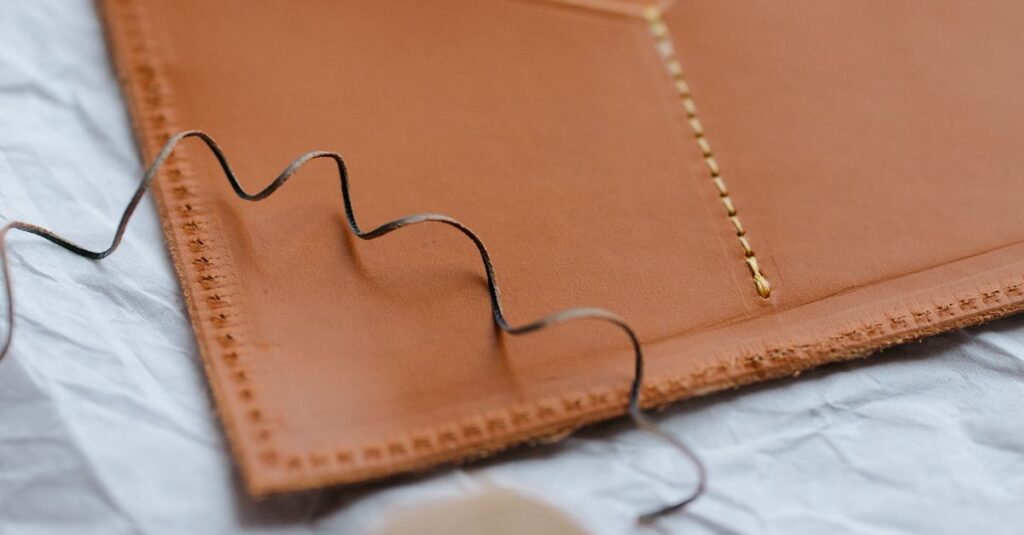
- Leatherette / Rexene: Now we’re talking. This is a synthetic material that mimics the look and texture of leather. It feels substantial in the hand. It’s durable, often wipeable, and screams “executive gift.” This is what you use for your top-tier clients or senior management. The cost goes up, but so does the perceived value. Instantly.
Here’s the thing people don’t realize: the material choice dictates the entire printing process. A gloss lamination sheet needs a different ink and drying time than a raw art card. If your manufacturer doesn’t get that right, your crisp logo comes out blurred. I’ve seen it happen.
A Real-World Moment
Anita, a 42-year-old stationery distributor from Hyderabad, told me this story last season. She’d ordered 5,000 units of a client’s corporate diary with a gloss cover. The sample was perfect. The bulk shipment arrived, and the logos on the front had this slight, almost invisible, smudge — like the ink hadn’t fully set before lamination. The client noticed. The whole batch was rejected. She lost the account and ate the cost. The problem? The factory rushed the drying. That tiny, overlooked detail in the cover production process cost her everything. It’s never just about picking a material from a list.
The Hidden Hero: Binding & Spine Construction
This is where the magic — or the misery — happens. You can have the toughest cover material in the world, but if it’s attached poorly to the pages, the whole thing falls apart. Literally.
Think of the spine as the hinge of a door. It’s the point of maximum stress. Open, close, open, close. All year long.
Perfect Binding: This is the classic “glued” spine you see on most hardcover diaries and books. The pages are gathered into a block, the spine is roughened up, and a strong, flexible glue is applied before the cover is wrapped around. When done right, with quality glue and proper clamping pressure, it’s incredibly durable and allows the diary to lie perfectly flat. When done cheaply? Pages start detaching in clumps by April. The glue dries out, becomes brittle, and fails.
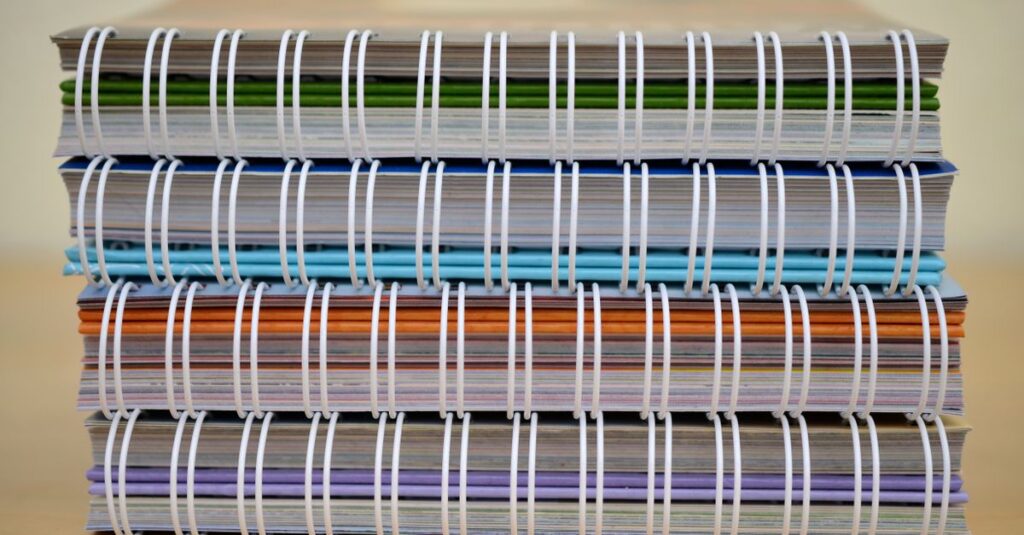
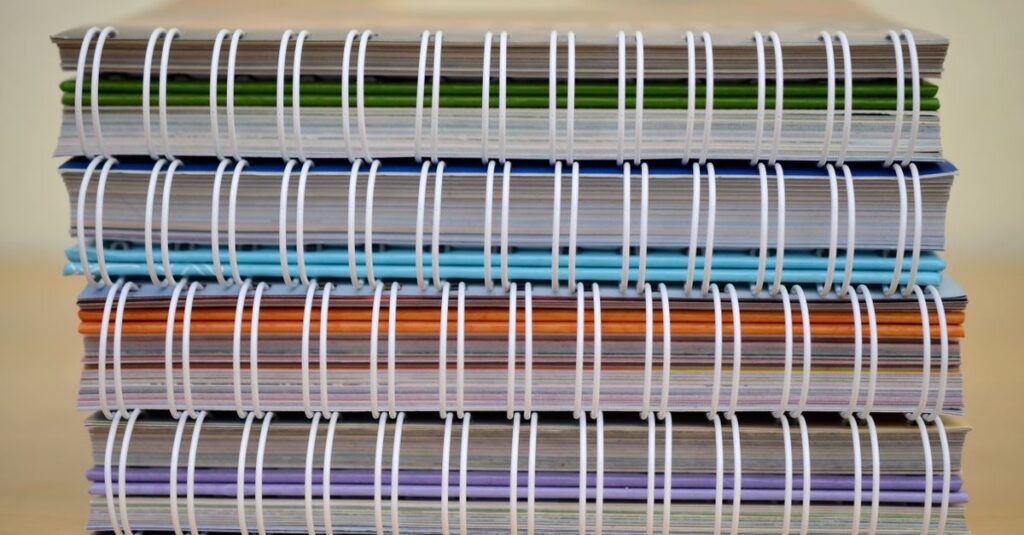
Spiral / Wire-O Binding: Here, the cover has holes punched along the edge, and a metal or plastic coil is threaded through. The major benefit? It lays absolutely flat, 360 degrees. Great for note-takers who hate wrestling with the spine. The downside? The cover can sometimes get warped if the coil isn’t the right size, and it’s generally considered less formal than perfect binding for corporate gifts.
Stitched Binding (Saddle Stitch): Usually for thinner diaries or notepads. Staples through the spine. It’s cost-effective and strong for lower page counts, but it doesn’t have that substantial, year-long feel.
Expert Insight
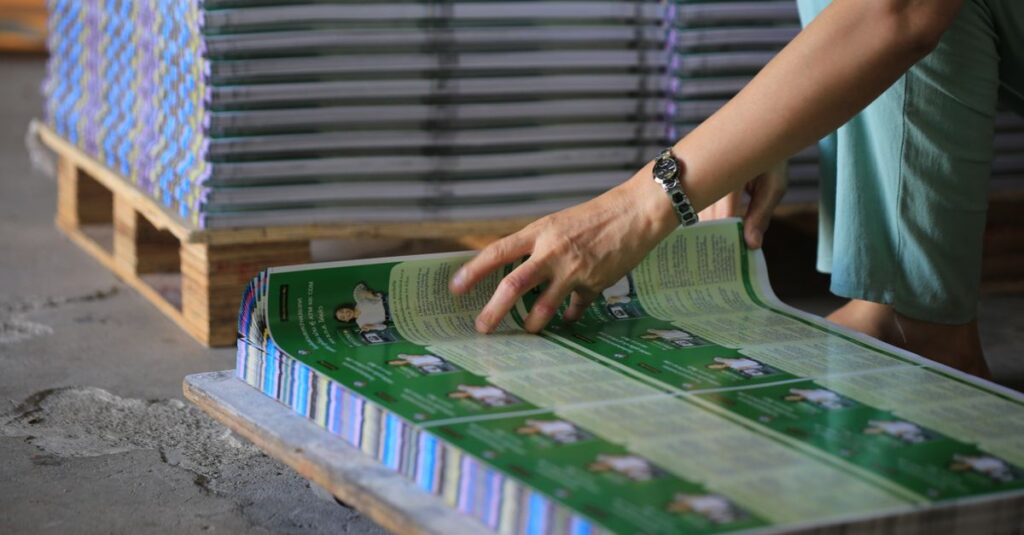
I was on the factory floor recently watching a batch of leatherette diaries get their perfect binding. The foreman, a guy who’s been doing this for thirty years, pointed to the glue applicator. “Most people think the cover is the star,” he said, wiping his hands on his apron. “They’re wrong. This glue line is the star. You can have the most expensive leather, but if this line is too thin or the glue is poor quality, the whole thing is a fancy paperweight in six months.” He laughed. “We test our glue by binding samples and literally trying to rip them apart after they cure. If the paper tears before the glue line gives? That’s a pass.” It was a blunt, physical kind of quality check. The kind that matters.
Design & Branding: Your Logo Isn’t a Sticker
This is where a lot of corporate buyers get tripped up. They send a PNG of their logo and expect it to look perfect. But printing on a diary cover isn’t like printing on office paper. The material, the finish, the texture — they all change the game.
- Embossing / Debossing: This is pressing a design into the cover material, creating a raised (embossed) or recessed (debossed) effect. It’s tactile. It feels expensive. It works beautifully on leatherette or thick card stock. You don’t even need color ink; it’s just the play of light and shadow. For a minimalist, premium brand, this is often the way to go.
- Foil Stamping: Applying a metallic or colored foil under heat and pressure. Gold, silver, copper. It adds shine and luxury. Looks incredible on dark-colored covers. But it requires precision — misalignment shows up instantly.
- Screen Printing: Great for bold, solid colors and special inks. Very durable. Often used for simpler, graphic-heavy designs.
- Offset Printing: The standard for full-color, photographic, or detailed gradient logos. This is what you need if your logo has fine details or multiple colors.
The key is working with a manufacturer who understands printing for stationery. They should be asking you questions: What’s the primary use? Is it for gifting? For daily desk use? That changes the cover spec immediately. A diary that lives on a desk can have a more delicate finish. One that travels in a laptop bag needs to be a tank.
What Are You Actually Buying For? (A Comparison)
Look, I could list features all day. What you probably need is a way to decide. Let’s say you’re comparing two common paths: the Cost-Effective Corporate Workhorse vs. The Premium Executive Gift. Here’s how they stack up.
| Feature | Standard Corporate Diary | Premium Executive Diary |
|---|---|---|
| Primary Audience | Internal teams, employees, mass giveaways | Top clients, senior management, high-value gifts |
| Cover Material | Art card with Matt Lamination | Leatherette / Rexene |
| Feel & Perception | Professional, functional, everyday | Luxurious, substantial, a “keeper” |
| Durability Focus | Resistance to daily desk wear & tear | Resistance to scuffs, spills, travel |
| Branding Typical | Offset printed logo, front cover | Debossed or foil-stamped logo, often spine too |
| Lay-Flat Ability | Good (depends on binding) | Excellent (often perfect-bound with flexible spine) |
| Cost Implication | Lower cost per unit, better for large volumes | Higher cost per unit, for targeted, smaller batches |
| Common Mistake | Choosing gloss over matte (shows fingerprints) | Over-designing; simplicity reads as more premium |
The point isn’t that one is better. It’s that they serve completely different purposes. Buying the premium cover for a 5,000-employee giveaway will blow your budget. Buying the standard cover for your best client might send the wrong message. You have to match the cover to the intention.
So, What Should You Look For When Ordering?
Okay, practical advice. When you’re talking to a supplier — whether it’s us or someone else — don’t just ask for a quote. Drill down.
- Ask for physical samples. Always. Not just a PDF. Feel them. Bend the cover gently at the spine. Try to peel the lamination at the corner with your nail. Open it and see if it lies flat.
- Ask about the GSM of the cover board. A flimsy 250 GSM art card will behave very differently from a robust 400 GSM board. Heavier isn’t always better (adds to shipping cost), but sturdier usually is.
- Specify the end use. Tell them: “These are for field sales reps who live out of their cars” or “These are for board members as year-end gifts.” That changes the recommendation instantly.
- Check the branding options. Can they do the embossing you want? What’s the minimum order quantity for foil stamping? Get the details before you fall in love with a design they can’t execute.
- Consider the whole unit. The cover works with the paper, the binding, the finish. A heavy cover with thin, low-GSM paper inside feels unbalanced and cheap. It’s a system.
And honestly? The manufacturers who know their stuff will ask you these questions before you even think of them. They’ll guide you. The ones who just send a price list? Maybe keep looking.
If you’re thinking about this for your next order, it’s worth seeing the kind of cover and quality options that are out there. Just to set a benchmark.
Frequently Asked Questions
What’s the most durable diary cover material for everyday heavy use?
For sheer daily abuse — think sales reps, construction supervisors, students — a thick art card (350 GSM+) with a matt lamination is your best bet. The lamination protects against moisture and scuffs, while the thick board resists bending. Leatherette is also very durable but can show scratches more easily on light colors.
Can I get a custom-sized diary cover, or are there standard sizes?
Most manufacturers work with standard sizes (like A5, A4, Crown Size) because the cutting dies and machines are set up for efficiency. Custom sizes are absolutely possible — we do them all the time — but they involve creating new cutting tools, which adds to the cost and minimum order quantity. It’s always better to check if a standard size fits your need first.
What’s the minimum order quantity (MOQ) for custom printed diary covers?
This varies wildly. For simple offset printing on a standard cover, MOQs can start around 500 pieces. For specialized finishes like embossing or foil stamping, the MOQ is higher — often 1,000 to 2,000 pieces — because setting up the press and dies takes time and precision. Always ask this upfront.
How long does it take to manufacture a batch of custom-cover diaries?
From final approved design to delivery? For a standard order of a few thousand units, allow 4-6 weeks. That includes time for proofing, material sourcing, printing, binding, and finishing. Rush jobs are possible but will cost more. The biggest delays usually happen when artwork isn’t print-ready, so get your files in order early.
Is it better to have a hardcover or softcover for corporate diaries?
It depends entirely on the message. A hardcover diary (like leatherette or laminated board) conveys permanence, quality, and is seen as a gift. It’s for clients, executives, long-term keepsakes. A softcover diary (like a thick, uncoated card) is more casual, flexible, and cost-effective. It’s perfect for internal teams, workshops, or short-term projects. Match the cover to the intent.
Wrapping This Up
Choosing a diary cover isn’t a minor detail. It’s the most important specification you’ll make for a bulk diary order. It dictates durability, perception, and how the thing actually functions day-to-day. You can get the interior pages perfect, but if the cover fails, the whole product fails.
I think the biggest takeaway is this: move beyond the brochure picture. Insist on a physical sample. Test it. Imagine using it every day for a year. Does it feel like it’ll make it? Does it represent your brand the way you want? Your gut feeling on that cover is usually right.
There’s no single perfect answer — the “right” cover is the one that solves your specific problem for your specific audience. But if you start with the cover and work inwards, you’ll end up with a diary that people actually use, and remember.
If the process of sourcing this feels overwhelming, or you just want to bounce your ideas off someone who’s been making these things for four decades, it’s what we’re here for. No pressure, just a conversation about what you actually need.