The Unspoken Truth About Writing a Diary
Right. Let’s be honest. You’ve probably heard all the self-help stuff. “Journaling for success.” “Morning pages.” But if you’re reading this, you’re likely not a life coach. You’re a procurement manager. Or a school administrator. You’re the person who buys notebooks by the pallet, not the person who writes in them one page at a time. You need to know about writing diaries because you’re the one supplying the tools.
And here’s the thing — the actual quality of the notebook changes everything about whether someone sticks with it. A cheap diary that bleeds ink or has paper so thin you can see the next page? It gets abandoned in a drawer. A solid one feels good in the hand. The writing becomes easier. Thoughts flow better. I’ve seen it for forty years. The notebook isn’t just a product. It’s the starting point.
If you’re looking at this from a business angle — maybe for custom corporate diaries or bulk school supplies — you should know what you’re really selling. It’s not paper. It’s a habit. A container for thought. And that container has to be built right.
What a Writing Diary Actually Is (It’s Not What You Think)
Most people hear “diary” and think of a locked book with a tiny key. That’s not it anymore. Not for the people buying them in bulk, anyway. For businesses and institutions, a writing diary is a functional tool. It’s a logbook for project managers. A daily record for senior staff. A structured planner for a whole department.
The difference between a diary and a standard notebook? Intent. A diary has dates. It implies a sequence, a commitment to regularity. It creates a timeline. A notebook is for notes — scattered, random, as-needed. A diary asks for more. It asks you to show up, day after day, and put something in the same place.
When we manufacture them, we think about that cadence. The paper has to handle daily use. The binding has to survive a year of being opened and closed. The ruling — single, double, unruled — has to match the type of thinking the user is doing. Is it lists? Is it paragraphs? Is it sketches next to notes? That’s not an afterthought. It’s the whole point.
A Real-Life Moment
I was talking to a procurement head for a chain of private schools in Hyderabad last month. She told me they’d switched notebook suppliers the previous year to save a few rupees per unit. The new books had paper so thin that fountain pen ink would feather and bleed through to the other side. The kids hated them. Teachers complained that homework submissions were messy and hard to read. By third term, they were back, ordering from their old supplier. The cost wasn’t in the price. It was in the frustration. The wasted time. The broken habit. She said she’d never make that mistake again. We were having chai, and she just shook her head. “Such a small thing,” she said. “Such a big mess.”
Anyway. The lesson is simple. The tool shapes the work.
Why Paper Quality is the Only Thing That Matters
You can have a beautiful cover. A clever layout. But if the paper is bad, the diary is useless. This is the part nobody in procurement wants to hear, because paper weight is where the cost lives. But it’s also where the experience lives.
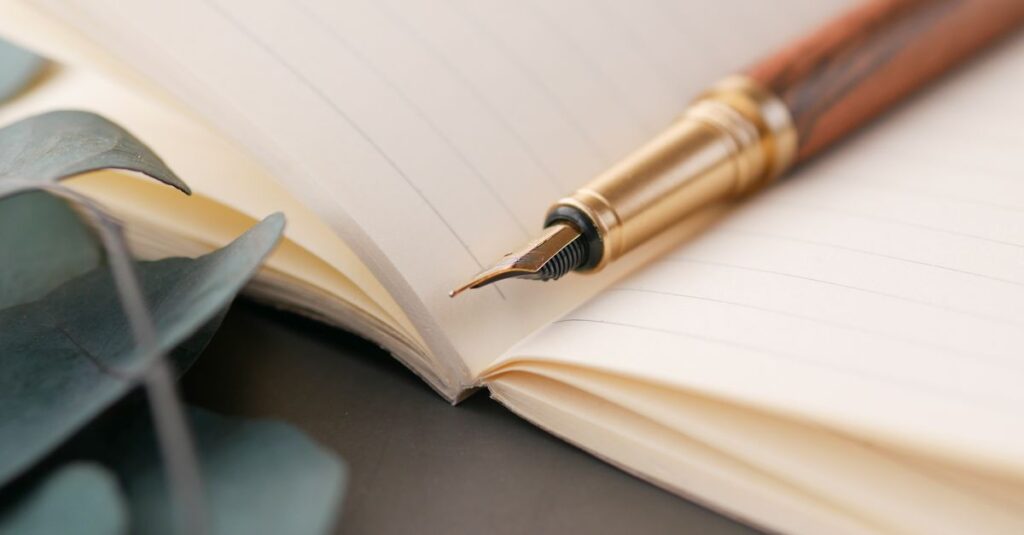
Think about it this way. When someone writes, they’re transferring a thought from their mind onto a page. That connection — pen tip to paper surface — is direct. It’s physical. If the paper is rough, the pen catches. The thought stutters. If it’s too thin, ink bleeds. The thought gets messy, literally. If it’s too glossy, the pen skids. The thought feels insubstantial.
Good diary paper has a slight tooth. It accepts the ink without fighting it. Our standard is 54 GSM writing paper. It’s not the thickest. It’s not the cheapest. It’s the sweet spot — durable enough for double-sided use, smooth enough for fast writing, opaque enough that you’re not distracted by the next page’s ghost. It feels like something is happening. That feeling? That’s what keeps people writing.
And for bulk buyers, this is a calculation. You’re not buying for one person. You’re buying for hundreds, maybe thousands. If 10% of those people stop using the diary because the paper is frustrating, you’ve wasted 10% of your budget. Probably more, when you factor in the time spent dealing with complaints. The real cost is never just the unit price. It’s the failure rate.
Choosing the right notebook means understanding that math.
The Manufacturing Choices That Make or Break a Diary
Look, I’ll be direct. Most people buying diaries have no idea how they’re made. They see a finished product. But from where I stand — in a factory that’s been running since 1985 — every single choice in the manufacturing process changes what the user experiences. Let’s break it down.
Binding: The Spine of the Operation
The binding is what holds the year together. Literally. You have three main types for diaries:
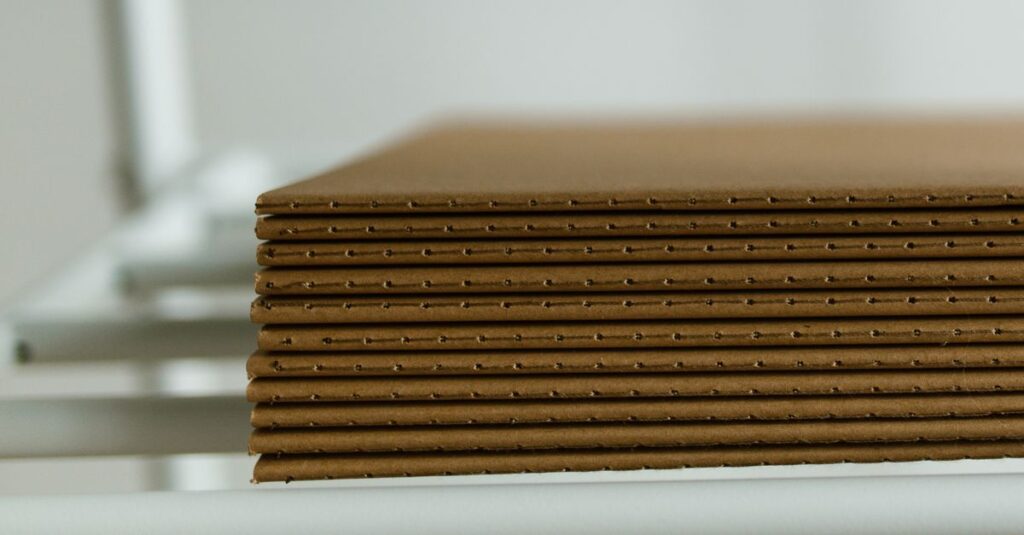
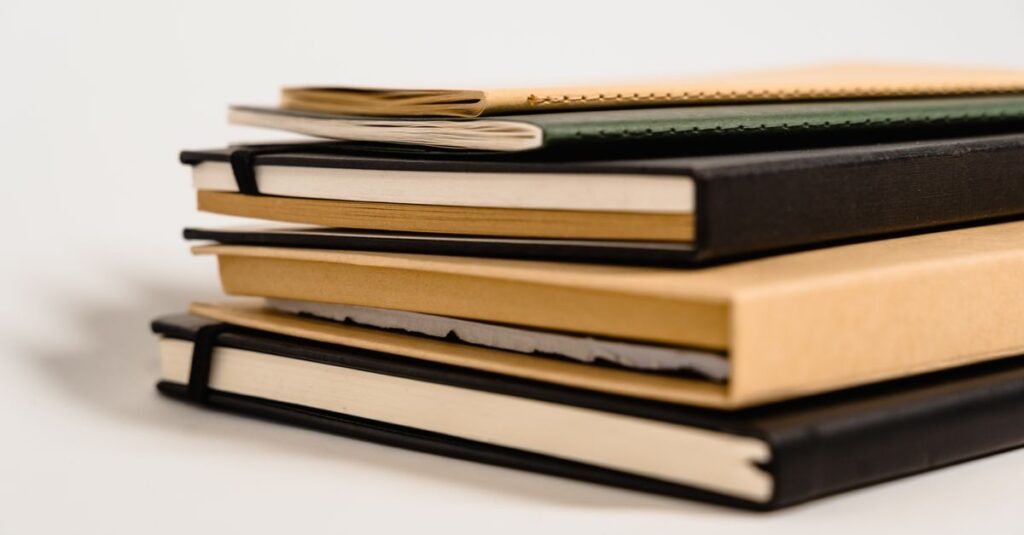
- Stitched Binding: The classic. Sheets are gathered into sections, stitched together, then glued into the cover. It’s durable, lies relatively flat, and has a professional feel. This is what most corporate diaries use. It says “permanent.”
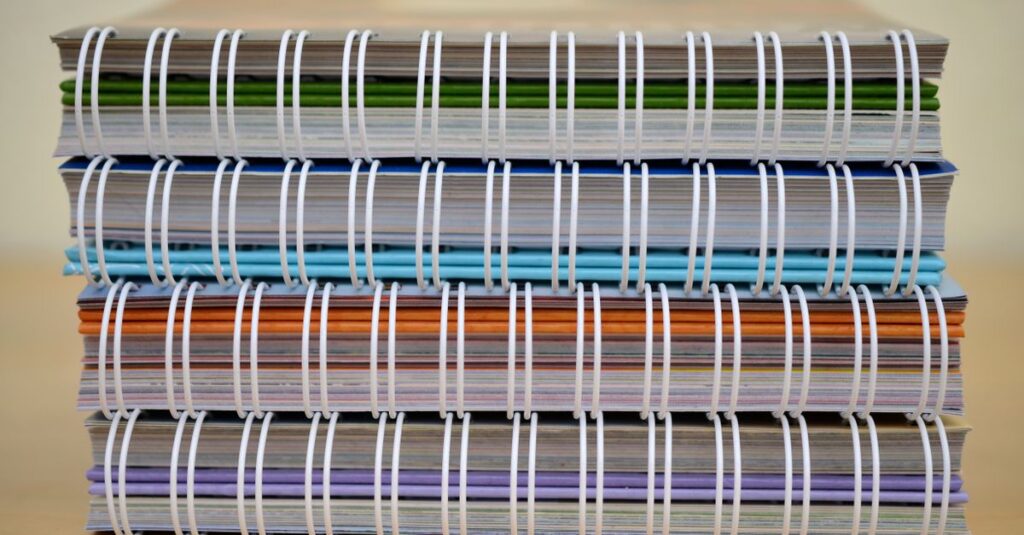
- Spiral Binding: Metal or plastic coil winding through punched holes. It lies perfectly flat, 360 degrees. Fantastic for someone who needs to write while holding the book in one hand, or for reference manuals. Can feel less formal. The coil can bend if abused.
- Perfect Binding: Like a paperback book. The edge of the page stack is ground down slightly and glued into the spine. It looks clean and modern. The downside? It doesn’t stay open on its own. You have to break the spine, and even then, the inner margins can get tight.
Each type serves a different purpose. A project manager constantly flipping back and forth? Probably spiral. An executive wanting a sleek desk diary? Stitched or perfect bound. There’s no “best.” There’s only “best for the job.”
Cover and Printing: The First Impression
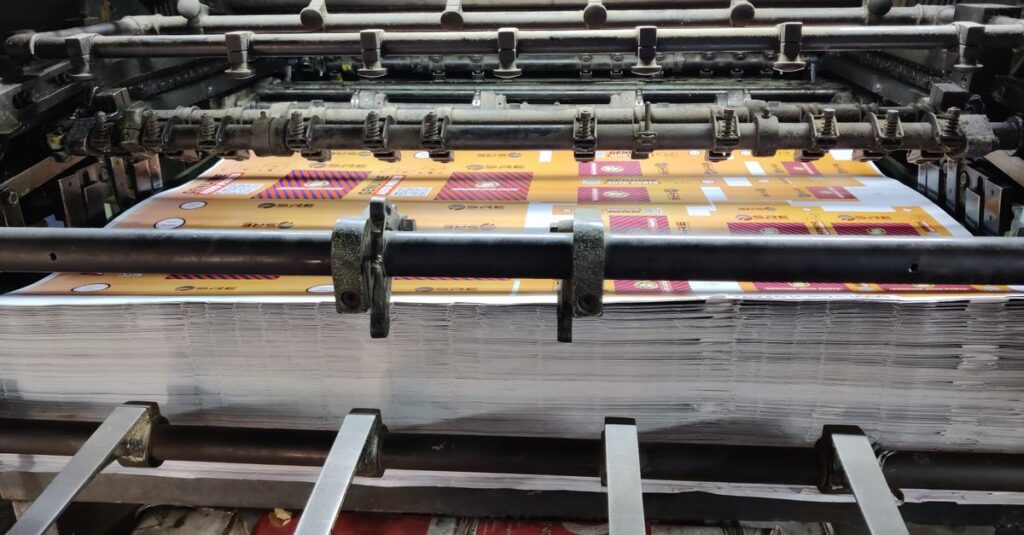
The cover is the promise. A flimsy cardstock cover promises a flimsy experience. A thick, laminated cover promises substance. For custom diaries, this is where branding lives. But the printing method matters. Offset printing gives you rich, solid colors and crisp text for large runs. Digital printing is more flexible for smaller, highly customized batches where every diary might have a different name or department on it.
We run both. Because sometimes you need 50,000 identical diaries for a bank’s branches. And sometimes you need 500, each with a different manager’s name embossed in gold foil. They’re different problems. They need different solutions.
| Feature | Stitched Binding Diary | Spiral Bound Diary |
|---|---|---|
| Lies Flat | Fairly well, but may need weight on pages | Perfectly, 360 degrees |
| Durability | Very high, rigid spine protects pages | Good, but coil can snag or bend |
| Professional Look | High, traditional desk accessory feel | More utilitarian, practical |
| Page Addition | Impossible | Impossible |
| Best For | Executive gifts, formal records, archival use | Active use, field work, students, planners |
| Cost (Bulk) | Generally higher | Generally lower |
The Business of Bulk: What Procurement Managers Really Need to Know
Okay. Let’s talk about your job. You’re not buying one diary. You’re buying five thousand. Or fifty thousand. The stakes are different. The questions are different.
First, lead time. A custom diary isn’t an off-the-shelf item. It needs to be designed, proofed, manufactured, packed, and shipped. For a complex order with custom branding and specific paper, you need to think in terms of weeks, not days. A good manufacturer will tell you this upfront. A desperate one will promise the moon and then fail. I’ve seen companies miss their own New Year gift schedule because they went with the cheaper, faster promise. It’s a headache, honestly.
Second, sampling. Never, ever place a bulk order without a physical sample. A PDF mockup shows you layout. It doesn’t show you how the paper feels. It doesn’t show you how the binding opens. It doesn’t show you if the gold foil chips off. Get a sample. Write in it. Throw it in your bag for a week. Test it like a user would.
Third, logistics. Where are these 10,000 diaries going? To one central warehouse? To 100 different school offices across a state? The packaging and shipping strategy is part of the product. Crushed corners during transport mean unhappy recipients. We spend as much time thinking about the box as we do about the book.
Expert Insight
I was reading an article last year — I can’t remember where — by someone who studied organizational habits. They said something that stuck with me. In companies that gave employees high-quality, branded tools — good pens, well-made notebooks — the employees were more likely to use them consistently for planning and reflection. It wasn’t about the cost. It was about the signal. The tool said, “This work matters. Your thoughts here matter.” It was a tiny piece of respect, made physical. I don’t have a cleaner way to put it than that. When you choose a cheap, throwaway diary for your team, you’re silently saying something else.
Custom Diaries: More Than Just a Logo Stamp
This is where it gets interesting for corporate buyers. A custom diary isn’t just your logo on the cover. That’s the bare minimum. It’s an opportunity to build a tool that actually works the way your organization works.
Think about the layout. Does your financial year start in April? Then the diary should start in April. Do your project managers need a weekly spread with a big notes section and a tiny weekend? We can do that. Do you want the company’s values printed as a footer on every page? Or important compliance dates pre-marked? It’s possible.
The goal is to make the diary so useful that it becomes part of the daily workflow. Not a giveaway that sits on a shelf. A working tool. That requires a conversation. It requires the manufacturer to understand your business, not just your brand guidelines. At our factory, we ask clients a lot of questions. How will this be used? By whom? Carried in a bag or left on a desk? Pencil, ballpoint, or fountain pen? The answers change everything we produce.
It’s the difference between supplying a product and solving a problem.
Common Mistakes Buyers Make (And How to Avoid Them)
Let’s wrap this part up with the pitfalls. I’ve seen these happen over and over.
- Choosing Price Over Paper: The biggest one. You save 15% on the unit cost and get paper that bleeds ink. The total cost of ownership is higher when you account for waste and dissatisfaction.
- Ignoring the Gutter: The margin near the binding. In a poorly made diary, the gutter is too narrow. You can’t write there without breaking the spine. It effectively reduces your usable page width by an inch.
- Forgetting the User: Buying a sleek, perfect-bound diary for a field engineer who needs to write while standing up. Or a heavy, A4 desk diary for a sales rep who lives out of a car. Match the format to the actual use case.
- Last-Minute Orders: This forces everyone into panic mode. Quality suffers. Options become limited. You get what’s available, not what’s right.
The way out is simple. Plan ahead. Ask questions. Demand a sample. Think about the person who will finally hold the book and put pen to paper. That’s who you’re really buying for.
Frequently Asked Questions
What’s the difference between a writing diary and a regular notebook?
A diary is structured by date (daily, weekly, monthly) and implies regular, sequential use. A notebook is for unstructured, ad-hoc notes. Diaries are for tracking; notebooks are for capturing. For bulk orders, diaries often need custom date printing, which is a specific manufacturing step.
What paper weight (GSM) is best for a diary?
For a daily writing diary that will be used with standard pens (ballpoint, gel) and needs to handle double-sided writing, 54-70 GSM is the practical sweet spot. It’s opaque enough to prevent show-through, has a good feel, and keeps the book from becoming too thick and bulky for a full year.
How far in advance should I order custom branded diaries?
For a bulk order of custom diaries, especially with complex printing or special finishes, you should start the process at least 8-12 weeks before your delivery deadline. This allows time for design, proofing, sampling, production, and shipping. Rushing it compromises quality.
Can I get different rulings (like graph or dotted) in a diary?
Absolutely. While single-ruled is most common, you can specify any ruling you need — unruled, double-ruled, four-ruled for accounting, graph, or even dotted for bullet journal styles. This is part of the custom manufacturing process. The key is to order a large enough quantity to make the specific paper run viable.
What binding is most durable for a year-long diary?
For a diary that will be opened and closed daily for a full year and needs to stay intact, stitched binding (also called section-sewn) is typically the most durable. The threads and glue work together to create a robust spine that withstands constant use better than perfect binding or some spiral bindings over a long period.
It’s About the Handoff
I don’t think there’s one perfect diary. The needs are too different. A school principal needs something else than a logistics manager. But there is a common thread. The diary is a handoff. From you, the buyer, to the end user. And that handoff contains a thousand tiny decisions — paper, binding, layout, cover.
If you get them right, the diary disappears. It becomes a natural extension of the hand, a clear window for the mind. The user doesn’t think about the notebook. They think with it. That’s the goal. That’s what forty years in this business has taught me is possible. It’s not about selling stationery. It’s about enabling thought.
And if you’re at the point where you need to make that handoff for hundreds or thousands of people, and you want to get those thousand decisions right, it might be worth starting a conversation with someone who’s been focused on exactly that for a very long time. We’re here for that talk.