That moment when you type “printers near by me” into the search bar
You’re sitting at your desk. Maybe you’re a school principal who just got the budget approved for next year’s student notebooks. Or a procurement manager, staring at a spreadsheet, needing 10,000 branded diaries for a corporate gifting event by Q4. Your fingers hit the keyboard: ‘printers near by me.’
The search results come back. A local print shop that does business cards and flyers. Another that prints banners. Maybe one that binds theses. And you think — will they even understand what I’m asking for?
Because you’re not looking for a few hundred copies. You’re looking for someone who can take an order for thousands of bound, ruled, durable notebooks, deliver them on time, and not mess up the school logo on the cover. That’s a very different conversation. If this is where you are, this is probably the page you needed to find.
Right. Let’s talk about what you’re actually searching for.
The gap between a printer and a notebook manufacturer
Look, I’ll be direct. When you type ‘printers near me’ for a bulk notebook order, you’re using the wrong word. It’s not your fault — it’s the most obvious term. But it points you in the wrong direction.
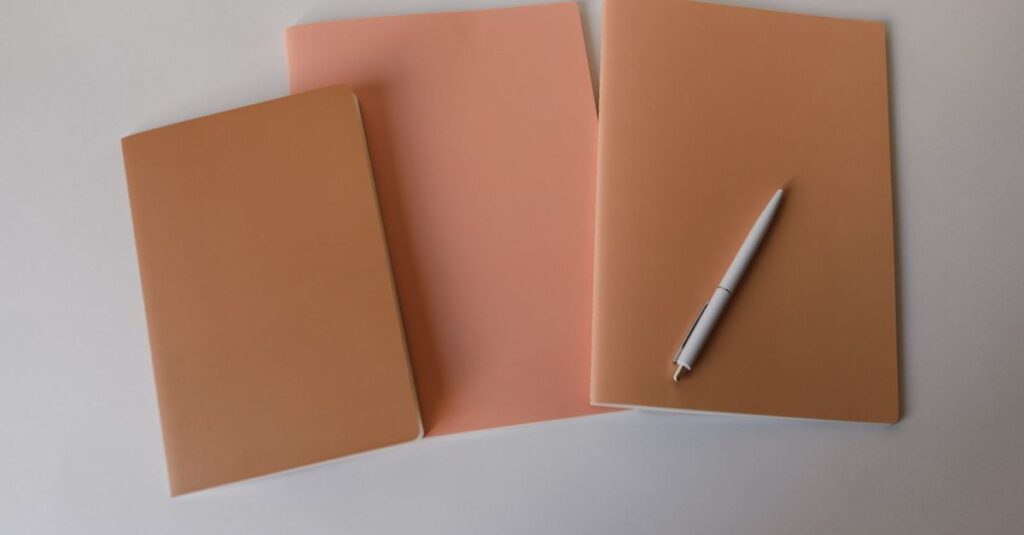
A printer takes a design and puts it on paper. That’s it. A notebook manufacturer? That’s a whole other world. They source the paper — the right GSM so the ink doesn’t bleed through. They decide on the ruling — single, double, four-ruled for younger students. They choose the binding — will these notebooks survive a year in a kid’s backpack, or do they need to lay flat on a boardroom table? They handle the cutting, the packing, the palletizing for shipment.
Three things happen when you go to just a ‘printer’ for a notebook job:
- They outsource the binding and paper sourcing anyway, adding layers of cost and delay.
- They treat it like a big printing job, not a manufactured product. The finish feels wrong.
- They can’t answer questions about page count options, paper weight consistency, or export packaging.
You end up managing three different vendors. And the headache is real.
I was talking to a distributor from Hyderabad last month — over a very bad coffee at a trade meet, actually — and he said his biggest cost wasn’t the product, it was the time spent coordinating between the paper mill, the printer, and the binder. He looked tired. Not sleepy-tired. Life-tired.
That’s the gap.
What you’re probably worrying about (and what you should be)
When you’re responsible for ordering thousands of something, your brain goes to practical fears. Will the quality be consistent from the first notebook to the ten-thousandth? What if the shipment is late and 500 students show up without books? Does the cover card stock feel cheap?
These are valid. But in my experience, people focus on the upfront price per unit and miss the other costs that actually matter more.
Here’s a short list of what most institutional buyers tell me they lose sleep over:
- Lead Time & Reliability: A ‘printer’ might promise 4 weeks. A manufacturer with their own binding line knows it takes 3 weeks for paper procurement, 1 week for printing, 5 days for binding, 2 days for QC and packing. They build that in. The promise is different.
- Customization Limits: Can you get a mix of rulings in one order? 200-page notebooks for seniors, 92-page for juniors? A printer often says no. A manufacturer plans for that.
- The ‘Feel’ Test: This is unscientific but everything. Does the notebook feel substantial? Does it lie flat? This comes from grain direction of the paper, glue application in binding, cover scoring. Details a general printer doesn’t control.
I think — and I could be wrong — that the real search isn’t for ‘printers near me.’ It’s for ‘a partner who won’t make me look bad in front of my boss/the principal/the board.’
And honestly? Most local print shops aren’t built for that pressure.
A quick table: Printer vs. Notebook Manufacturer
Let’s make it visual. This is what you’re actually choosing between.
| Factor | Local Printer | Notebook Manufacturer |
|---|---|---|
| Core Service | Printing designs onto supplied materials. | End-to-end production: paper sourcing, printing, binding, finishing. |
| Order Size Comfort | Best for hundreds, struggles with thousands. | Built for bulk. 30,000+ units per day is normal. |
| Paper & Material Knowledge | Limited. Offers available stocks. | Deep. Can advise on 54 GSM vs. 70 GSM, cover card weight, binding durability. |
| Customization | Usually just cover printing. | Full scope: size (King/Long/Short), page count, ruling, binding type, private label. |
| Problem-Solving | If binding fails, they’re stuck. | In-house binding line means they fix it on the spot. No third-party blame. |
| Supply Chain | You manage paper delivery to them. | They manage everything from raw paper to delivery truck. |
| Real Cost | Lower unit price, higher management overhead. | Slightly higher unit price, but single point of contact and responsibility. |
See the difference? It’s not about proximity. It’s about capability.
Expert Insight
I was reading an industry report last year — can’t remember which one exactly — and one line stuck with me. It said something like, ‘The shift from local print procurement to dedicated manufacturer procurement happens the first time a large order fails.’
Don’t quote me on the exact phrasing. But the point was clear. Schools, corporations, governments don’t change their buying habits because they want to. They change because they have to. A delayed shipment of school notebooks is a logistical and political nightmare. A batch of corporate diaries with misaligned spines is an embarrassment. After that, the search term changes from ‘printers near me’ to ‘reliable notebook suppliers.’
I don’t have a cleaner way to put it than that.
So what should you look for instead?
Alright, if ‘printers near me’ is the wrong starting point, what’s the right one? Let’s get practical.
First, shift the language in your own head. You’re not buying printing services. You’re procuring a manufactured product. That changes the questions you ask.
Start with these:
- Ask about their factory. Not their print shop. Their factory. Do they have binding machines in-house? What’s the daily output? (If they hesitate, red flag).
- Ask for physical samples of past work. Not a glossy brochure. Actual notebooks they’ve made for other schools or businesses. Feel the binding. Try tearing a page out. Check the print alignment on the cover and every 10th page.
- Ask about their paper supply chain. Where do they source paper? Is it consistent? Can they show you a GSM sample chart? This tells you if they control the primary input.
- Be specific about your nightmare scenario. “What happens if we find a defect in 10% of the batch after delivery?” Their answer — the speed and clarity of it — tells you everything.
Here’s the thing — a true manufacturer loves these questions. It shows you’re serious. A printer just trying to land a big job gets nervous.
Think about it this way. You’re not just buying notebooks. You’re buying peace of mind for the next 12 months. You’re buying the confidence to walk into that meeting and say, “It’s handled.” That’s what you’re actually searching for. Seeing their product range is a good first step.
The local myth (and when geography actually matters)
“Near me.” We’re wired to think local is better. Faster delivery, easier to visit, more accountable. For a pizza? Sure. For 50,000 notebooks?
Probably not.
Let me complicate what I said earlier. Local matters for relationship building. You can visit. You can sit across a table. But for manufacturing capability? The best notebook manufacturer for your needs might be 500 km away in an industrial cluster. Rajahmundry, for instance, has been a paper and printing hub for decades. The infrastructure, the skilled labor, the supplier networks — they’re all there.
The real question isn’t ‘are they near me?’ It’s ‘can they reliably get the finished product to me, on time, every time?’
A manufacturer with a dedicated logistics arm for bulk orders in another city is often more reliable than a local printer who has to rent a truck and figure out pallet shipping for the first time. I’ve seen this happen. The local guy has the best intentions, but he’s out of his depth on the logistics. The notebooks arrive with corner damage because they weren’t palletized correctly.
Geography matters for trust-building visits and sample approvals. It matters less for actual production and delivery in the age of professional freight. Focus on their distribution network, not their street address.
Wrapping this up
If you’ve read this far, you already know the core mismatch. You typed ‘printers near by me’ because it’s the common term. But your need is deeper, bigger, more stressful.
You need a partner who understands that a notebook is a tool. For learning, for planning, for record-keeping. Its quality directly affects the person using it. You need someone who thinks about paper grain and glue tensile strength and carton drop tests.
That’s a manufacturer.
I don’t think there’s one perfect answer for every buyer. Probably there isn’t. But the next step is clear: change the search. Ask different questions. Look for proof of manufacturing, not just printing.
The relief you’ll feel when you find a supplier who says, “Send us your logo and specs, we’ll handle the rest” — that’s the actual goal. Sometimes, seeing how a real manufacturer talks about their service makes it click.
Frequently Asked Questions
What’s the difference between a printer and a notebook manufacturer?
A printer applies your design to paper. A notebook manufacturer handles the entire process: sourcing the right paper, printing, choosing and applying the binding (stitched, spiral, perfect), cutting, and packing for bulk shipment. For large orders, a manufacturer gives you one point of contact and full control over quality.
Why shouldn’t I just use a local printer for my school’s notebook order?
You can, but you might become their project manager. Most local printers outsource binding and bulk paper procurement. You’ll spend time coordinating between multiple parties, and consistency across thousands of units is harder to guarantee. A dedicated notebook factory is built for this scale.
How do I know if a company is a real manufacturer and not just a reseller?
Ask for a video or photos of their production floor, specifically their binding machines. Ask about their daily production capacity. A true manufacturer will quote you based on paper GSM, page count, and binding type — not just ‘per notebook.’ They’ll talk openly about their paper mill sources.
Is it more expensive to use a notebook manufacturer vs. a local printer?
The unit cost might be slightly higher. But the total cost of ownership is often lower. You save on the hidden costs of managing multiple vendors, quality inspection time, and risk of delays. For bulk orders, the manufacturer’s efficiency usually offers better value.
What should I have ready before contacting a notebook manufacturer?
Have a clear idea of: quantity needed, notebook size (e.g., Long Size: 27.2 x 17.1 cm), page count, type of ruling (single, double, unruled), binding preference, and your delivery deadline. A draft of your cover design or logo is a huge plus. The more specific you are, the faster and more accurate their quote will be.