Let’s be honest about the shiny new stuff
You hear a lot about digital printing these days. Fast. Flexible. Perfect for small runs. And it is. But here’s the thing — walk into any factory that supplies notebooks by the truckload to schools, corporations, or government institutions, and you’ll hear a different, deeper hum. It’s a steady, rhythmic, mechanical sound. That’s the sound of an offset press.
It’s not the flashy new tech. It’s the workhorse. The reason your corporate diaries look sharp and consistent, box after box. The reason a procurement manager can order 50,000 notebooks and not lose sleep over color variations on page 320. If you’re buying in bulk, you need to know about this. You just do. Because the method decides the quality when the numbers get big.
What is an offset press, really?
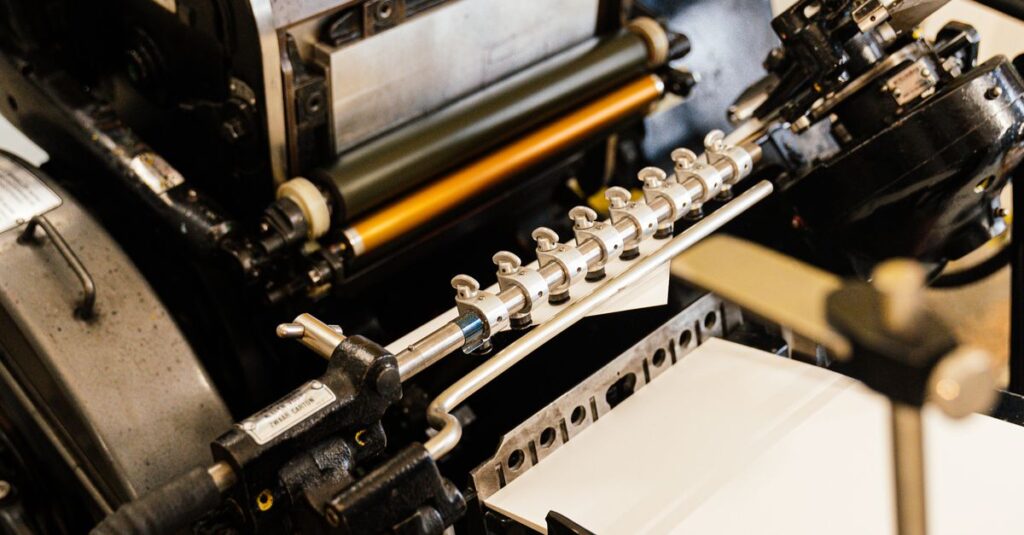
Right. Let’s strip away the jargon. An offset press isn’t a printer in the way you think of your office one. It’s more like a precise, high-speed painting machine for paper. Instead of spraying ink directly onto the page (like digital does), it uses metal plates. Each plate carries the image for one color — say, cyan, magenta, yellow, and black (CMYK).
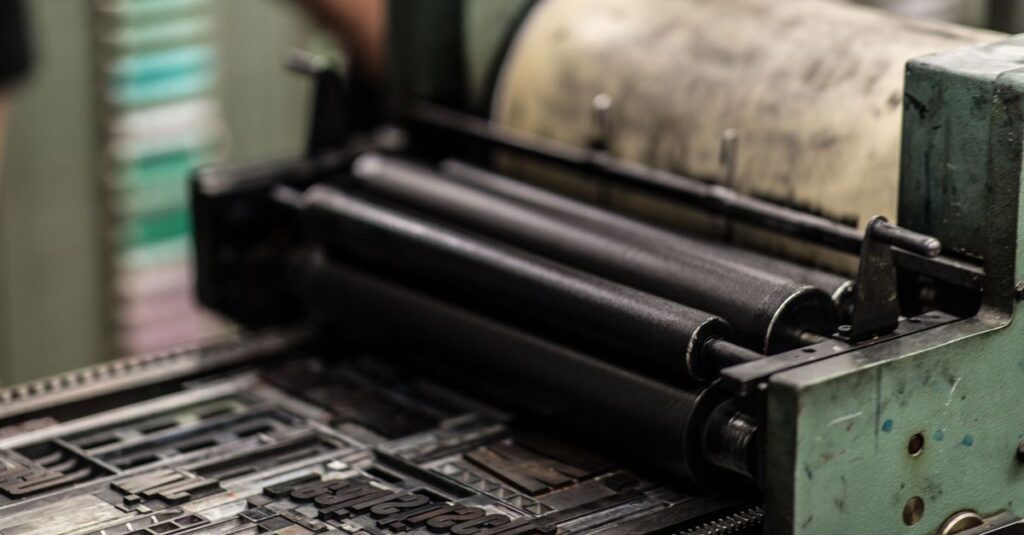
The plate transfers, or “offsets,” the inked image onto a rubber blanket cylinder. That rubber blanket then rolls the image onto the paper. The offset part — plate to blanket to paper — is where it gets its name. It sounds like an extra step. It is. And that’s the whole point. The rubber blanket conforms to the paper’s texture, giving you a cleaner, more consistent print than slapping metal directly onto paper could ever achieve.
Think of it like stamping with a soft rubber stamp versus a hard wooden one. The soft one gives you a better imprint, every time, even on slightly rough paper. And notebook paper? It’s often slightly rough. That’s the secret. It was built for this.
Why would a bulk buyer even care?
Look. When you’re ordering 10,000 notebooks for a school district or 5,000 custom diaries for a corporate giveaway, you’re not buying a product. You’re buying consistency. You’re buying predictability. A principal doesn’t want to explain why Class 4A’s notebooks look brighter than Class 4B’s. A brand manager can’t have their logo looking salmon pink on one batch and fire-engine red on the next.
Offset printing locks that down. Once the plates are made and the press is calibrated, the first sheet and the ten-thousandth sheet are virtually identical. The color stays true. The lines stay crisp. The cost per unit plummets as the quantity goes up. Digital printing is brilliant for its purpose — short runs, variable data. But for sheer, unchanging, mass-produced clarity? Offset is still king. Most people don’t realize this until they’ve had a bad batch. By then, it’s too late.
The messy, beautiful process of making your notebook
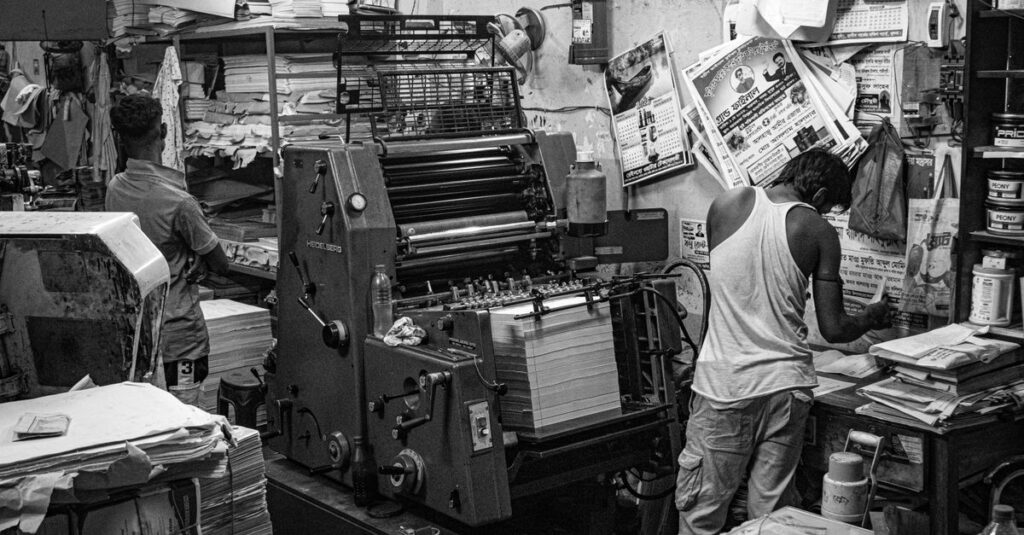
I want you to picture this. It’s a Tuesday morning in our factory in Rajahmundry. The air smells like paper and machine oil. A team is loading a giant roll of paper — we call it a “web” — onto the offset press. It’s 54 GSM writing paper, the kind that takes pencil and pen without bleeding through. The plates, etched with that week’s order for a chain of coaching institutes, are locked in.
The foreman gives a nod. The machine whirs to life. And then it just… runs. A continuous roar as paper flies through at speeds that would blur your vision, getting kissed by each color station. Cyan. Magenta. Yellow. Black. Maybe a spot color for a specific logo. It’s mesmerizing. And loud. You have to raise your voice to be heard. There’s a rhythm to it that feels ancient, even though the machine might be modern.
Later, that printed web gets cut, folded, collated into notebooks. But in that moment, on the press, the identity of those 40,000 notebooks is decided. Their look. Their feel. Their professionalism. It’s all set right there. No undo button. No last-minute tweaks. It’s a commitment. And that commitment is what builds trust with a buyer who’s signing a large PO.
You learn to respect the process when you see it up close.
Offset vs. Digital: A bulk buyer’s cheat sheet
Okay. So when do you pick one over the other? It’s not about which is “better.” It’s about which is right for the job in front of you. Let’s break it down so you can sound like you know what you’re talking about in your next procurement meeting.
| Consideration | Offset Press Printing | Digital Printing |
|---|---|---|
| Best For Quantity | Large runs (1,000+ units). Cost per unit drops sharply. | Short runs (1–500 units). No cost advantage in bulk. |
| Color Consistency | Unmatched. Once set, it’s locked for the entire run. | Can vary slightly between batches or even within a run. |
| Setup Time & Cost | Longer setup, higher initial cost for plates. | Almost no setup. Just upload a file and go. |
| Paper Flexibility | Handles a wide range of paper weights and finishes beautifully. | More limited. Can struggle with very textured or coated stocks. |
| Customization per Unit | Zero. Every notebook in the run is identical. | High. You can personalize each notebook with different names/data. |
| The ‘Feel’ | Ink sits on the paper. You can often feel a slight texture. | Ink/Toner is fused into the paper. Tends to feel flatter. |
See? It’s a tool for a job. If you need 20,000 identical school notebooks with a complex, colorful cover? Offset. If you need 200 executive notebooks each with a different employee’s name foil-stamped on? Digital. Trying to force one to do the other’s job is where budgets and tempers blow up.
Expert Insight
I was reading an interview last month with an old press operator from Germany — a guy who’d been running Heidelbergs for 40 years. He said something that stuck with me. He called offset printing “the art of consistency under pressure.” Not pressure like stress, but the literal tons of pressure in the rollers. The art, he said, isn’t in making one perfect print. It’s in making the ten-thousandth print as perfect as the first, while the machine is hot, the paper humidity is changing, and you’re eight hours into a shift. That’s the real skill. It’s a forgotten kind of craftsmanship in a world obsessed with instant and new. I don’t have a cleaner way to put it than that.
The parts nobody talks about (but you should)
Three things happen when you choose offset for a bulk order that don’t make it into the glossy brochure.
First, you need lead time. Not just for production, but for plate making and press calibration. This isn’t a next-day service. It’s a planning exercise. A good supplier will walk you through this, not just promise the moon.
Second, you get locked in. I mean this in a good way. Your design is etched onto those metal plates. There’s no “oops, let’s change the font” after the press starts. This forces a discipline in the approval process that actually saves everyone headaches down the line. No last-minute panic emails at 11 PM.
Third — and this is the big one — you’re betting on the machine, but you’re really betting on the people running it. A perfectly calibrated offset press in the hands of a distracted operator is a waste of metal and paper. The human eye checking color bars, listening for hiccups, feeling the paper feed… that’s the irreplaceable part. When you vet a manufacturer, ask about their press teams. How long have they been there? That tenure tells you more about consistency than any spec sheet.
So, is it right for you?
Let’s cut to the chase. Ask yourself these questions:
- Is my order in the thousands, not the hundreds?
- Is having absolutely uniform color across every single unit non-negotiable? (Think brand colors, institutional logos).
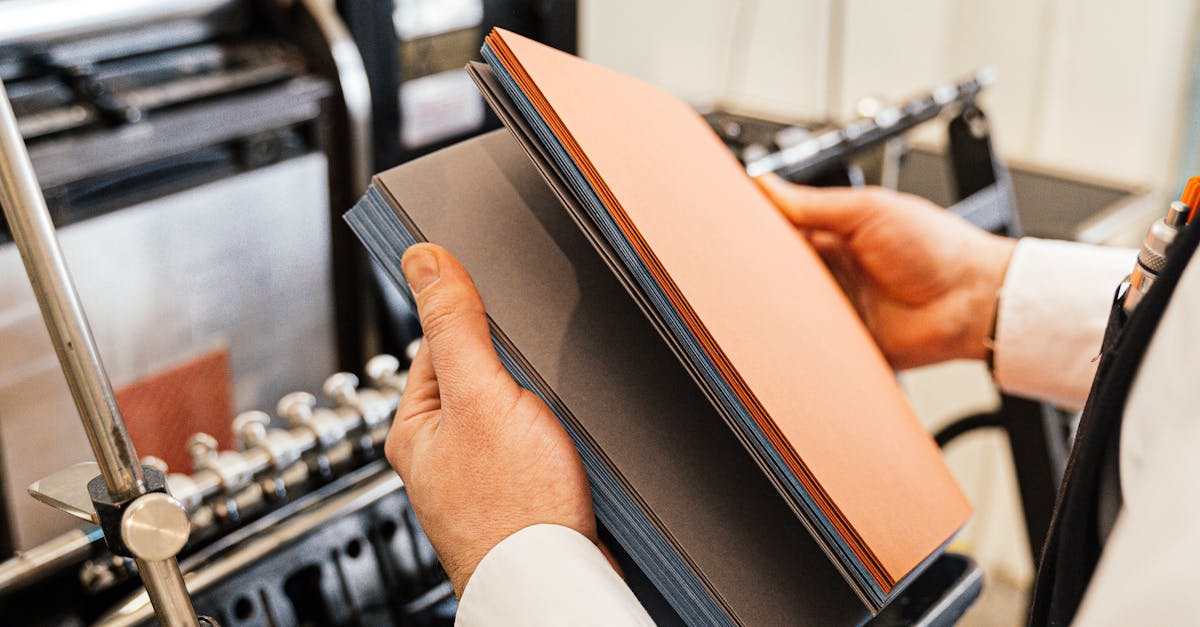
- Am I using standard paper weights and finishes (like 54-70 GSM writing paper for notebook interiors)?
- Do I have my final, approved, print-ready artwork locked down?
If you nodded yes to most of those, then offset isn’t just an option. It’s probably your best path. The economics make sense, the quality is proven, and the supply chain for it is mature. You’re not experimenting. You’re using the industrial-grade tool for an industrial-scale job.
The question isn’t whether the technology is old. It’s whether it’s the right tool. And for bulk, uniform, cost-effective printing on paper, it very often still is. The real shift in thinking is understanding that “old-school” sometimes just means “reliable.”
Frequently Asked Questions
Is offset printing more expensive than digital?
It depends entirely on quantity. For small batches, yes — the setup costs for plates make it pricier. But for large runs (think thousands of units), the cost per notebook on an offset press drops way below digital. The crossover point is usually around 500-1,000 copies, but it varies by design.
Can you print full-color notebook covers with an offset press?
Absolutely. That’s what it’s built for. Offset excels at high-quality, vibrant full-color (CMYK) printing. The rich, consistent colors you see on premium corporate diaries or textbook covers are almost always done on an offset press. It handles complex graphics and solid color fields brilliantly.
What’s the main downside of using an offset press for notebooks?
Flexibility, or lack of it. Once the plates are made and the run starts, every notebook is identical. You can’t personalize individual copies or make a last-minute change. It’s perfect for bulk, identical orders but terrible if you need variable data or very small, quick-turn batches.
How long does it take to set up an offset press for a notebook run?
Setup can take a few hours. You have to mount and align the printing plates for each color, calibrate the ink and water balance, and get the color consistency just right on test sheets. This is why you need longer lead times for offset jobs. But once it’s running, it produces thousands of sheets per hour.
Do you need special paper for offset printing?
Not “special,” but the paper needs to be compatible. Standard notebook paper (like 54-70 GSM writing paper) works perfectly. The offset process can handle a wider range of paper types — including textured or thicker cover stock — better than many digital printers can. It’s actually less fussy about paper in many ways.
Wrapping this up
In a world chasing the next shiny thing, the offset press stands its ground. Not because it’s stubborn, but because for a specific, massive need — putting the same crisp, reliable image onto thousands upon thousands of pages — it simply hasn’t been beaten. It’s the foundation. The engine room of bulk stationery manufacturing.
I don’t think there’s one answer for every print job. Probably there isn’t. But if you’re sourcing notebooks at a scale where small variances become big problems, you already know what you need. You’re just figuring out who can deliver that old-school reliability without the old-school headaches. Sometimes, the right tool is the one that’s been proving itself for decades.