You Need Pamphlets. And You Need Them Done Right.
Look, you’re probably reading this because someone at work just dropped a ‘great idea’ on your desk. A marketing pamphlet for the new quarter. An event flyer for the next conference. Or maybe it’s that corporate annual report booklet that needs to be in 500 hands by next Friday. And now the search begins: ‘pamphlet printing near me.’ The pressure is real.
You’re not looking for a fancy definition. You want a solution that doesn’t waste your time or budget. I get it. We’ve been manufacturing notebooks and printing for companies for over 40 years in Rajahmundry, and I can tell you this much — the ‘near me’ search is about trust, not just geography. It’s about finding someone who won’t mess up the colors, who understands what ‘bulk order’ really means, and who answers the phone when there’s a last-minute change. That’s the whole game.
If you’re in the middle of figuring this out, seeing what a manufacturer with real capacity looks like might help clear the fog.
What Pamphlet Printing Actually Is (And What It Isn’t)
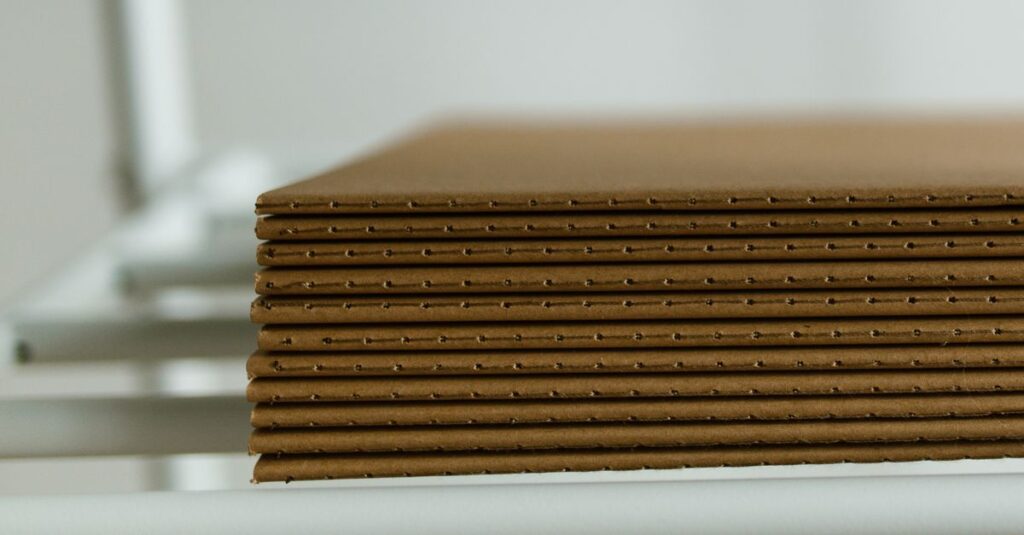
Okay, let’s cut through the jargon. A pamphlet is just a small, unbound booklet. It’s a few sheets of paper, folded together. That’s it. It’s not a novel. It’s not a magazine. It’s information packaged to be handed out, mailed, or left on a counter.
But here’s where everyone gets tripped up. When you search for ‘pamphlet printing near me,’ you’re not just searching for a printer. You’re searching for a partner who gets your end goal. Is it for brand recall at a trade show? Is it a detailed product catalog for your sales team? Is it a simple informational handout for parents at a school event? The ‘what’ changes the ‘how.’
Three things happen when you get this right:
- Clarity: Your message doesn’t get lost in bad design or flimsy paper.
- Credibility: A well-made pamphlet makes your institution look professional. A cheap one does the opposite.
- Conversions: Whether it’s a sign-up, a sale, or simple awareness, a good pamphlet gets people to do something.
The headache starts when people confuse a pamphlet with a brochure or a leaflet. Honestly? In everyday business talk, the lines are blurry. But in the printing world, the difference is usually in the binding and page count. A pamphlet is often saddle-stitched (stapled along the fold) or simply folded. A brochure might be more complex. But for most procurement managers, the core question is: does this printed piece solve my problem?
I was talking to a procurement manager from a Hyderabad-based college last month — over a very rushed phone call — and she said the quiet part out loud: “I just need it to look like we spent time on it, even if we didn’t.” That’s the real brief.
The “Near Me” Dilemma: Local Printer vs. Big Manufacturer
This is where the real decision lives. You find a local print shop. They’re friendly. They’re ten minutes away. But can they handle 10,000 copies with a tight deadline? Do they have the paper stocks you need? Or are they just a middleman sending your job to a bigger plant anyway?
Then you look at the big online aggregators. The prices seem low. The websites are slick. But try getting a human on the line to ask about the GSM of the paper or to check a color proof. Good luck.
Here’s my take — and I see this daily. The ‘near me’ factor isn’t about physical distance anymore. It’s about accessibility. It’s about a direct line to the factory floor. It’s about someone who understands that a government tender has specific paper weight requirements, or that a corporate diary needs a certain kind of foil stamping.
| Consideration | Local Print Shop | Direct Manufacturer (Like Us) |
|---|---|---|
| Lead Time for Bulk | Often longer (they outsource) | Shorter, controlled in-house |
| Pricing for 5000+ units | Can be higher (added margin) | Typically lower (no middleman) |
| Customization Depth | Limited by their equipment | High — from paper to binding |
| Expertise on Materials | General | Deep (paper, binding, finishes) |
| Problem-Solving | May be limited | Direct, from source |
The right choice isn’t about one being universally better. It’s about what your specific job needs. A 500-piece run for a local event? The local guy might be perfect. A 50,000-piece national campaign for branded corporate notebooks? You need the factory.
Expert Insight
I was reading an industry report last quarter, and one line stuck with me. It said something like — the most expensive print job isn’t the one with the highest price per piece; it’s the one that fails to do its job. A pamphlet that tears, that has blurry logos, that uses paper so thin your competitor’s ad shows through the back… that costs you more in lost reputation than you’ll ever save on the invoice. I don’t have a cleaner way to put it than that. Quality isn’t a line item; it’s the whole point.
What to Actually Ask For (Your Cheat Sheet)
So you’ve decided to call a few places. Don’t just ask for ‘a quote.’ You’ll get numbers that mean nothing. Be specific. Here’s your script.
- Quantity: “I need 5,000 copies. What’s the unit price at 5k, 10k, and 25k?” (This tests volume flexibility).
- Size & Format: “It’s an A4 sheet, folded to DL size. Can you handle that folding precisely?”
- Paper: “What GSM paper do you recommend for a professional feel that won’t bleed ink? Can I see samples?” (Ask for 100+ GSM text weight as a starting point).
- Binding: “I need it saddle-stitched with two staples. Is that included?”
- Turnaround: “What is your realistic turnaround for a job this size, including proofs?” (Then add a buffer. Always).
- File Setup: “What file format and specs do you need from our designer?” (This one question can save you a world of back-and-forth).
This isn’t being difficult. This is being professional. It turns you from a ‘price shopper’ into a ‘valued client.’ They’ll know you mean business.
Let me tell you about Rohan. He’s 42, a procurement manager for a chain of coaching institutes in Vizag. He needed welcome kit pamphlets for 2000 new students, with a complex fold to turn into a pocket for ID cards. His usual local guy said ‘no problem’ and then ghosted him for three days when the folding machine broke. Rohan called us on a Tuesday afternoon, frantic. We had the specs confirmed in an hour, ran a sample the next day, and shipped the entire order by Friday. The detail that stuck with me? He said the worst part wasn’t the delay — it was the silence. The not knowing. That’s what ‘near me’ should solve: the anxiety.
Why Your Business Needs This (Even in a Digital World)
I know what you’re thinking. “It’s 2024. Everything’s on a screen.” Right. And that’s exactly why a well-printed pamphlet works.
Think about the last conference you went to. Your inbox is flooded with digital brochures you’ll never open. But the one well-printed, tangible pamphlet you picked up? It’s on your desk. It’s in your bag. It has physical presence. For schools, it goes home in a student’s bag to the parents. For corporates, it sits on a reception table. For distributors, it’s a physical sample of your quality.
Tangible stuff builds trust in a way pixels can’t. It’s a commitment. You spent the money. You chose the paper. That says something about your brand. It’s not about replacing digital; it’s about complementing it. A QR code on a beautifully printed pamphlet? That’s a powerful one-two punch.
Anyway. The point is, don’t write it off as old-fashioned. It’s a tool. And in the right hands, it’s a sharp one. If you’re evaluating this as part of a larger stationery need, looking at the full range of physical products can give you a better sense of scale and capability.
Finding the Right Partner (It’s Not Just About Price)
So how do you choose? The lowest quote is a trap. Always. Here’s what matters more.
Communication: Do they answer your questions clearly and quickly? Or do they sound like they’re reading from a script? This is your first red flag.
Samples: Any reputable printer will send or show you physical samples of similar work. Not just photos. Feel the paper. Check the print clarity. Look at the finishing.
Process Transparency: Will they provide a digital proof for approval? What’s their policy if you find an error after approval? (Hint: It happens. A good partner has a clear process).
Capacity: This is the big one for bulk orders. Ask: “Is this printed in-house, or do you send it out?” A direct manufacturer like us has control from paper roll to final carton. That means fewer delays, consistent quality, and one point of contact. For a business ordering 10,000 corporate diaries or notebooks, this is the only way to go.
The goal is to find someone who acts like an extension of your team. Someone who tells you, “That font might be too small for that paper,” or “We can save you 15% if you adjust the layout by a centimeter.” That’s the partnership you’re really searching for.
Frequently Asked Questions
What’s the difference between a pamphlet and a brochure?
It’s mostly about complexity. A pamphlet is simpler — a few pages, folded or stapled. A brochure often has more pages, heavier paper, and fancier binding (like perfect binding). For most business needs, if it’s under 20 pages and you’re handing it out, you’re probably talking about a pamphlet.
How long does bulk pamphlet printing usually take?
It depends wildly on the printer. A local shop might quote 7-10 business days for 5000 copies. A direct manufacturer with in-house capacity, like our facility in Rajahmundry, can often turn around a standard job in 3-5 working days after final proof approval. Always ask for their realistic timeline, including proofing.
What paper weight (GSM) is best for a professional pamphlet?
Don’t go flimsy. For something that feels substantial and won’t show print through, start at 100 GSM text paper for the inside pages. For the cover, 250-300 GSM card stock gives a great, durable feel. It’s the difference between ‘premium’ and ‘disposable.’
Can I get custom-sized pamphlets, or only standard sizes?
A good manufacturer should offer both. Standard sizes (like A4, A5) are cheaper and faster. But if you need a unique size for a specific product catalog or event, custom cutting is absolutely possible. Just know it might add a bit to the cost and time.
Do you handle the design, or do I need to provide print-ready files?
Most industrial-scale printers (including us) require print-ready PDF files from you or your designer. We focus on manufacturing and printing. Some local shops offer design, but it’s a different service. The safest, best-quality route is to have your designer provide high-resolution PDFs with bleeds and crops. We can then focus on making it perfect on paper.
The Bottom Line
Searching for ‘pamphlet printing near me’ is really a search for reliability. It’s about finding a place that sees your 5000-piece order as important, that answers the phone at 4 PM on a Friday, and that understands that your pamphlet isn’t just paper — it’s your brand in someone’s hands.
The right partner makes the process invisible. You get a great product, on time, at a fair price. The wrong one gives you excuses and headaches. It’s that simple. And honestly? Most people know this already — they just need to trust their gut when they find it.
I don’t think there’s one perfect answer for every business. Probably there isn’t. But if you’ve read this far, you already know what you need from a printer — you’re just figuring out who can actually deliver it. Sometimes, starting a conversation is the fastest way to find out.