

Look, Let’s Talk About The Machine In The Corner
You’re probably here because you’ve seen the term. Maybe on a supplier’s website. Maybe in a quote. "High-quality offset printing." And you’re thinking — okay, but what does that mean? Is it just a buzzword, or does it actually matter for the 10,000 notebooks I need for my school district or the corporate diaries for next quarter?
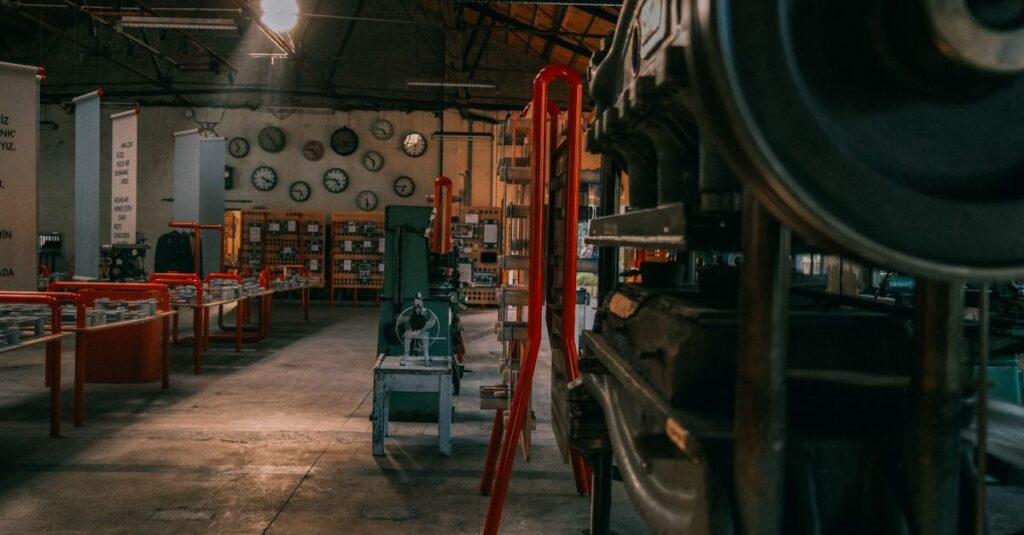
Here’s the thing. For decades, if you wanted to print anything in bulk — and I mean bulk — you used an offset press. It wasn’t a choice; it was the only real game in town for getting sharp, consistent color on thousands of sheets without going bankrupt. Digital printing changed that, sure. But for certain jobs? For the kind of volume and quality that institutional buyers need? The offset press is still sitting in the corner of factories like ours, humming away. It’s not the new, shiny thing. It’s the reliable, slightly greasy, workhorse that gets the job done when the numbers get big.
If you’re in charge of procurement and that pile of purchase orders is staring you down, understanding this stuff matters. Not because you need to operate the machine, but because you need to know when you’re getting what you pay for.
The Simple (And Slightly Messy) Truth of How It Works
Forget the technical manuals for a second. The core idea of an offset printing press is weirdly straightforward, and also kind of brilliant in its indirectness. It’s all in the name: offset.
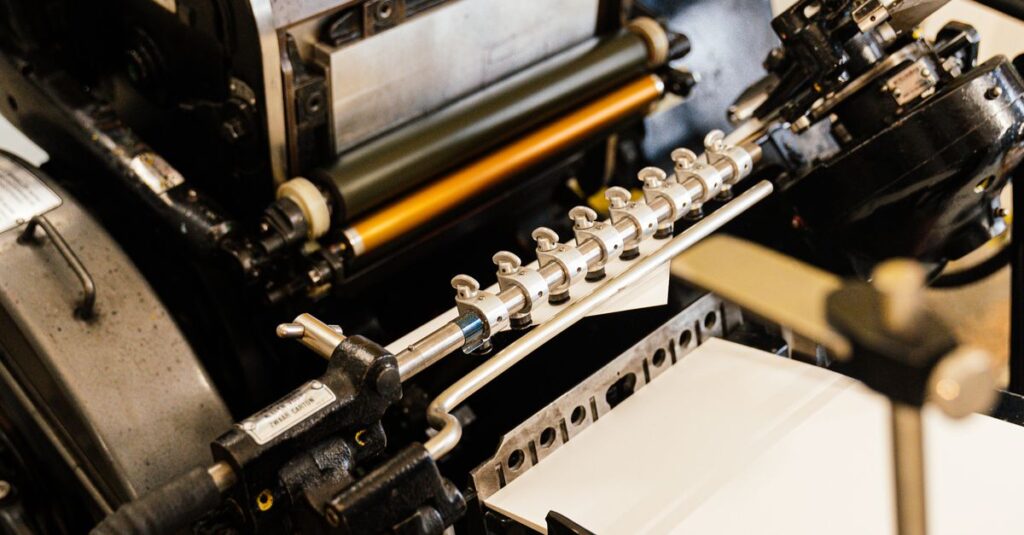
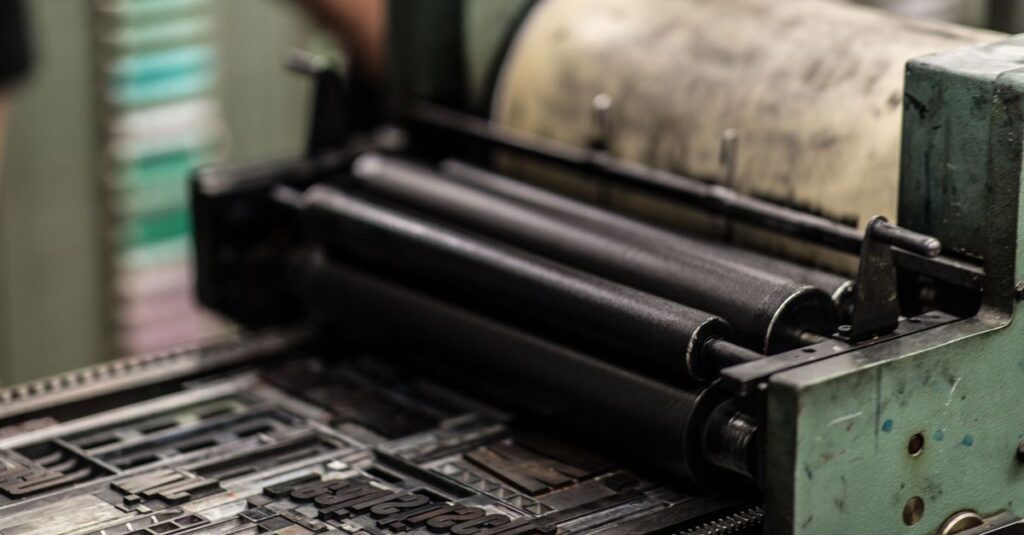
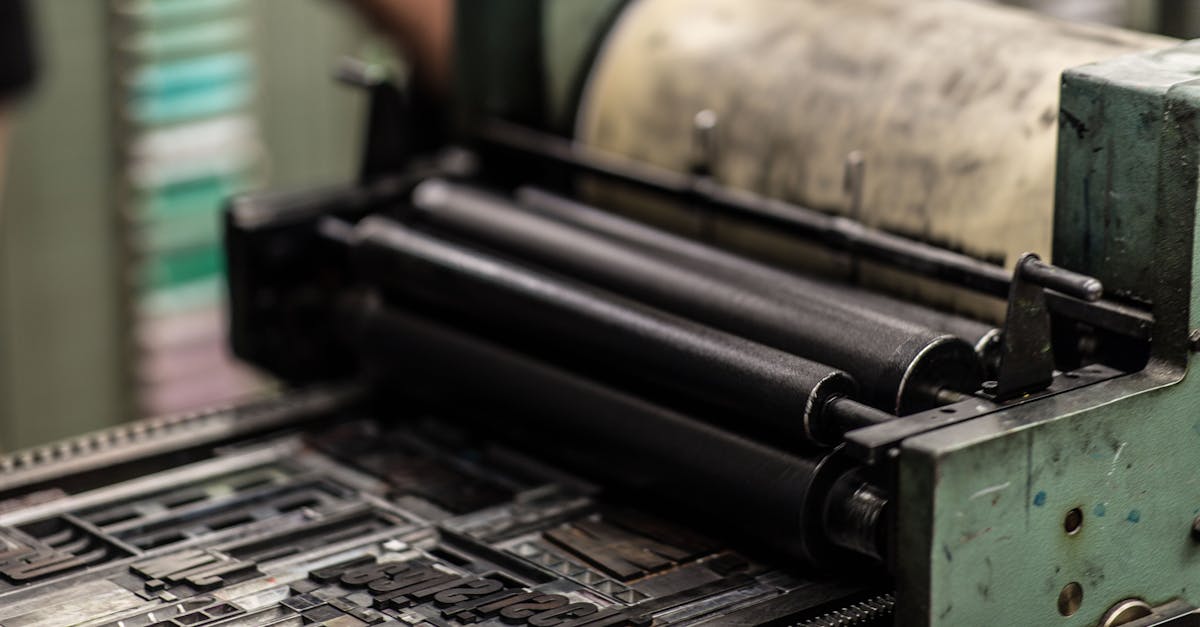
The ink doesn’t go straight from the plate onto your paper. That’s the first mental hurdle. Instead, the image is etched onto a metal plate. That plate gets inked up. But then, the plate rolls against a rubber blanket cylinder — transferring, or "offsetting," the wet ink image onto this rubber surface. Finally, that rubber blanket rolls onto your paper, pressing the image onto the sheet.
Why the extra step? That rubber blanket is the secret. It conforms. Paper isn’t perfectly smooth, especially the kind of writing paper we use for notebooks. It has a texture. A rubber surface squishes into those tiny imperfections, getting ink into places a hard metal plate might miss. The result is a sharper, more consistent, and honestly, a more vibrant print on almost any paper stock you throw at it. It’s a workaround for the reality of paper, and it works.
I was talking to our head press operator, Ravi, about this last week. He’s been running these machines since before I was born. He wiped his hands on a rag, pointed at the big Heidelberg, and said, "It’s patient. Digital is fast. This thing is patient. It waits for the ink to sit right." I don’t have a cleaner way to put it than that.
Digital vs. Offset: It’s Not a War, It’s a Toolbox
This is where most articles get it wrong. They frame it as a battle: Old Tech vs. New Tech. That’s useless for someone trying to place an order. The real question is: which tool solves your specific problem?
Think about it this way. You need 500 custom-branded notebooks for a leadership retreat. Each one has a different manager’s name on it. That’s a digital job, hands down. The setup is virtually nothing, and variable data (like names) is easy.
Now flip it. You need 50,000 standard-issue science notebooks for a state-wide school supply tender. Every cover is identical. Every page has the same ruling. That’s an offset job. The initial setup takes time and cost — making the plates, getting the ink colors calibrated just right. But once that’s done? The cost per unit drops like a stone. The 50,000th notebook costs pennies more than the 1,000th. The consistency is locked in. That’s the economy of scale talking.
| Consideration | Offset Printing Press | Digital Printing |
|---|---|---|
| Best For Volume | High volume (5,000+ units) | Low to medium volume (1 – 5,000 units) |
| Cost Structure | High setup cost, very low cost per unit after | Low/No setup, consistent cost per unit |
| Turnaround Time | Longer lead time (plate making, setup) | Very fast, almost immediate start |
| Print Quality | Superior color richness and consistency on textured paper | Excellent, but can struggle on very porous or textured stocks |
| Customization | Fixed. Once the plate is made, the image can’t change. | Full variable data. Every sheet can be different. |
| The Paper Question | Handles a wider range of paper weights and textures better | Works best on specific, smoother coated stocks |
Nine times out of ten, for our bulk institutional buyers, the math points to offset. The question isn’t which technology is "better." It’s which one makes your budget work for the quality you need.
Why Your Bulk Notebook Order Probably Needs Offset
Let’s get specific about notebooks, because that’s where the rubber blanket literally meets the road. You’re not printing glossy brochures. You’re printing on 54 GSM, 60 GSM writing paper — paper designed to be written on with a pen, not to look dazzling in a magazine.
Offset printing handles that toothy, textured surface in a way digital often can’t match. The ink sits on top of the paper fibers, giving you a crisp, bleed-free rule line or a solid, opaque cover color. When a student opens a geometry book, those faint blue margin lines need to be precise from page 1 to page 200. An offset press, once calibrated, gives you that precision for a marathon run, not a sprint.
And then there’s color. Corporate logos. School crests. That specific shade of blue your brand uses. Offset printing uses Pantone spot colors. You mix the ink to an exact formula before it even goes in the machine. The color on notebook #1 is chemically identical to the color on notebook #40,000. Digital printing simulates colors by mixing tiny dots of CMYK (Cyan, Magenta, Yellow, Black). It’s incredibly good, but it’s a simulation. For absolute, non-negotiable color consistency across a massive order? You want spot color. You want offset.
I remember a buyer from a large university cooperative telling me they switched a contract for branded lab notebooks away from a digital supplier. "The logos were shifting a shade," she said. "Not much. But batch to batch, you could see it. It looked cheap."> The real cost wasn’t in the unit price. It was in the perceived value.
The Real Cost Isn’t Just The Price Tag
Okay, let’s talk money. Because that’s what you’re here for. The initial quote for an offset job will make you blink. Plate costs. Makeready sheets (the hundreds of sheets you run through to get the color perfect before the ‘good’ run starts). It’s a big number upfront.
But that’s the trap of looking at the setup line item in isolation. The magic happens in the cost per unit curve. With digital, the cost per notebook is basically flat. Notebook #1 costs $X, notebook #5,000 costs roughly the same $X.
With offset, the curve drops steeply after those initial costs are absorbed. Notebook #5,000 costs a fraction of notebook #100. By the time you’re at 20,000 units, you’re in a totally different, much cheaper neighborhood. For bulk, the total cost of ownership wins. Every time.
This is why manufacturers like us invest in these big, complex machines. It’s not because we love machinery (though, some of us do). It’s because it’s the only way to hit the price point our school and corporate clients need without sacrificing the quality they expect. You can’t do 30,000 notebooks a day reliably any other way. The entire production model is built around it.
The headache, honestly, is planning. You need the lead time. You can’t decide on Thursday you need 100,000 notebooks by next Tuesday. The press needs its due diligence. But if you know your annual requirements? If you’re planning the next academic year’s supplies or the next corporate gift cycle? That’s where offset shines.
A Tuesday in Rajahmundry: The Press Room Floor
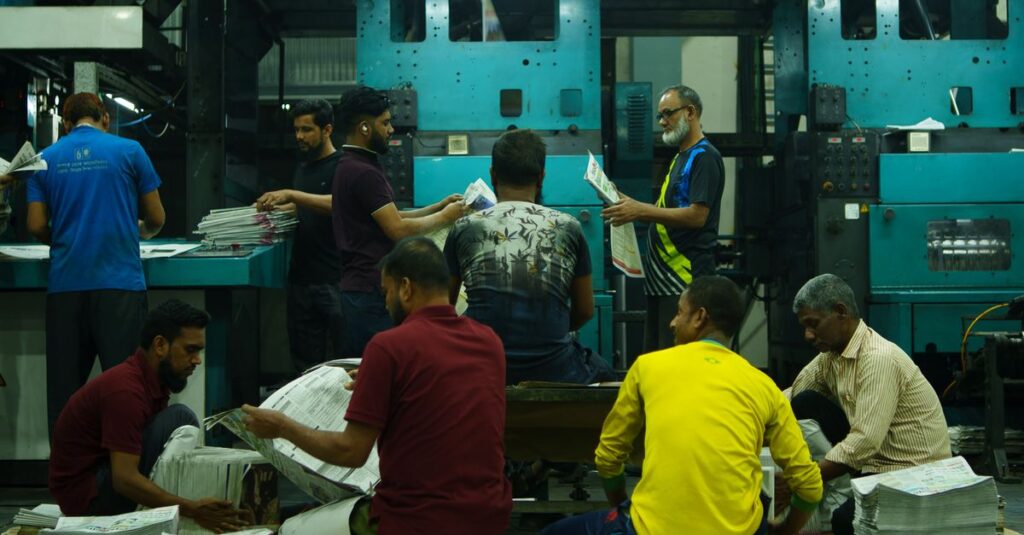
Let me drop you into our factory for a second. It’s 10 AM on a Tuesday. The smell is a mix of paper dust and sharp, mineral-scented ink.
On press #2, we’re running a massive order of A4 account books for a distributor in Hyderabad. The paper — 70 GSM, off-white — is flying through the machine in a blur. But if you stop and watch one sheet come out, it’s perfect. The deep green double-ruled lines are sharp enough to cut your finger on. The header print is flawless. The operator, Santosh, is checking a sheet under a loupe every 500 copies. He’s not checking for "okay." He’s checking for "exactly the same as the last one."
That’s the moment. The boring, repetitive, magnificent moment of scale. It’s not glamorous. But it’s what delivers a pallet of 2,000 identical books to a warehouse where they can be shipped out to 50 different businesses, and every single book meets the same spec. That’s the trust you’re actually buying.
Anyway.
Frequently Asked Questions
Is offset printing more expensive than digital?
It depends entirely on quantity. For short runs (under 1,000), digital is almost always cheaper because there’s no plate cost. For long runs (over 5,000), offset becomes far more economical. The high initial cost gets spread over thousands of units, making the individual notebook cost much lower.
Why do notebook manufacturers still use offset presses?
For three main reasons: unbeatable consistency on textured writing paper, superior color matching for brand logos, and the lowest possible per-unit cost on bulk orders. When you’re producing 40,000 notebooks a day for schools or corporate clients, the economics and quality demand it.
How long does setup for an offset print run take?
It takes time — usually several hours. You have to mount and align the metal plates, mix and load the specific inks, and run hundreds of "makeready" sheets to dial in the color, registration, and pressure perfectly. This is why offset requires longer lead times than digital.
Can you print custom logos with an offset press?
Absolutely. In fact, it’s ideal for custom logos in bulk. A separate plate is made for each color in your logo, ensuring exact color matching across every single notebook. Once the plate is made, you can reprint the same job years later with identical results.
What’s the minimum quantity for offset printing to make sense?
There’s no universal number, but as a rule of thumb, if you need more than 5,000 copies of the same design, you should get a quote for offset printing. For simple one-color notebooks, the break-even point can be even lower. Always ask your manufacturer to quote both methods.
The Takeaway? It’s About The Run Length
So, what’s the answer? The offset printing press isn’t a relic. It’s a specialized instrument for a specific, massive need. If your need is "lots of the same thing, done perfectly, at the best possible price," then it’s not just an option. It’s the industrial-grade solution.
I think the real shift in thinking is this: you’re not just buying notebooks. You’re buying the output of a specific manufacturing process. And understanding that process — its strengths, its costs, its requirements — is the fastest way to stop comparing apples to oranges when you get quotes.
You already know what you need: durability, consistency, and value for money. The question is just whether your supplier has the right tool for your specific job. For the big jobs, the answer is often humming away in a factory corner, covered in a fine layer of dust that means it’s been working.
If you’re sizing up a bulk order and the numbers are making your head spin, it might be worth a direct chat. Sometimes the best way to understand the machine is to talk to the people who run it every day.