Right, So What IS an Office Diary?
You’ve got a list from procurement. “Office diaries” is on it. You type it into your supplier portal, or maybe you search online. You get pictures of leather-bound planners, spiral notebooks, branded calendars. Which one is the actual office diary? And how many should you order? What’s the difference, beyond price?
That’s the headache. Because it’s not just a notebook. It’s a tool, a branding piece, a logistical item. It’s something you need to get right, for hundreds or thousands of people, and you don’t want to hear complaints six months later. If you’ve ever had to field a call about pages falling out or covers peeling, you know. It’s a small item that can become a big problem.
Here’s the thing. An office diary isn’t what you see on Instagram. It’s what sits on a desk, gets used daily, and survives a year of coffee spills and pen jabs. The real questions procurement managers have are practical, not aesthetic. I’ve spoken to enough of them over the years — at trade shows, over calls, via email — to know the pattern.
Look, if this sounds familiar, this might be worth a look. Not as a sales pitch, but just to see what one actual manufacturer makes of it.
The Three Things That Happen With a Diary Order
I think — and I could be wrong — that most people think ordering diaries is about picking a cover design. It’s not. When you place a bulk order, three things happen in sequence, and each one can trip you up.
The first is specification. You’re not buying a product off a shelf. You’re agreeing to a list: paper GSM, binding type, page count, ruling style, cover material, printing method. If you miss one detail — like assuming “stitched” means the same as “spiral” — you get a product that doesn’t match your expectation. And the factory has already run the batch.
The second is timing. Corporate diaries are almost always ordered for a specific start date: the new financial year, a company anniversary, January 1st. The production line is stacked with other orders for the same deadline. Your 5,000-unit order isn’t special; it’s another job in the queue. If you don’t lock in your slot early, you’re risking delivery after the date you need them.
The third, and the biggest one, is consistency. You need every single diary in that 5,000-unit order to be identical. The colour on page 87 must match the colour on page 87 of diary number 4,999. The binding must hold just as well. The cover must feel the same. In bulk manufacturing, variability is the enemy. A good supplier’s entire process is built to kill it.
Expert Insight
I was reading an industry report last month — one of those dry, technical ones — and one line stuck with me. It said something like: the difference between a consumer notebook and a corporate diary isn’t quality; it’s predictability. The consumer wants a nice experience once. The corporation needs the same experience replicated perfectly, thousands of times. That’s the whole game.
And honestly? Most manufacturers don’t talk about that. They show you glossy covers. They don’t show you the quality checks every hundred units.
The Real-World Use: A Moment From Last Week
Let me tell you about Sarah. She’s a procurement manager for a mid-sized firm in Hyderabad. She ordered 2,000 corporate diaries last November. She chose a nice dark blue cover, spiral binding, 240 pages. The delivery came in December. By March, she was getting emails. Not many — maybe fifteen. But they all said the same thing: the spiral wire was coming loose at the top, pages were catching.
She had to explain to her boss. She had to contact the supplier. She had to think about replacement costs. It wasn’t a catastrophe. But it was a persistent, low-grade headache for three months. The issue wasn’t that the diaries were “bad.” It was that the binding type chosen wasn’t suited to the page thickness and the expected usage. A spiral binding on a 240-page diary, used heavily, can stress at the hinge.
This is what you’re actually solving for: not the first impression, but the twelfth-month impression.
What You’re Actually Comparing (It’s Not Just Price)
When you look at suppliers for office diaries, you’re comparing a few hidden things. Price is there, obviously. But it’s often the decoy. The real comparison is underneath.
You’re comparing production control. Can this factory guarantee that diary number 1 and diary number 5,000 are functionally identical? That comes from machine calibration, paper batch consistency, and binding tension settings. It’s technical, but it’s the only thing that prevents those fifteen complaint emails.
You’re comparing customization depth. Printing your logo on the cover is standard. But can they print your company values on the inside cover? Can they add a custom calendar of your fiscal year? Can they use your specific brand colours on the ruling lines? The more you can integrate the diary into your actual workflow, the more value it has.
You’re comparing communication clarity. This one sounds soft, but it’s critical. When you send an email with a change — “actually, we need 700 pages, not 240” — does the supplier understand immediately? Do they confirm in clear terms? Or do you get a vague reply and then discover the mistake later? The best suppliers I’ve worked with treat the spec sheet like a legal document. Every line is confirmed.
Anyway. Where was I.
A Practical Table: Standard Diary vs. Corporate-Grade Diary
Most people think they’re buying a “better” notebook. They’re not. They’re buying a different product category. Here’s a blunt comparison.
| Feature | Standard / Retail Diary | Corporate-Grade Bulk Diary |
|---|---|---|
| Paper GSM | Often 45-50 GSM. Lightweight, can show bleed. | 54 GSM or higher. Designed for daily pen and sometimes marker use. |
| Binding | Often glued or cheap spiral. Focus on cost. | Stitched or reinforced spiral. Focus on durability across full page count. |
| Cover Material | Standard cardstock, often thin. | Reinforced cardstock or laminated finish. Resists scuffing. |
| Printing Precision | Colours may vary batch to batch. | Colour consistency is a controlled parameter. Logo placement is exact. |
| Page Ruling | Usually one or two standard options. | Multiple rulings (SR, DR, FR, CR) available to match different departmental needs. |
| Order Flexibility | Fixed designs, minor customization. | Full custom layout, inside and cover. Can integrate company-specific data. |
| Primary Goal | Look nice on a shelf. | Function without failure for 12 months. |
The question isn’t whether you need a corporate-grade diary. It’s whether your supplier can actually deliver one.
The Manufacturing Angle: What Actually Happens in a Factory
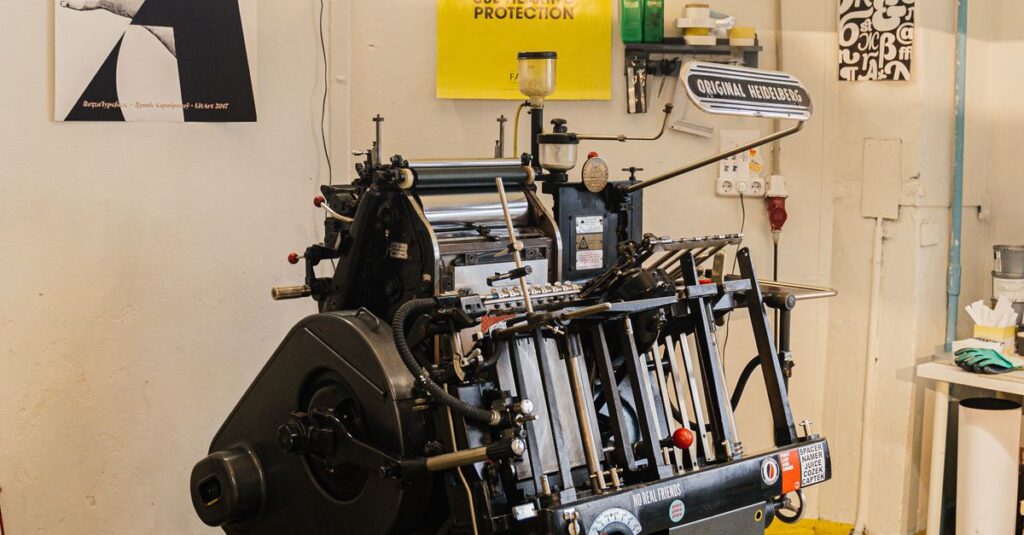
When you order 3,000 custom diaries, the factory doesn’t just “print” them. It runs a sequence. I’ll walk you through it, because knowing this helps you ask the right questions.
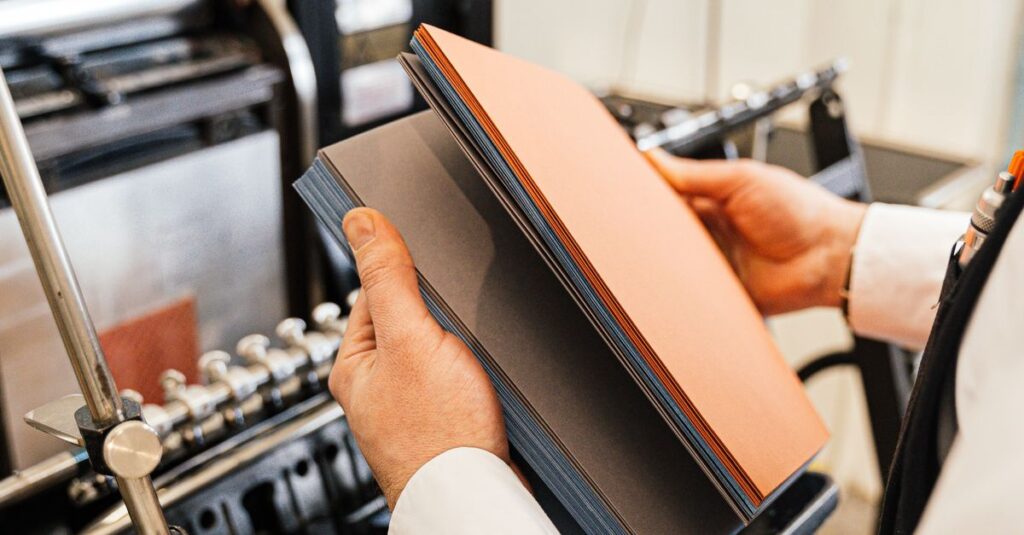
First, paper is sourced in bulk rolls. Not sheets. Rolls. The GSM is checked at this stage. If it’s off by even a few points, the writing feel changes. A good factory will test it.
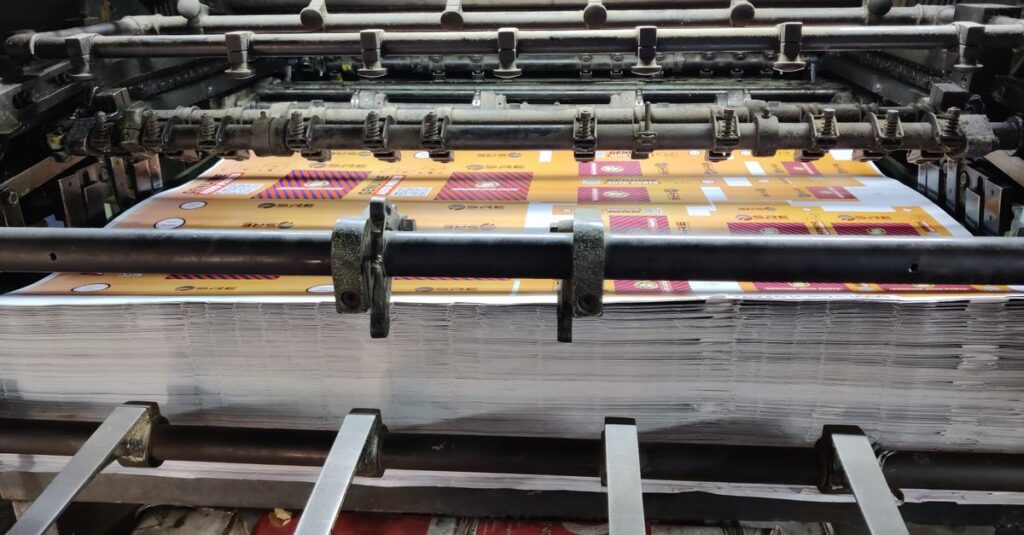
Then, printing. Your logo and any internal pages are printed. This is usually offset printing for bulk — it’s consistent and cost-effective for large runs. Digital printing might be used for super complex, variable data, but that’s rare.
Then, cutting and folding. The printed sheets are cut to the diary size — King Size, Long, Short, Account. They’re folded into sections. This is where page count gets locked in.
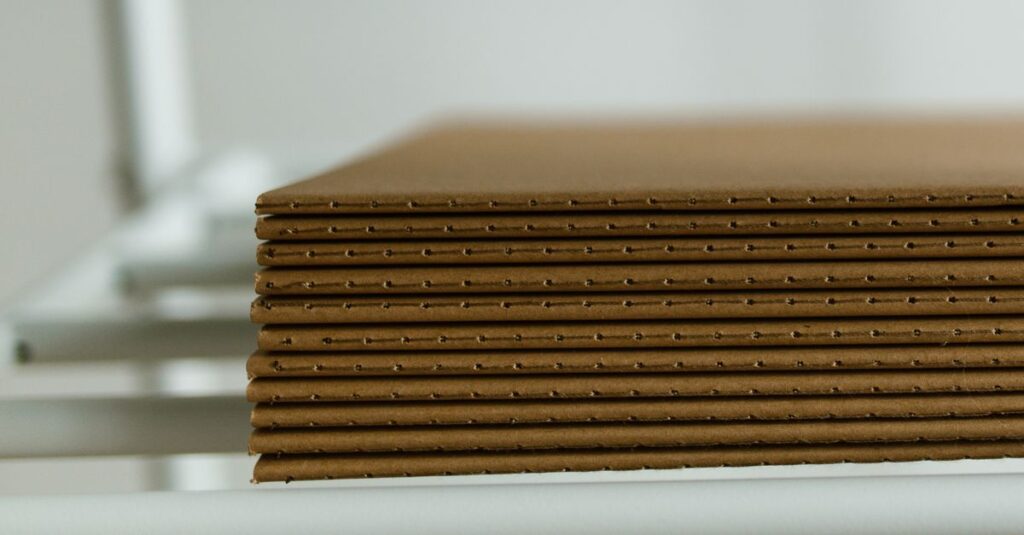
Binding. This is the most critical step. Stitched binding (like a book) is the most durable for high-page-count diaries. Spiral binding offers full page flatness but has that hinge stress point I mentioned earlier. Perfect binding (glued) is cost-effective but can fail if the glue quality isn’t high.
Cover application and finishing. The cover is attached, any final embossing or lamination is done.
Quality check. A sample is pulled from every batch — sometimes every 100 units — and tested. Pages are flipped repeatedly. The cover is stressed. The ruling alignment is checked.
Packaging. This matters for delivery. They’re packed in boxes that protect them from moisture and crushing during transit.
Look, I’ll be direct: if a supplier can’t explain these steps to you clearly, they might not control them tightly. Control is what you’re paying for.
The Real Cost (Not the Price Tag)
The price per unit is obvious. The real cost is hidden in three places.
One is replacement cost. If 5% of your diaries fail, you need to replace them. That’s not just the cost of new diaries; it’s the cost of re-logistics, communication, and internal frustration.
Two is brand perception cost. A diary with your logo on it that falls apart is a tiny, daily negative brand impression for the person using it. It’s subtle, but it accumulates.
Three is time cost for you. Dealing with a supplier who misunderstands specs, delays communication, or delivers inconsistent quality eats your hours. Your time is worth more than the discount you might get from a sloppy factory.
So when you evaluate a quote, you’re not just evaluating a number. You’re evaluating risk. A higher price from a known, controlled manufacturer might actually be the lower total cost.
How to Actually Choose a Supplier
Most guides tell you to “compare quotes.” That’s step three. Step one is different.
First, ask for a sample of their standard corporate diary. Not a custom one yet. Just their go-to product. Use it for a week. Write in it. Flip the pages. Carry it around. See how it holds up. The sample tells you more than any brochure.
Second, ask them to walk you through their quality control process. How often do they pull a sample during a run? What do they test? If they can’t answer quickly and clearly, it’s not a robust process.
Third, ask about their lead time for a 1,000-unit custom order. Then ask about their lead time for a 5,000-unit order. The difference shouldn’t be linear. A good factory has scaling efficiencies. If the time jumps massively, their production planning might be fragile.
Fourth, check their communication. Send an email with a moderately complex question about ruling options and page counts. See how quickly and precisely they reply. That reply pattern will be your experience for the entire order.
I don’t have a cleaner way to put it than that.
Frequently Asked Questions
What is the typical page count for an office diary?
Most corporate diaries range from 240 to 320 pages. That’s enough for daily entries across a full year, plus some additional notes. Some companies opt for 700-page diaries for detailed project logging. The choice depends on how heavily your team uses them. For general administrative use, 240 is standard.
What binding type is most durable for heavy daily use?
Stitched binding (like a traditional book) is generally the most durable for high-page-count diaries. It distributes stress across the whole spine. Spiral binding is excellent for flat page opening but can weaken at the hinge if the diary is very thick. For a 240+ page diary used aggressively, stitched is often the safer bet.
Can we print different internal pages for different departments?
Yes, absolutely. This is called segmented customization. You can have finance diaries with four-ruled pages for accounting, sales diaries with broader ruling for quick notes, and management diaries with calendar pages. It requires clear communication with your manufacturer and separate production batches, but it’s common in bulk orders.
How long does production take for a bulk order of custom diaries?
For a fully custom order of 1,000 to 5,000 units, lead time is typically 4 to 6 weeks. This includes design approval, material sourcing, production, and quality checks. For larger orders (10,000+), it can be 8 weeks. Always confirm this with your supplier before placing the order, especially if you need them for a specific start date like January 1st.
What is the minimum order quantity for custom corporate diaries?
Most manufacturers have a minimum order quantity (MOQ) for custom work, because setting up the print and bind lines for a unique design has a base cost. Typically, the MOQ is around 500 units. Some might go as low as 200 for very simple customization, and some require 1,000. It’s the first question you should ask when starting conversations.
Alright, Let’s Wrap This Up
Choosing an office diary supplier isn’t about finding the cheapest notebook. It’s about finding the most predictable partner. The diary itself is just a product. The process behind it — the control, the communication, the consistency — is what you’re actually buying.
The headaches you’re trying to avoid are the small, accumulating ones: the loose binding, the colour mismatch, the delayed delivery. Solving for those is what separates a good procurement decision from a regret.
I don’t think there’s one perfect supplier for everyone. Probably there isn’t. But if you’ve read this far, you already know what you need — you’re just figuring out how to get it without the hidden costs.
If you want to see how one manufacturer breaks it down, take a look at what we do. Not as the only answer, but as one clear example.