You see “online print” on a supplier’s website. You click it. Maybe you’re looking for 5,000 branded notebooks for your company or a year’s worth of school diaries. And what you get is… confusing. A contact form. A PDF upload. A phone number. It’s never just a simple ‘add to cart’. Right?
Here’s the thing — that confusion is the whole point. Because ordering printed notebooks in bulk, the kind that schools, governments, and big offices actually use, isn’t like buying a t-shirt. There is no magic online shopping cart that spits out 40,000 perfect-bound account books. The term “online print” in our world is more like a promise: you can start the process online, but you’re going to talk to a human. You’re going to need specs. And honestly, most procurement managers I talk to prefer it that way. If you’re figuring out how to get custom notebooks for your institution, you know exactly what I mean. You’re not looking for a button to click; you’re looking for a partner who won’t mess up your logo or your timeline. If that sounds like where you are, what we do at Sri Rama Notebooks might be worth a look.
What “Online Print” Really Means (It’s Not What You Think)
Most people hear “online print” and picture a website where you upload a design, pick a product, and check out. That works for 50 mugs or 100 flyers. But for bulk notebooks? For corporate diaries? For government tender supplies? No. Not even close. The volume alone makes it impossible.
The real meaning, at least in the notebook manufacturing world, is about communication and specification. It means you can initiate the enquiry, share your design files, and discuss your requirements digitally. The actual process — quoting, paper selection, approval proofs, scheduling production — that’s a series of conversations, usually over email and WhatsApp. The “online” part is the door. The “print” part is the factory floor, which you absolutely need to understand.
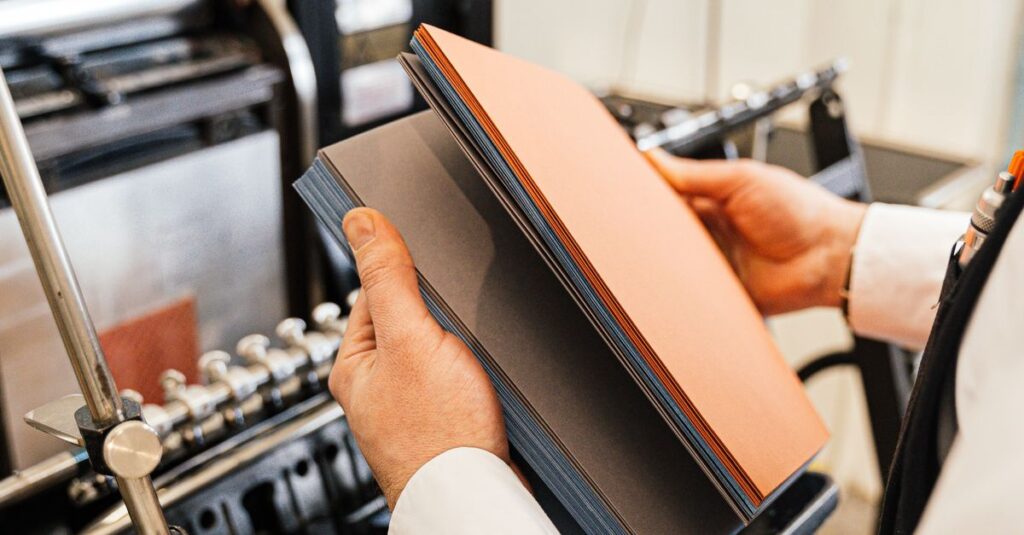
Think about it this way. You need 10,000 A4 single-ruled notebooks with your university’s crest. You go online, you find a manufacturer. You send the crest artwork. But what paper? 70 GSM? 80 GSM? What ruling colour? What binding? Spiral or stitched? How many pages? This is where the online part stops and the expertise part kicks in. And if your supplier doesn’t ask these questions, run. Fast.
Expert Insight
I was on a call with a procurement manager from a college last month. He said something that stuck with me. He told me his biggest fear wasn’t the price — it was that he’d send a perfect PDF and get back notebooks where the print was fuzzy or the binding fell apart in a student’s bag. He said, “I need to know you’ve done this a thousand times before.” I don’t have a cleaner way to put it than that. The trust doesn’t come from a fancy online configurator. It comes from knowing the person on the other end has seen every possible printing mistake and has built a process to avoid them.
Anyway. That’s the core of it. The online bit is just the start.
The Hidden Steps No Website Tells You About
Let’s walk through what happens after you hit ‘send’ on that enquiry form. Because this is where things get real, and where most of the delays or misunderstandings happen. I’ll give you the honest, slightly messy version.
First, someone like me looks at your request. We immediately check three things: the art file quality, the quantity, and the deadline. A low-res JPG for a full-cover print? That’s a problem. A request for 50,000 notebooks in two weeks? Also a problem (unless you want a miracle, and miracles are expensive).
Next, we send a detailed quote. This isn’t a one-line price. It’s a spec sheet. It lists paper GSM, cover material, binding type, packaging, and freight options. This document is the single most important thing in the process. It’s the blueprint. People skim it. Please don’t. This is where you catch the assumption that “notebook” means 92 pages when you needed 200.
Then there’s the proof. We’ll send a digital proof, sometimes a physical sample if it’s a huge order. You have to approve it. In writing. I can’t stress this enough. I’ve seen so many issues where someone says “looks good” in a chat, but then wants changes after production. That approval email is your only safety net.
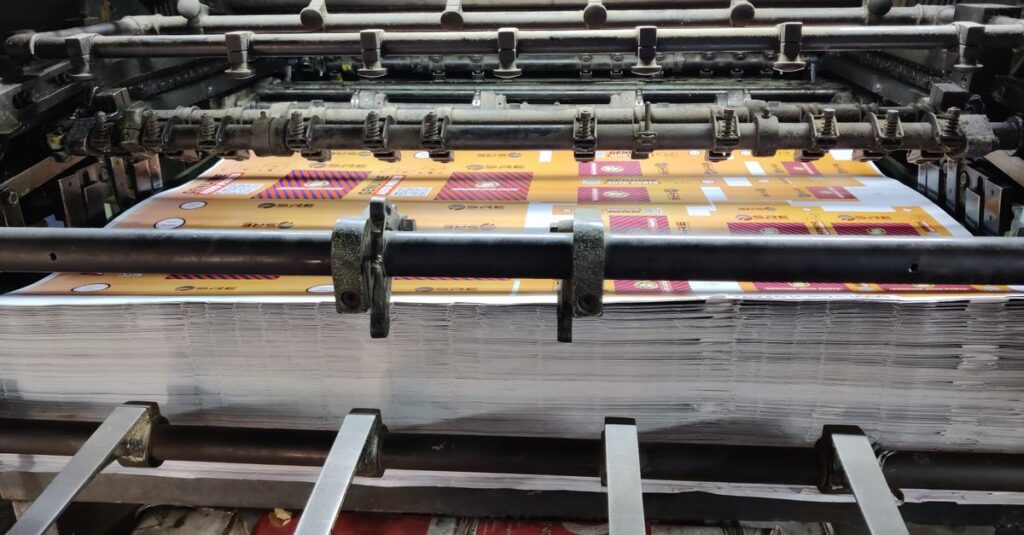
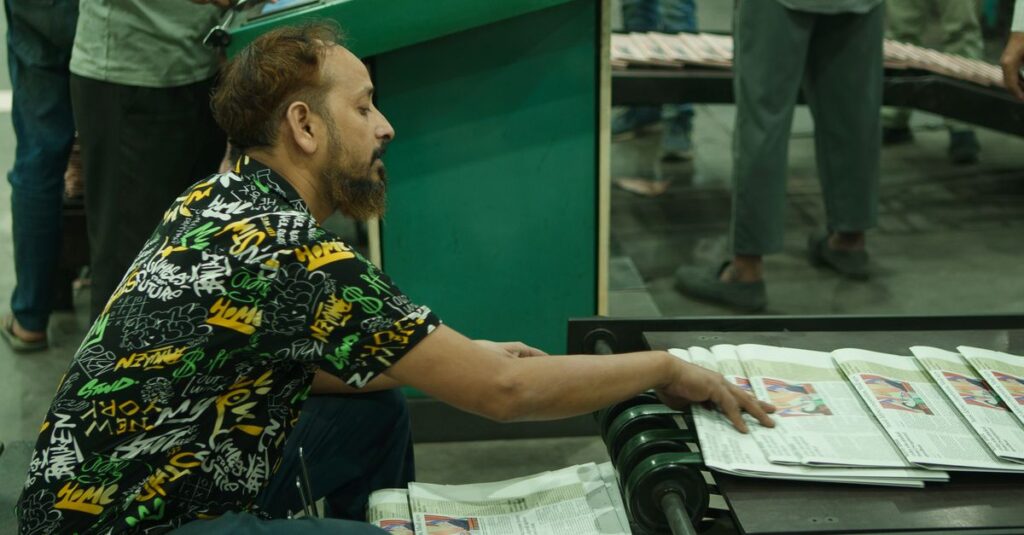
Finally, production starts. This isn’t an instant print job. For a bulk order, paper is cut, printed in sheets, gathered into “signatures,” bound, trimmed, and packed. It takes days. And during this time, you should get updates. If you don’t, that’s a red flag.
Look, the hidden step is patience. And clear communication. The online tools just facilitate the first chat.
A Quick Story About What Can Go Wrong (And Right)
Rahul, 42, a procurement officer for a chain of coaching centres in Hyderabad. Needed 25,000 custom graph books. Sent us a design his marketing team made in Canva. It was a PNG file. The background was “white” but was actually a very, very light grey in the digital file. On screen, you couldn’t tell.
If we had just run with it, all 25,000 books would have had a faint grey tint behind the printed grid lines. Looks cheap. Unprofessional. Our prepress guy caught it — called it a “dirty white.” We flagged it, asked for a vector file or a PDF with the background properly removed. Rahul was annoyed at first (“It looks white on my screen!”). A week later, he emailed to thank us. Said the books looked crisp, and his boss noticed.
That’s the difference. Anyone can print. Not everyone checks.
Bulk vs. Small Batch: Two Completely Different Worlds
This is the big one. The process, the pricing, the very machinery used for printing 500 notebooks versus 50,000 is fundamentally different. Thinking they’re the same is probably the most common mistake.
| Factor | Small Batch (50 – 500 units) | Bulk Manufacturing (5,000+ units) |
|---|---|---|
| Primary Printing Method | Digital Print | Offset Printing |
| Cost Per Unit | Much higher | Drastically lower (economies of scale) |
| Setup Time/Cost | Low / Minimal plates | High initial setup for plates & alignment |
| Best For | Prototypes, event gifts, testing designs | School year supplies, corporate giveaways, distributor stock |
| Customization Flexibility | High – each book can be different | Low – one design per production run |
| Paper Options | Limited to available digital stock | Full range, including custom paper orders |
| Lead Time | Faster turnaround (days) | Longer production cycle (weeks) |
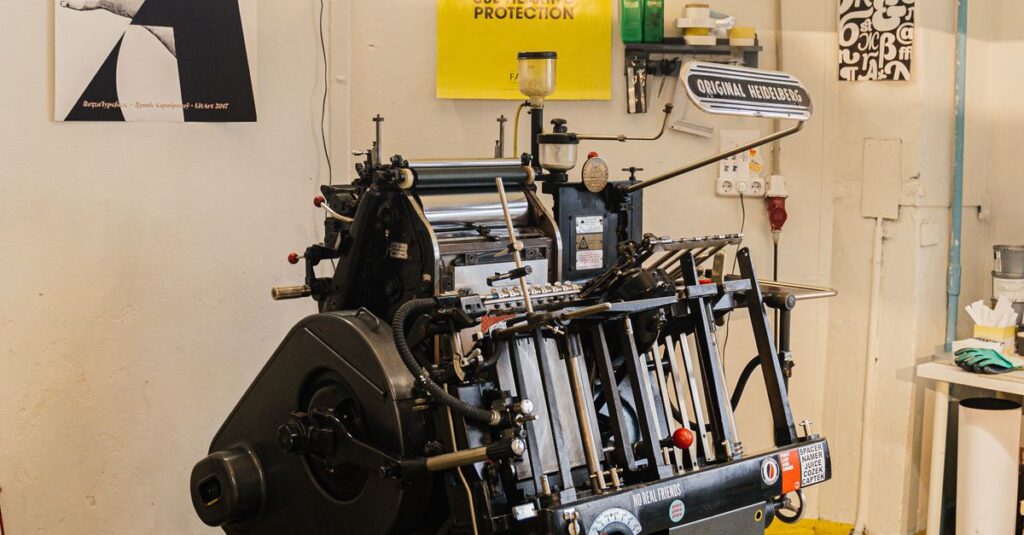
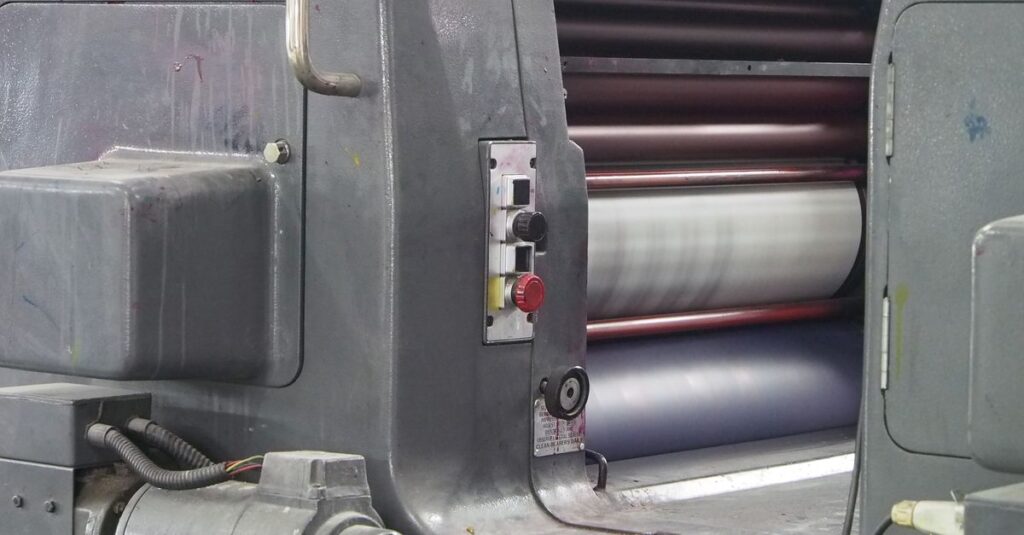
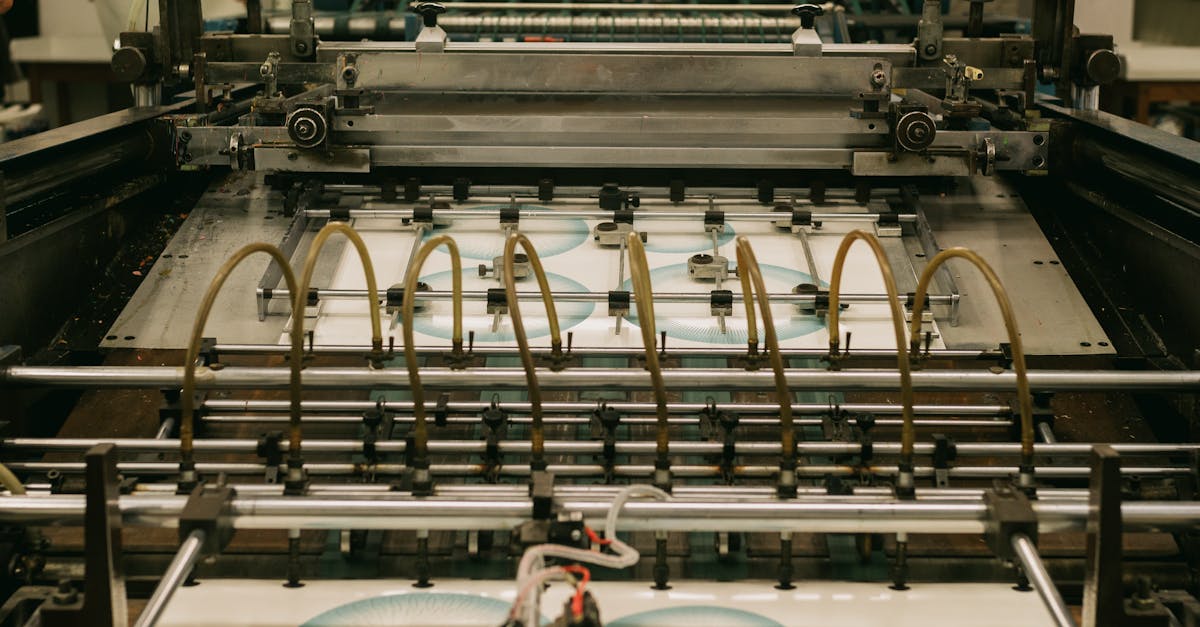
If you’re a business ordering corporate diaries for your entire staff, you live in the right-hand column. The price you see online for a single custom notebook is irrelevant. Your world is about offset printing cylinders, paper bought by the tonne, and binding lines that run for 12 hours a day. The “online print” enquiry for you is about accessing that industrial-scale capability, not a desktop printer.
What You Should Actually Look For In A Supplier
Forget flashy websites for a second. When your job is on the line to deliver 10,000 notebooks to 200 schools on time, what matters? I’ve been doing this since 1985, and it boils down to three things, honestly.
Communication, not automation. You need a direct phone number that a human answers. You need someone who replies to emails with clear details, not auto-responders. When there’s a delay at the port or a paper shortage, you need to hear it from a person, not a tracking portal that says “processing.”
Transparency in the process. A good supplier will walk you through it without you asking. They’ll explain why they’re recommending 70 GSM paper over 60 for a textbook. They’ll show you the difference between perfect binding and double-wire stitching. They make you smarter. If they just say “trust us,” be wary.
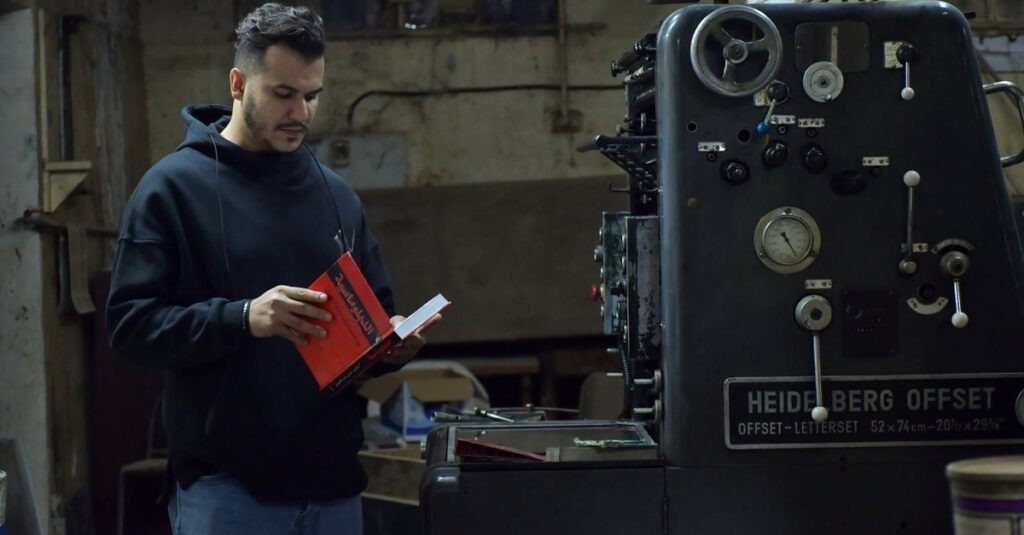
Proof of scale. Can they actually handle your volume? Ask for photos of their factory floor. Ask about their daily production capacity. For us, it’s 30,000 to 40,000 bound notebooks a day. That means your 100,000-unit order isn’t a panic; it’s a schedule. A small shop will see that number and ghost you.
Look, I’ll be direct. The cheapest quote often comes from the guy who cuts corners on paper quality or uses cheap ink that smudges. Your students or employees will notice. Your reputation is on every page. Finding the right printing partner is about value, not just price.
Common Mistakes Buyers Make (And How to Avoid Them)
I see these patterns all the time. Let’s save you the headache.
- Mistake 1: Not ordering a physical sample. You approved a digital proof on your colour-calibrated monitor. The batch arrives and the blue is purple. Always, always get a physical dummy or a pre-production sample shipped to you. The cost is nothing compared to a wrong batch.
- Mistake 2: Ignoring lead times. You need notebooks for the new academic year in June. You start enquiring in May. The paper alone takes 3 weeks to arrive. Build in buffer. A reliable manufacturer will tell you a realistic timeline, not a fantasy one.
- Mistake 3: Focusing only on unit price. The quote for Notebook A is 2 rupees cheaper than Notebook B. But Notebook B includes stronger packaging for shipping and uses anti-curl paper. The cheaper books arrive warped and damaged. Total cost is higher. Look at the whole spec.
- Mistake 4: Providing wrong or low-quality artwork. Send print-ready PDFs with fonts embedded and high-resolution images (300 DPI). Don’t send Word docs or screenshots. This is the foundation. Garbage in, garbage out.
Nine times out of ten, a problem order traces back to one of these. Getting them right is 80% of the battle.
Frequently Asked Questions
What file format should I send for online printing of notebooks?
Always send a print-ready PDF. Make sure all fonts are embedded, images are at least 300 DPI, and any bleeds or crop marks are included. Avoid JPGs, PNGs, or Word documents — they rarely translate well to large-scale commercial printing and can cause quality issues.
How long does bulk online printing of notebooks usually take?
It depends heavily on quantity and complexity, but for a typical bulk order (say, 10,000+ units), expect 4 to 6 weeks from final approved proof to delivery. This includes time for material procurement, printing, binding, finishing, and packing. Always confirm the timeline with your supplier before committing.
Can I get different designs in one bulk notebook order?
Generally, no — not with standard offset printing for bulk. Each unique design requires a separate printing plate setup, which defeats the cost-saving purpose of bulk manufacturing. For true bulk, you commit to one design per notebook type. If you need multiple designs, they are treated as separate, smaller runs.
What’s the minimum order quantity for custom printed notebooks?
This varies by manufacturer. For a process like offset printing to be cost-effective, most reputable notebook manufacturers will have a minimum order quantity (MOQ) of 500 to 1,000 pieces per design. For smaller quantities, digital printing is used, but the per-unit cost will be significantly higher.
Do you handle shipping and logistics for online print orders?
Yes, any full-service manufacturer should. The quote should include options for packaging and freight — whether by road transport across India or by sea/air for international exports. Make sure you understand who is responsible for insurance and customs documentation if you’re exporting.
So, what’s the takeaway from all this? First, “online print” for bulk notebooks is a starting line, not a finish line. It’s about beginning a detailed, human conversation with a factory that knows its machines. Second, the real cost isn’t in the rupees per book; it’s in the risk of getting it wrong — the delayed school term, the embarrassing corporate gift.
I don’t think there’s one perfect way to manage it. Probably there isn’t. But if you’ve read this far, you’re not just shopping for a product. You’re looking for a reliable process. You’re figuring out who to trust with the boring, crucial details that make an order successful. And that’s the part no website can sell you. It has to be built. If you’re ready to start that conversation for your next project, we should talk.