You’re Probably Using the Wrong Kind of Shop
Let’s start with a moment you’ve probably had. You’re standing in a small store, fluorescent lights humming, the air thick with the smell of toner and paper. You’re there to get a few copies made — a report, some handouts. And you think, maybe you could get them to run off a batch of small notebooks for your team, too. It’s just copying, right? Should be fine. I’ve had procurement managers tell me this exact story, and they always finish with the same look: a little confused, mostly frustrated. Because what they got back from the local photocopy shop wasn’t right. The pages fell out. The covers curled. It looked cheap. And they were out of pocket for 200 books nobody wanted to use.
That’s the gap, right there. Most people — smart, capable people running businesses and schools — use the terms ‘photocopy shop’ and ‘printer’ or ‘manufacturer’ like they’re the same thing. They’re not. Not even close. A photocopy shop is built for one-off tasks. A manufacturer is built for production. Knowing which one to use for what job is the difference between a professional product and a disappointing pile of paper. If you’re ordering anything in bulk for your institution, understanding that difference is the first step.
What a Photocopy Shop Actually Does (It’s Not Much)
Here’s the thing — a photocopy shop is a service hub. Think of it like a neighborhood cafe. You walk in, you get what you need right now, you leave. Their entire operation is reactive. A customer walks in with a document. They hit copy. They might do some basic binding with a plastic comb or a staple. They can scan things. Maybe print a banner from a file you bring on a USB stick. The scale is tiny, and the equipment reflects that. They use desktop printers and copiers, the kind that are brilliant for 50 copies of a meeting agenda but start to wheeze and protest at 500.
Their business model is built on immediacy and variety, not volume or durability. They handle a thousand different small jobs in a day. The paper stock is usually whatever’s cheapest and most generic, because their customers are price-sensitive for single documents. The binding is functional, meant to hold pages together for a presentation or a submission, not to survive a year in a student’s backpack or on a manager’s desk. I was in one last week in Rajahmundry — a good one, busy — and I watched the guy behind the counter. He was a wizard with that laminator. But when someone asked about making 100 custom notebooks, he just shook his head. “We don’t do that,” he said. “You need a proper factory for that.” He was right.
Meet Priya, 34, School Administrator in Hyderabad
Priya needed 500 custom workbooks for her primary school’s new curriculum. Budget was tight. She took the files to the trusted photocopy shop near her office. They quoted a price that seemed okay. Two weeks later, she picked up the boxes. The covers, printed on flimsy 80gsm paper, were already dog-eared. The spiral binding was loose on half the books, the coils catching on each other. By the end of the first term, pages were tearing out at the spirals. She had to explain to the principal why they needed a reorder mid-year. She doesn’t use that shop for anything but single-page flyers now.
The Manufacturer’s World: Scale, Specs, and Sitting Down
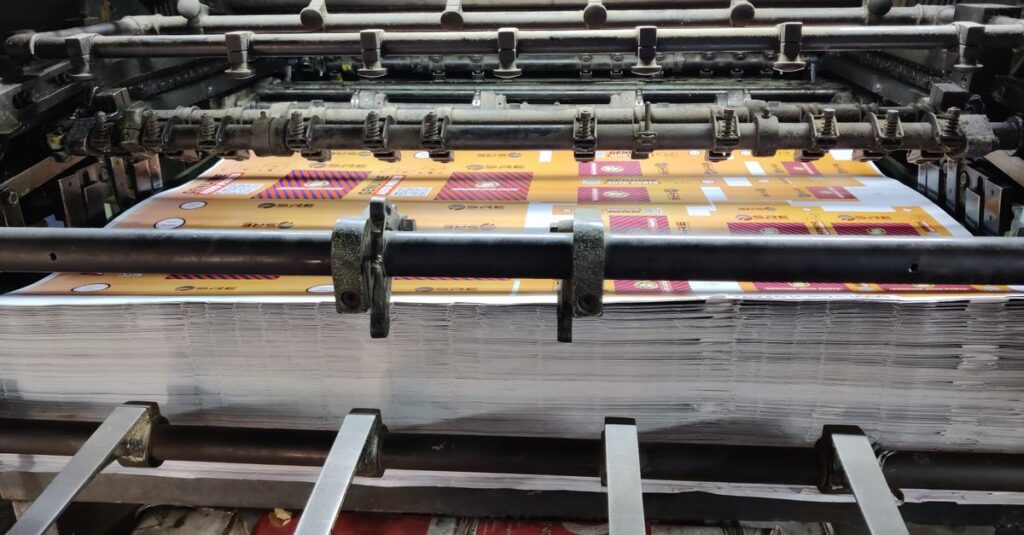
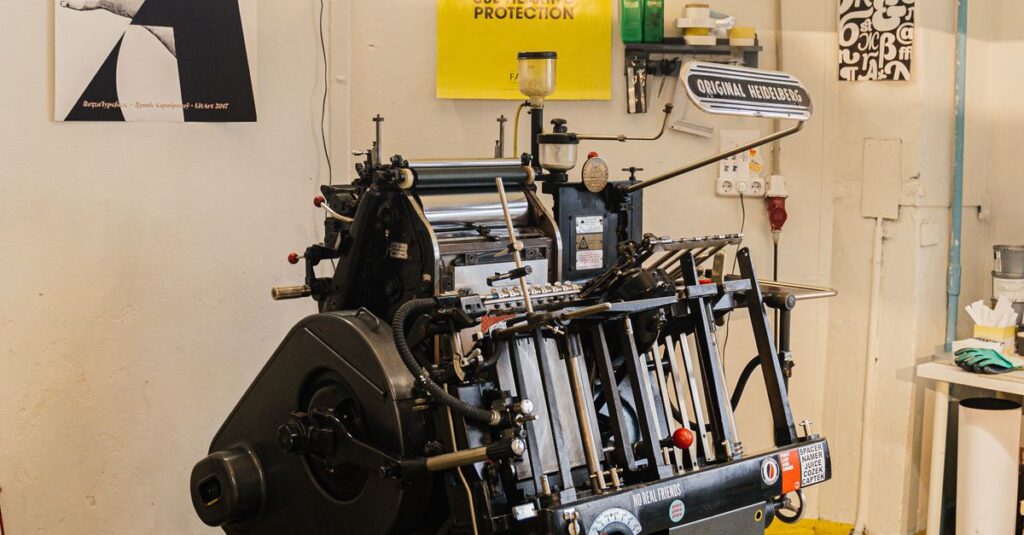
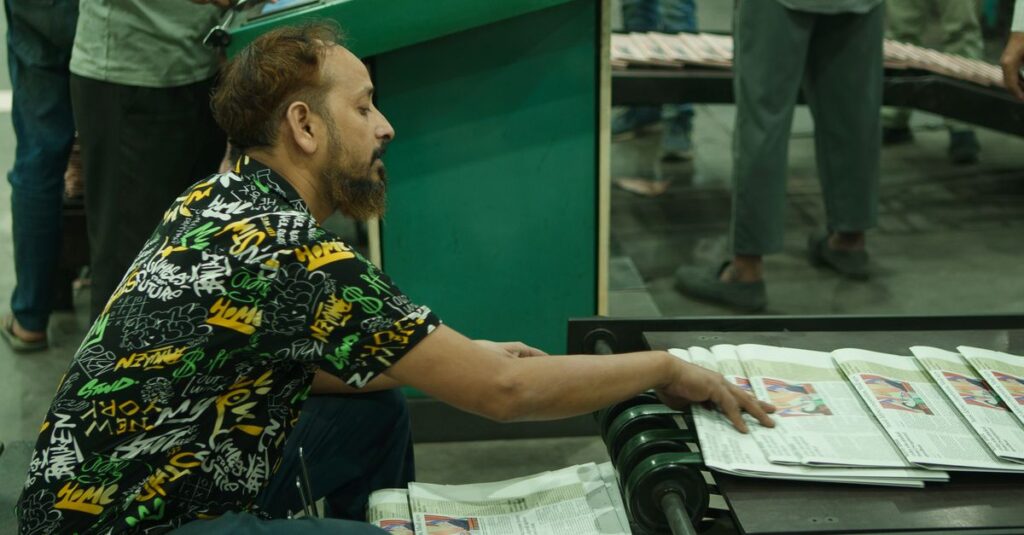
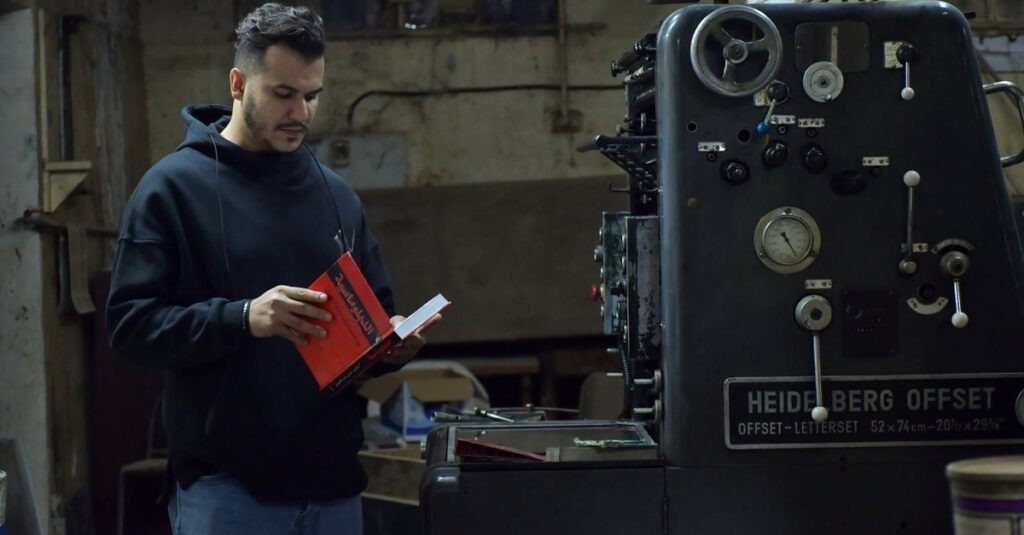
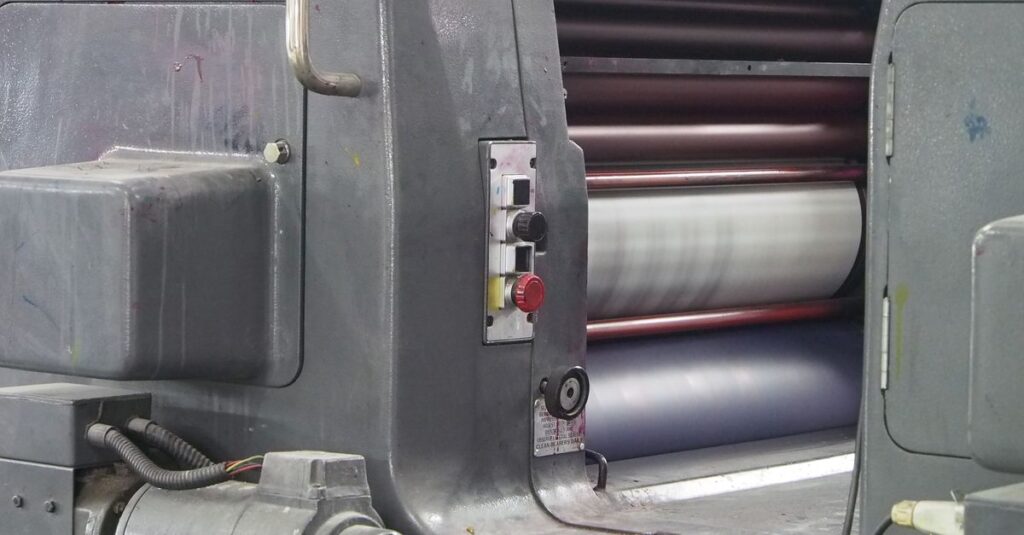
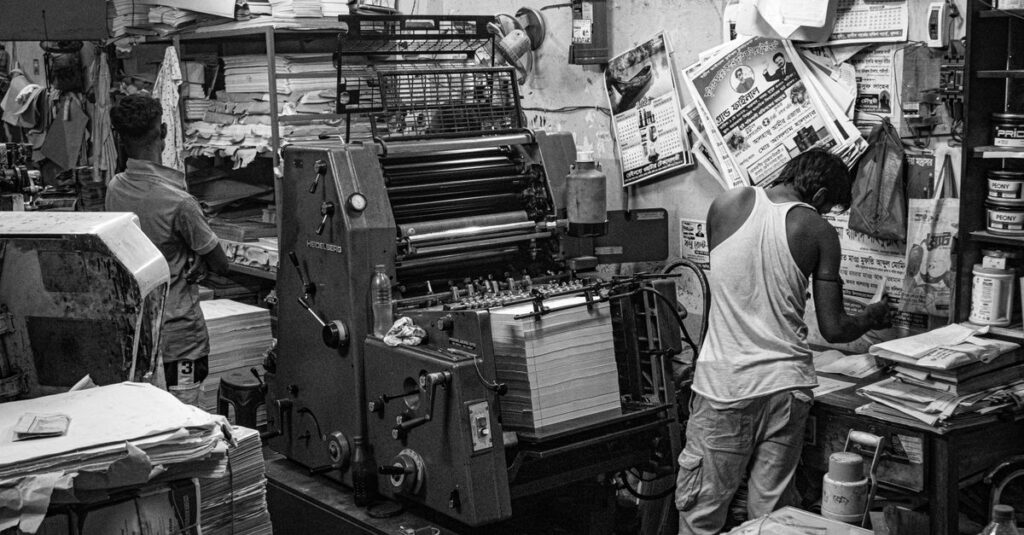
Now, flip the script. A notebook manufacturing unit — like ours — doesn’t wait for someone to walk in. It runs. It’s a factory floor. The sound isn’t the quiet whir of a copier; it’s the rhythmic thump of a perfect binding machine, the steady zip of a paper cutter slicing through a two-foot-high stack like butter. Our day starts with trucks of raw paper rolls, not reams. We don’t “copy.” We print, on industrial offset machines that can run 10,000 sheets an hour with perfect, smudge-free registration.
The conversation is different, too. You don’t just hand over a file. You sit down — physically or on a call — and we talk specs. What size? King, Long, Short, Account? How many pages? 52, 92, 200, 320? What ruling? Single, double, four-ruled for young kids, unruled for designers? What paper? We use 54gsm and up, paper meant to be written on, not just read. What binding? Stitched for longevity, spiral for lay-flat use, perfect binding for a sleek corporate diary. This is a production meeting, not a transaction. The goal isn’t to get you your job today. It’s to build a product that will last for months, look professional, and make your brand look good. That’s the shift in thinking.
Expert Insight
I was reading an old trade journal a while back — from when we first started in the 80s — and one line stuck with me. It said the most expensive product you can buy is the one that fails before its job is done. A cheap notebook that falls apart forces a reorder, wastes administrative time, and damages your institution’s credibility. The guy writing it wasn’t even in our industry; he was talking about industrial tools. But it applies perfectly. A photocopy shop gives you a product for right now. A manufacturer builds you a tool for the task. That distinction, between a disposable item and a working tool, is the whole game.
When to Use Which: The Decision Guide
So, how do you choose? It’s not that one is better than the other. They’re tools for different jobs. You wouldn’t use a sledgehammer to put in a picture hook. The trick is matching the job to the right tool.
Use a local photocopy shop for:
- Making 1-50 copies of a single document (reports, forms, flyers).
- Scanning and digitizing old documents or books.
- Quick, simple binding for a one-time presentation (stapling, plastic comb).
- Printing a few posters or banners from a ready-made file.
- Urgent, same-day needs where finish quality is secondary to speed.
Use a notebook manufacturer for:
- Any order of 100 notebooks or more. This is where per-unit costs flip.
- Anything that needs to last: school yearbooks, corporate diaries, account books.
- Customization. Your logo on the cover, your brand colors, your specific page layout.
- Private label or OEM production. You’re selling these under your own brand.
- Specific paper or binding requirements (like durable stitching for heavy use).
- Export-quality goods that need consistent, reliable packaging and finishing.
Think about it this way. If you need 20 copies of a agenda, walk to the copy shop. If you need 2000 notebooks for the new school year, you need a partner who knows how to source the right paper, run the sheets, stitch them, cut them, and pack them on pallets. That’s us.
| Factor | Photocopy Shop | Notebook Manufacturer |
|---|---|---|
| Core Business | Retail copy & print services | Industrial-scale production |
| Ideal Order Size | 1 – 100 units | 100 – 100,000+ units |
| Paper Source | Pre-cut reams (limited variety) | Raw paper rolls (multiple GSM & grades) |
| Binding Methods | Staples, plastic comb, spiral coil | Stitched, perfect binding, hardcover, specialized spiral |
| Customization | Basic: print from your file | Full: cover design, page layout, ruling, packaging |
| Lead Time | Hours or days | Weeks (for production & quality checks) |
| Cost Driver | Per-page cost + service fee | Volume, material specs, customization |
| Output | A copy of your document | A finished, branded, durable product |
The Real Cost Isn’t on the Invoice
This is the part I find myself explaining most often. A procurement manager will look at a quote from a manufacturer and compare it to a per-notebook estimate from a copy shop. The copy shop price looks lower. It’s a trap. Because the copy shop price is for a facsimile — a stack of copied pages bound weakly. The manufacturer’s price is for a engineered product. You’re paying for R&D (figuring out the right paper and binding), for quality control (checking every signature before it’s bound), for durability (so it doesn’t come back to you as a complaint), and for brand representation (so your logo looks sharp, not pixelated).
The real cost of using the wrong supplier is hidden in the re-orders, the wasted time, the disappointed employees or students, and the diluted brand perception. I’ve seen companies spend more in the long run trying to save a few rupees per unit upfront by going to a small shop for a job that needed a factory. It’s a headache you don’t need. And honestly? Most people know this already — they just need permission to think about stationery as a capital investment, not a stationery expense.
What To Look For When You Need a Manufacturer
Okay, so you’ve got a bulk order. You know you need a manufacturer. How do you pick one? Don’t just Google “notebook supplier” and call the first number. That’s just picking a bigger copy shop.
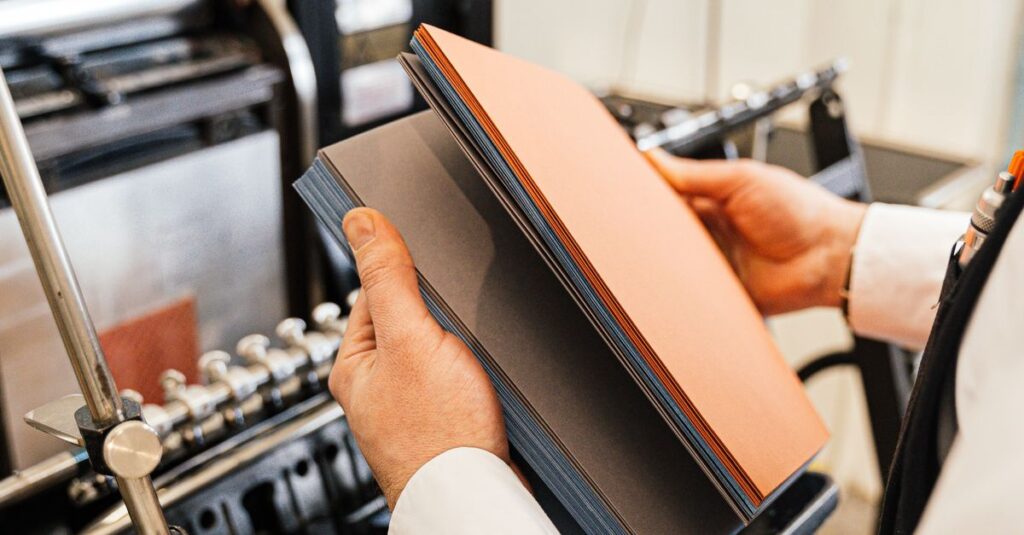
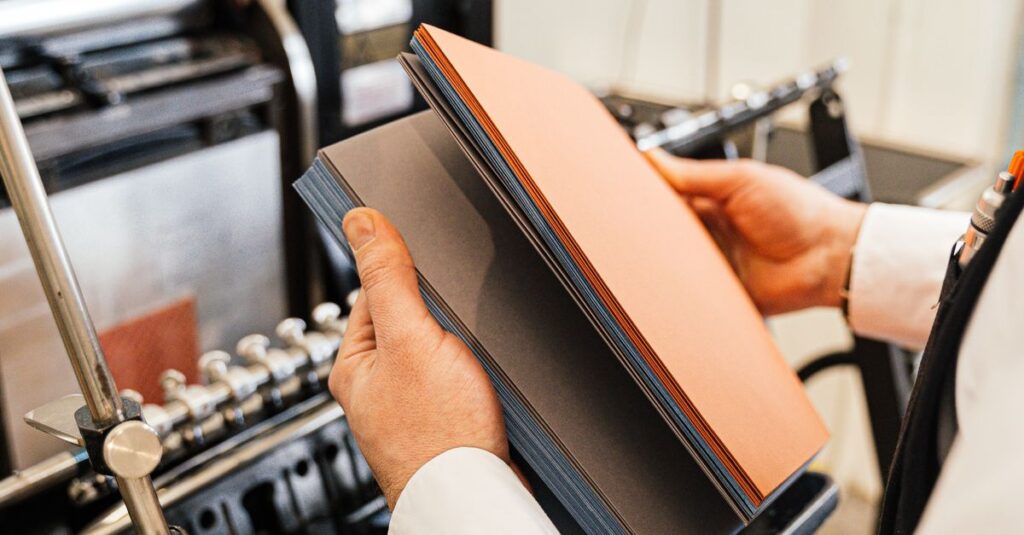
First, look for transparency about process. Can they explain their binding methods? Do they ask you about paper GSM or just assume? Second, ask about capacity. “Can you handle 10,000 units in a month?” is a very different question from “Can you print this file?” A real manufacturer will talk about machine schedules and raw material lead times. Third, and this is huge, ask for samples of their standard work. Not a glossy brochure. Actual notebooks. Feel the paper. Try to tear a page out. Bend the cover. A product that’s made to be used feels different in your hands.
Look, I’ll be direct. In our 40 years, the best clients are the ones who come with a problem, not just a file. “My teachers say the pages tear out.” “Our sales team wants a diary that lays flat in meetings.” “We need these to survive a monsoon season in a warehouse.” That’s when we can actually help. That’s manufacturing. The copy shop just says, “How many copies?”
Frequently Asked Questions
Can a photocopy shop make custom notebooks?
Technically, they can bind some pages together, but it won’t be a durable notebook. They lack the heavy-duty binding machines (like stitching or perfect binding), the right paper stocks, and the quality control for volume. For a few one-off personal notebooks, maybe. For any business or institutional order, no. You’ll get a stack of copied sheets with a weak binding that won’t last.
What’s the minimum order quantity for a notebook manufacturer?
It varies, but for true custom manufacturing (like with your logo and specs), it’s often around 500 to 1000 units. The reason is setup time. Calibrating the printing and binding machines for a unique product takes time. For 50 notebooks, that setup cost makes each one prohibitively expensive. For 1000, the cost per unit drops dramatically. That’s the economics of scale.
Is it cheaper to use a photocopy shop for bulk?
Almost never for true bulk. The per-page copy cost might seem low, but they add binding and service charges. More importantly, the materials are inferior. A manufacturer’s per-unit price for 2000 notebooks will be far lower and the quality far higher. The copy shop price is for a service. The manufacturer’s price is for a product. They’re different things.
What file do I need to provide for manufacturing?
For a photocopy shop, a PDF or Word file is usually enough. For a manufacturer, you need print-ready artwork with bleed and crop marks. They’ll also need separate files for covers and interiors if the design differs. A good manufacturer will guide you through this and often have a designer who can help prepare your files correctly. Don’t let this scare you — it’s part of the service.
How long does bulk notebook production take?
Don’t expect next-day. From finalizing artwork to delivery, a batch of 5000 custom notebooks can take 4-6 weeks. This includes proofing, paper sourcing, printing, binding, drying, quality checks, and packing. A photocopy shop job takes hours. This is the biggest mindset shift: manufacturing is a production cycle, not a quick print job. Plan ahead. Starting the conversation early is key.
The Takeaway
It boils down to intention. A photocopy shop is for replicating information quickly. A notebook manufacturer is for creating a tool that performs a function over time. One is about the immediate present; the other is about the useful future.
If you’re ordering for your business, your school, your distributors — you’re not buying paper. You’re buying utility, representation, and reliability. That comes from a production line, not a copy machine. The question isn’t whether you can get a notebook made at a copy shop. You can. The question is whether you’ll be happy with what you get, and whether it’ll do the job you actually need it to do. Nine times out of ten, for any serious order, the answer points you to a factory floor, not a retail counter.