Why A4 Size Matters More Than You Think
You see it on office printer settings, school supply lists, and international packaging. A4. It’s just paper, right? But if you’re ordering notebooks in bulk for a school, a corporate office, or your own brand, getting the size wrong isn’t a small mistake. It’s the difference between a notebook that feels right in the hands and one that gets left in a drawer. The A4 size — 210mm x 297mm, or 8.27 inches by 11.69 inches — is the unspoken global standard for a reason. It fits in briefcases, stacks neatly on shelves, and photocopies perfectly. But there’s a lot more to it than dimensions.
If you’re sourcing notebooks for your business or institution, understanding A4 is step one.
The A4 Paper Size, Explained Without the Jargon
Let’s break it down simply. The “A” in A4 comes from an international standard called ISO 216. The core idea is beautiful in its logic: if you fold an A0 sheet in half, you get A1. Fold A1 in half, you get A2. Keep going, and you land on A4. Each size maintains the same proportional aspect ratio (roughly 1:1.414). This means scaling a document from A4 to A3 or A5 keeps everything perfectly proportional — no weird cropping or stretched margins.
For notebook manufacturers like us, this system is a gift. It dictates everything from how we cut parent paper reels to how we design covers for different markets. An A4 notebook isn’t just a random choice; it’s a calculated decision based on portability, writing space, and compatibility. In most of the world outside North America, A4 is the default for official documents, schoolwork, and business correspondence. So when a corporate procurement manager in Europe or a school administrator in Asia orders notebooks, they’re almost certainly thinking A4.
Real-World Uses: Where You Actually See A4 Notebooks
It’s not just about paper. It’s about function. Here’s where A4 notebooks live their best life:
- Corporate Boardrooms & Offices: For formal minutes, project plans, and client presentations. The size conveys professionalism and offers ample space for detailed notes.
- University & Higher Education: Students use them for lecture notes, research, and dissertations. The large page is ideal for complex diagrams and long-form writing.
- Legal & Architectural Firms: Where sketches, drafts, and official notes need room to breathe and often need to be filed alongside standard A4 documents.
- Artist Sketchbooks: Many artists prefer A4 spiral-bound notebooks — big enough for substantial work, but still portable.
I was talking to a procurement manager for a chain of international schools last month. He said their biggest headache was receiving shipments of “A4” notebooks that were actually off by a few millimeters. Doesn’t sound like much, but when you’re trying to file student work in standard binders or run worksheets through a copier, that tiny difference brings the whole system to a halt. That’s the thing — precision matters.
A4 vs. Letter Size: The One Comparison You Need
This is where confusion usually happens. In the US and Canada, the default is “Letter” size (8.5″ x 11″). It’s close to A4, but not the same. A4 is slightly taller and narrower. Mixing them up in an international supply chain causes misfiling, misprinting, and frustration.
| Feature | A4 Size (ISO 216) | US Letter Size |
|---|---|---|
| Dimensions | 210 x 297 mm (8.27″ x 11.69″) | 216 x 279 mm (8.5″ x 11″) |
| Primary Use | Global standard for business, academic, and official documents. | Standard in the United States and Canada for general office use. |
| Aspect Ratio | 1:√2 (consistent across A-series) | ~1:1.2947 (unique to Letter) |
| Photocopying/Scaling | Scales perfectly to other A sizes (A3, A5). | Does not scale proportionally to A-series sizes. |
| Notebook Feel | Feels taller, more elegant; common in executive diaries. | Feels squarer, more familiar in North American markets. |
The takeaway? Know your audience’s location. Exporting notebooks to the UK, Australia, or Europe? You’re in A4 territory. Supplying a corporate office in Chicago? You’d better confirm if they want true A4 or are expecting Letter size. It’s a small detail that defines a professional order. For manufacturers like us, we keep both paper stocks on hand because you never know what the next bulk order will require.
Expert Insight
I remember reading an old industry report on paper standards. The researcher pointed out something obvious that most people miss. The A-series system wasn’t designed for beauty; it was designed for waste reduction. By using the mathematically perfect aspect ratio, paper mills and converters can cut sheets from larger rolls with almost zero off-cut waste. Every time we plan a production run for A4 notebooks, that efficiency translates directly into cost savings for bulk buyers. It’s not just about size — it’s about a smarter system.
Choosing the Right A4 Notebook: A Buyer’s Guide
Okay, so you need A4 notebooks. But which ones? Not all A4 notebooks are created equal. Here’s what to look for beyond the dimensions:
- Paper Quality (GSM): This is grams per square meter. For everyday writing, 70-80 GSM is good. For inkjet printing or heavy marker use, you need 90-100 GSM to prevent bleed-through. We use a 54 GSM writing paper for our standard school notebooks — it’s smooth, opaque enough, and keeps the overall notebook lightweight.
- Binding: How will it be used? Stitched binding (like in a hardcover book) is durable for archived notes. Spiral binding lets the notebook lie completely flat, perfect for artists or students. Perfect binding (glued spine) gives a clean, professional look for corporate diaries.
- Ruling: Single ruled (SR), double ruled (DR), unruled (UR), or graph (CR). Think about the user’s hand. Accountants might want GR for figures. Designers prefer UR.
- Page Count: This affects thickness and perceived value. A 200-page A4 notebook feels substantial for a project. A 52-page one is a quick meeting jotter.
Consider Ravi, a stationery distributor in Bangalore. He told me his best-selling A4 item isn’t the fanciest one. It’s a simple, 200-page, stitched-bound notebook with single ruling. Schools buy them by the pallet because they’re durable for a full academic year and cheap enough to issue to every student. Sometimes the right choice is the simplest one.
The Manufacturing Angle: How A4 Notebooks Are Made
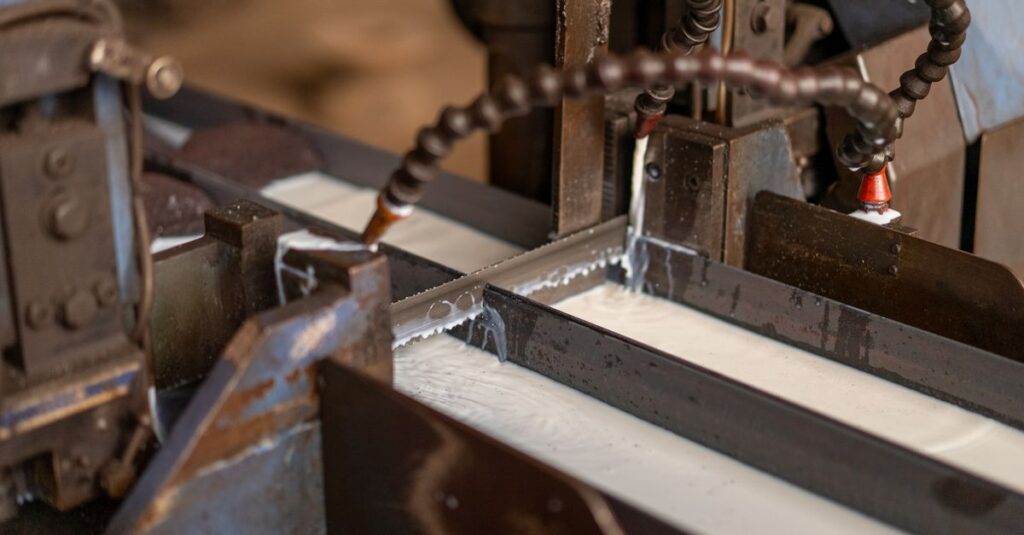
From our factory floor in Rajahmundry, here’s how an A4 notebook comes to life. It starts with massive parent reels of paper, often 100 inches wide. These are slit down to smaller rolls based on the A4 width. Then, the paper goes through a sheeter, which cuts it to the precise A4 length (297mm). This precision-cutting is crucial — a millimeter off, and it’s not A4 anymore.
The cut sheets are then collated into sections (called “signatures”), which are folded, stitched, or glued depending on the binding type. The cover — which is also cut to an A4 dimension with necessary spine allowance — is then attached. Finally, the notebook is trimmed on three sides to give it that clean, sharp edge. For a custom printed notebook, the cover design is printed on larger sheets before this final cutting stage. A factory like ours can produce tens of thousands of these in a day, but the principle remains: it’s a dance of precision engineering and scale.
And look, I’ll be direct. The biggest cost isn’t the paper. It’s the set-up time and the machine calibration to switch between sizes. That’s why bulk orders for a single, consistent specification — like 10,000 A4, 200-page, single-ruled notebooks — are so much more efficient for everyone. It keeps the price down for you.
Frequently Asked Questions
Is A4 the same as legal size?
No. Legal size paper in the US is 8.5″ x 14″, which is longer than both Letter and A4. A4 is an international standard, while Legal is a specific North American format.
What is A4 size in inches?
A4 size is 8.27 inches wide by 11.69 inches tall. It’s often rounded to 8.25″ x 11.75″ for simplicity in some markets, but the true ISO standard is the metric measurement.
Why is A4 size so popular worldwide?
Its popularity comes from the ISO 216 standard, which is used by most countries. It creates consistency for printing, copying, filing, and international document exchange. Once a system adopts it, everything else — folders, binders, printers — is designed around A4.
Can I get custom-printed A4 notebooks?
Absolutely. Most manufacturers, including us, offer custom printing services for A4 notebooks. You can add your company logo, specific rulings, or unique cover designs for branding or corporate gifts.
What is the best binding for an A4 notebook?
It depends on use. Spiral binding lies flat for writing/drawing. Stitched binding is more durable for archived records. Perfect binding (glued spine) looks sleek for executive diaries. Think about how the notebook will be used most.
The Bottom Line on A4
So, A4 size. It’s more than just numbers on a page. It’s a system of efficiency, a global language of paper, and a key specification that can make or break a bulk stationery order. For schools, it’s about compatibility with curriculum and copiers. For businesses, it’s about professionalism and seamless filing. For manufacturers, it’s a precise formula we build around.
The question isn’t whether you need to know about A4. If you’re ordering notebooks in any serious volume, you already do. The real question is whether you’re partnering with a manufacturer who understands these details as deeply as you need them to. If that sounds like the kind of precision you’re looking for, we should talk.