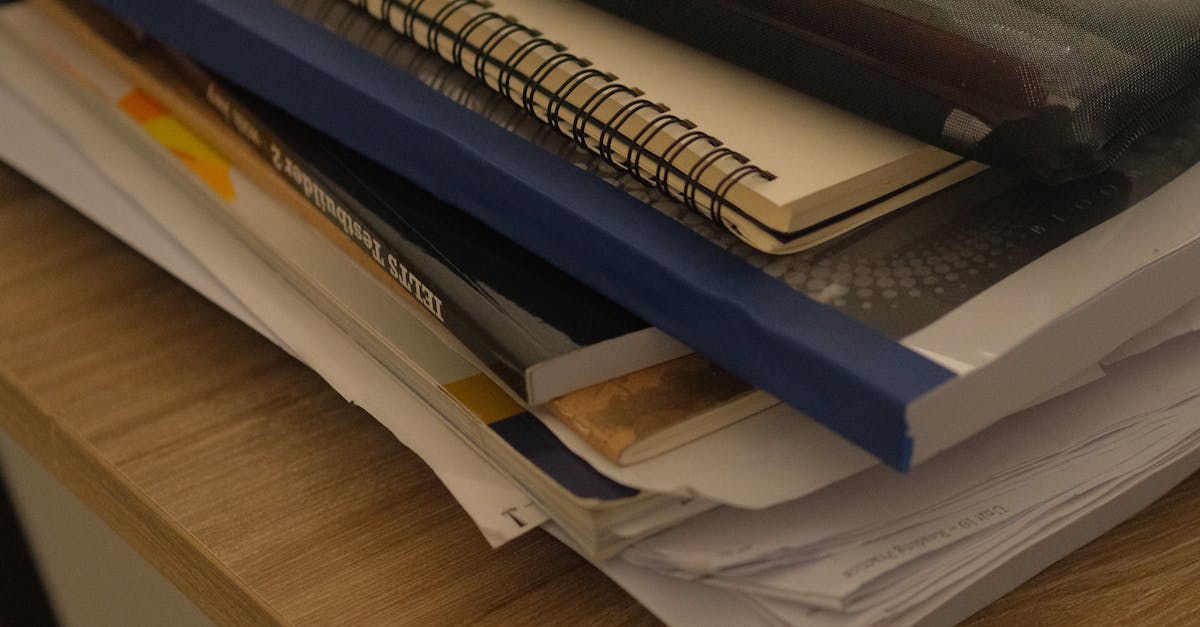
Let's Talk About The Most Boring, Important Thing In Your Office
It's Tuesday morning. Your procurement manager walks in and drops a sample notebook on your desk. “The new batch for the schools,” they say. You pick it up. It feels… off. The pages are too thin, the edges are rough, the ink from the custom logo bleeds through. Right there, before a single word is written, you've got a problem.
Nine times out of ten, the root of that problem isn't the binding or the cover design. It's the paper. And when we talk about notebooks in the business world, especially for bulk institutional orders, we're almost always talking about A4 paper. It's the silent, standardised backbone of corporate diaries, student notebooks, and office stationery. But nobody talks about what it actually is, or why getting it wrong costs you more than just money.
So, here's the thing. I've been in this industry for decades, and the most common mistake I see buyers make is treating paper like a commodity. It's not. It's the experience. If you're ordering bulk notebooks for a school, a corporate gift, or a government tender, you need to know this stuff. Let's break it down.
What A4 Paper Really Is (Beyond The Numbers)
Okay, the textbook definition: A4 paper is 210 mm wide by 297 mm tall. That's 8.27 by 11.69 inches. It's part of the ISO 216 standard, which is just a fancy way of saying it's a system where each size is half the area of the next one up. Fold an A3 sheet in half, you get A4. Fold A4, you get A5. Simple.
But that's not what matters to you. What matters is why it became the global standard for business and education. The proportions are designed to be pleasing to the eye—they maintain the same aspect ratio when you scale. This isn't just math; it's psychology. Documents look consistent. Printing is efficient with less waste. And for a notebook manufacturer like us, it means machines are calibrated for this one, predictable size. It streamlines everything from cutting the paper roll to binding the final book.
Think about it this way. When you specify A4 notebooks, you're not just picking a size. You're buying into an entire ecosystem of compatibility with printers, copiers, filing cabinets, and briefcases. It's the reason a notebook made in Rajahmundry fits perfectly in a boardroom in London.
A Real-Life Paper Problem
I was on a call with a distributor in Africa last month — let's call him David. He'd imported 10,000 “A4″ notebooks from a cheaper supplier. The books looked fine, but when his clients, a network of colleges, tried to photocopy pages from them, nothing lined up. The margins were wrong. The punch holes didn't match their binders. Turns out, the paper was cut to a sloppy 8.5″ x 11”, a close-but-not-quite size that's common in some markets. He had to sell them at a massive loss. The silence on that call had weight. All that over a few millimetres.
The Paper Quality Maze: GSM, Brightness, and Why You Should Care
Now we get to the part that makes or breaks a notebook. Size is one thing. The feel of the paper is everything. You'll hear terms like GSM and brightness thrown around. Let's translate.
GSM stands for Grams per Square Metre. It's the weight. For standard writing paper in an A4 notebook, you're typically looking at 70-80 GSM. This is the sweet spot. It feels substantial, resists show-through from the other side of the page, and can handle everything from a ballpoint pen to a fountain pen without bleeding. Go down to 60 GSM, and the pages feel flimsy, almost translucent. It shouts “cheap.” For a premium corporate diary, we might go up to 100 GSM or even 120 GSM for that luxurious, card-like feel.
Then there's brightness. It's exactly what it sounds like—how white the paper is, measured on a scale. Higher brightness (like 92 or 96) gives a sharper contrast for text and colours, making printed logos pop. But it's also more expensive. For school exercise books, a lower brightness around 84 is perfectly fine and much more economical.
Here's my direct observation after forty years: most institutional buyers fixate on page count. “Give me 200 pages!” But 200 pages of 55 GSM paper is a worse product than 120 pages of 75 GSM. The book will feel thicker, but it'll be a ghosting, bleed-through nightmare. I'd take the fewer, better pages every single time.
Notebook Manufacturing: Where A4 Paper Meets The Machine
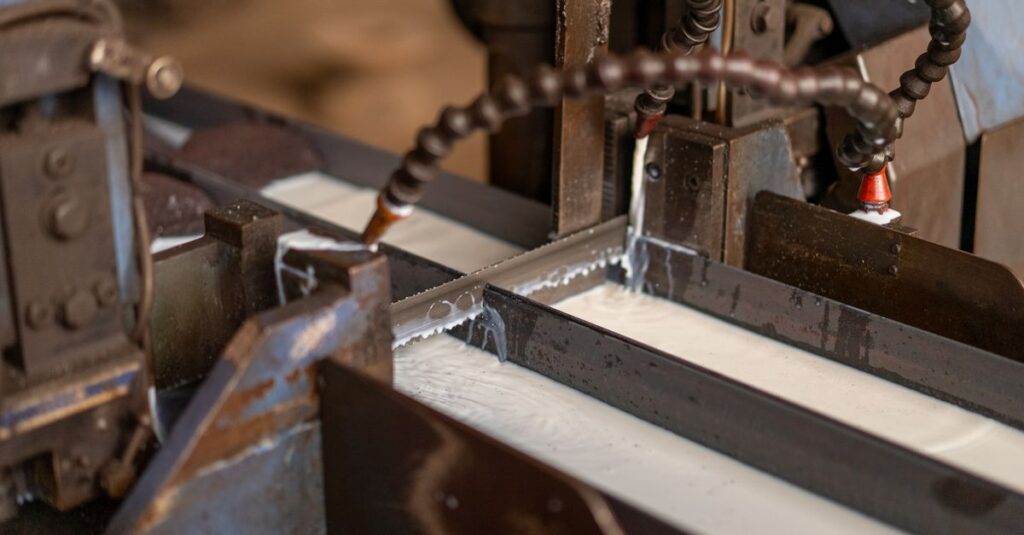
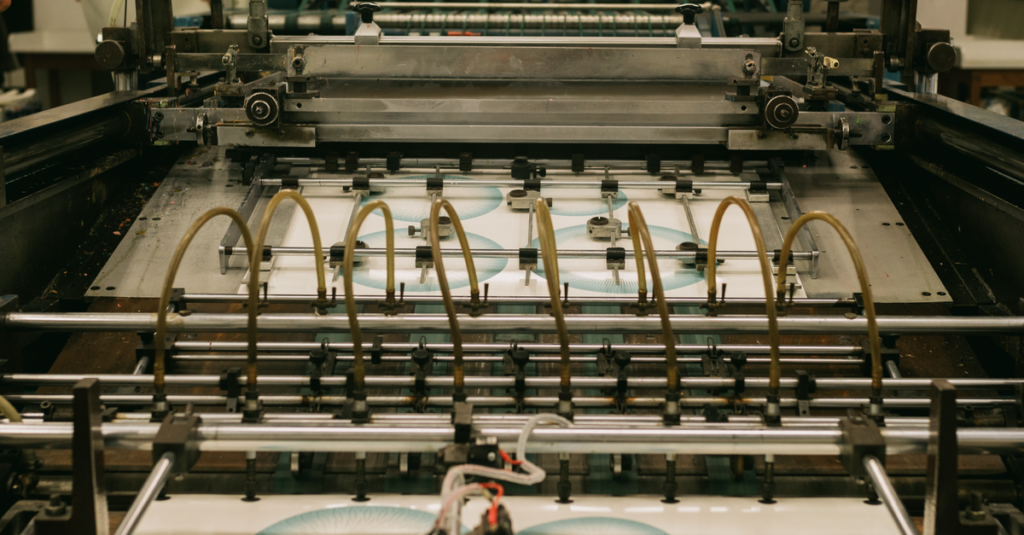
This is where the magic—or the mess—happens. You've ordered 50,000 custom A4 notebooks. How does that flat sheet become a book? The paper starts as massive rolls, often called “parent reels.” These are fed into a sheeter, which slices them into perfect A4 sheets. This step is crucial. If the cut is even slightly off-square, every subsequent process—printing, folding, binding—gets thrown out of alignment.
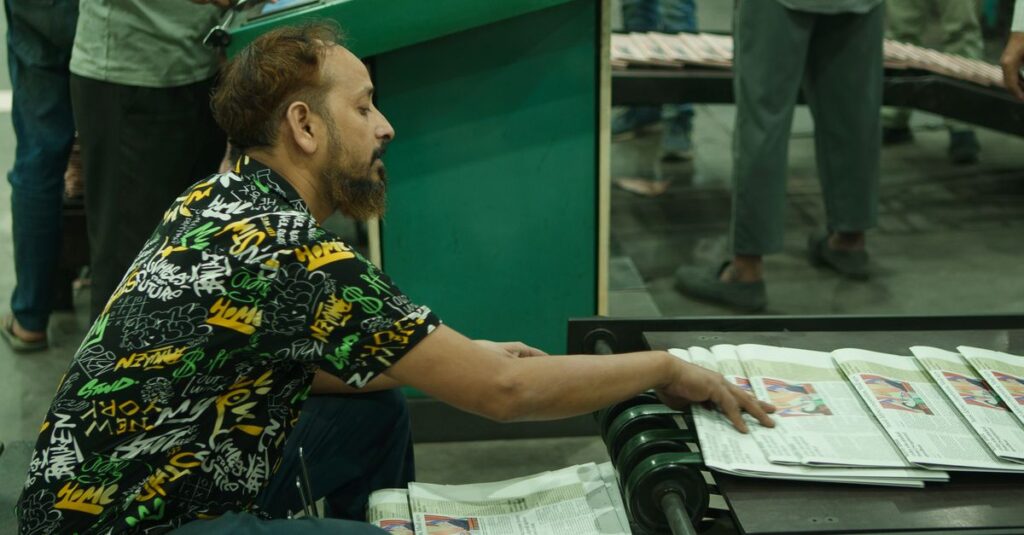
Then comes printing. For bulk orders, it's almost always offset printing. We're talking about printing the cover design, the logo, the ruling on the pages, the headers and footers. The paper has to be able to hold the ink without it feathering or soaking through. This is a chemistry experiment between the paper coating and the ink. Get it wrong, and your beautiful company logo looks blurry.
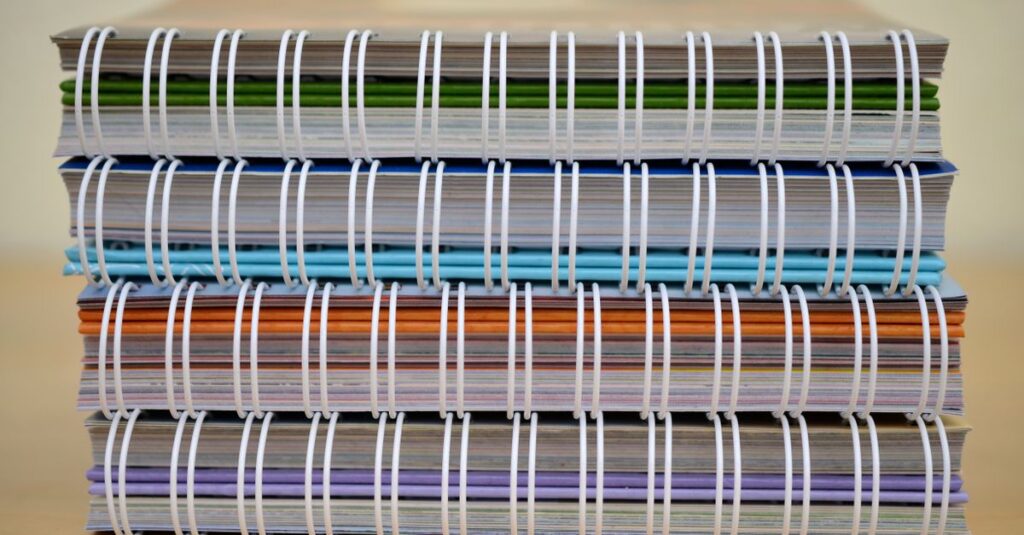
Finally, binding. For A4 notebooks, you have a few main choices:
- Stitched Binding (Saddle Stitch): Staples through the spine. Great for thinner notebooks (up to about 96 pages). Lies flat, cost-effective.
- Spiral Binding (Wire-O or Plastic): Coils through punched holes. THE choice for notebooks that need to fold back on themselves completely. Think lab books, artist pads. More expensive per unit.
- Perfect Binding: The pages are glued together at the spine with a strong adhesive. This is what most thick corporate diaries and premium journals use. It gives a clean, square spine for branding.
The choice here depends entirely on the notebook's use. A student's rough book? Stitched is fine. A designer's sketchpad? Has to be spiral. An executive gift diary? Perfect bound, no question. It changes the entire production line setup.
Expert Insight
I was reading a trade journal last month, and an engineer said something that stuck with me. He called the perfect A4 sheet “the point of maximum efficiency and minimum apology.” It's efficient for the machine, for shipping, for the user. And it apologises for nothing—if it's made right, it just works silently. I don't have a cleaner way to put it than that. The goal isn't for someone to marvel at the paper. The goal is for them to never have to think about it at all.
The Bulk Buyer's Dilemma: A4 vs. “Standard” Sizes
Here's where confusion sets in, especially for international buyers. In the US, the default “Letter” size is 8.5″ x 11″. It's close to A4, but it's not the same. It's slightly wider and shorter. This mismatch causes headaches in global supply chains.
| Feature | A4 Paper (ISO 216) | US Letter Size |
|---|---|---|
| Dimensions | 210 x 297 mm (8.27″ x 11.69″) | 216 x 279 mm (8.5″ x 11″) |
| Primary Market | Rest of the world (UK, Europe, Asia, Aus) | United States, Canada, Mexico |
| Aspect Ratio | √2:1 (Scales perfectly) | 1.2941:1 (Does not scale) |
| For Bulk Notebooks | Global standard, machines optimized for it. | Requires separate tooling and setups. |
| Printing/Photocopying | Documents may get cut off on US machines. | Documents may have margins on A4 machines. |
| My Recommendation | If you're supplying outside North America, this is the safe, professional bet. | Only specify this if your end-users are exclusively in North America. |
When you're sourcing, you need to be absolutely clear. Say “A4 as per ISO 216 standard.” Don't just say “standard size.” That word means nothing. This clarity saves weeks of corrective freight and angry emails.
Custom A4 Notebooks: Your Brand, On Paper
This is probably why you're really here. You don't just want A4 paper. You want A4 paper that becomes a marketing tool, a retention gift, a piece of your company's identity. Custom notebook printing is where the functional meets the emotional.
You can control everything: the cover material (hardback, soft-touch laminate, leather grain), the foil stamping of your logo, the design of the inner pages. Want your company values printed on the bottom corner of every right-hand page? Done. Need a specific ruling for accountants? Or a dot grid for designers? That's all part of the A4 canvas.
The paper, again, is key. For a custom notebook, you often need a slightly coated paper to make the colours vibrant. But over-coat it, and pens won't write smoothly. It's a balance. We do a lot of test prints—we have to. Because once you order 5,000 units, there's no going back.
Look, I'll be direct. A generic notebook costs X. A custom one costs X plus Y. But Y isn't just a cost; it's an investment. Every time an employee or client opens that book, they see your brand. It's tactile. It lasts. Compared to a digital ad that disappears in a scroll, it's permanent. Which is… a lot for a stack of paper to carry.
Frequently Asked Questions
What is the exact size of A4 paper in inches?
It's 8.27 inches by 11.69 inches. Remember, it's slightly taller and narrower than US Letter size (8.5″ x 11″). For precision in manufacturing and ordering, always use the metric dimensions: 210mm x 297mm.
What GSM paper is best for A4 notebooks?
For general writing and bulk school notebooks, 70-75 GSM is the industry sweet spot. It's durable, prevents ink bleed-through, and feels quality. For premium corporate diaries, go for 90-100 GSM. Don't go below 60 GSM for anything you want to last.
Can I get A4 notebooks with different rulings?
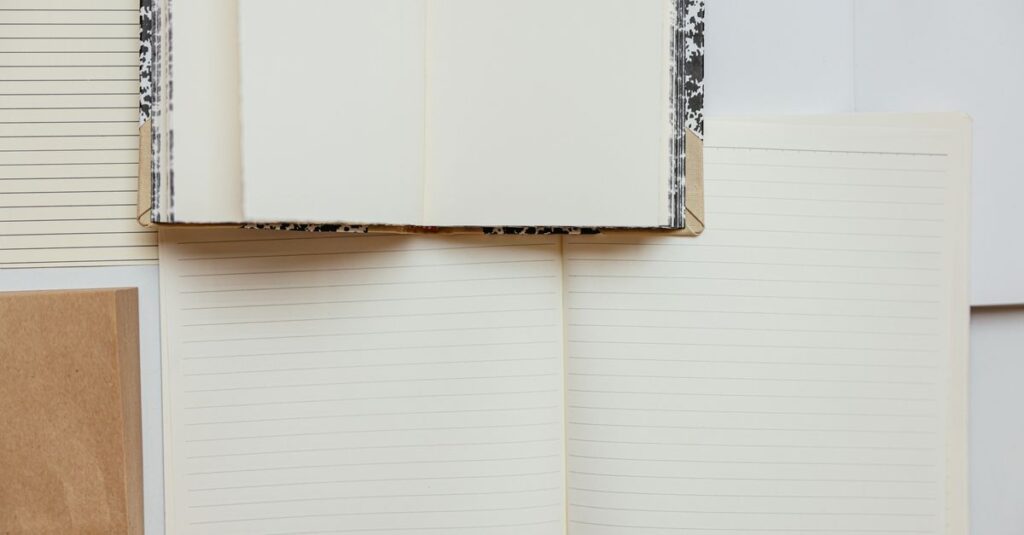
Absolutely. This is a major part of customization. The common ones are Single Ruled (SR), Double Ruled (DR), Unruled (UR), and Four Ruled (for handwriting practice). For specialized needs like graph paper or ledger rulings, any notebook manufacturer worth their salt can set that up for your bulk order.
Is A4 paper used for all notebook sizes?
No. A4 is one specific size. Many common notebooks are smaller. For example, a “Long” notebook is often closer to A5 size (half of A4), and a “Short” notebook is even smaller. A4 is typically for formal notepads, office stationery, and larger diaries. You choose the size based on how the notebook will be used and carried.
How do I choose a supplier for bulk A4 notebooks?
Ask for physical samples first. Always. Test the paper with the pens you use. Check the binding. Look at their experience and client list. And be wary of the lowest quote—it usually means corners were cut on paper quality or binding strength. Your reputation is bound into those pages.
The Unresolved Truth About Paper
So, we've talked dimensions, GSM, binding, and standards. The technical stuff. But I think the real thing you're buying is trust. You're trusting that this stack of processed wood pulp won't let down your students, your employees, or your clients. That it'll hold their ideas without comment.
A4 paper, when it's done right, is invisible. It's the stage, not the actor. And that's the highest compliment you can give to a manufactured product. The question isn't whether you need to understand it. It's whether you can afford not to.
I don't think there's one perfect answer for every order. Probably there isn't. But if you've read this far, you're not just looking for paper—you're looking for a partner who gets that the details are the product. And that's the whole game.