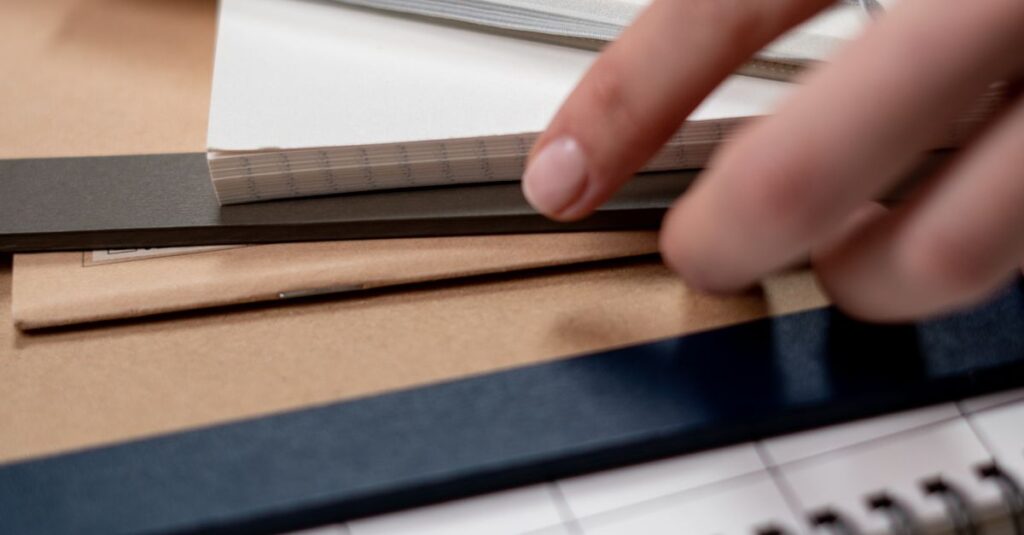
Look, nobody buys notebooks for the cover.
You think about the feel, right? The way the pen moves. The sound the page makes. Whether it bleeds through. I was talking to a school principal last week — over coffee, actually — and she said something I keep thinking about. “We get through thousands of notebooks a year,” she said. “If the paper sucks, the teachers complain, the kids can’t work, and I get a headache by November.” That’s the thing. This isn’t just stationery. It’s the tool people use to think, plan, and learn. And the heart of that tool is the paper.
If you’re buying notebooks in bulk — for a school, a corporate office, a government tender — you’re probably juggling price, durability, and that unspoken need for quality. You might be searching for book paper specs and getting a wall of jargon: GSM, opacity, brightness. It’s confusing. And honestly? Most suppliers make it confusing on purpose.
Anyway. Let’s talk about what actually matters. If you’re sourcing notebooks seriously, this might be worth a look.
The Real Stuff: What “Book Paper” Actually Means
First off, the term “book paper” is a catch-all. It’s not one thing. In our factory, when someone says “book paper,” we’re talking about the writing-grade paper that goes between the covers. It’s designed to be written on, not just printed. And the biggest factor — probably the biggest reason notebooks feel cheap or premium — is the GSM.
GSM stands for grams per square meter. Think of it as the paper’s weight and density. A higher GSM means a thicker, more substantial sheet. Most standard school notebooks? They use around 54 to 60 GSM paper. It’s the workhorse. Thick enough to handle a ballpoint without tearing, thin enough to keep the book from becoming a brick.
Here’s where it gets messy. Some manufacturers will sell you 40 GSM paper and call it “standard.” And it is — for newspapers. You write on that, and the ink ghosts through to the other side. The page feels flimsy. Kids press too hard and rip it. For a procurement manager, that means complaints. For a teacher, it means wasted time. For us, after forty years of making these things, it means choosing a paper that won’t let the user down. Which is harder than it sounds.
Three things happen when you get the GSM wrong: the notebook feels insubstantial, writing becomes a chore, and the whole product loses trust. You know?
A Day in the Life of Bad Paper
Let me tell you about Anil. He’s 42, runs procurement for a mid-sized tech firm in Hyderabad. Orders five thousand corporate diaries every New Year. Last year, he went with a cheaper supplier. The diaries looked fine — nice cover, logo stamped cleanly. But the paper was 45 GSM. Thin. Almost translucent.
Anil got the first complaint in January. A project manager sent a photo of her meeting notes, the ink from one page clearly visible on the next. “Looks unprofessional,” she wrote. By March, the HR head was asking if they could switch brands mid-year. The diaries sat on desks, half-used, a quiet reminder of a cost-cutting decision that backfired. Anil spent more time managing the fallout than he saved on the unit price.
I don’t have a cleaner way to put it than that. The paper is the experience.
GSM, Opacity, Brightness: The Trifecta Nobody Explains
So you’ve got your GSM sorted. 54, 70, maybe 100 for a premium diary. Good. But then there’s opacity — how much show-through there is. And brightness — how white the page looks. These three work together. A high GSM paper with poor opacity will still ghost. A bright white paper with low GSM will feel cheap.
Most people don’t realize this: brightness is a psychological trick. A brighter, whiter page feels cleaner, more official. It’s why most corporate stationery opts for high-brightness paper. But in a school notebook? Sometimes a slightly off-white, creamier shade is easier on the eyes for long writing sessions. It’s not worse; it’s fit-for-purpose.
We run tests in the factory. Literally, we have people write with different pens on different paper batches. Ballpoint, gel, fountain pen. You’d be surprised how a paper that works for one bleeds with another. The goal isn’t a perfect paper. It’s a reliable one. That’s the whole point of controlled manufacturing — you control the variables so your buyer doesn’t have to.
Expert Insight
I was reading an old industry manual last month — one from the 90s — and one line stuck with me. It said, “Paper is the silent partner to the writer.” I think about that a lot. The more invisible the paper is, the better the writing experience. When you’re not fighting the page, you can focus on the words. That’s the real job of book paper: to disappear. Not literally, but to get out of the way. We don’t always nail it. But that’s what we’re aiming for.
Notebook Paper vs. Printing Paper: Why It’s Not the Same
This is a common mix-up. Someone will ask, “Can’t we just use A4 copier paper for notebooks?” Technically, yes. Practically, it’s a disaster waiting to happen.
Book paper is engineered for binding. It has a different grain direction, a different surface sizing. Printing paper is made to fly through a laser printer at high speed. Notebook paper is made to lie flat when bound, to resist curling at the edges, and to withstand being folded back on itself. It’s a durability thing.
Think about a spiral-bound notebook. The paper is punched. If it’s standard printer paper, those holes tear. The pages come loose. Book paper is tougher around the edges — literally. It’s made to be handled, not just fed through a machine once.
| Feature | Notebook / Book Paper | Standard Printing Paper |
|---|---|---|
| Primary Use | Handwriting, durability, binding | High-speed printing, copying |
| Surface Finish | Smooth, often coated for ink control | Optimized for toner adhesion |
| Binding Strength | High – resistant to tear-out | Low – not designed for punching |
| Opacity | Higher priority to prevent show-through | Variable, often lower |
| Cost Focus | Cost-per-durable-page | Cost-per-printed-sheet |
See? Different tools. Using printing paper for a notebook is like using racing tires on a truck. They’re both round and black, but they’ll fail at the wrong moment.
The Bulk Buyer’s Checklist (What to Ask Your Supplier)
Okay. So you’re evaluating a manufacturer for a big order. Maybe fifty thousand notebooks for the next academic year. What do you ask about the paper? Don’t just ask for GSM. That’s step one.
Here’s my list — the things that separate a professional supplier from a guy with a binding machine:
- Ask for a physical sample. Not a photo. Write on it with the pen your users will use. Fold the corner. Hold it up to the light.
- Ask about the paper source. Is it imported pulp? Domestic? Consistent supply matters more than you think for re-orders.
- Ask about opacity rating. A good supplier will know this number. If they don’t, that’s a red flag.
- Specify the ruling. This affects paper choice. A single-ruled sheet has different stress points than a quad-ruled graph page.
- Ask about batch consistency. Will the paper in the June shipment match the November shipment in color and feel?
I’ve heard this enough times now to know it’s not coincidence. The buyers who ask these questions get better products. They also get taken more seriously by the factory. It shows you know what you’re buying.
Binding & Paper: The Relationship Everyone Ignores
The binding type dictates the paper you can use. This is the part nobody says out loud until there’s a problem.
Perfect Binding (like a paperback book): Needs a specific paper grain direction and flexibility. Use a too-stiff paper, and the glue won’t hold; the pages fall out.
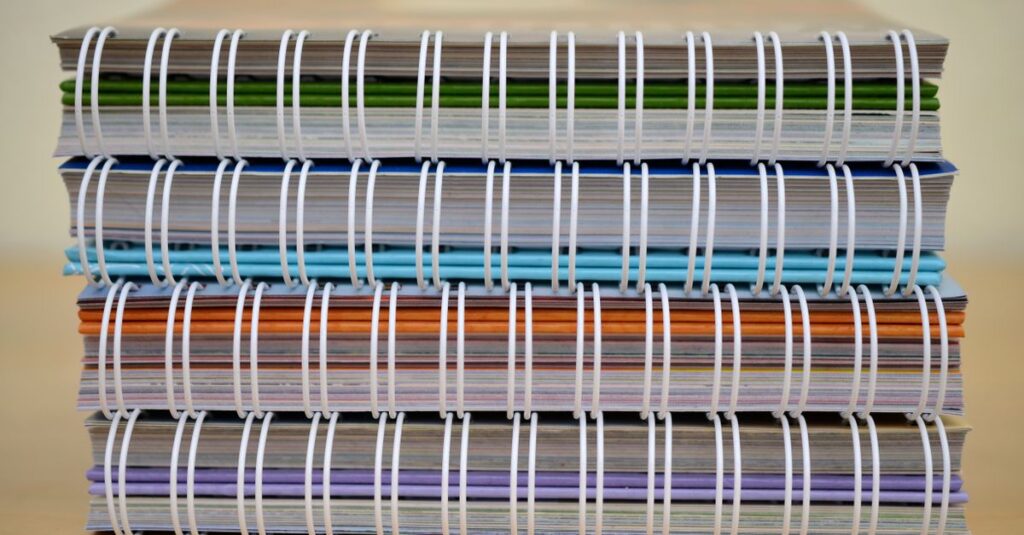
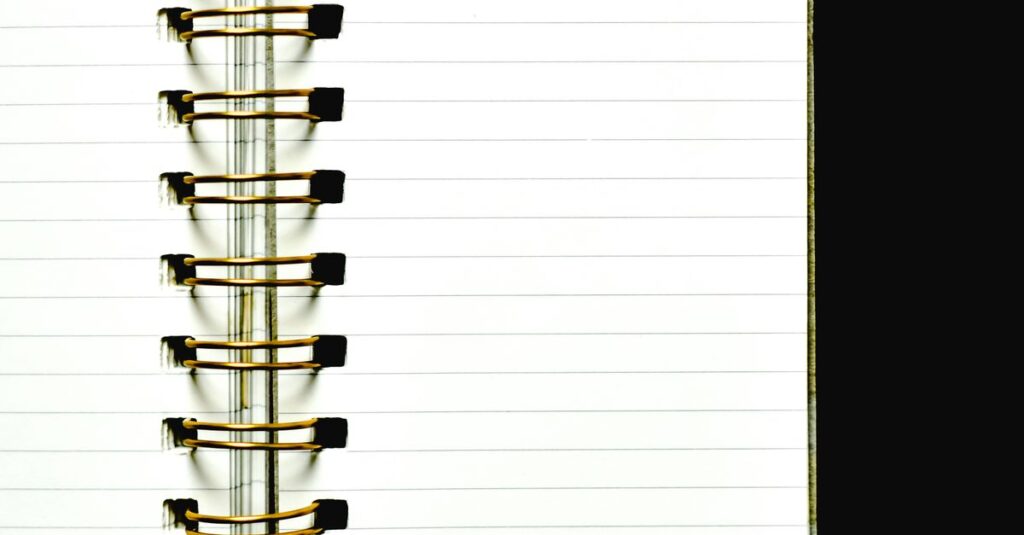
Spiral Binding: The paper has to be punchable without turning to confetti. It also needs to rotate smoothly around the coil without tearing at the holes. This is where GSM and fiber length are critical.
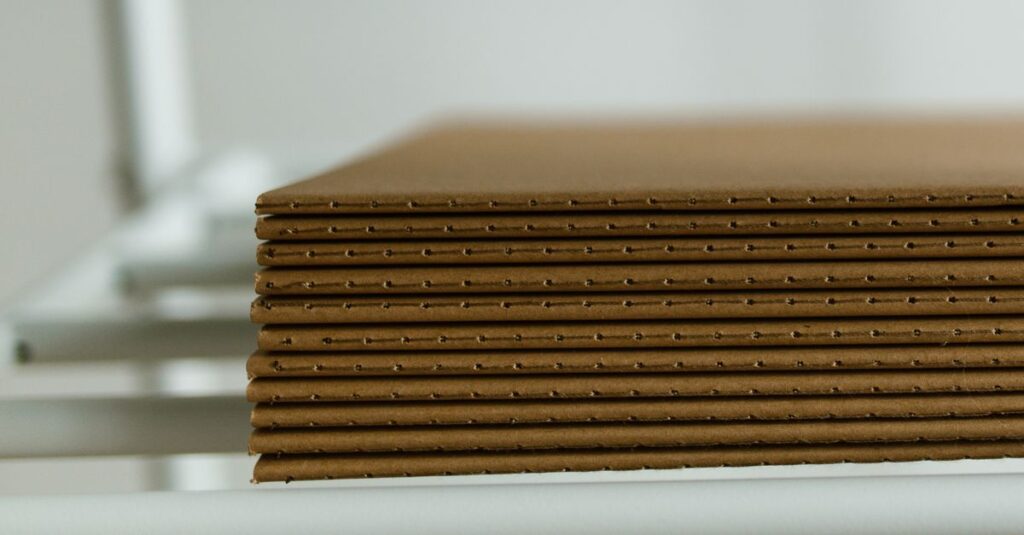
Stitched Binding (like traditional school notebooks): This is the most forgiving, honestly. But even here, the paper stack has to be even for the stitching machine to work cleanly. In our Rajahmundry factory, we run the stitchers slower for higher GSM papers. It’s a rhythm thing.
You can’t just pick a paper and then pick a binding. They’re a package. A good manufacturer will guide you through this. A bad one will say “yes” to whatever you ask for and then deal with the fallout later. Which is… a lot to sit with when you’ve got ten pallets of defective notebooks.
Look, I’ll be direct. This is why working with an experienced manufacturer isn’t a luxury; it’s a risk mitigation strategy. They’ve already made the mistakes so you don’t have to. Forty years in one place teaches you which corners not to cut.
Conclusion: It’s Not Just Paper
When you drill down past the specs, buying book paper for notebooks is buying a promise. The promise that the tool won’t fail the person using it. Whether that’s a student during exams, an accountant at year-end, or an executive in a board meeting.
The weight, the feel, the opacity — they all add up to trust. Trust that the notes will stay put, that the ideas will be legible, that the object in hand is dependable. In a world of digital noise, that’s a tangible thing.
I don’t think there’s one perfect paper for every need. Probably there isn’t. But if you’ve read this far, you already know what you’re looking for — you’re just figuring out who can actually deliver it. Maybe start a conversation with someone who’s been making that promise for a while.
Frequently Asked Questions
What is the best GSM for school notebooks?
For general school use, 54 to 70 GSM is the sweet spot. It’s durable enough for daily handling and writing with pencils or ballpoints, but still keeps the notebook light and affordable. For younger kids who press harder, lean towards 70 GSM.
How does paper quality affect custom notebook printing?
Massively. Lower quality paper (lower GSM, poor opacity) will cause ink to bleed or appear dull, ruining your custom logo or design. Good book paper provides a clean, consistent surface that makes your branding look sharp and professional.
Can I get different paper for different pages in one notebook?
Yes, but it’s complex. It requires precise scheduling on the manufacturing line. It’s common for things like account books to have plain and ruled pages, or for notebooks to have a section of graph paper. You need a manufacturer with experience in mixed-page binding.
What does “brightness” mean in notebook paper?
It refers to how much light the paper reflects, measured on a scale. Higher brightness (like 90+) means a whiter, brighter page. It looks cleaner and offers better contrast for writing. However, very high brightness can cause glare under certain lights.
Why do some notebook pages tear out easily?
Usually, it’s a combination of low GSM (thin paper) and a binding method that’s too aggressive for that paper’s strength. Spiral bindings on weak paper is a classic culprit. The paper can’t handle the stress around the perforations.