Look, The Real Question is Simpler Than You Think
So you need notebooks. A lot of them. For a school, an office, a government tender. You hear terms like A5, A4, Crown Size. And you think — okay, but what does that actually mean for me? Right now?
You’re not looking for a Wikipedia entry. You need to know if it fits in the bag. If the cost per unit works out. If the paper is good enough for pen ink not to bleed through. If your logo will look sharp on the cover. If you can get 10,000 of them by next quarter.
I’ve been doing this for over four decades. Running Sri Rama Notebooks out of Rajahmundry since 1985. And the confusion around ‘book size A5’ is one of the most common, simple, yet frustrating conversations I have with procurement managers. The info online is either too technical or just plain wrong for bulk buyers. So let’s just talk. Honestly.
If you’re here to figure out if A5 is the right size for your bulk order, this is probably where you should start looking.
So, What Exactly is A5? (And Why Should You Care?)
Forget the metric system lecture. Here’s what you need to know, practically.
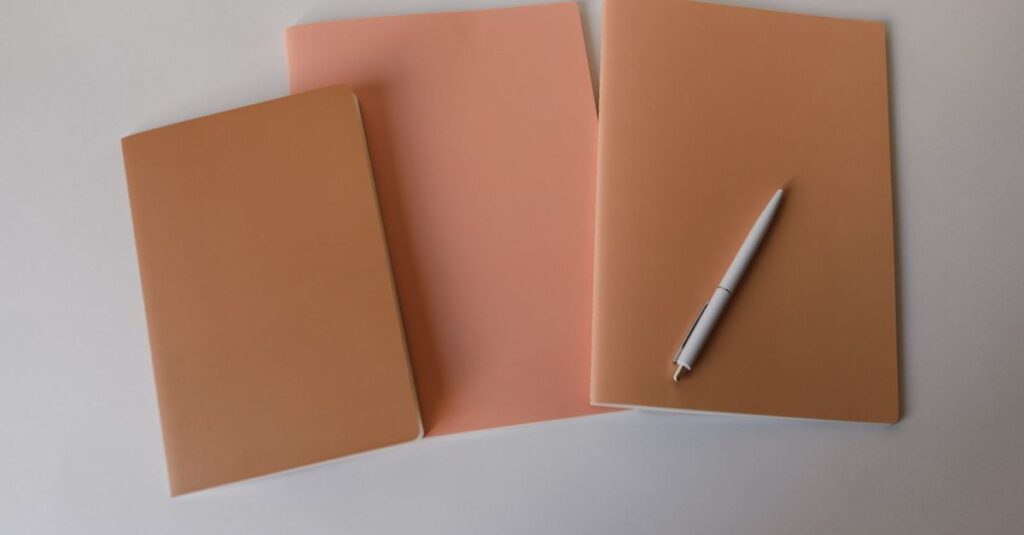
An A5 notebook is essentially half of an A4 sheet. You know A4 — standard printer paper. Take that, fold it in half width-wise. That’s your A5. The official dimensions are 148mm x 210mm. In inches, that’s about 5.8″ x 8.3″.
But here’s the part nobody says out loud: those are the trimmed sizes. The paper size before it’s cut and bound is always a bit bigger. In manufacturing, we call that the ‘bleed area’. If you’re getting custom printing, you need to know that. If your designer sends a cover image that goes right to the 148mm edge, it’s going to get trimmed off. It’s a tiny detail that wastes money and time.
Think about it this way. It’s the perfect middle child. Not as imposing as an A4 corporate report, not as tiny as an A6 pocket jotter. It’s the size of a standard novel. It fits in most laptop bags, handbags, and backpack sleeves without a fight. It feels substantial enough for meeting notes but casual enough for a daily journal.
And honestly? That’s its superpower.
Who Actually Uses A5 Notebooks? (The Real-World Breakdown)
Let me tell you about Priya. She’s 34, a project manager for a tech firm in Hyderabad. Her company ordered 500 custom A5 notebooks last Diwali for employee gifts. Priya carries hers everywhere. Team stand-ups, client calls, even her weekly grocery list is in there. She told me — over email, this was — that the A4 felt like ‘carrying a textbook to a coffee chat.’ The A5 just… worked.
That’s one person. When you’re ordering in bulk, you need to think in categories.
- Corporate Teams & Trainers: For workshops, onboarding kits, conference swag. It’s professional but not overly formal. Ideal for branding.
- University Students: Especially for humanities, business courses. Big enough for lecture diagrams, small enough to carry three at once.
- Creative Professionals: Designers, writers, architects (for quick sketches). The proportion feels good for ideas.
- Healthcare & Field Staff: Nurses, surveyors. Fits in a lab coat pocket or a field kit.
- High School Students: This is a big one in India. Many CBSE and ICSE schools are moving to A5 for senior classes — it’s a bridge between the smaller school notebooks and the A4 college pads.
The question isn’t ‘is A5 popular?’ It’s ‘is A5 the right tool for the job you’re giving it?’
A5 vs. The Competition: Cutting Through the Noise
You’ll get options. Lots of them. Let’s put the two biggest contenders side-by-side. This isn’t about which is ‘better.’ It’s about which is better for your specific need.
| Feature | A5 Notebook (148×210 mm) | Standard Long Notebook (272×171 mm) |
|---|---|---|
| Primary Feel | Compact, portable, modern. Feels ‘designed.’ | Traditional, familiar. The ‘default’ Indian school notebook. |
| Best For | Corporate gifting, professional use, college notes, creative work. | School assignments, exam writing, bulk academic use where low cost/page is key. |
| Perception | Premium, intentional. Often associated with quality. | Utilitarian, economical. Associated with volume writing. |
| Binding & Durability | Excellent for spiral or perfect binding. Lies flat easily. | Typically side-stitched. Can be bulkier at the spine. |
| Cost Implication (Bulk) | Slightly higher per unit due to cutting & modern formats. Better for custom print margins. | Often the most cost-effective per unit due to standardized, high-volume production. |
| Customization | Highly brandable. Clean cover space for logos. | Customizable, but often retains a more ‘school notebook’ aesthetic. |
See the difference? It’s not about specs. It’s about context. Ordering A5 notebooks for a primary school government tender is probably a waste of budget. Ordering Long Notebooks for a boutique consulting firm’s client gift? Might feel cheap.
You have to match the tool to the job. Every single time.
Expert Insight
I was reading an industry report last month — one of those dry PDFs — and one line stuck with me. The analyst said the shift towards standardized ISO sizes (A4, A5, A6) in institutional buying isn’t really about global standards. It’s about predictability. A procurement manager in Dubai, a school principal in Andhra Pradesh, and a stationery wholesaler in London all know exactly what they’re getting with ‘A5’. It reduces friction in a way that ‘Crown Size’ or ‘Demy’ just doesn’t. I don’t have a cleaner way to put it than that. The world is slowly, boringly, standardizing. And A5 is winning the notebook war.
What Bulk Buyers Forget to Ask About A5
Here’s the thing. Everyone asks about dimensions and page count. The smart buyers ask about the stuff that happens between those numbers.
- Paper GSM & Show-Through: With A5’s smaller page, you might be tempted to go with thinner, cheaper paper to hit a price point. Bad move. On a smaller page, lower GSM (like 50 or below) means the writing on the other side shows through more clearly. It looks and feels cheap. For A5, I rarely recommend going below 70 GSM for a quality feel. It’s the single biggest differentiator between a notebook that feels premium and one that feels disposable.
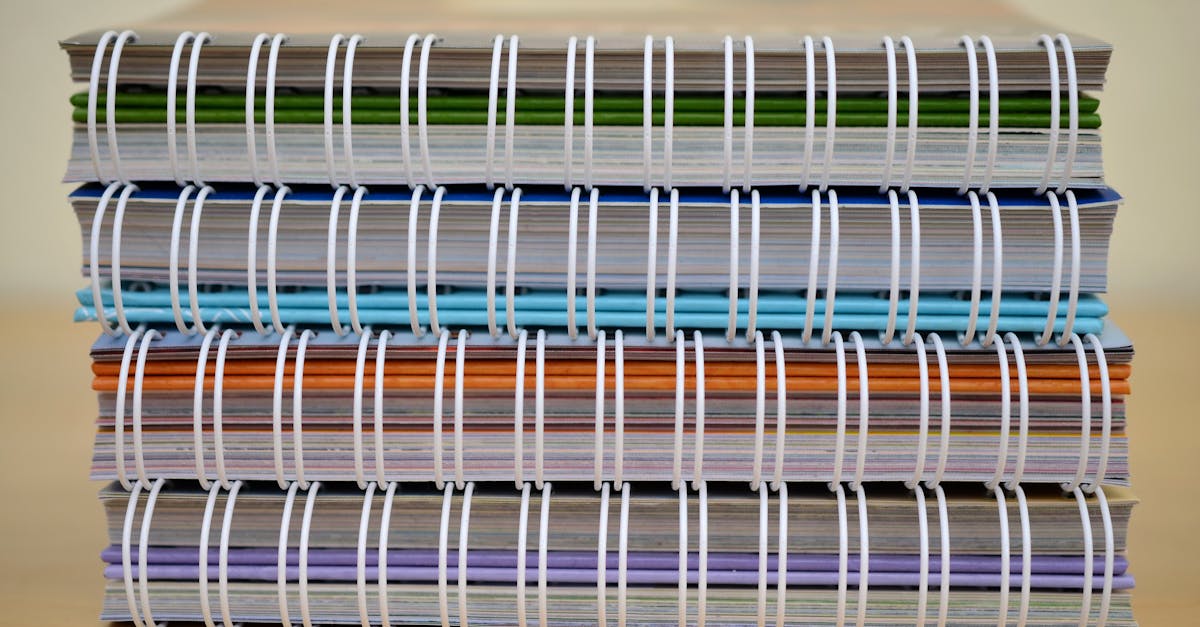
- The Binding Bottleneck: A5 is fantastic for spiral binding — it’s robust and lies perfectly flat. But if you’re ordering 50,000 units, you need to know if your manufacturer’s spiral wire machines are set up for that specific size. Changing machine settings eats time. Time is money. Ask: ‘Is this a size you run regularly, or is this a custom setup?’
- Packaging & Shipping: This is a headache, honestly. A5 packs flatter than a taller ‘Long’ notebook, but it’s wider. That changes your carton dimensions. A small change in carton size can mean you fit 100 fewer units per pallet. That increases your shipping cost per notebook. You need a supplier who understands logistics, not just printing.
These are the three conversations that separate a smooth order from a nightmare. Most people don’t realize it until they’re in the middle of it.
And if you’re starting to think about the nitty-gritty of paper and binding, our printing services page breaks down the options without the jargon.
Let’s Talk Money: The Real Cost of an A5 Notebook
I’ll be direct. I can’t give you a price here. Paper costs change weekly. But I can tell you what drives the price, so you can spot a quote that’s too good to be true.
The cost of an A5 notebook in bulk is a pile of little things. The paper grade (70 GSM vs. 80 GSM). The cover stock (200 GSM art card? 250?). The ruling (single-ruled is standard, but four-ruled for younger kids costs more to print). The binding (spiral adds cost over simple stitching). The ink coverage on your custom cover (a full-color photo vs. a simple logo). The packaging (individual polybags? Bulk in cartons?).
A supplier offering you a rock-bottom price is cutting corners on at least two of those things. Probably the paper and the binding. The result is a notebook that falls apart in a month and makes your brand look bad.
Here’s a rule of thumb I’ve seen hold true: For a decent quality, custom-branded A5 notebook with 92 pages of 70+ GSM paper, in orders over 5,000 units, you should be thinking in terms of tens of rupees per piece, not single digits. If someone offers you single digits, ask them what the paper GSM is. Just ask. The silence is usually very loud.
The Customization Game: Making an A5 Notebook Yours
This is where it gets fun. Or stressful. Depending on your day.
Customizing an A5 notebook is easier than most sizes. The cover is a clean, broad canvas. You can print edge-to-edge. You can emboss a logo. You can add spot UV coating to make parts shine. You can have different colored edges on the paper. You can even have custom-designed interior pages — like project planning layouts, goal trackers, or specific column formats for engineers.
But — and this is a big but — every single one of those ‘extras’ adds a step in the factory. Embossing needs a die to be made. Spot UV needs a separate machine pass. Custom interiors need new printing plates.
I think — and I could be wrong — that most corporate buyers over-design. They want everything. Foil, emboss, custom icons on every page. The cost triples, and the production time goes from 4 weeks to 12. Sometimes, a clean, sharply printed logo on a nice colored cover is all you need. It looks classy, it’s deliverable on time, and it stays within budget.
Which is… a lot to sit with. You want it to be perfect. But perfect is the enemy of ‘shipped’.
Frequently Asked Questions
Is A5 the same as a ‘Half Letter’ size?
No, they’re close but different. A5 is an international ISO standard (148x210mm). ‘Half Letter’ is a North American size (140x216mm). They’re similar, but if your design is made for one, it might not fit perfectly on the other. For international orders, always specify ‘A5’ to avoid confusion.
What is the most common page count for an A5 notebook?
For bulk orders, 92 pages and 200 pages are the most popular. 92 pages gives a substantial feel without being too thick, ideal for corporate gifts or quarterly project notes. 200 pages is the workhorse for students or professionals who write a lot. We also do 52, 240, and 320 pages — it really depends on the intended use.
Can A5 notebooks be made with perforated pages?
Yes, absolutely. It’s a common request for tear-out shopping lists, meeting notes to hand out, or exercise sheets. It requires a perforating blade on the binding line, which is standard equipment in most modern notebook manufacturing setups. Just be aware it adds a tiny bit to the cost.
Is A5 a good size for children in primary school?
Usually not. For younger kids (Classes 1-5), their motor skills are still developing. They need larger spaces to form letters. A ‘Short’ or ‘Crown Size’ notebook with broader rulings (like Broad Ruled or Four Ruled) is typically better. A5 is better suited for senior students (Class 8+) and adults.
How many A5 notebooks come in a standard shipping carton?
It varies by thickness, but for a standard 92-page A5 notebook, we typically pack 100 notebooks per master carton. This creates a manageable box weight (around 10-12 kg) and optimizes pallet space for shipping. Always confirm the packing quantity with your supplier — it affects your logistics cost.
Wrapping This Up (Without the Motivational Speech)
So, book size A5. It’s not magic. It’s a specific tool. A very good, versatile, globally understood tool.
If you need portable, professional, brandable notebooks for a discerning audience, it’s probably your best bet. If you’re buying for a primary school or a situation where the absolute lowest cost-per-page is the only metric, look at the traditional Long or Short sizes.
The real work starts now. Getting samples. Feeling the paper. Testing a pen on it. Seeing how your logo looks on the cover mock-up. That’s where you’ll know.
I don’t think there’s one perfect notebook for everyone. Probably there isn’t. But if you’ve read this far, you’re not just buying paper — you’re buying a tool for your team, your students, your brand. You’re already thinking about the right things; you’re just figuring out who to trust with making them.
Talking to someone who’s made millions of them is usually a decent next step.