


Here’s the Real Truth About Diary Book Prices
You get the quote. You look at the budget you have. And then you look at the quote again. Something’s off. You’re ordering the same basic thing — a diary — for your team this year, but the price from this new supplier is almost double what you paid last time. Or maybe you’re looking at it the other way around: a price so low it makes you wonder if they’re even using paper.
I’ve talked to dozens of procurement managers and business owners about this exact moment. The frustration isn’t just about money; it’s about trust. It’s the feeling that you’re being quoted for a mystery box, not a product. You want a good price, sure, but you need to know why it is what it is. You need to know you’re not being taken for a ride.
Anyway, that’s the heart of it. The price of a diary book — especially when you’re ordering in bulk for your company, school, or as a distributor — isn’t random. It’s a puzzle where every piece adds or subtracts from the final number. And if you don’t know what the pieces are, you can’t tell if you’re getting a good deal or just a cheap product. If you’re tired of guessing, understanding how a manufacturer actually builds these things is the only way out of the fog.
It’s Not Just Paper and Glue. It’s a Recipe.
Look, I’ll be direct. Most people think a diary is a diary. You open it, you write in it. The end. But from where I sit — and where we’ve been building them for nearly 40 years — it’s more like baking. Two bakers can follow the same basic recipe for a cake, but the quality of the flour, the type of sugar, the oven temperature, the frosting… that’s where the real cost (and the real product) lives.
For a diary, the “ingredients” are everything. And each one has a price tag.
- The Paper (The Foundation): This is the biggest variable, honestly. 54 GSM paper feels different from 70 GSM. It’s thinner, lighter. It’s fine for quick notes. But if you want something that feels substantial, that won’t let ink bleed through, you go for a higher GSM. More grams per square meter = more pulp = more cost. It’s that simple.
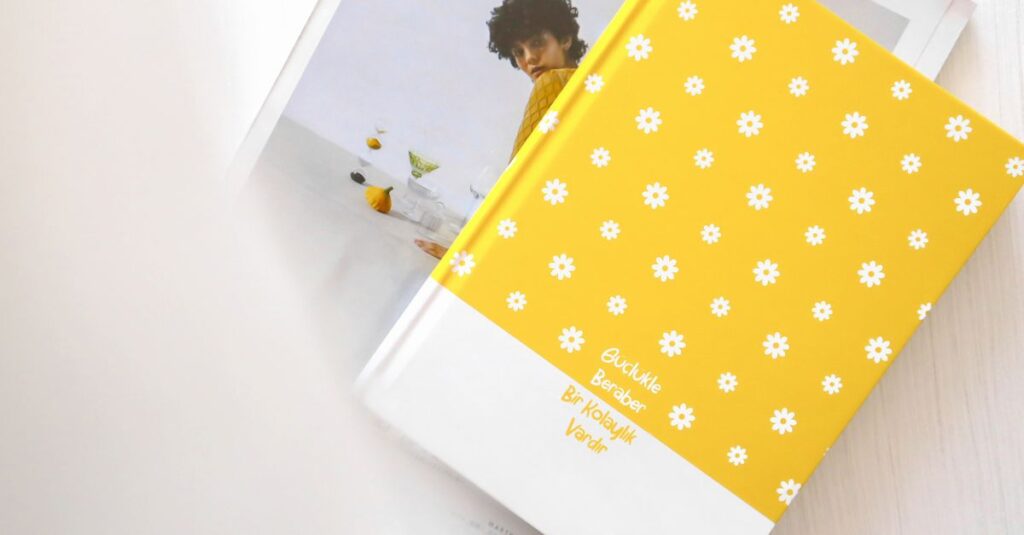
- The Cover (The First Impression): A flimsy, single-layer cardstock cover versus a thick, laminated hardcover. One says “disposable notepad,” the other says “corporate gift.” The difference in material, printing, and lamination adds up fast.
- The Binding (The Durability Test): Stitched binding is classic and lies flat. Spiral binding is great for laying completely open but can snag. Perfect binding (like a paperback book) looks clean but can crack if you force it. Each method uses different machines, different labor time, different materials.
And then there’s the hidden stuff. The ruling on the pages (single-ruled, unruled, cross-ruled for accounts). The number of pages (a 100-page diary vs. a 300-page one). Even the ink quality for any printed logos or text. When you start adding it all up, you see why two “A5 diaries” can have wildly different prices. They’re not the same product.
I was on a call with a school administrator from Hyderabad last month. She was comparing quotes. One was for “standard school diaries,” the other was for “premium student planners.” The second was 40% more. Her question was perfect: “Am I paying for a fancy word?” We broke it down. The “planner” had thicker paper, a dated calendar printed on each page, and a reinforced spine. The “standard” one was… well, standard. She wasn’t paying for a word. She was paying for the stuff behind it.
The real question isn’t which is better. It’s what do your people actually need to use it for?
The Bulk Buying Paradox: More Should Cost Less, Right?
Here’s the thing that trips people up. They assume ordering 5,000 diaries should automatically be half the per-unit cost of ordering 500. In a perfect world, maybe. But manufacturing doesn’t live in a perfect world.
Economies of scale are real — to a point. Buying paper for 10,000 diaries gets us a better rate from the mill than paper for 1,000. Setting up the printing press for a long, consistent run is more efficient than stopping and starting for tiny batches. But.
The savings from “bulk” can get eaten up immediately by “customization.” And that’s the paradox.
Let me give you an example. A standard, off-the-shelf corporate diary we run every day is a smooth, cost-effective process. The plates are made, the paper is loaded, it’s a straight shot. Now, a company wants their own. They want a custom cover design with their complex logo. They want their corporate colors matched exactly. They want a unique interior layout with their company values printed on certain pages. They want a specific ribbon bookmark color.
Every one of those “wants” is a change to the standard process. New design time. New printing plates. Stopping the machine to change ink colors. Sourcing a specific colored ribbon. Each change adds time, and in manufacturing, time is literally money. So your “bulk” order of 2,000 units now has a setup cost that a simpler order of 500 doesn’t.
This is why the cheapest per-unit price often comes from the simplest, most standard product ordered in huge volume. The moment you make it “yours,” the cost structure shifts. It’s not a scam. It’s physics.
Expert Insight
I was reading an industry report last quarter — one of those dry PDFs that puts you to sleep — but one line stuck with me. The analyst said something like: “In commoditized manufacturing, the final price is a direct reflection of the compromises a buyer is willing to make.” I keep thinking about that. A low diary book price isn’t magic. It’s a series of deliberate choices, usually about paper thickness, binding method, or finish. The manufacturer isn’t hiding the ball. The question is whether the buyer knows what those compromises mean for the person who has to use the thing every day.
How to Read a Quote (Without Needing a Decoder Ring)
So you’ve got your quotes. Two, three, five of them. They all say “Corporate Diary – A5 – 200 pages.” The prices are all over the place. What now? Don’t just pick the middle one and hope.
Break it down. You need to compare apples to apples, and the only way to do that is to know exactly what’s in the box. Ask these questions. Actually, demand these specs:
- Paper GSM: “Is this 54 GSM or 70 GSM writing paper?” This is the single biggest factor in feel and quality.
- Cover Specification: “Is the cover 250 GSM art card? Is it laminated? Matt or gloss lamination?” A flimsy cover warps. A good one doesn’t.
- Binding Type: “Is it stitched and glued (smyth sewn), or just perfect glued?” Stitched lasts longer. Glue alone can fail.
- Printing Details: “How many colors on the cover? Is the interior logo a standard stamp or a custom print?” More colors = more cost.
- Inclusions: “Does this price include a ribbon bookmark? An elastic closure? A back pocket?” These aren’t free.
When you have those answers, you can finally see what you’re comparing. You might find the cheap quote uses lower GSM paper and no lamination. The expensive one uses premium materials. Now your decision isn’t about price, it’s about value. What’s the diary meant to communicate about your brand? A flimsy book says one thing. A sturdy, well-made one says another.
And honestly? Most procurement managers know this instinctively. They just need the language to justify the choice to the finance team. “We’re not paying more for the same thing. We’re paying for thicker paper that won’t bleed, so our executives aren’t frustrated using them.” That’s a business case.
| Feature | Budget-Friendly Diary | Premium Corporate Diary |
|---|---|---|
| Paper Quality | 54-60 GSM, standard writing paper | 70-80 GSM, superior smooth finish, minimal show-through |
| Cover | 200-250 GSM art card, single-sided print | 300+ GSM board, full lamination (matt/gloss), printed both sides |
| Binding | Perfect binding (glued spine) | Smyth-sewn (stitched) binding, lies perfectly flat |
| Customization | Standard imprint of logo in 1-2 colors | Fully custom cover design, interior branding, color matching |
| Extras | None, or basic ribbon | Elastic closure, ribbon bookmark, back pocket, gilt-edged pages |
| Best For | Internal use, giveaways, large-scale student diaries | Executive gifts, client presents, high-end brand representation |
When “Cheap” Gets Expensive: The Real Cost of a Bad Diary
Let’s talk about a scenario nobody wants to think about. You save 30% on the unit cost. You order 1,000 diaries. They arrive. The covers are slightly misaligned. The paper is so thin you can see writing from the next page. The glue in the binding gives way after a month of use.
Now what?
You’re not just out the money. You’re dealing with annoyed employees or unhappy clients. Your brand looks cheap. The person who chose them looks bad. And you’re probably going to have to replace them, which means going through the whole buying process again. That “savings” just turned into a massive, stressful cost.
I think — and I could be wrong — that this fear is what drives most smart buyers to prioritize reliability over rock-bottom price. They’re not buying a product. They’re buying peace of mind. They’re buying the guarantee that on January 2nd, their team has a functional, professional tool on their desks. Not a disappointment.
This is where working with an established manufacturer matters. It’s not about fancy brochures. It’s about process. It’s about quality checks at every stage — checking the paper batch, the print alignment, the binding strength. It’s about having the experience to know that if you use X paper with Y binding, it will hold up. That knowledge prevents the “cheap gets expensive” problem before it ever lands on your loading dock.
Three things happen when you buy purely on low price: you gamble on quality, you gamble on consistency, and you gamble on your own reputation. Sometimes you win. Often, you don’t.
So, What Should You Actually Budget?
I can’t give you a number. Anyone who does without asking a dozen questions is lying. The range is too wide. A simple bulk school diary might be a few dollars per piece. A fully custom, leather-touch, gilt-edged executive planner could be twenty times that.
But I can tell you how to find your number.
Start with the purpose. Is this a functional tool for daily logging? Or a brand statement? Your answer decides which “ingredients” are non-negotiable. For a tool, durability and writing experience are key. For a statement, aesthetics and feel are paramount.
Then, get specific. Use the checklist from earlier. Decide on your minimum specs for paper, cover, and binding. That is your brief. Send that brief to a few manufacturers, not just a request for “A5 diary quote.” You’ll get comparable numbers back. The variance between them will be smaller, and it’ll be for real reasons — their overhead, their profit margin, their efficiency.
Finally, factor in the invisible costs. Shipping. Turnaround time (rushing costs more). Payment terms. The relationship. Can you call them with a question? Do they understand your need?
Your final budget shouldn’t be a number you pull from last year’s spend. It should be the number that gets you the right product, from a reliable partner, delivered on time. Anything less is a false economy.
The goal isn’t the cheapest diary. It’s the right one.
Frequently Asked Questions
What is the most important factor affecting diary book price?
Hands down, paper quality (measured in GSM). Thicker, smoother paper costs more but prevents ink bleed-through and feels premium. It’s the foundation of the diary, and skimping here is the fastest way to a disappointing product, even if the cover looks great.
Why is custom printing so much more expensive for diaries?
It’s all about setup. A standard diary runs on an assembly line. A custom one needs new design work, new printing plates, machine stoppages to change inks, and specific material sourcing. That initial setup cost gets spread across your order, raising the per-unit price compared to a standard book.
Does ordering more diaries always mean a lower price per book?
Usually, but not linearly. You get big savings moving from 100 to 1,000 units due to bulk material costs. The savings from 1,000 to 5,000 are smaller. And if your large order has complex custom features, the per-unit savings might be minimal because the setup costs are so high.
What’s the difference between perfect binding and stitched binding for diaries?
Perfect binding uses glue to hold pages to the spine (like a paperback). It’s cost-effective but can crack if forced open flat. Stitched (or smyth-sewn) binding uses thread to sew pages into sections, then glues them. It’s more durable and allows the diary to lie completely flat, but it’s more labor-intensive and costs more.
How can I reduce my corporate diary cost without sacrificing quality?
Focus on simplifying the customization. Use a standard size (like A5). Limit cover printing to 2 colors instead of 4. Choose a standard, in-stock paper weight instead of a special order. Keep the interior layout simple. These choices keep the manufacturing process efficient, which controls cost while still letting you put your brand on a well-made product.
The Bottom Line Isn’t a Number
After all this, here’s what I’ve seen to be true. The people who are happiest with their diary book price aren’t the ones who hunted for the absolute lowest quote. They’re the ones who understood what they were buying. They knew the specs, they matched them to a real need, and they found a manufacturer who could deliver that clearly, without surprises.
The price stops being a scary variable and becomes a logical outcome. You’re not budgeting for a mystery. You’re investing in a tool, or a gift, or a brand asset with known qualities. That shift in perspective — from cost to value — changes everything.
I don’t think there’s one perfect price. There’s the right price for what you need it to do. And if you’ve read this far, you’re probably already most of the way to figuring that out.