Look, Most People Think Design Means The Cover
They're wrong. And I've seen that mistake cost businesses, schools, and distributors thousands.
When you're ordering notebooks in bulk — whether for 10,000 students or for corporate gift boxes — the conversation always starts with the cover. The logo placement. The colors. That's fine. It's important. But it's just the front door. The real design happens inside, on the page, in the binding, in the way the thing feels when someone picks it up to actually use it. That's what decides if your notebooks get thrown away after a month or become the tool people keep on their desk for the whole year. If you're a procurement manager, a wholesaler, or a school administrator reading this, you're probably trying to figure out how to get quality without blowing the budget. I've been in this industry for over forty years, and that tension — between cost and real, functional quality — is the story of every large order we handle at Sri Rama Notebooks. If this sounds familiar, this might be worth a look.
What Design Actually Means When You're Ordering 50,000 Units
Here's the thing. For a single person buying a fancy journal, design is aesthetic. For you, buying in bulk, design is functional engineering. It's a set of decisions that directly impacts durability, user satisfaction, and your total cost-per-unit. Let's break it down into the parts nobody talks about in the first meeting.
The Paper Layout: It's Not Just Lines On a Page
You see a ruling type — Single Ruled (SR), Double Ruled (DR), Four Ruled (FR). That's just the label. The design is in the spacing. The margin width. The alignment. For school notebooks, a Center Broad Ruled (CBR) layout isn't just a style choice; it's a teaching tool. It guides young handwriting. For account books, the vertical and horizontal line spacing needs to accommodate numbers clearly without crowding. A badly designed page layout makes the notebook useless for its purpose. And I've seen factories cut corners here — shrinking margins, using faint ink — to save a few rupees per book. The user feels it immediately.
Binding: The Hidden Factor That Decides Lifespan
Stitched binding, spiral binding, perfect binding. Each one has a different cost, a different feel, and a different failure point. A stitched notebook for a school child who throws it in a bag every day needs a specific thread strength and stitch frequency. A spiral-bound corporate diary that sits on a desk might use a lighter coil. The design choice isn't just "which one looks nicer?" It's "which one will survive the specific kind of abuse this notebook will get?"> Most bulk buyers just pick the cheapest option. Then they get complaints six months later.
(I was talking to a procurement manager from a Bangalore tech company last week — over a painfully slow Zoom call, actually — and he said their biggest mistake last year was choosing a lightweight spiral for employee diaries. They fell apart by March. The design failed because they didn't match the binding to the actual use.)
The Micro-Story You Probably Recognize
Rohit, 42, procurement head for a chain of schools in Hyderabad. He ordered 20,000 "standard" long notebooks last season. The cover design was perfect — school logo, bright colors. But the paper inside was a 52 GSM that felt thin, almost translucent. The ruling lines were printed so lightly the students couldn't see them clearly. The binding was a single stitch that started giving way after a few weeks of use. The teachers complained. The students complained. Rohit's budget was locked. He couldn't replace them. He spent the next term fielding calls from principals instead of focusing on his next order cycle. The design failed. Not on the cover. On the inside.
Cover Design: Yes, It Matters. But Not How You Think
Right. Let's talk about the cover itself. Because this is where most of the conversation lives, and it's important — but probably for reasons you haven't considered.
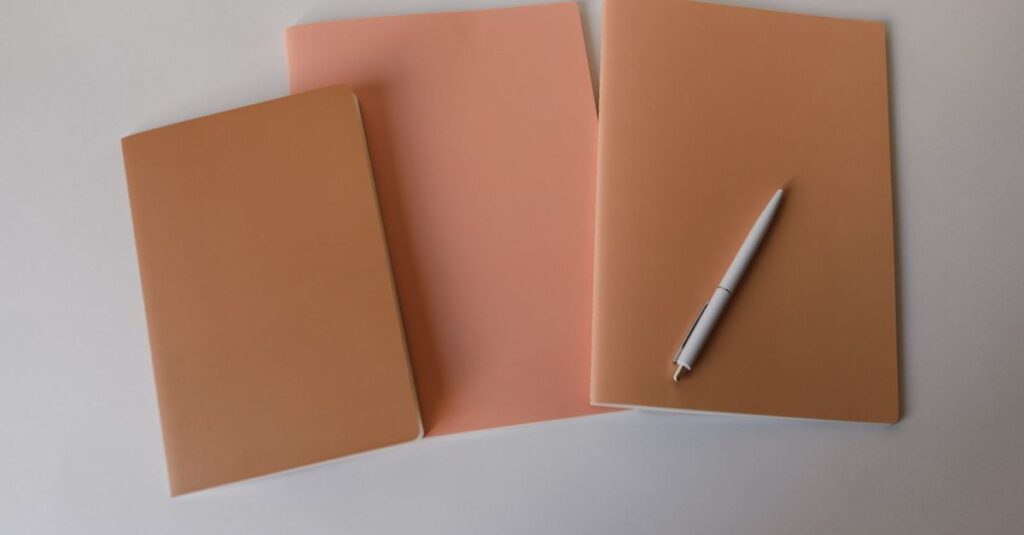
The thickness of the cover board. The coating. The finish. A glossy laminated cover looks premium, but it can crack at the edges if it's too thin. A matte finish feels sophisticated but might not withstand frequent handling. For a corporate diary meant as a gift, the cover needs to feel substantial — a psychological signal of quality. For a school notebook tossed in a backpack, it needs to be flexible and resistant to moisture. The design here is a material science problem disguised as a branding exercise.
And the printing method on that cover? Offset printing gives you sharp, vibrant colors for large logos. Digital printing might be better for smaller, complex designs or variable data. The choice affects your cost, your turnaround time, and the final look. If you're ordering private label notebooks, this is the part of the design you need to dig into.
Expert Insight
I was reading an old industry journal recently — one from the early 90s — and a line from a binder in Chennai stuck with me. He said, "A notebook is a promise. The cover makes the promise. The inside pages keep it."> I don't have a cleaner way to put it than that. If the inside doesn't match the cover's promise, the whole thing feels like a betrayal. And in bulk orders, that betrayal scales.
Comparing Two Common (And Misunderstood) Design Paths
| Design Focus | Economy Bulk Notebooks | Premium Custom Notebooks |
|---|---|---|
| Primary Goal | Minimize cost per unit for mass distribution. | Maximize user experience and brand perception. |
| Paper Quality | Standard 54-60 GSM paper; functional but may show ink bleed. | Higher GSM (70+), smoother finish, often anti-bleed coating. |
| Binding Priority | Durability for rough handling; often stitched. | Ease of use and aesthetic; often spiral or perfect binding. |
| Cover Design | Simple, durable material; printed logo focus. | Multi-material (board, lamination), full-color design, texture. |
| Layout Design | Standard ruling (SR/DR); consistent but basic. | Custom ruling, margin widths, header/footer branding. |
| Hidden Cost | Higher risk of user dissatisfaction/replacement. | Higher upfront cost, but lower long-term complaint rate. |
How to Actually Talk to a Manufacturer About Design
Most procurement discussions are about price, quantity, delivery. Design gets five minutes at the end. Flip that. Start with design. Because the design decisions lock in the price. Here's what to ask.
- "What's the GSM of the writing paper, and can I feel a sample?" Don't just accept the number. Get a physical swatch. Bend it. Write on it.
- "What's the exact ruling pattern and line weight?" Ask for a PDF mockup of the page layout. Look at the margin space.
- "For this binding type, what's the failure rate in your testing?" A good manufacturer will have internal quality data.
- "Can the cover design accommodate our logo without losing clarity at scale?" This is especially key for smaller, intricate logos.
- "What are the design compromises if we need to reduce cost by 10%?" This tells you where they'll cut corners. Be ready for that answer.
The question isn't whether you need a well-designed notebook. It's whether you're asking the right questions to get it.
The Part Nobody Says Out Loud: Design Is a Logistics Problem
Okay, let me rephrase that earlier point. The design of a notebook — the paper weight, the binding method, the cover stock — directly impacts your shipping weight, your pallet size, your storage durability. A heavier GSM paper means a heavier box. A specific binding might require more protective packaging to prevent damage in transit. If you're exporting to the Gulf or Africa, the climate can affect paper and binding glue. The design isn't just about the end user. It's about the entire chain from our factory floor in Rajahmundry to the storage room of your school in Gujarat or your corporate office in Delhi. I think — and I could be wrong — that most international buyers miss this completely. They focus on the final product photo. Not on how it will travel to them.
Which means your design specs need to include your logistics constraints. Tell your manufacturer. "These need to survive a two-week sea voyage."> "These will be stored in a humid warehouse for a month before distribution."> That's part of the design brief. Honestly.
FAQ: The Questions We Get Every Single Time
Frequently Asked Questions
What is the most important element of notebook design for bulk school orders?
The paper layout and binding durability. Students use notebooks aggressively. Faint ruling or weak binding leads to immediate complaints and undermines the learning tool. The cover is secondary to functional design inside.
How much does custom notebook design add to the cost per unit?
It depends on the changes. A custom page layout or a higher GSM paper adds cost linearly. A complex cover design with special printing can add more. The key is to prioritize: identify the one or two design elements that matter most for your users and invest there.
Can we get different designs within the same bulk order?
Yes, but it complicates production. We often run batches for schools where different grades get different ruling types (broad for younger kids, single for older). It's possible, but you need to plan it with your manufacturer early to avoid production delays.
What is the most common design mistake bulk buyers make?
Choosing a paper GSM that is too low for the intended use. They see a sample and think it's fine, but under mass writing pressure — like 100 pages of student notes — thin paper shows ink bleed and feels cheap. It's the first thing users notice.
How long does it take to finalize a custom notebook design?
From first discussion to approved prototype, usually 7-10 working days if communication is clear. The delay isn't in the design work; it's in the back-and-forth on specs. Being precise with your requirements from day one cuts that time drastically.
So, Where Does That Leave You?
Probably with a list of questions for your next supplier meeting. That's good. The goal isn't to become a notebook design expert. It's to know enough to spot the gaps between what you're paying for and what you're actually getting. For schools, corporates, distributors — the notebook is a tool. Its design is its functionality. Ignoring that means buying a problem in bulk.
I don't think there's one perfect design formula. Probably there isn't. But if you've read this far, you already know what your users need — you're just figuring out how to translate that into a manufacturing spec. Sometimes, starting with a conversation helps.