You’re Probably Using the Wrong One
Let’s be honest. You’re standing in a stationery aisle, staring at a shelf, and you just need a place to put your thoughts. You’re not thinking about binding types or page rulings. You’re thinking about the meeting tomorrow, the school project, or that project budget you have to track. But the label says ‘diary’ and the one next to it says ‘notebook.’ And for a second, you freeze. Are they the same thing? Which one do you actually need?
That split-second of confusion costs you more than time. It can cost you money if you buy a hundred of the wrong thing for your team. I’ve seen it happen. A procurement manager for a chain of coaching centers once ordered two thousand ‘diaries’ for student workbooks. The covers were fancy, the paper was thin, and the price was high. They were completely wrong for rough math work. He didn’t know the difference. So, look — if you’re ordering for a school, a business, or just trying to get your own stuff organized, knowing what you’re buying is the only thing that matters here. This is what we’ve been explaining for forty years.
The Real Difference: It’s About Expectation
Most people think a diary is just a fancy notebook. Not quite. The difference isn’t in the paper or the binding — it’s in the expectation you bring to it. A diary expects order. A notebook expects chaos.
Here’s a quick story. I was talking to a college admin last week — over a truly terrible cup of office coffee — and she was ordering supplies for the new semester. She said the students kept asking for ‘diaries’ but then using them for lecture notes and tearing pages out. She was frustrated. I told her, “You’re ordering the wrong product. They’re saying ‘diary’ but they need a ‘notebook.’ Their expectation is wrong, and you’re fulfilling it.” She paused. “Oh. Right.”
The Diary: A Structured Calendar Partner
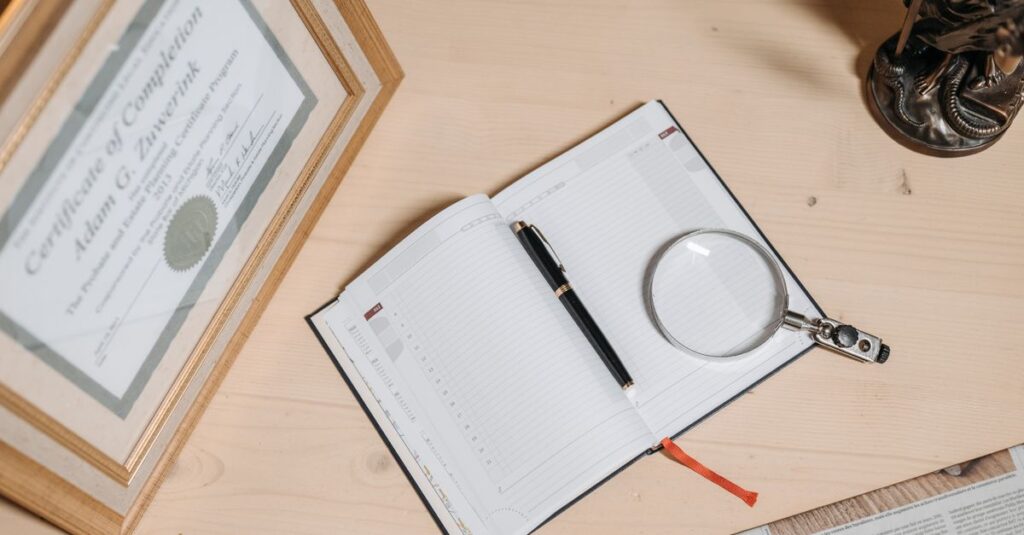
A diary is a planner. It’s a timekeeper. Its primary job is to structure your future, not just record your present. Think dated pages, pre-printed calendars, sections for appointments, and maybe some inspirational quotes. It’s for looking forward. A corporate diary, for example, is a tool. Its value is in helping a team stay synchronized on deadlines and meetings. The paper quality is often higher (think 70-80 GSM), the binding is more robust for daily flipping, and the cover is designed to last a year of being carried around. It’s not meant for scribbling random ideas. It has a job.
The Notebook: The Blank Canvas of Chaos
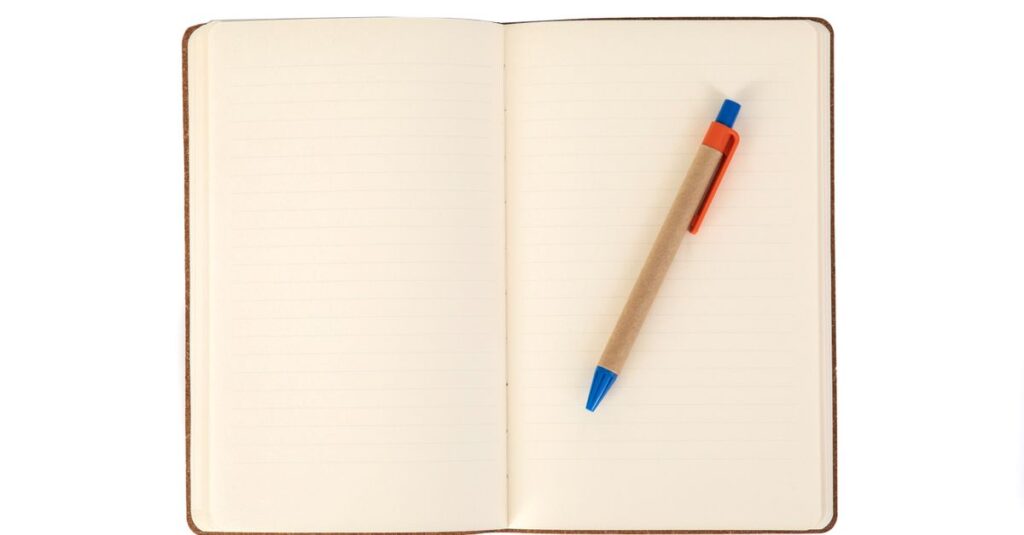
A notebook is a catch-all. It’s for everything the diary isn’t. Lecture notes, project brainstorms, sketches, meeting minutes, to-do lists that you’ll never look at again. It’s for looking around, right now. The ruling can be anything — single ruled for writing, unruled for drawing, graph paper for charts. The binding can be simple stitching or sturdy spiral, built to lie flat. The paper is functional, often around 54-60 GSM, smooth enough to write on but not so thick you feel guilty using it. A school notebook gets abused — thrown in bags, doodled on, pages ripped out. It’s built for that.
Anyway. The point is, you choose based on the job. Are you archiving time, or capturing thought?
How to Choose: A Practical Guide for Buyers
If you’re the one responsible for ordering these in bulk — for a corporation, a school district, a distributor — this is where the headache starts. Making the wrong choice isn’t just annoying; it’s wasteful. So let’s break it down without the jargon.
First, ask the user. What will they do with it?
– Daily Planning & Appointments: You need a Diary. Dated, maybe with monthly tabs, time slots. Look for durable binding (perfect binding is common) and a professional cover.
– Note-Taking & Jotting: You need a Notebook. Focus on page count (92, 200 pages), paper smoothness, and a ruling that matches the task (single ruled for text, four-ruled for young students).
– Project Tracking & Logs: This is tricky. It might be a hybrid. Sometimes a notebook with a simple date header on each page works. Sometimes you need a custom-printed logbook. This is where customization isn’t a luxury; it’s a necessity.
Second, think about longevity. A diary has a one-year shelf life. A notebook is used until it’s full, which could be a month or a year. Your bulk pricing and storage strategy should reflect that.
I think the most common mistake I see — and I could be wrong — is businesses ordering beautiful, expensive diaries for staff who just need a place to scribble meeting notes. The diary goes underused because it feels too formal. The money is wasted. The staff end up using cheap notepads anyway. It’s a mismatch of intent.
Diary vs. Notebook: A Side-by-Side Breakdown
| Feature | Diary (Corporate/Personal Planner) | Notebook (General Use) |
|---|---|---|
| Primary Purpose | Planning, scheduling, time management. | Recording, note-taking, brainstorming, studying. |
| Page Structure | Dated pages, pre-printed calendars, sections. | Blank or uniformly ruled pages (SR, UR, DR, etc.). |
| Typical User | Executives, managers, students with heavy schedules. | Students, creatives, engineers, meeting attendees. |
| Paper Quality (GSM) | Higher (70-80+ GSM). Smoother, less bleed-through. | Standard (54-60 GSM). Balanced for cost and feel. |
| Binding Focus | Lay-flat for easy date viewing, durable for year-long use. | Lay-flat for writing, sturdy for bag carry. |
| Customization | Logo on cover, company info on front pages, branded tabs. | Logo on cover, custom rulings, page headers, brand colors. |
| Bulk Order Driver | Corporate gifting, annual employee issue, promotional item. | Academic year supply, operational stationery, project kits. |
The Manufacturing Perspective: Why This Distinction Matters
From where I sit — in a factory that’s been running since 1985 — the difference between making a diary and a notebook isn’t subtle. It changes everything on the production line.
Expert Insight
I was reading through an old order log the other day, and one note from a 90s client stuck with me. He said, “The diary is the promise we make to ourselves for the year. The notebook is the work we do every day to keep it.” I don’t have a cleaner way to put it than that. This is why the production specs diverge so much. A diary run requires precise date printing, which is a whole separate setup on the press. One misprint on a date and the entire batch is scrap. The margin for error is almost zero. Notebook paper? As long as the ruling is straight and the paper doesn’t jam, you’re good. The pressure is different. The diary feels like precision engineering; the notebook feels like honest, mass-scale craftsmanship. Both are vital, but you breathe differently while making them.
For a bulk notebook supplier, efficiency is key. We’re set up to produce tens of thousands of uniform notebooks a day. Switching the line to diaries — with their date blocks, calendar pages, and special sections — means slowing down, changing plates, and a different quality check. That’s not a complaint; it’s just the reality of the tool defining the process. When a school places an order for 50,000 single-ruled notebooks, the machine hums one tune. When a corporation wants 5,000 custom-branded diaries, it hums another.
A Real-Life Choice: Priya’s Story
Priya, 28, manages procurement for a mid-sized IT firm in Hyderabad. Last November, her boss told her to find New Year gifts for the 200 employees. “Something useful,” he said. She first thought: fancy leather diaries. She got samples. Beautiful. Then she talked to the team leads. The developers said they’d never use a dated diary. “We need whiteboard space, not appointment slots,” one told her. The sales team loved the idea. The support team asked if they could have notepads instead for call logs.
Priya was stuck. One gift wouldn’t fit all. She ended up splitting the order: sleek, dated diaries for client-facing staff, and robust, spiral-bound project notebooks for the tech teams. The cost was different. The logistics were messier. But the usage feedback was the best they’d ever had. Because the tool matched the job. She didn’t force one solution. She listened.
Which is… what more of us should do.
So, What Do You Actually Need?
Let’s cut through it. If you’ve read this far, you’re probably trying to justify a purchase order or make a decision for your organization. Here’s my blunt take.
You need a DIARY if:
– You are giving a corporate gift that symbolizes planning and a fresh start.
– You need to standardize how your team tracks time, meetings, and deadlines.
– The item will live on a desk and be referenced daily for scheduling.
You need a NOTEBOOK if:
– You are supplying students or trainees with materials for learning and practice.
– Your staff needs a disposable, functional tool for capturing ideas and minutes.
– You want a cost-effective, high-volume solution for everyday writing tasks.
And sometimes — often, actually — you need both in different parts of your organization. The question isn’t which is better. It’s which is right for this specific group of people and their specific tasks. Getting that right is the difference between a stationery item that gets used and loved, and one that gathers dust in a drawer, a silent monument to a poor procurement choice.
Frequently Asked Questions
Can a notebook be used as a diary?
Technically, yes. You can write dates in a notebook. But it lacks the pre-planned structure of a diary — the calendar view, the dated pages — which is the whole point of a diary for time management. For casual, personal journaling, a notebook is perfect. For managing a business schedule, it’s a headache.
What is the main difference in manufacturing diaries vs. notebooks?
The biggest difference is in the printing and assembly. Diaries require precise, dated page printing and often more complex binding for lay-flat use. Notebooks use uniform, repeating page rulings and simpler, high-speed binding. The production line setup is completely different.
Are diaries more expensive than notebooks?
Usually, yes. Per unit, diaries cost more due to higher paper quality, more complex printing, and often more durable covers and binding. Notebooks are designed for volume and cost-efficiency, making them cheaper for bulk orders like school supplies.
What should I look for in a bulk diary supplier?
Look for a manufacturer with experience in precise date printing and custom branding. Check their binding quality—it must survive a year of daily use. Ask about paper GSM (70+ is good) and if they can incorporate your company’s calendar, holidays, and data.
What’s the best notebook ruling for school students?
It depends on the grade. Younger students (primary classes) typically need Four-Ruled (FR) or Center Broad Ruled (CBR) notebooks for handwriting practice. Older students and college-goers usually use Single Ruled (SR) for general note-taking. Always check the school’s specific syllabus requirements.
The Unresolved Bit
Look, at the end of the day, paper is paper. But the intent behind it isn’t. The diary is a contract with your future self. The notebook is a conversation with your present self. One isn’t better. They’re just different tools for different kinds of work.
I don’t think there’s one perfect answer for every organization. Probably there isn’t. But if you’re sourcing for a business or an institution, the most important step is to stop thinking of them as interchangeable. See them for what they are: specialized tools. Your job is to match the tool to the task. Get that right, and the rest — the quotes, the logistics, the delivery — is just process. Get it wrong, and you’re just moving boxes of wasted potential. Sometimes, talking to someone who’s made both for decades is the fastest way to clarity.