Look, You've Heard the Term a Million Times
Copy and print. It sounds like the most basic thing in the world, right? You probably walk past shops with those words on the window every day. But when you're the one in charge of ordering 5,000 corporate diaries or 20,000 branded notebooks for the new school year, those words suddenly get heavy. They stop being about making a photocopy and start being about money, quality, deadlines, and your reputation.
And honestly? Most people using the term don't really know what it entails for bulk manufacturing. I've been in this industry since 1985 — I was talking to a procurement manager from Hyderabad last week, actually. He said his biggest headache was vendors promising "copy and print" but delivering notebooks where the logo looked fuzzy and the binding fell apart in a month. It's not just about putting ink on paper. It's a whole process. And if you're spending company money, you need to know what you're buying. If this sounds familiar, our approach to printing might be worth a look.
So, What Does "Copy and Print" Actually Mean?
In the simplest terms, it's the process of reproducing text and images onto a physical medium — usually paper. But that's the kindergarten definition. In the world of bulk stationery and notebook manufacturing, "copy" refers to the content — the lines, the margins, the header formats, the pre-printed text on every page. The "print" is the act of putting that content, plus any custom branding, onto the paper and the cover.
Three things happen when you get this right: your brand looks professional, the product feels consistent, and the end-user (a student, an employee) doesn't even think about it. They just have a good notebook. But when it's wrong? It's all they think about. The ink smudges. The alignment is off. It feels cheap.
I think the main confusion comes from digital vs. offset. Most small copy shops use digital printing — great for short runs, variable data. But for manufacturing thousands of units? You need offset printing. The colours are sharper, the cost per unit plummets, and the quality is in a different league. That's the first filter for a bulk buyer: ask what printing method they use.
The Real-Life Headache: A Micro-Story
Let me tell you about Priya. She's 34, a procurement officer for a chain of coaching institutes in Vizag. Her job was to source 50,000 custom notebooks for the new academic session. She found a supplier who quoted a great price for "full copy and print services." Priya sent the design — a complex cover with the institute's mascot and a detailed header on every page.
The samples came. The cover was… okay. But the inside pages? The ruling was faint in places, as if the printer was running out of toner. On page 47 of one sample, there was a ghost image from another page. She called the supplier. Their response was, "Madam, this is normal for bulk." It's not normal. She had to cancel the order two weeks before term started. The stress, I don't even want to imagine.
The point isn't the horror story. It's that "copy and print" isn't one step. It's a chain of steps, and if one link is weak, the whole thing falls apart.
Breaking Down the Process (It's Not What You Think)
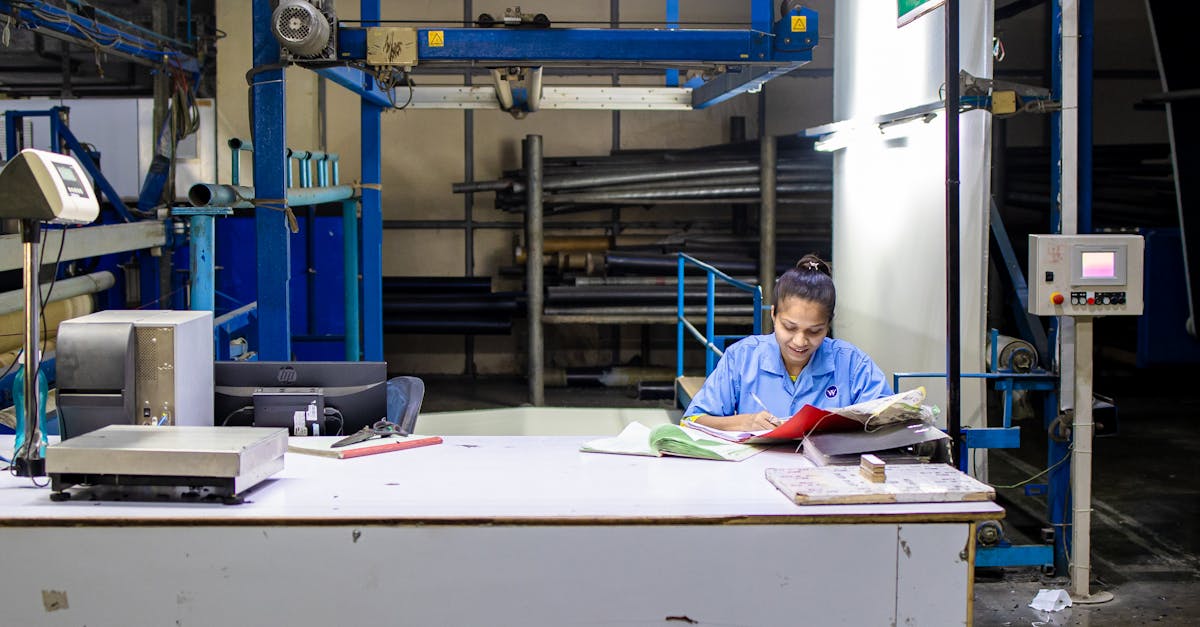
Okay, so how does it actually work in a factory like ours? It's not a magic button. People think you feed in a design and notebooks pop out. It's more like a relay race.
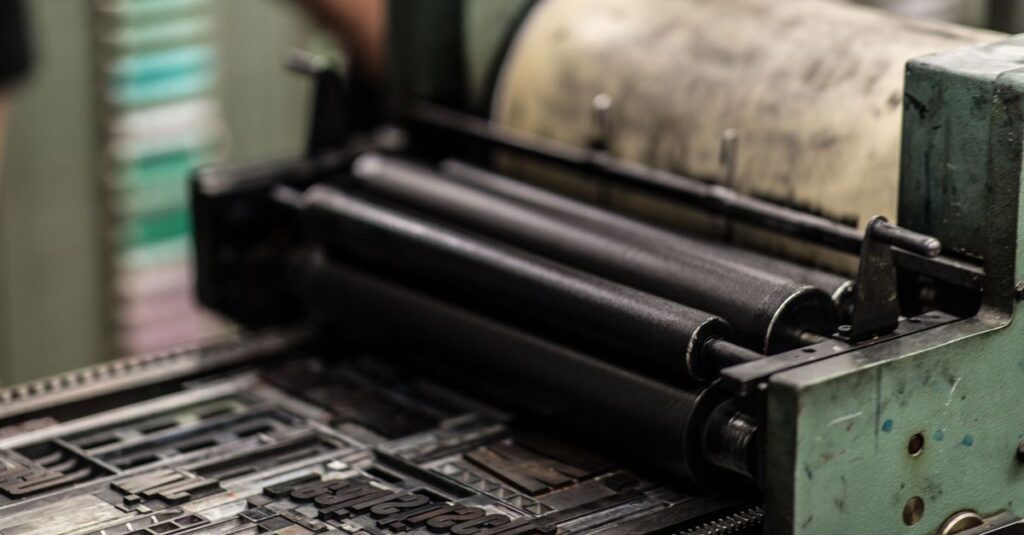
First, there's prepress. This is where your PDF gets checked, colours are separated into plates (CMYK), and everything is aligned perfectly for the press. A tiny error here magnifies by ten thousand. Then the paper is loaded — we use 54 GSM as standard, but it can go heavier for premium diaries. The press runs, applying the "copy" (the ruled lines, the margins) and the "print" (your logo, any graphics) in passes. Then it's cut, collated, bound, and packed.
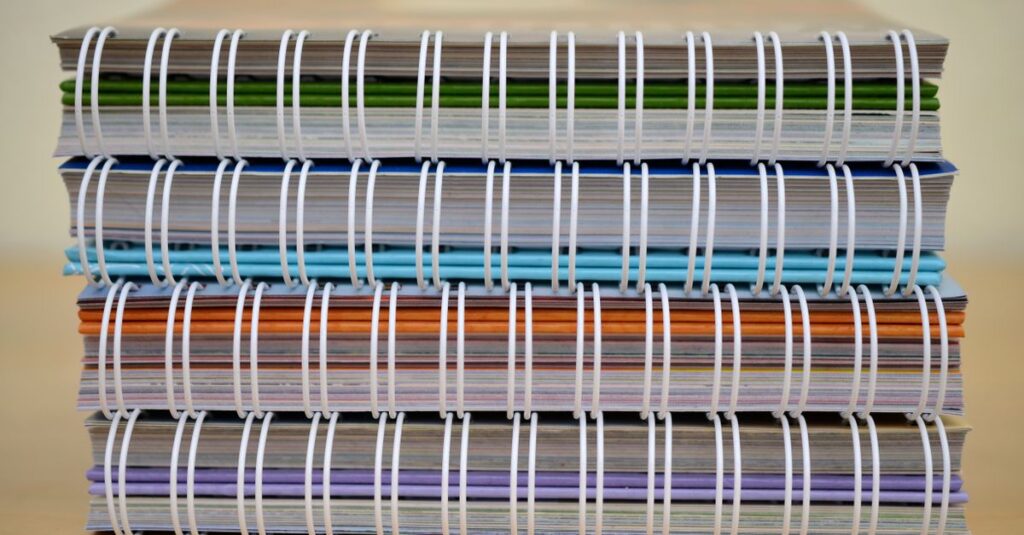
The binding is part of the print service, by the way. A perfect-bound notebook needs a different cover print setup than a spiral-bound one. Nobody tells you that. Seeing the range of finished products helps make sense of it.
Here's the thing — the most capable manufacturers make it look easy. And that's the problem. You only notice the process when it fails.
Expert Insight
I was reading an old industry journal last month, and one line from a press operator stuck with me. He said something like — good printing isn't seen, it's felt. The reader shouldn't notice the ink density or the perfect registration. They should just feel that the notebook is right. The paper has the right tooth, the lines are crisp but not aggressive, the cover image is sharp. It's a background service to someone else's foreground work. I don't have a cleaner way to put it than that. It's a craft that hides itself.
Digital vs. Offset Printing: A Side-by-Side Look
This is probably the most important choice you don't know you're making. Let's clear it up.
| Factor | Digital Printing | Offset Printing |
|---|---|---|
| Best For | Short runs (under 500), quick proofs, variable data | Long runs (1,000+), bulk orders, consistent quality |
| Cost Model | Higher cost per unit, no setup fee | Lower cost per unit, has a setup cost for plates |
| Colour Consistency | Can vary between batches | Extremely consistent across the entire run |
| Paper Flexibility | Limited by printer specs | Works on a huge range of paper weights and finishes |
| Turnaround Time | Very fast for small jobs | Longer setup, but faster production once running |
| Ideal Use Case | Sample notebooks, pilot programs | School notebooks, corporate diaries, bulk exports |
Nine times out of ten, if you're a business buyer, you need offset. The economics only make sense after a certain quantity, and the quality is simply more professional. A digital print can have a slight sheen or feel toner-heavy. Offset ink soaks into the paper. It feels like it belongs there.
What to Look for in a Copy and Print Partner
This isn't about finding the cheapest vendor. It's about finding the right one. Here's my blunt advice, after four decades in Rajahmundry doing this.
- Ask for real samples from a past bulk order. Not the glossy showcase sample. Ask to see a notebook from the middle of a 20,000-unit run they did last month.
- Visit if you can. The sound of a well-maintained offset press is different from a struggling one. The organisation of the floor matters.
- Talk paper. Don't just accept "good paper." Ask for the GSM, the brand, the finish. If they can't tell you, walk away.
- Understand their binding in-house capacity. If they outsource binding, your timeline has two potential failure points, not one.
- Check export experience. Even if you're supplying locally, a manufacturer who exports has to meet stricter quality checks. It's a good filter.
And honestly? Trust the conversation. If they're more interested in closing the sale than understanding your exact ruling type or cover laminate preference, they're not a partner. They're a transaction. And transactions go wrong.
The Unspoken Benefit: It's Not Just a Notebook
Earlier I said it's about money and quality. That's not quite fair — it's more about representation. When you hand out a corporate diary with your logo, you're not giving someone a place to write meetings. You're giving them a year-long, daily reminder of your brand. If it's flimsy, if the print is pixelated, what does that say?
For schools, it's even bigger. A well-made notebook with clear, dark ruling is a tool for learning. A poorly made one is a distraction. The student fighting to see faint lines on cheap, greyish paper is fighting your product. That's the real cost of bad copy and print.
It's a headache, honestly. But it's a solvable one. You just need to know what questions to ask.
Frequently Asked Questions
What is the difference between copy and print?
In manufacturing, "copy" usually refers to the standard, repeating content like notebook rulings, margins, and headers that are on every page. "Print" typically refers to the custom elements, like your company logo, brand colours, and specific cover design. A full service handles both seamlessly.
How long does bulk copy and print take?
It depends heavily on the order size and complexity. For an order of 10,000 standard ruled notebooks, a competent manufacturer might need 2-3 weeks from final approval to packed dispatch. Always factor in time for physical proof approval — don't skip that step.
Can you print on any type of notebook?
Pretty much, but the technique changes. Printing on a hardcover diary is different than on a spiral-bound notebook's soft cover. A good manufacturer will guide you on the best cover material and printing method (like offset or screen printing) for your specific notebook type and budget.
What file format do you need for printing?
Print-ready PDFs are the standard. Your design should be in CMYK colour mode, not RGB, with all fonts embedded and a 3-5mm bleed area. If that sounds technical, a good supplier will help you get your files right before production starts.
Is custom copy and print expensive for bulk orders?
It's usually more cost-effective per unit in bulk. The setup cost for plates and alignment is spread over thousands of units. For large orders, the premium for custom work over a stock notebook can be surprisingly small, while the brand impact is huge.
Wrapping This Up
So, copy and print. It's a craft. It's a process with zero room for error when you're scaling it up. It's the difference between a stationery item and a brand ambassador.
I don't think there's one perfect supplier for everyone. Probably there isn't. But if you've read this far, you already know what you need — you're just figuring out who can deliver it without the drama. Ask the hard questions. Demand real samples. Look beyond the price per piece. Your brand, and your peace of mind, are worth that extra hour of due diligence. If you want to talk specifics, we're always here.