Introduction: That Sticker Shock Moment
You’ve got the quote. The notebook design looks fantastic. Logo on the cover, some branding on the inside pages. Then you see the line item for color printing. And you just think: why? Why does adding a splash of color to a simple notebook sometimes feel like you’re ordering a luxury item?
I’ve been talking to procurement managers for years — over calls, emails, factory visits. And this is the moment they all mention. The budget gets tight, and color printing is the first thing they question. They’re not wrong to ask. But most of the time, they’re comparing apples to… well, industrial machinery.
The real cost of color print isn’t just about ink on paper. It’s about setup, plate-making, paper quality, and that specific shade of blue your CEO insists on. It’s about volume. And honestly, it’s about what you’re trying to achieve. Are you printing a thousand school notebooks where the cover needs to survive a backpack, or fifty thousand corporate diaries where the logo has to be perfect? The cost story changes completely.
If you’re trying to make sense of a quote right now, and why color seems to add so much, this might be worth a look. Let’s break it down.
It’s Not Just Ink: The Hidden Parts of Your Quote
Here’s the thing — when you ask for a price on color printing, you’re not just buying colored liquid. You’re buying a process. And the start of that process is where a lot of the fixed cost lives. This is the part nobody says out loud when they send you a per-unit price.
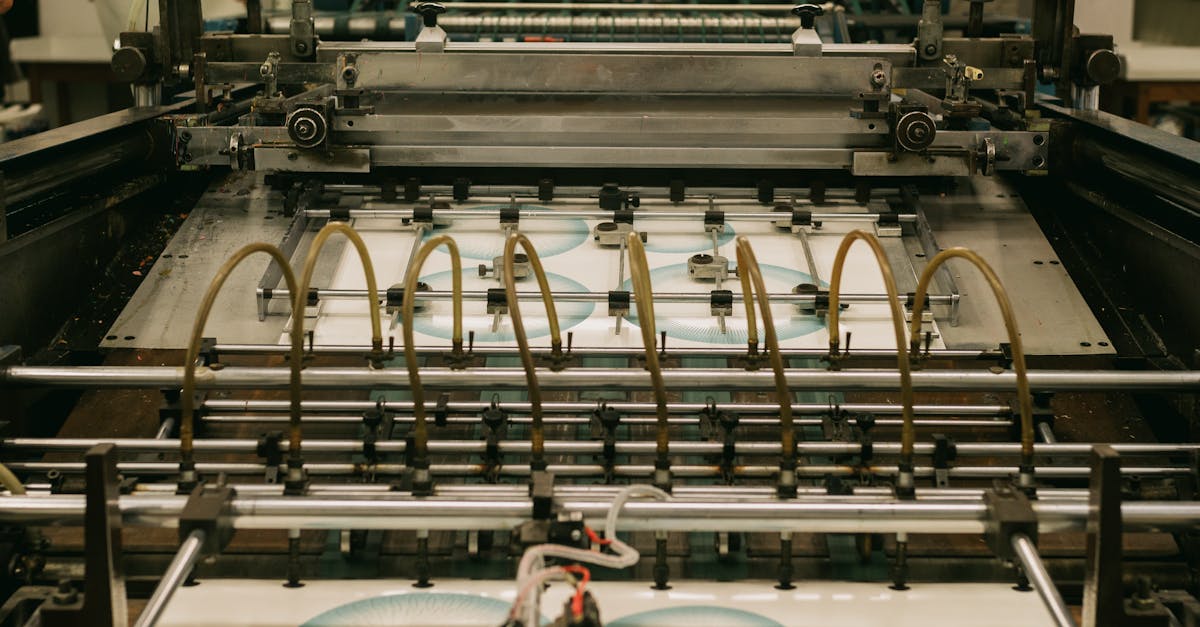
First, there’s the setup. For offset printing (which is what we use for bulk), we need to create metal plates for each color. That’s Cyan, Magenta, Yellow, and Black — the CMYK you hear about. One plate per color. So a full-color cover needs four plates made. That’s a cost. It happens once, at the start. Print five hundred notebooks or fifty thousand, that plate cost is the same. Spread over a huge order, it becomes tiny. Spread over a small order, it stings. Makes sense, right?
Then there’s the paper. This is the big one. Regular notebook paper is around 54 GSM. It’s thin. It’s designed for writing. Try to put rich, wet ink on it from a four-color press? It’ll soak through. It’ll warp. It’ll look terrible. So for any kind of quality color printing, you need a coated or thicker paper stock. That paper costs more. Sometimes double. You’re not just paying for color; you’re paying for the paper that can hold that color properly.
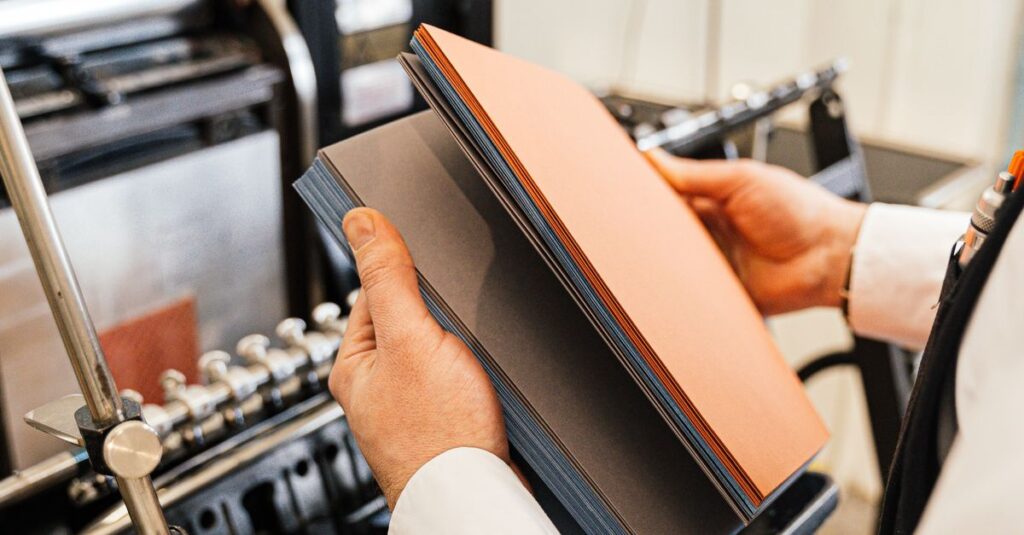
The machine time. A color press is slower than a single-color one. It has to align each color perfectly (they call that registration). It needs more checks. More care. More skilled operators. The machine itself costs a fortune. That time and expertise isn’t free.
And finally, drying. Color ink takes time to dry before you can bind, cut, or pack. That means the job sits on the factory floor longer, taking up space. In a high-volume plant like ours, scheduling that drying time into the production flow is a real thing. It all adds up.
Expert Insight
I was reading an industry journal last month — something about print economics — and one line stuck with me. The writer said the biggest mistake buyers make is treating print like a commodity. Like ink is ink. It’s not. It’s chemistry, physics, and a bit of art. The more specific you get with a color, the more you’re paying for that art. A “blue” is cheap. Your brand’s Pantone 3005 C is a different conversation. I don’t have a cleaner way to put it than that.
A Real-Life Scenario: Why Priya’s School Order Was Different
Let me give you a real-life micro-story. Names changed, but this happened last quarter.
Priya, 42, procurement head for a chain of private schools in Hyderabad. She needed 10,000 notebooks for the new academic year. School logo on the cover, single color (blue). Simple. Her quote from us was straightforward. Then she asked: “Can we make the logo two colors? Add a little red accent?”
Seems small. One more color. But that meant moving from a single-color press to a two-color press. New plate for the red. Different ink well. A more complex setup. The paper could stay the same, but the machine time and skill went up. The per-notebook cost didn’t double, but it jumped by about 40%. She was surprised. We got on a call, I walked her through the plate and setup cost, showed her how it gets absorbed over volume. In the end, she stuck with the single color. Saved the budget for a better binding instead. Smart.
The point isn’t that color is bad. It’s that every decision has a trade-off. Priya understood the trade-off. Most people don’t get that transparency.
Color Printing vs. Mono Printing: A Side-by-Side Breakdown
Look, I’ll be direct. This table shows why a “black ink only” notebook is a completely different product from a full-color one. It’s not just a price difference; it’s a different manufacturing path.
| Factor | Single-Color (Mono) Printing | Full-Color (CMYK) Printing |
|---|---|---|
| Setup & Plates | One metal plate for one ink (usually black). Fast, cheap setup. | Four plates minimum (C, M, Y, K). High initial setup cost and time. |
| Paper Requirements | Works on standard 54-70 GSM writing paper. No special coating needed. | Often requires coated or higher GSM paper (80+ GSM) to prevent bleed-through and get vibrancy. |
| Machine & Speed | Single-color press. Very high speed, simpler operation. | Multi-color press. Slower, requires precise registration and skilled operators. |
| Ink Cost & Drying | One ink type. Dries quickly. Minimal waste. | Four ink types. Longer drying time needed between steps, more potential for waste. |
| Best For | High-volume school notebooks, internal account books, basic custom text. | Corporate diaries, premium notebooks, marketing materials, brand-heavy covers with photos or gradients. |
| Cost Impact on Bulk | Low per-unit cost, ideal for orders of 50,000+. | Higher per-unit cost, but setup cost spreads thin over very large runs (100,000+). |
See the difference? It’s like comparing a scooter to a truck. Both get you places, but they’re built for different loads.
How to Actually Get a Better Price on Color Printing
Okay, so color costs more. But you need it. Your brand depends on it. How do you not get ripped off? Here’s what I tell people who call us.
First, volume is your best friend. This is the golden rule. The fixed costs (plates, setup) get divided by every single notebook you print. Need 5,000 custom diaries? The color cost per diary will be high. Need 50,000? It plummets. I’ve seen quotes where doubling the order only increases the total cost by 30% because the setup is already paid for. Always ask for a price break at different quantity tiers. Any good manufacturer will have this ready.
Second, be flexible with paper. Ask: “What’s the most cost-effective paper that will still give me a good color result?” You might not need that premium 100 GSM glossy. An 80 GSM matte coated might do the job and save 15%. A good partner will guide you here, not just upsell you.
Third, simplify your design. This is huge. Every additional color, every tiny gradient, every photograph increases complexity. A solid color background with a one-color logo is cheap. A full-bleed photo with gradients and subtle text? That’s where costs balloon. Sometimes, a smart, minimalist design in two colors looks more premium than a messy four-color print anyway.
And finally, plan ahead. Rush jobs kill budgets. When you give a factory time, they can schedule your color print run efficiently, slotting it into the press when it makes sense. Rush means they might have to stop another job, do a quick cleanup, and fit you in — and you’ll pay for that disruption.
Three things happen when you follow this: you get clarity, you get control, and you stop being scared of color quotes.
The Question of Quality: When Cheap Color Printing Bites Back
I think — and I could be wrong — that the fear of cost pushes people toward the cheapest quote. Which is understandable. But in printing, cheap has a habit of showing up later. On your desk. In a box of notebooks where the logo is blurry.
Low-cost color printing often means digital printing for bulk. It’s okay for short runs. For a few hundred diaries? Fine. For ten thousand school notebooks? The per-unit cost might look similar to offset, but the durability won’t be. Digital color can scratch off easier. It might fade. The color consistency from notebook to notebook can waver. Page 1 might look vibrant, page 1000 might look washed out.
Offset printing, which is what we use for bulk, has that high setup cost we talked about. But once it’s running, every impression is identical. The color is locked in. It’s durable. It’s the industry standard for a reason. Choosing a supplier just because their per-notebook price is 2 rupees lower might mean you’re getting a fundamentally inferior product. Your teachers will notice when the covers start peeling. Your clients will notice when your corporate gift looks faded.
So the real cost isn’t just on the invoice. It’s the cost of your brand’s perception. It’s the cost of re-orders when the product fails. That’s the part of the math you need to sit with.
Frequently Asked Questions
Why does color printing cost so much more than black and white?
It’s mostly about process, not ink. Black and white uses one plate, one ink station, and can run on faster, simpler presses. Color requires four plates, a more complex press, slower speeds, and often better paper. The setup time and cost are significantly higher, which impacts the price, especially on smaller runs.
Does the cost per notebook go down if I order more?
Absolutely, and dramatically. The fixed costs (like plate-making and press setup) are the same whether you print 1,000 or 100,000 notebooks. Those costs get divided across every unit. So, a larger order spreads that fixed cost thinner, making the cost per notebook much lower. Always ask for price breaks at higher quantities.
Can I print color on regular notebook paper?
Technically, yes. But you shouldn’t. Standard 54 GSM writing paper is thin and absorbent. Liquid color ink will bleed through, cause wrinkling, and look muddy. For a professional result, you need a coated or heavier paper (usually 80 GSM or more), which is a separate cost factor in your quote.
What’s the difference between digital and offset color printing for notebooks?
Digital is like a giant office printer. Lower setup cost, good for very short runs (under 500), but higher per-unit cost and less durable on bulk. Offset uses metal plates and is the industrial standard for quality and consistency in bulk. It has a high setup cost but a very low cost per unit for large quantities, and the print is more durable and vibrant.
How can I reduce the cost of color printing for my custom notebooks?
Three ways: 1) Increase your order volume to absorb fixed costs. 2) Use a simpler design with fewer colors and no complex gradients/photos. 3) Opt for the most economical paper stock that still meets your quality needs. Planning your order well in advance to avoid rush charges also helps.
Conclusion: What You’re Really Paying For
So, the cost of color print. It’s not a mystery. It’s physics, machinery, and time. You’re paying for precision. For consistency across ten thousand covers. For a color that matches your brand, not just ‘a blue’.
I don’t think there’s one answer here. Probably there isn’t. For a school buying exercise books, color might be an unnecessary luxury. For a corporation building brand presence through diaries, it’s non-negotiable. The question isn’t whether color costs more. It’s whether what it gives you is worth that more.
If you’ve read this far, you’re not just looking for a cheaper price. You’re looking for a fair one. For transparency. And that’s the only thing that matters here. Sometimes, it helps to just talk it through with someone who’s been doing this for 40 years.