

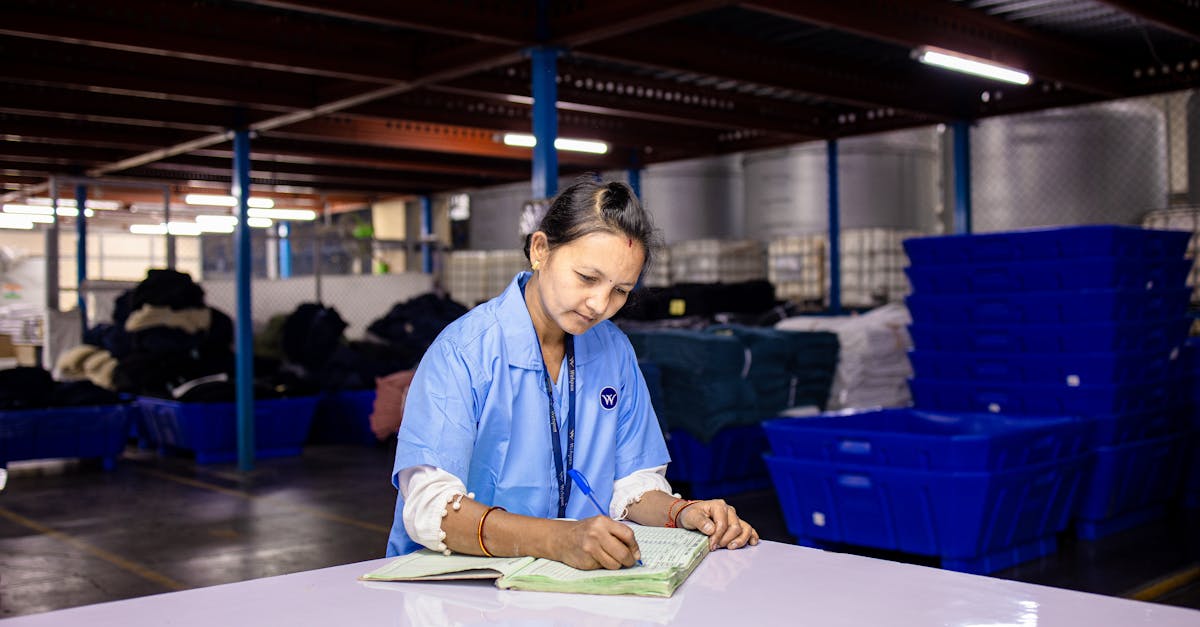
It’s not a print shop. It’s a supply chain question.
Let’s be honest for a second. You type in “printing near me” and you get a map full of FedEx or Kinko’s locations. Places that’ll print your resume or a birthday banner. That’s fine.
But if you’re a procurement manager for a school district, or you’re ordering 10,000 branded diaries for your company—you aren’t looking for a copy shop. You’re searching for a local manufacturing link. Someone who makes the thing from scratch. The paper, the binding, the printing on the cover, all of it.
You want the workshop, not the front counter. And that’s a completely different search. It’s a supply chain question disguised as a simple Google query. If that disconnect sounds familiar, the answer is often a specialized manufacturer.
Right. So, what are you actually looking for?
The Three Hidden Intents Behind “Local Printing”
When someone in a business does that search, it’s not about convenience. Not really. It’s about three things nobody says out loud.
First, it’s about control. You want to be able to drive to the place if something goes wrong. To see the pallets. To talk to the person running the machine. A PDF email chain with a distributor three time zones away doesn’t give you that.
Second, it’s about speed. Not “24-hour print” speed, but supply chain speed. When a school term starts in two weeks and you’re short 5,000 notebooks, you can’t wait for a shipment from another state. You need someone who can ramp up and get it to you yesterday.
And third — this is the big one — it’s about trust. You’re not buying a single poster. You’re committing a chunk of your yearly budget. You need to know they won’t vanish, that the quality won’t dip on page 92, that the logo printing will be consistent from batch to batch.
That’s the real search. It’s a hunt for a reliable production partner you can see and verify.
A Real Example
I was talking to a guy last month — let’s call him Ravi, he’s a procurement officer for a chain of private schools in Hyderabad. He told me his “printing near me” story. He needed 20,000 custom notebooks for the new academic year. He called three local “printers.” Two were digital shops who quoted him a price per page that made his budget spreadsheet laugh. One was actually a reseller who’d outsource the job anyway. He spent a week going in circles.
The moment he changed his search to “notebook manufacturer near me” or “bulk stationery production,” the game changed. He found factories, not storefronts. The conversation shifted from “how many pages” to “what GSM paper do you prefer, and do you want stitched or spiral binding?”
He didn’t need a printer. He needed a maker.
Notebooks vs. Flyers: The Manufacturing vs. Printing Split
This is where the industry knowledge matters. Think of it like this.
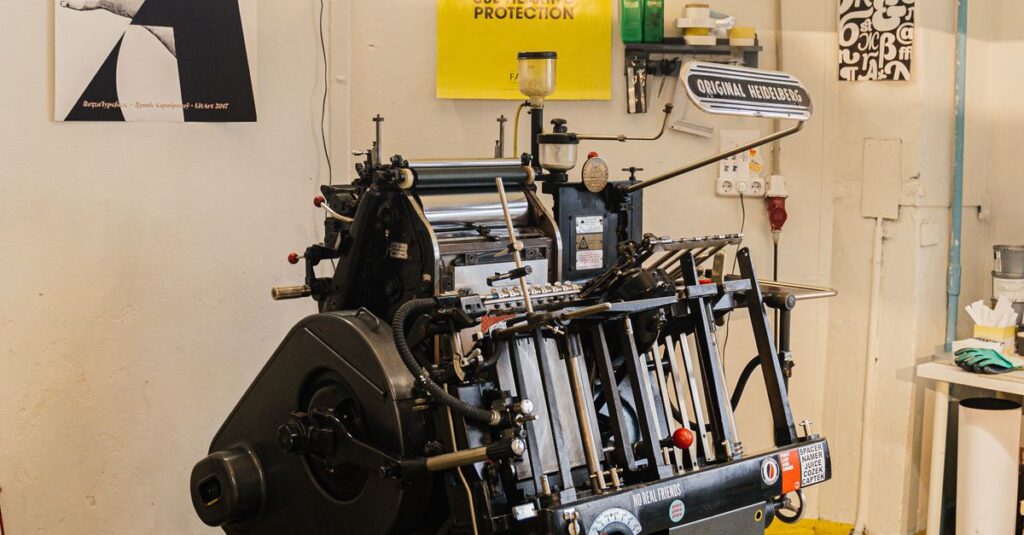
Commercial printing (your local print shop) is about applying ink to a pre-existing surface. They take your paper stock and print on it. That’s it. The paper comes from somewhere else. The binding? They might outsource it or offer a basic staple.
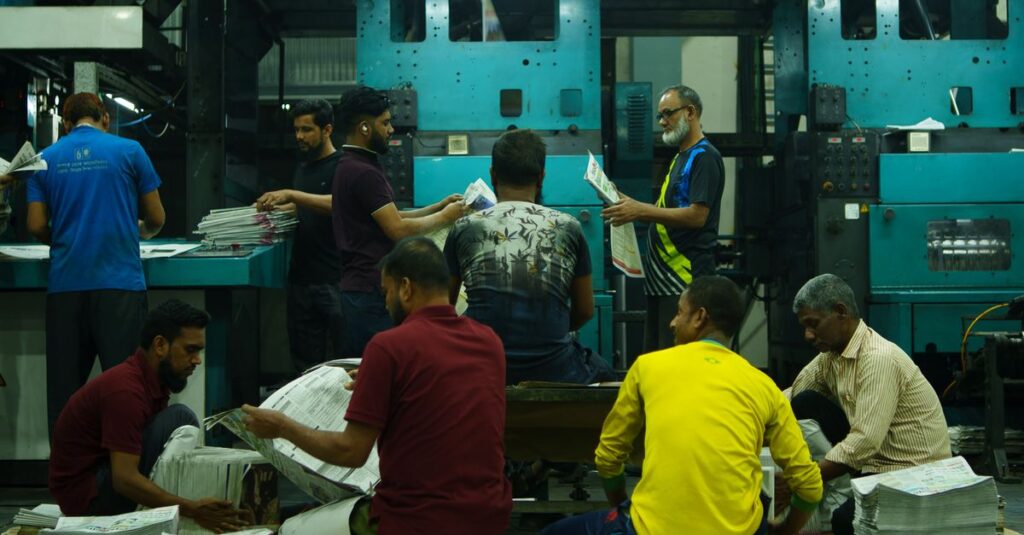
Notebook manufacturing is a vertical process. It starts with huge rolls of paper — we call them reels. You cut the paper to size, you rule the pages (single line, double line, cross-ruled for graphs), you collate the sheets, you bind them (stitched, perfect bound, spiral), you print or foil-stamp the cover, then you pack them into bundles. It’s a production line.
When you search for “printing near me” for notebooks, you need the second kind of operation. A place that has the paper cutter, the ruling machines, the binding lines. Otherwise, you’re just adding a costly, slow middleman.
The sign? Ask about paper GSM. A print shop will say, “We print on whatever paper you bring us.” A manufacturer will say, “We use 54 GSM for standard notebooks, but we can do 70 GSM for premium diaries. Which do you need?”
It’s a completely different language.
What a Real Local Manufacturer Actually Offers
Okay, so let’s say you find one. A real, local stationery manufacturer. What should you expect? Nine times out of ten, they’ll handle these core things in-house:
- Paper Sourcing & Cutting: They buy paper in bulk reels and slice it down to notebook sizes—King Size, Long, Short, Account.
- Ruling: Running the paper through machines that print the lines. All the types: SR (Single Ruled), DR, FR, CR. This isn’t just printing; it’s precision.
- Binding: This is the heartbeat. Stitched binding for durability, spiral for lay-flat use, perfect binding for a clean edge on thick diaries.
- Cover Printing & Finishing: Printing your logo, school crest, or corporate design directly onto the cover board. Maybe adding a lamination for protection.
- Customization: This is the big one. A manufacturer can build a notebook from the ground up to your specs—page count, ruling, cover design, even the packaging.
I think the most overlooked part is the binding. A cheaply bound notebook will shed pages after a month of student use. A well-stitched one lasts the whole year. That difference doesn’t come from a digital print shop. It comes from a factory floor.
Expert Insight
I was reading an interview with an old-school bindery manager a while back. He said something that stuck with me: “People see the cover print and think that’s the quality. But the real quality is in the spine. It’s in the thing you don’t look at until it fails.”
He was right. The most common complaint we hear isn’t about faded logos. It’s about pages falling out. The binding is where the real manufacturing skill lives. And you can’t outsource that to a copy center.
How to Spot a Reseller vs. a Real Manufacturer
This is probably the most practical part of the whole search. How do you tell the difference? Here’s a quick guide from conversations I’ve had with frustrated buyers.
Ask these questions:
- “Can I tour your production facility?” A manufacturer will say yes. A reseller will hesitate or give a vague answer.
- “What’s your daily production capacity?” A factory will give you a number (e.g., 30,000-40,000 notebooks per day). A reseller will talk about “partner networks” or “lead times.”
- “Do you source the paper, or does the client provide it?” The answer should be clear: they source it. If they say you need to arrange paper, you’re talking to a printer, not a manufacturer.
- “Can you customize the page ruling and page count?” If they only offer standard 92-page notebooks, that’s a red flag. A real manufacturer can mix and match.
Look, the goal isn’t to trick anyone. It’s to align expectations. You need a partner who understands the volume, the timeline, and the physical product you’re actually trying to put in people’s hands.
| Feature | Local Print Shop / Reseller | Integrated Notebook Manufacturer |
|---|---|---|
| Core Service | Printing on provided materials | End-to-end production from paper reel to finished notebook |
| Paper & Materials | Client-supplied or basic stock options | Sourced in bulk, variety of GSM & quality controlled |
| Binding | Limited (stapling, basic coil) | Multiple methods (stitched, spiral, perfect) in-house |
| Customization Depth | Usually cover design only | Full control: size, page count, ruling, cover, binding, packaging |
| Scale for Bulk Orders | Struggles with 10,000+ units | Built for bulk (10k-100k+ units standard) |
| Ideal For | Small batches, one-off projects | School supplies, corporate gifts, distributor stock, export orders |
The Real “Near Me” Advantage for Bulk Buyers
So why does local even matter if you’re buying 50,000 units? It matters for logistics and communication. Period.
When your manufacturer is in the same region, you cut down on insane freight costs. A truck from Rajahmundry to Chennai is a predictable cost. A container with customs clearance is a different beast.
But more than that, it’s about the ability to solve problems fast. Let’s say a sample has the wrong shade of blue on the cover. You can send someone over that afternoon. They can stand at the machine while they adjust the ink. You can’t do that over email with an international supplier. The timezone lag alone kills you.
For institutions — schools, government offices, corporations — this proximity is a safety net. It turns suppliers into partners. You’re not just a PO number; you’re the guy who visits the factory.
Anyway. The point is, “near me” is about reducing risk. It’s a buffer against the chaos of supply chains. And after the last few years, that buffer is the only thing that matters.
What to Do Next (A Tiny Action Plan)
If you’ve read this far, you’re probably mid-search, trying to get a big order sorted. So here’s what I’d suggest, straight up.
First, stop searching “printing near me.” It’s sending you down the wrong rabbit hole. Try these instead:
- “notebook manufacturer [your state/region]”
- “bulk diary supplier”
- “custom stationery production”
- “school notebook factory”
Second, when you find a potential place, ask the screening questions from earlier. The tour question is the fastest filter.
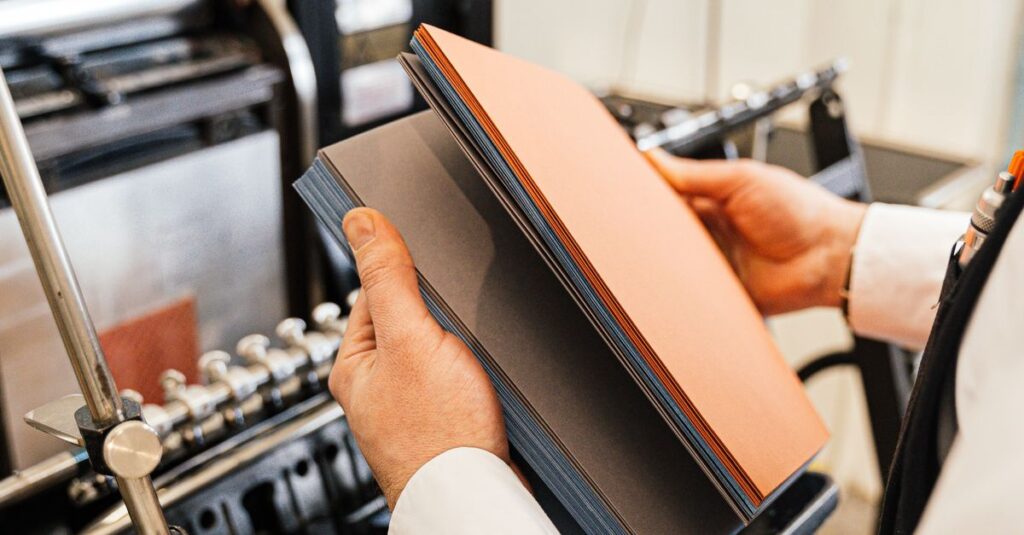
Third, get a physical sample. Not a PDF. Not a photo. The actual notebook. Feel the paper. Try tearing a page out. Write on it with different pens. The sample tells you more than any sales brochure.
And honestly? Most people skip the sample. They trust the quote and the website. Don’t be most people. The devil is in the physical details — the glue, the stitch, the way the cover bends.
Frequently Asked Questions
What’s the difference between a printer and a notebook manufacturer?
A printer applies your design to a surface. A manufacturer creates the entire product from raw materials—paper, binding, cover, printing. For bulk orders of notebooks, you need a manufacturer who controls the whole process in-house.
Why can’t a local print shop handle my order of 5,000 custom notebooks?
They likely don’t have the specialized machinery for ruling paper, stitching binding, or sourcing bulk paper reels. They’d have to outsource most steps, adding cost, time, and losing quality control. It’s simply not their business model.
What should I look for when visiting a notebook factory?
Look for the production line: paper cutting machines, ruling machines, binding stations (stitching, spiral coil insertion), and cover printing/pressing. Ask to see raw material storage (paper reels). If they only have digital printers and stacks of pre-made notebooks, they’re a packager, not a manufacturer.
Is ‘local’ manufacturing more expensive?
Often, it’s the opposite for bulk orders. You save massively on shipping and avoid import duties. Also, direct manufacturing cuts out middleman markups. The per-unit cost is usually lower, and you gain reliability. For a full breakdown, checking a manufacturer’s product list gives you a real sense of scale and pricing.
How long does it take to manufacture bulk notebooks?
For an established manufacturer, production for an order of 10,000-50,000 notebooks can take 2-4 weeks from finalized design. This includes paper sourcing, production, binding, and packing. Rush jobs are possible but add cost. Always factor in sample approval time first.
In the end, it’s about the right fit.
Searching for “printing near me” when you need a manufacturer is like looking for a mechanic when your car’s still on the assembly line. You’re asking the wrong expert.
The core need isn’t ink on paper. It’s a durable, functional, cost-effective product delivered on time. That’s a manufacturing problem. It’s solved with industrial machines, supply chain knowledge, and the kind of hands-on experience that only comes from doing it for decades.
So next time that search box feels unhelpful, remember the intent. You’re not looking for a shop. You’re looking for a source. The map might not show it, but they’re out there—the factories behind the notebooks, the makers behind the brands.
If figuring out that sourcing puzzle is where you’re stuck, it’s a conversation worth having directly.