Let’s be honest about that search bar
“Printing near by me.” You’ve typed it. I get it. It makes complete sense. You want something local, something you can see, something you can pick up fast. You’re probably a school administrator with a budget and a deadline, or a corporate procurement manager trying to brand 500 diaries for a conference next month.
Your brain goes straight to the local print shop — the one with the copier in the window. It’s a reflex. It feels safe.
But here’s the thing — that search is usually about fear. Fear of complicated logistics. Fear of something going wrong with a distant supplier. Fear of waiting.
I’ve been in notebook manufacturing for over four decades. I see this pattern all the time. People start with “near me” because they don’t know the other option exists. And that other option? A direct manufacturer, thousands of miles away, who can actually do it better, cheaper, and more reliably for the volumes you need. It’s a world most local shops can’t touch.
Anyway. Let’s talk about why your instinct might be pointing you in the wrong direction.
The gap between what you want and what you get
Think about what you’re really looking for. It’s not just “printing.” It’s a finished product. A stack of 5,000 identical notebooks for a new school year. A run of corporate diaries with a perfect logo emboss. A bulk order of custom stationery that doesn’t feel cheap.
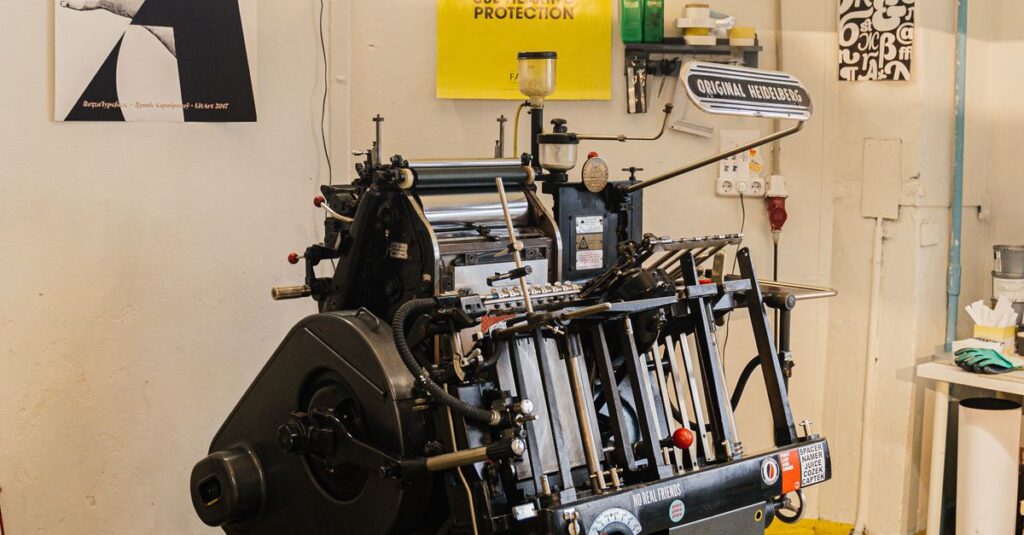
Your local print shop? They’re amazing for flyers, business cards, maybe a small batch of binders. They’re built for quick-turn, low-volume jobs. They buy paper and covers from someone else — a wholesaler, probably. They assemble. They print.
But when you walk in with an order for 10,000 units? Their system breaks. They have to outsource the paper, outsource the binding, manage three different suppliers, and then mark up every single step. You end up paying a premium for their middleman stress.
And the quality? Look. A local shop runs on a digital printer. It’s great for photos. For text on a notebook cover? It can scratch off. The binding might be glue that gives out in six months. I’ve seen it. A school principal showed me a batch once — pages falling out after one term. He’d gone “local” for speed. Cost him double in complaints.
This is the part nobody says out loud: “near me” often means “compromise on scale.”
A Tuesday in Rajahmundry
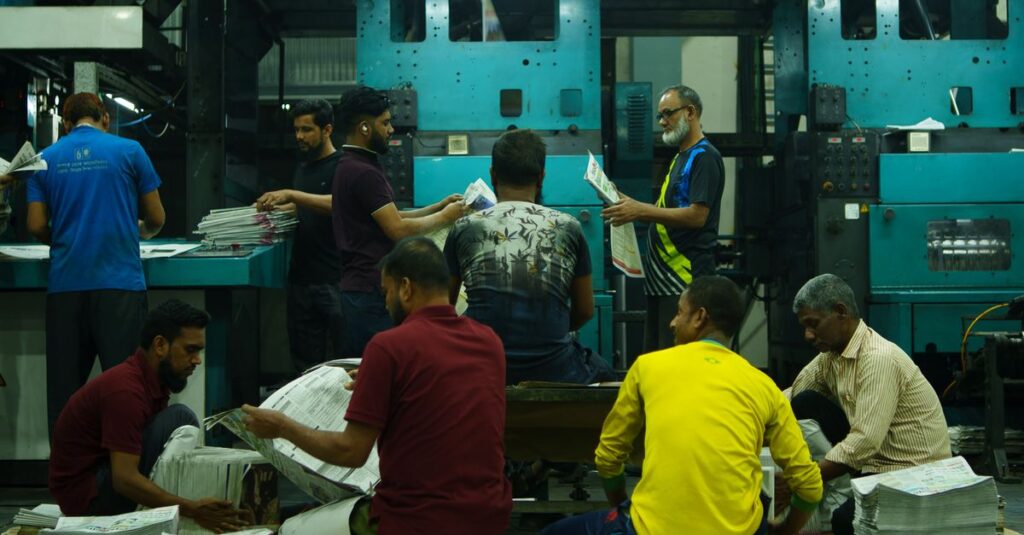
Let me give you a picture. It’s a Tuesday morning here. The factory floor is hot, the smell of paper and glue is everywhere — it’s a good smell, honest. We’re not printing one notebook. We’re making 35,000. The paper comes in on a truck from the mill, straight to our cutting machines. The stitching line is rhythmic, like a heartbeat. The covers go from blank sheets to printed, embossed, finished products in one flow.
The difference isn’t just size. It’s integration. We control the paper weight, the stitch tension, the drying time for the ink. A local shop can’t control any of that. They get what they’re given.
For you, the buyer, that control is everything. It’s why a notebook from a manufacturer lasts three school years, and one from a general print shop might not.
What you should actually be looking for
So if “printing near by me” isn’t the right search, what is?
Your keywords need to shift. Think like a professional buyer, not a retail customer.
- Bulk notebook manufacturer: This is the big one. It signals you need volume, not just a print run.
- Custom diary supplier: Focuses on the product type and the B2B relationship.
- Private label stationery production: If you want your brand on it, this is the term.
- Institutional notebook supply: Speaks directly to schools, colleges, government.
The intent changes completely. You’re no longer looking for a service. You’re looking for a source. A partner. Someone who doesn’t just print a cover but understands grain direction in paper and why double-stitched binding is non-negotiable for a 200-page account book.
And logistics? It’s 2024. Shipping 5,000 notebooks from Rajahmundry to Rajasthan — or Riyadh — is a solved problem. It’s often cheaper than you think because our base price is so much lower. The freight cost gets absorbed and you still save 20, 30 percent. Plus, you get a production facility built for your order, not a copy shop trying to scale up.
The product range alone is different. We’re talking 52-page notebooks to 700-page ledgers. Single-ruled, four-ruled, cross-ruled. Things a local shop would have to special order as a one-off.
Local Print Shop vs. Integrated Manufacturer
| Factor | “Printing Near Me” (Local Shop) | Integrated Notebook Manufacturer |
|---|---|---|
| Best For | Small batches, quick prototypes, copies | Bulk orders (1,000+ units), annual supply |
| Core Skill | Digital printing, copying | Paper sourcing, binding, large-scale offset printing |
| Price Driver | High per-unit markup, outsourced materials | Economies of scale, direct material sourcing |
| Quality Control | Variable; depends on their suppliers | Controlled end-to-end in one facility |
| Customization Depth | Usually cover-only, basic finishes | Cover, paper, ruling, binding, packaging — full control |
| Lead Time (for 5k units) | Longer (coordinating multiple vendors) | Shorter (integrated production line) |
| Real Cost | Higher per notebook, hidden markups | Lower per notebook, transparent pricing |
Look at that table. It’s not that local shops are bad. They’re just built for a different job. Asking them to do large-scale notebook manufacturing is like asking a bicycle courier to move a sofa. Wrong tool.
The Trust Factor (It’s Not About Distance)
I know what you’re thinking. “But I can’t see your facility. How do I trust you?”
Valid. Absolutely.
But let me flip it. Do you really see the local shop’s process? You see a storefront. You don’t see their paper supplier’s mill. You don’t see their binder’s workshop. You’re trusting a chain of invisibility.
With a manufacturer like us, you get samples. Physical, hold-them-in-your-hand samples of exactly what you’ll get, sent to your office. You get videos of the production line if you want. You get a single point of contact who knows the entire process from tree pulp to packed box.
The trust comes from specialization, not proximity. We’ve been doing only this since 1985. A local print shop does wedding invites on Monday and your notebooks on Tuesday. Which one inspires more confidence for a bulk order?
I was on a call with a procurement manager from a university in Kenya last week. His first question was about shipping timelines. His last question was about reordering. The distance became irrelevant once he saw the spec sheet and the sample. The problem wasn’t logistics. It was quality assurance. And we solved that before we even talked price.
Expert Insight
I read an industry report a while back — can’t remember the publisher, something dry — but one line stuck. It said the biggest cost in bulk stationery isn’t the paper or the print. It’s the risk of inconsistency. A bad batch of 10,000 notebooks means wasted money, wasted time, and a ruined professional relationship. The report said manufacturers with integrated control have a failure rate something like 90% lower than assembled supply chains. Don’t quote me on the exact number. But the point is burned in my mind: consolidation reduces points of failure. Every time you add a link in the chain — paper guy, print guy, bind guy — you add a chance for something to go wrong. We removed those links. That’s the real value. Not being “near,” but being whole.
So, what do you do now?
Start by redefining the problem. You don’t have a “printing” need. You have a “product supply” need.
Step one: Get clear on your specs. Not just “a notebook.” How many pages? (52? 240?) What ruling? (Single? Four-ruled for accounts?) What binding? (Stitched? Spiral?) What paper weight? This clarity is power. It lets you talk to manufacturers in their language.
Step two: Request physical samples. From us, from others. Compare them. Bend the cover. Write on the paper with different pens. Try to pull a page out. A sample tells you more than a hundred website photos.
Step three: Factor in total cost. Not just unit price. Include the cost of your time managing a local shop’s delays. Include the cost of replacements if quality fails. Include the value of getting it right the first time.
The goal isn’t to find the closest supplier. It’s to find the most capable one. For bulk notebooks, that capability is almost never found around the corner. It’s found in specialized industrial towns, in factories that have been perfecting this one thing for longer than some of your staff have been alive.
That capability looks like this: predictable quality, scalable volume, and a price that makes your finance department smile.
Frequently Asked Questions
Isn’t shipping from a distant manufacturer expensive and slow?
It’s usually the opposite for bulk. We produce at a much lower unit cost, so even with shipping added, you often save 20-30%. And because we control the whole process, production is faster than a local shop coordinating multiple vendors. Sea freight for international orders is very cost-effective for container loads.
How can I trust quality without seeing the facility?
We send detailed specs and, most importantly, free physical samples of your exact product before you commit. You test them. You also get production photos/videos. Trust is built on evidence, not location. After 40 years, our reputation is our facility.
What’s the minimum order quantity for a custom notebook?
It varies, but for custom printed notebooks, we typically start at 1,000 pieces. For standard notebooks, we can supply smaller quantities, but the real price advantage kicks in at 5,000+ units. It’s about the cost of setting up the printing plates and production run.
Can you match a specific brand color or paper type?
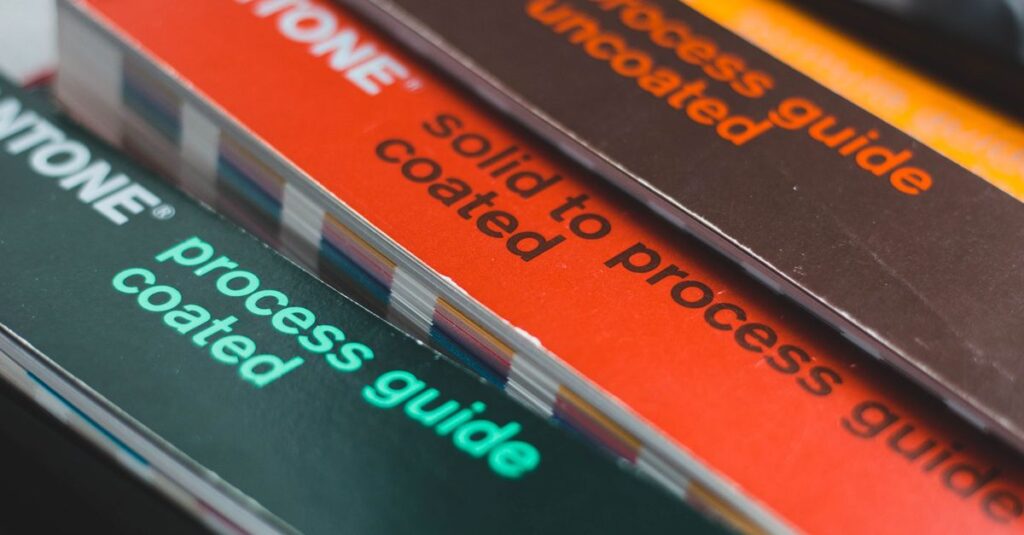
Yes, absolutely. That’s a key advantage of working directly with a manufacturer. We can match Pantone colors for logos and source specific paper weights and finishes (like 70 GSM or 100 GSM paper). A local shop is limited to the few paper stocks their wholesaler carries.
Do you handle all the design, or do I need to provide print-ready files?
We can do both. If you have a professional designer, we prefer print-ready PDFs. But we also have in-house designers who can take your logo and ideas and create cover artwork for you. There’s usually a small fee for the design service, but it saves you a huge headache.
The Bottom Line
“Printing near by me” is a search for convenience. I understand the urge. But buying notebooks in bulk for an institution or a corporate giveaway isn’t a convenience purchase. It’s a strategic one.
The real convenience isn’t a 10-minute drive to pick up a box. It’s a perfect delivery of 10,000 units to your warehouse, on time, on budget, with zero defects. It’s not having to think about it again until next year’s order.
That kind of convenience comes from expertise and scale, not proximity. It comes from finding a partner, not a printer.
So maybe the next search isn’t about location at all. Maybe it’s about finding someone who has solved the exact problem you’re holding, thousands of times over. The distance, then, just becomes geography. And geography is the easiest problem to solve.