Let’s Talk About That Price Tag
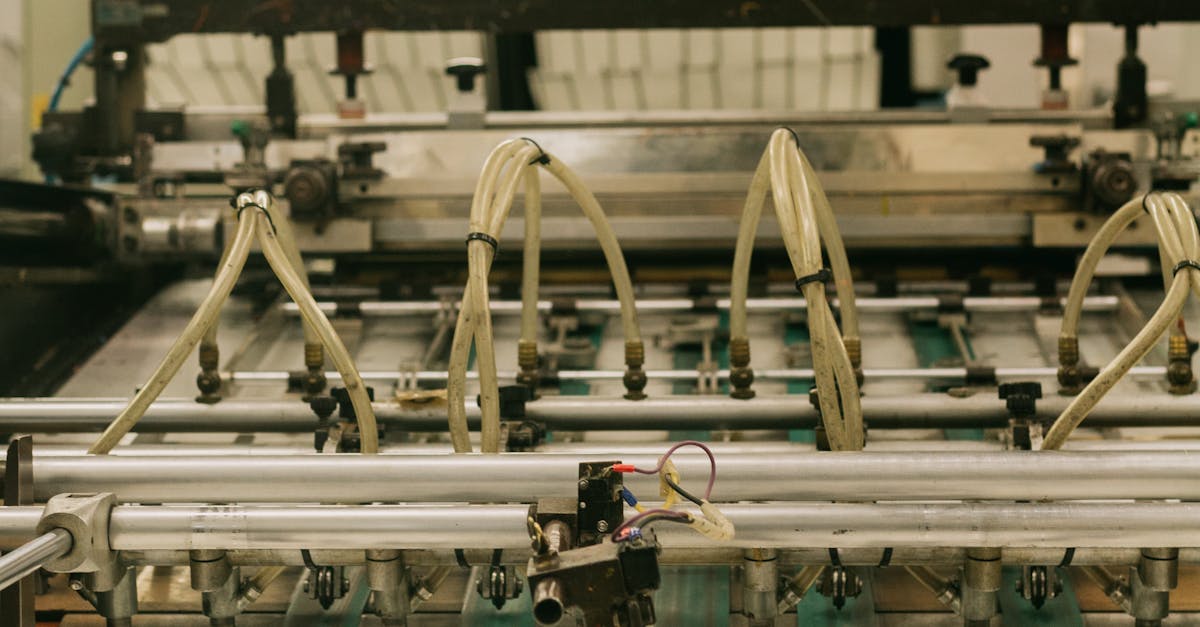
You’re looking at a printing machine price quote. Maybe you’re a school procurement manager trying to budget for next year’s notebooks. Or a distributor trying to figure out why your supplier’s costs just went up. The number on the screen looks big. It feels big. And your first thought is probably: “What am I actually paying for here?”
Right. That’s the question nobody in this industry likes to answer directly. Because the truth is, the machine itself is just the start. The real cost — the one that determines whether your notebooks feel cheap or premium, whether they fall apart or last the school year — is hidden in about a dozen other decisions. I’ve been making notebooks since 1985. I’ve seen the quotes come and go. And I can tell you, focusing only on the machine price is how you end up with a warehouse full of notebooks that nobody wants to buy. If you’re trying to make sense of the numbers, our breakdown might help.
It’s Not Just a Machine. It’s a Chain Reaction.
Here’s the thing. When you see a price for a printing machine — say, for offset printing — you’re not just buying metal and ink jets. You’re buying into a system. The machine dictates the paper you can use. The paper dictates the binding method. The binding method dictates the cover quality. And all of that dictates the final price you can charge.
Think about it this way. A basic machine might only handle 54 GSM paper efficiently. That’s fine for standard school notebooks. But if a corporate client wants a premium 100 GSM paper for their executive diaries? That machine struggles. It jams. It wastes paper. The cost per unit shoots up. So that “cheaper” machine just made your premium product line impossible. Or at least, unprofitable.
I was talking to a procurement manager from a college last week — over the phone, actually — and he said something that stuck with me. He said, “We bought based on the lowest machine quote three years ago. Now we’re stuck ordering the same flimsy notebooks every year because it’s all our system can produce.” He sounded tired. Not annoyed-tired. Trapped-tired.
That’s the real cost. It’s not the number on the invoice. It’s the lack of options two years down the line.
Expert Insight
I was reading an industry report last month — one of those dry, technical ones — and one line jumped out. It said the most efficient manufacturers don’t choose a machine for its price. They choose it for its flexibility gap. The gap between what it can do today and what it might need to do tomorrow. The researcher put it like this: “Capability is a debt you pay upfront. Limitation is an interest you pay forever.” I don’t have a cleaner way to put it than that. You either invest in the ability to adapt, or you get charged for your inability to change.
The Hidden Line Items Nobody Talks About
Okay, let’s get practical. What’s actually in a printing machine price? Let’s say you’re comparing two quotes. One is 20% lower. Why?
- Paper Tolerance: Can it only run perfect, mill-fresh paper? Or can it handle the slight variations you get in bulk paper rolls? The latter costs more.
- Ink System: Is it a closed system that forces you to buy one brand of expensive ink? Or an open system where you can shop around? Guess which one has a lower upfront price.
- Binding Integration: This is a big one. Some machines just print. Others have attachments or perfect alignment for spiral binding or perfect binding units. A standalone printer plus a separate binder is two machines, two operators, two points of failure. An integrated line looks expensive. Until you calculate the labor.
- Speed vs. Quality: You can have fast, or you can have sharp. High-speed machines for bulk school notebooks often sacrifice a bit of detail. That’s fine for ruled lines. It’s not fine for a detailed corporate logo. The machine that does both well? It costs.
And then there’s the truly hidden stuff. The cost of downtime. The availability of spare parts in your city. The technician who has to fly in from another state every time something breaks. I’ve seen a “bargain” machine sit idle for three weeks waiting for a circuit board. The savings evaporated in one missed delivery deadline.
Look, I’ll just say it. The cheapest machine is cheap for a reason. Usually, several reasons. And you’ll discover each one at the worst possible time.
A Tale of Two Orders (The Real-Life Kind)
Let me tell you about Priya. She runs procurement for a chain of private schools in Hyderabad. Two years ago, she needed 50,000 custom notebooks for the new academic year. She got two quotes. One from a supplier with a new, high-efficiency machine. The price per notebook was slightly higher. The other from a smaller shop with older machines. The price was 15% lower.
She went with the lower price. The notebooks arrived. The printing was… okay. A little fuzzy on the school crest. The binding was glue-based, not stitched. By mid-term, pages were falling out. Parents complained. Teachers complained. Priya spent the next six months apologizing and dealing with replacement requests. The “savings” turned into a PR headache and a ton of extra work.
Last month, she placed her order for this year. She didn’t ask for the lowest price. She asked for our spec sheet: stitched binding, 70 GSM paper, offset printing for clarity. She said, “I can’t afford to save money like that again.” Her exact words. She wasn’t just buying notebooks. She was buying peace of mind. Which, it turns out, has its own price.
Anyway. The point isn’t that you should always buy the most expensive option. The point is you need to know what you’re buying — and more importantly, what you’re not.
Printing Machine Price Breakdown: A Side-by-Side Look
| Cost Factor | Basic / Entry-Level Machine | Integrated / Flexible Machine |
|---|---|---|
| Upfront Purchase Price | Lower. The main attraction. | Higher. The main hesitation. |
| Paper Quality Range | Limited. Best with standard 54-70 GSM. | Wider. Can handle 40 GSM to 120+ GSM smoothly. |
| Binding Compatibility | Often print-only. Requires separate binding process. | Often designed with inline or near-line binding in mind. |
| Operating Cost (Ink/Energy) | Can be higher per page due to less efficiency. | Often lower per page at high volumes. |
| Output Flexibility | Good for one or two product types (e.g., standard notebooks). | Can switch between school notebooks, premium diaries, custom pads. |
| Long-Term Cost (5 Years) | Higher. Includes more downtime, limited upgrades, potential replacement sooner. | Lower. Built to last, adaptable to new paper/binding trends. |
See the pattern? The cheaper machine asks for less money today but more time, more hassle, and more money tomorrow. The flexible machine asks for a bigger commitment now but gives you options later. It’s a trade-off. But at least now you know what’s being traded.
So What Should You Actually Look For?
Forget the sticker price for a minute. Start here instead:
- Your Product Mix: Are you only ever going to make one type of notebook? Maybe a basic machine works. Do you want to offer custom corporate diaries or drawing books later? You need flexibility.
- Your Volume: Making 5,000 notebooks a month is different from 50,000. High-volume machines have a different cost profile. The sweet spot is where machine speed meets your actual demand without constant stops and starts.
- Local Support: This is huge. Is there a technician within 100 km? What’s the average repair time? A machine with great local support is worth a 10% premium. Easily.
- Energy & Waste: Ask about power consumption per 1,000 sheets. Ask about paper waste during setup. These are silent cost killers.
Most people I’ve spoken to start with the budget and work backwards. I think you should start with the notebook you want to sell — the feel, the quality, the durability — and work forwards. Find the machine that makes that notebook profitably. Then figure out if you can afford the machine. Sometimes the answer is no. And that’s okay. It’s better to know before you buy than after.
And honestly? Sometimes the right answer isn’t buying a machine at all. For many businesses, especially those starting out or with fluctuating orders, partnering with a manufacturer who already has the right setup is the smartest move. You pay a per-unit cost, sure. But you avoid the massive capital outlay, the maintenance, the operator salaries. You’re buying a finished product, not a factory. That’s the model we’ve built for a lot of our distributors — they handle the sales and distribution, we handle the complex, capital-intensive production. It works.
Frequently Asked Questions
What is the average price of a notebook printing machine?
There’s no “average” that’s useful. A small digital printer for short runs might start around ₹10-15 lakhs. A full industrial offset printing line for bulk school notebooks can run into crores. The price swings wildly based on speed, automation, and binding integration. The better question is: what’s the price range for the machine that can make the specific notebooks I need to sell?
Does a higher printing machine price mean better notebook quality?
Not automatically, but usually. A higher price often buys precision (sharper printing), consistency (every notebook looks the same), and durability (the machine — and the notebooks it makes — last longer). But you still need to pair it with good paper and binding. A fancy machine with cheap paper still makes a cheap notebook.
Can I get a good machine at a low price?
You can get a functional machine at a low price. “Good” depends on your definition. For steady, low-variety, high-volume work, a used or simpler machine might be perfectly good. The risk is in the hidden costs: more maintenance, higher waste, less flexibility. It’s a calculated gamble.
How does binding affect printing machine price?
Massively. A machine that only prints sheets is one thing. A machine that prints, collates, and stitches pages into a notebook cover in one line is a completely different (and more expensive) system. If you want stitched or spiral-bound notebooks, you need to factor in the binding technology from the start. It’s not an add-on.
Is it better to buy one multi-purpose machine or several specialized ones?
For most notebook manufacturers starting out, one flexible machine is better. It’s simpler to operate and maintain. As you scale into the tens of thousands of units per day, specialized machines (a dedicated printer, a dedicated binder) can be more efficient. But that’s a high-level problem. Start with getting one product line right first.
The Bottom Line Isn’t a Number
After forty years, here’s what I know. The printing machine price is a question of philosophy, not just finance. Are you buying a tool to make a product as cheaply as possible? Or are you building a system to make a product as well as possible? The market is full of cheap notebooks. It’s always hungry for good ones.
The schools, corporates, and distributors we work with — they remember quality. They remember the notebook that didn’t fall apart. They remember the clear print. They come back. That loyalty, that repeat business, pays for the machine a hundred times over. The initial price fades. The reputation you build with the machine? That lasts.
I don’t think there’s one right answer here. Your budget is real. Your needs are specific. But if you’ve read this far, you’re not just looking for a cheap machine. You’re looking for a smart investment. And you’re probably figuring out if the smarter investment is in metal and wires, or in a partnership with someone who’s already done the math. Either way, just know what you’re really paying for.
If you want to talk specifics — your volume, your paper, your budget — we do that all day. No machine sales. Just notebook talk.