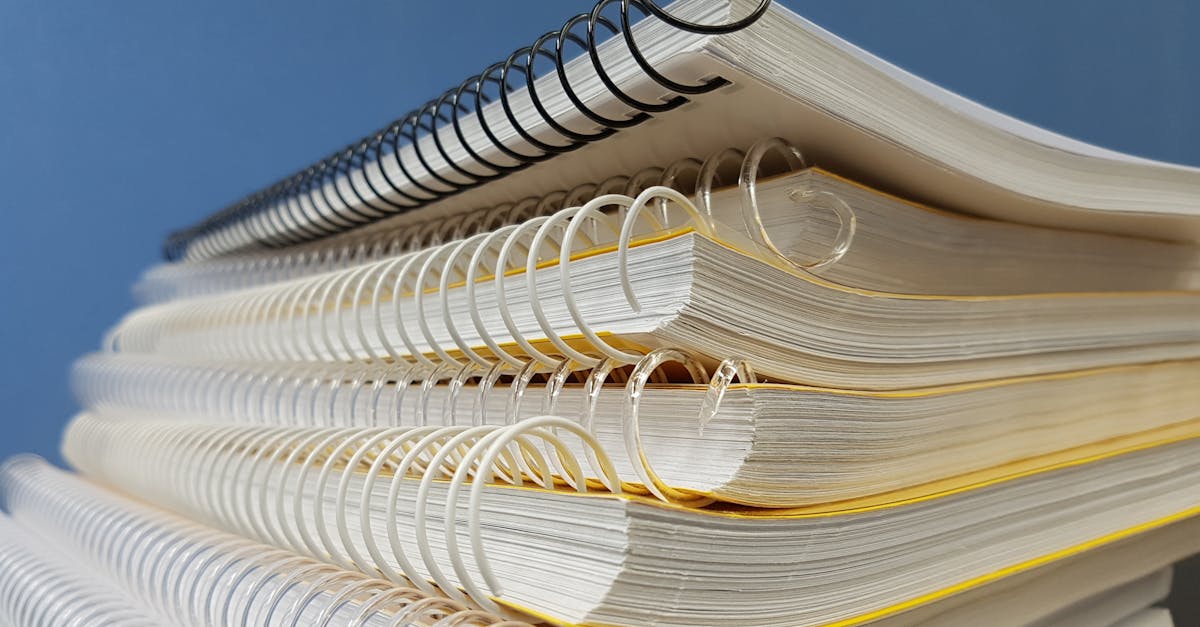
Right. Let’s talk about what’s holding your notebook together.
It looks simple, right? Some paper, a cover, something holding it all in place. But if you’re ordering 20,000 notebooks for a school term, or 10,000 branded diaries for your sales team, the way it’s bound is the single biggest decision you’ll make. Get it wrong, and you’re looking at pages falling out mid-year, covers curling, and a product that feels cheap. You know that feeling — you’ve probably had a notebook fall apart on you.
I’ve been making notebooks for four decades. The number of procurement managers who ask, “Just get me the cheapest binding,” and then are shocked when the product fails… it’s a pattern. So let’s break it down, honestly. Not as a sales pitch, but as someone who’s seen what lasts and what doesn’t. The binding isn’t just a finish. It’s the integrity of the whole thing. If you’re looking at a bulk order, this is the stuff you need to know.
It’s not just about holding pages. It’s about use and abuse.
Here’s the mistake most corporate buyers make: they choose binding based on a sample. A single notebook feels fine. But you’re not buying one. You’re buying thousands that will be used in wildly different ways. A student’s notebook gets shoved in a backpack, tossed on a desk, opened and closed fifty times a day. A corporate diary sits on a desk, gets opened once for a meeting, maybe travels in a laptop bag. The stress is completely different.
So the first question isn’t “which binding is best?” It’s “what’s going to happen to this notebook?” And you need to answer that before you look at a single quote. Otherwise, you’re just picking based on price, and that’s a fast way to get complaints later.
A Real-World Example That Stuck With Me
I was talking to a procurement manager for a large IT company last year — over the phone, actually — and he was frustrated. Their previous supplier had delivered beautiful, logo-embossed perfect-bound diaries. Looked premium. But within three months, the sales team was reporting that the diaries wouldn’t lay flat during client meetings. They were having to hold them open with one hand while scribbling notes with the other. It looked unprofessional. The problem? Perfect binding on a thick, 240-page diary. It just doesn’t work for that kind of active, desk-flat use. He didn’t know to ask. The supplier didn’t volunteer the information. A classic mismatch.
Anyway. Where was I.
So what are your actual options? Let’s get technical.
You’ll hear a few main terms. I’ll explain them like you’re standing in the factory with me, which you basically are.
- Stitched Binding (Saddle Stitching): This is the classic. Think of two or three metal staples right through the spine fold. It’s how most school notebooks are made. The paper is folded into sections (called signatures), nested, and stapled. Incredibly strong for its cost. The notebook will lay completely flat, which is why it’s perfect for writing. Limitation? You can’t bind a very thick book this way. Once you go past about 92-100 pages, it gets bulky and the staples struggle. For standard school notebooks, it’s the king. Reliable. Durable. Simple.
- Spiral Binding (Coil Binding): A plastic or metal coil is threaded through round holes punched along the edge. The big win? It lays FLAT. 360-degree flat. You can fold the cover right around to the back. This is why artists love it for sketchbooks, and why it’s great for manuals or notebooks that need to stay open on a specific page. Downside? The coils can get bent or snagged in bags, and it feels less “formal” than other types. For a corporate environment, sometimes the aesthetic is wrong.
- Perfect Binding: This is what most hardcover books and paperback novels use. The pages are gathered, the spine edge is roughened, and a strong, flexible glue is applied. The cover is then wrapped around. It gives a very clean, professional look. It’s excellent for thicker books (200 pages and up). But — and this is the critical but — it does NOT lay flat easily, especially when new. You have to “break the spine.” It’s for books that are read, not necessarily for notebooks that are written in on every page.
See? Already more complicated than you thought. And that’s before we talk about paper weight, which changes everything.
The one question you have to ask your manufacturer.
It’s simple. “For my intended use, which binding will fail first, and how?” A good manufacturer won’t dodge this. They’ll tell you. For a spiral-bound student notebook with thin paper, the paper might tear at the holes under rough handling. For a cheap perfect-bound book, the glue might give way in high humidity. For a stitched book with too many pages, the staples might pop.
We run tests. We literally try to break them. Because we don’t want the call six months later either. It’s a headache, honestly. So this is where trust comes in. You’re not just buying a product; you’re buying the expertise to match the product to the need.
| Factor | Spiral/Coil Binding | Perfect Binding | Stitched Binding |
|---|---|---|---|
| Lay-Flat Ability | Excellent. 360° fold. | Poor. Must break spine. | Very Good. Opens flat naturally. |
| Durability (Daily Abuse) | Good, but coil can bend. | Good for desk use. Weak if flexed constantly. | Excellent for standard use. |
| Page Count Suitability | Low to High (52 to 300+ pages) | Best for High (200+ pages) | Low to Medium (52 to 120 pages) |
| Professional Appearance | Casual/Functional | High-End/Formal | Standard/Utilitarian |
| Cost (Bulk Order) | Medium | Low to Medium | Lowest |
| Biggest Risk | Coil deformation, torn holes. | Glue failure, spine cracking. | Staple pull-through on thick books. |
Expert Insight
I was reading something last month and one line stuck with me. It was from an old book on bookbinding, not even about commercial notebooks. The author said something like — the binding is a contract between the maker and the user. It’s a promise that the contents will stay accessible. I don’t have a cleaner way to put it than that. When we choose a binding method here at the factory, that’s what we’re thinking about. Not just cost-per-unit. What’s the promise? For a child’s schoolbook, it’s a promise to survive a year of chaos. For your corporate diary, it’s a promise of a professional tool. They’re different promises. And they need different solutions.
How bulk changes everything (the part nobody mentions)
You might think ordering 50,000 units just makes things cheaper. It does. But it also locks you in. Hard. If there’s a flaw in the binding choice, you’re stuck with 50,000 flawed notebooks. There’s no sending them back. That’s why the smartest buyers we work with start with a pilot order. A few thousand units. Test them in the real world. Give them to the actual users — the students, the sales reps, the office staff — and get raw feedback.
Does the spiral coil catch on things in their bag? Does the perfect-bound diary feel too stiff in meetings? This isn’t a waste of time. It’s the cheapest insurance you can buy. I’ve seen institutions skip this step to save six weeks on delivery, and then live with a subpar product for two years. The math never works in their favor.
Look, I’ll be direct. The binding is where a manufacturer can cut the most corners to give you a lower price. Thinner glue. Fewer staples. A lower-grade plastic coil. You won’t see it in a sample. You’ll only see it in month three, when the complaints start. So your supplier relationship matters. A lot.
This is why we’re so upfront about our process — it saves everyone the headache later.
So what should you do next?
First, forget the word “best.” Think “most appropriate.” Gather three things before you even reach out for a quote: 1) The exact user (student, executive, artist), 2) The typical use-case (shoved in bag, on a desk, in a field), and 3) The required lifespan (one academic year, one calendar year, indefinite).
Second, ask the manufacturer why. “Why do you recommend spiral for this?” Their answer tells you everything. If it’s just “it’s cheaper,” walk away. If it’s “because with this page count and paper GSM, the spiral will allow flat writing and hold up to frequent page-turning better than glue,” you’re talking to someone who knows.
Third, think about the feel. This is intangible but real. A perfectly stitched notebook has a certain satisfying snap when you open it. A well-made spiral book has a smooth turn. The binding contributes to the user’s experience as much as the paper quality does. It’s part of the product’s personality.
I don’t think there’s one perfect answer here. Probably there isn’t. The right binding is a balance of cost, function, durability, and even culture. But if you’ve read this far, you’re not just looking for a commodity. You’re looking for a tool that works. And that’s the whole point.
Frequently Asked Questions
Which notebook binding is most durable for students?
For standard school use, stitched binding is the workhorse. It handles the daily shoving, dropping, and opening/closing remarkably well. The metal staples provide a strong, mechanical hold that glue alone can’t match for thinner books. For older students with thicker, heavier books, a robust spiral binding with a thicker plastic coil can be a good alternative, as it also lays flat for writing.
What’s the difference between spiral and coil binding?
Honestly? In everyday talk, they’re the same thing. Technically, “spiral” usually refers to a continuous wire that spirals through holes, while “coil” often means a pre-formed plastic cylinder. But most manufacturers (and buyers) use the terms interchangeably. The key thing is the material (plastic or metal) and the coil’s diameter, which affects durability.
Can you do custom notebook binding for a corporate logo?
Absolutely. This is where it gets interesting. For corporate diaries, the binding is part of the branding. We can do perfect binding with your logo hot-foiled on the spine for a sleek look, or use colored spiral coils to match your brand colors. The cover material and binding method are completely customizable based on the image you want to project. It’s a big part of our custom printing services.
Why do some perfect-bound notebooks fall apart?
Two main reasons: bad glue or a poorly prepared spine. If the glue is low-quality or applied too thinly, it fails. If the page edges aren’t roughened up properly, the glue has nothing to grip. It’s a cost-cutting step that backfires every time. A well-made perfect-bound book is very strong, but it’s not designed to be folded back on itself repeatedly like a spiral notebook.
How does page count affect binding choice?
It’s the biggest technical factor. Stitched binding has a limit (around 100-120 pages). After that, you need to move to spiral or perfect binding. Perfect binding really comes into its own for thick books (200+ pages). Spiral binding can handle a wide range, but very high page counts need a larger coil diameter to hold all the paper. Always discuss your exact page count with your manufacturer.
Wrapping this up
The choice comes down to three things, really. What does the user need it to do? How long does it need to last? And what’s the budget? You can usually only optimize for two of those. If you need high durability and low cost for a school, you get stitched binding and accept the page limit. If you need a premium feel and flat-lay for a corporate team, you get a quality spiral or comb binding and pay a bit more.
Don’t let it be an afterthought. It’s the skeleton of the book. And nobody wants a notebook with a weak spine. The question isn’t whether you need to think about binding. It’s whether you’re ready to think about it the way your end user will — after they’ve been using it for months.