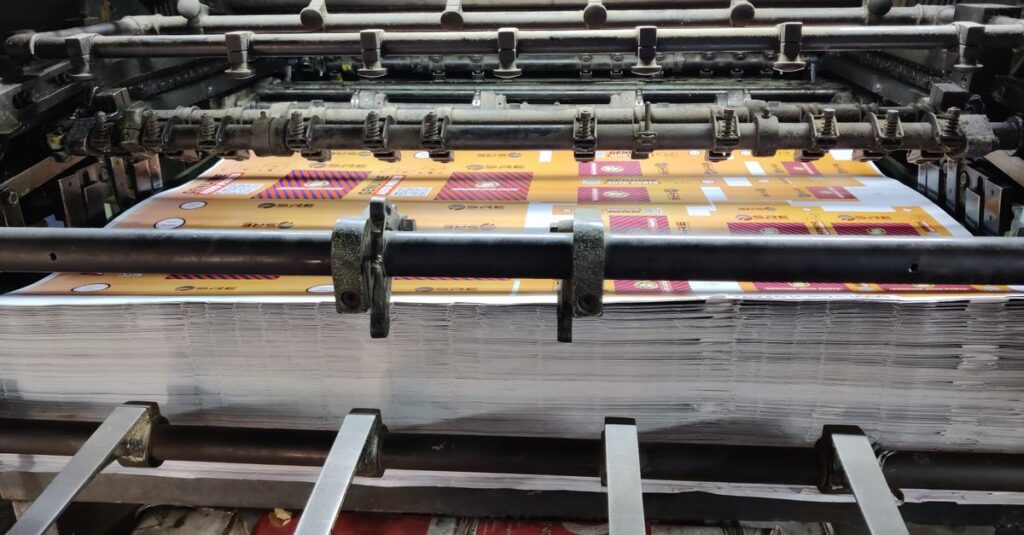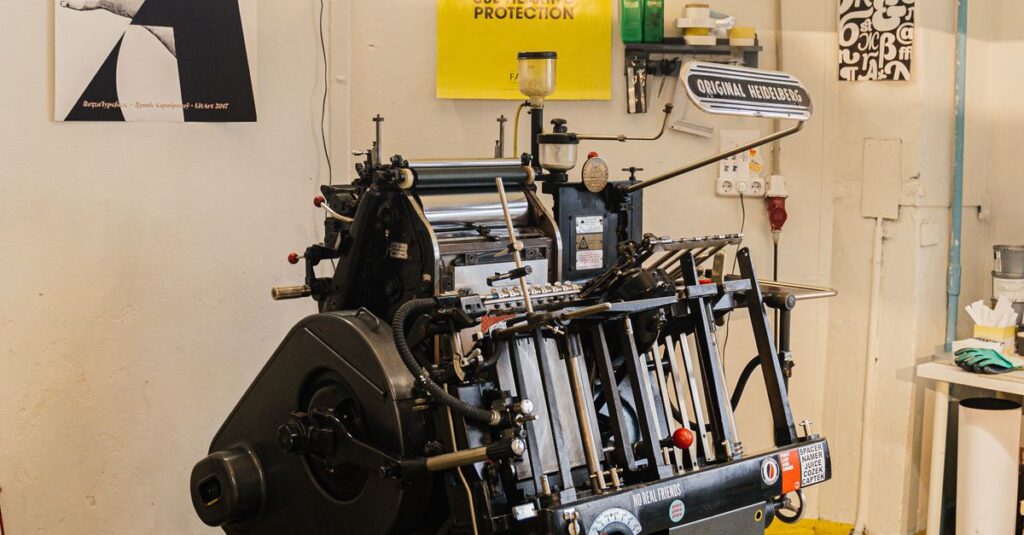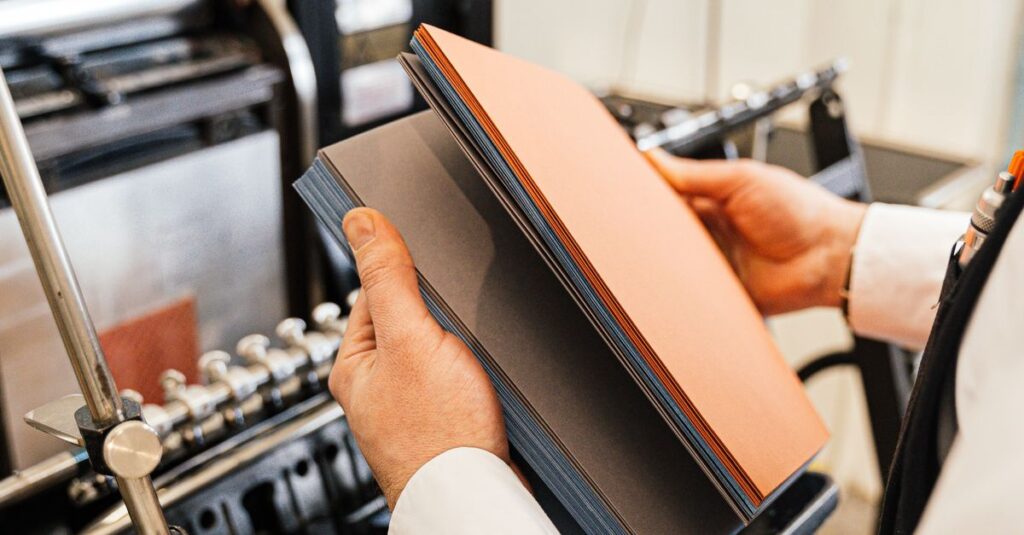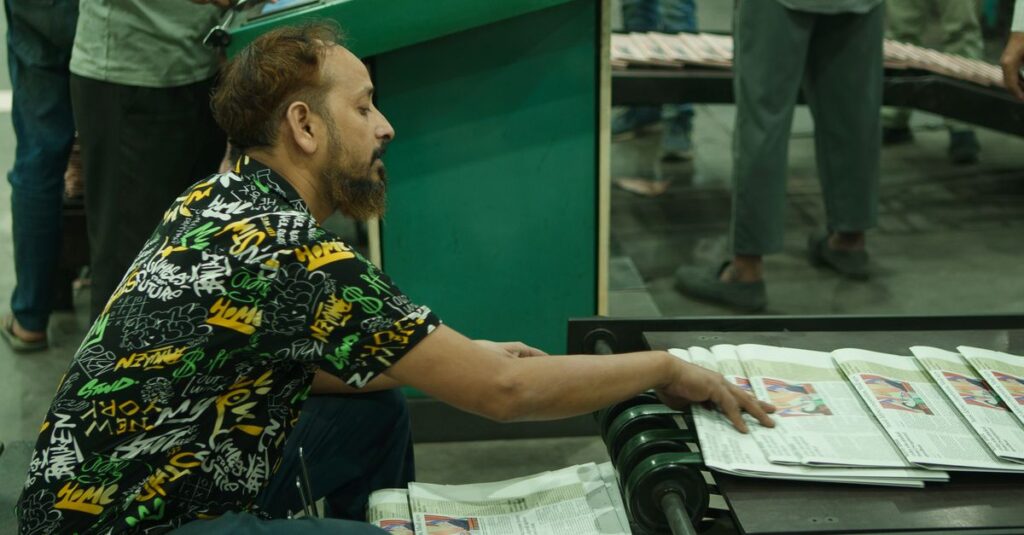
Introduction
You’ve got a bulk order for notebooks or diaries. You’re comparing quotes. And somewhere in that spreadsheet is a number that keeps bugging you — the printing cost per page.
I’ve been in this business since 1985. And I’ve seen procurement managers spend hours trying to figure out why one quote is cheaper than another. Here’s the thing: the printing cost per page isn’t just a number. It’s a story about paper, ink, setup time, and margins.
If you’re ordering in bulk, you need to know what’s inside that number. Otherwise you’re guessing. And guessing costs money.
Let’s break it down — no fluff, no jargon. Just what I’ve learned after selling millions of notebooks. If this sounds like something you need, Sri Rama Notebooks has been doing this for decades.
What Actually Determines Printing Cost Per Page?
Most people think it’s just paper plus ink. That’s like saying a car is just metal plus rubber. Technically true, but useless.
Here are the big factors that push your printing cost per page up or down:
- Paper GSM and quality — 54 GSM Writing paper costs less than 70 GSM. But cheaper paper might ghost or bleed. Especially with fountain pens. I’ve seen schools save two paise per page — then get complaints from teachers. Not worth it.
- Ink coverage — Full-colour logos, photos, or dark backgrounds chew through ink. A simple one-colour logo on the cover? Much cheaper. The inside pages usually stay black-only, but if you want colour inside, multiply your cost.
- Quantity — Running 10,000 notebooks vs 500. Setup cost is fixed. So higher volume spreads that cost across more pages. Simple math. But some suppliers hide setup fees.
- Number of pages — A 200-page notebook vs 100. The per-page cost usually drops slightly because of press time efficiency. But not always — depends on the machine.
- Binding type — Stitched binding is cheaper per page than spiral or perfect binding because it’s less labour. But it won’t lie flat.
That’s the surface. But there’s more. (There’s always more.)
Expert Insight: The Lesson I Learned the Hard Way
Back in the early 2000s, we took a large order from a college in Visakhapatnam. They chose the cheapest paper — 48 GSM, I think — to keep the printing cost per page low. We warned them. They said it’s fine.
Three months later, the dean called. Students were complaining that ink bled through to the other side. They had to reprint the entire batch. They ended up spending almost double.
I still remember that call. The dean said, “Why didn’t you insist?” I told him we did. He said, “Insist harder next time.”
Fair point.
A Real Story: How One School Cut Their Printing Cost Per Page — and Wished They Hadn’t
Let me tell you about Ravi. He’s the procurement head at a private school in Vijayawada. 42 years old. Two kids. Drives an old Maruti that he says he’ll replace “next year” — been saying that for three.
Ravi called me last year. He had a quote for 5,000 notebooks at what looked like a great price. The printing cost per page was 30% lower than our quote. He was proud.
I asked him three questions: “What paper? What ink? What binding?” He didn’t know. He just saw the number.
Six months later, he called back. The notebooks were falling apart. Pages were loose. Some had smudged printing. The teachers were furious. He ended up placing an emergency order with us — and paid rush charges.
Ravi’s story isn’t unusual. It’s just the most recent one I remember. The lesson? The cheapest printing cost per page isn’t the cheapest total cost. Simple, but people keep forgetting.
Offset vs Digital Printing: Which Is Cheaper When Calculating Per Page?
If you’re ordering in bulk — and I mean real bulk, like 1,000+ notebooks — you need to know this.
| Factor | Offset Printing | Digital Printing |
|---|---|---|
| Setup cost | High (plate making, press setup) | Low (no plates, direct to press) |
| Per-page cost at high volume | Very low — drops with quantity | Flat — doesn’t drop much |
| Per-page cost at low volume (200-500 copies) | High — setup dominates | Reasonable — no setup penalty |
| Colour accuracy | Excellent — Pantone matching | Good, but can vary between runs |
| Paper variety | Wide — almost any paper | Limited — sensitive to paper type |
| Best for | Notebooks, diaries, any long run | Short runs, prototypes, quick orders |
If you’re ordering 5,000+ notebooks, offset wins on printing cost per page almost every time. But for 500 custom diaries? Digital might be smarter. There’s no universal answer. Sorry.
Hidden Costs That Inflate Your Printing Cost Per Page
Let me list the ones I see most often:
- Design charges. Some suppliers hide them in the per-page rate. Ask upfront.
- Proofing fees. A digital proof should be free. But not always.
- Packaging. Bulk orders need cartons. Some charge extra for decent packaging. We don’t — but many do.
- Shipping. Especially for exports. A low printing cost per page means nothing if freight eats your margin.
- Rejection. If the quality is bad, you reprint. That doubles your cost. I’ve seen it happen.
— Actually, that’s not the whole list. There’s one more I forgot. Storage. If you order too far in advance and don’t have space, you might need warehousing. That’s real money.
I once had a client who ordered 20,000 diaries in June for December delivery. He stored them in a rented godown — cost him more than the printing.
Anyway. The point is: the number on the quote is never the full picture.
Why Getting a Direct Manufacturer Quote Changes Your Printing Cost Per Page
You can go to a printer who buys paper from a wholesaler, uses a third-party binder, and adds 20% margin at every step. Or you can go to a manufacturer who does everything under one roof.
At Sri Rama Notebooks, we make the paper rolls into notebooks in-house. Printing, cutting, folding, binding — all in our factory in Rajahmundry. That means we control the cost at every stage. And when we quote a printing cost per page, it’s direct from production, not from a middleman.
Does that make us cheaper in every case? No. Sometimes smaller printers with lower overheads beat our price. But you know exactly what you’re getting. No hidden layers.
If you’re serious about understanding your costs, ask the supplier: “Do you print, bind, and pack in your own factory?” If they hesitate, that’s your answer.
Frequently Asked Questions
What is a typical printing cost per page for bulk notebooks?
It varies widely by paper, ink, and quantity. For a standard 200-page notebook with 54 GSM paper and single-colour cover, expect roughly ₹0.25 to ₹0.50 per page in India for runs of 5,000+. Lower volume or special finishes increase it.
Does the printing cost per page include cover printing?
Not always. Some suppliers quote only inside pages. Cover printing (especially full colour or foil stamping) is often charged separately. Always ask for a full breakdown — per page inside, per cover, per binding.
How can I reduce my printing cost per page without sacrificing quality?
Choose standard paper GSM (54 or 60), limit colour to the cover only, order in larger quantities, and opt for stitched binding instead of spiral. Also, deal directly with a manufacturer — no middleman markup.
Is digital printing cheaper per page for small batches?
Yes. For under 500 copies, digital printing avoids plate costs, making the per-page price lower. But as volume crosses 1,000–2,000, offset becomes more economical due to lower per-unit costs.
What hidden costs should I watch for when comparing printing cost per page?
Design fees, proof charges, packaging, shipping, and rejection rates. Also check if the price includes binding — many quotes list only printing. Get all costs in writing before placing the order.
Conclusion
Your printing cost per page isn’t just a number on a quote. It’s a reflection of paper quality, ink coverage, setup, and the supplier’s honesty. Three things to remember: compare apples to apples, ask about hidden costs, and don’t chase the lowest number without understanding what it buys.
I don’t think there’s a perfect formula. Probably there isn’t. But if you’ve read this far, you already know that cheap per-page cost can be expensive in the end. You’re just looking for someone who will tell you straight.
If that’s what you want, Sri Rama Notebooks — we’ve been telling it straight since 1985.