The Real Question Behind Your Search
Look, you’ve typed “stationery near me” into Google. I’ve seen the traffic. I know the pattern. Right now, you’re probably not hunting for a single fancy pen or a cute notepad. You’re staring at a screen, maybe with a procurement sheet in front of you, a deadline looming, and you need to solve a problem that’s bigger than just buying a notebook.
You’re not shopping. You’re sourcing. And that’s a whole different game.
The thing is, that search term “stationery near me” is deceptive. It sounds simple, transactional. But the intent behind it – especially from businesses, schools, procurement managers – is almost never simple. It’s layered. It’s about logistics, reliability, bulk pricing, and making a decision that won’t blow up in your face six months from now when 500 students complain their notebooks are falling apart. So let’s talk about what you’re actually looking for, because the local stationery shop around the corner might be able to get you a pack of ten. But for 10,000? That’s a different conversation.
If this is the headache you’re dealing with, you’re in the right place. We’ve been having this conversation for forty years.
It’s Not About Proximity. It’s About Trust
Here’s the immediate instinct: find something close. Faster delivery, right? Maybe you can even visit. It feels safer. I get it. But with bulk orders, “near” stops being about geography and starts being about supply chain resilience. A manufacturer three states away with a solid logistics partner is often “closer” than a local middleman who’s just going to order from that same manufacturer and add a mark-up. The real question isn’t “Where are you on a map?” It’s “Can I trust you to deliver 5,000 identical, quality notebooks on the 15th of next month, every single time?”
Let me tell you about a procurement manager I spoke to last week – let’s call her Priya. She works for a chain of coaching institutes in Hyderabad. Her old “local” supplier was brilliant for small orders. Then they got a contract for five new branches. The order size tripled. The supplier couldn’t scale. Paper quality dropped. Delivery dates became suggestions. She spent more time managing the crisis than her actual job. “Local” became synonymous with “risk.” She wasn’t buying notebooks; she was buying a promise. And that promise broke.
The trust you need is in the process, not the postcode.
The Three Things You’re Secretly Evaluating
When you click on a supplier’s website or call them up, your brain is running a checklist. You might not say it out loud, but you’re evaluating three things almost immediately.
Can you handle my scale?
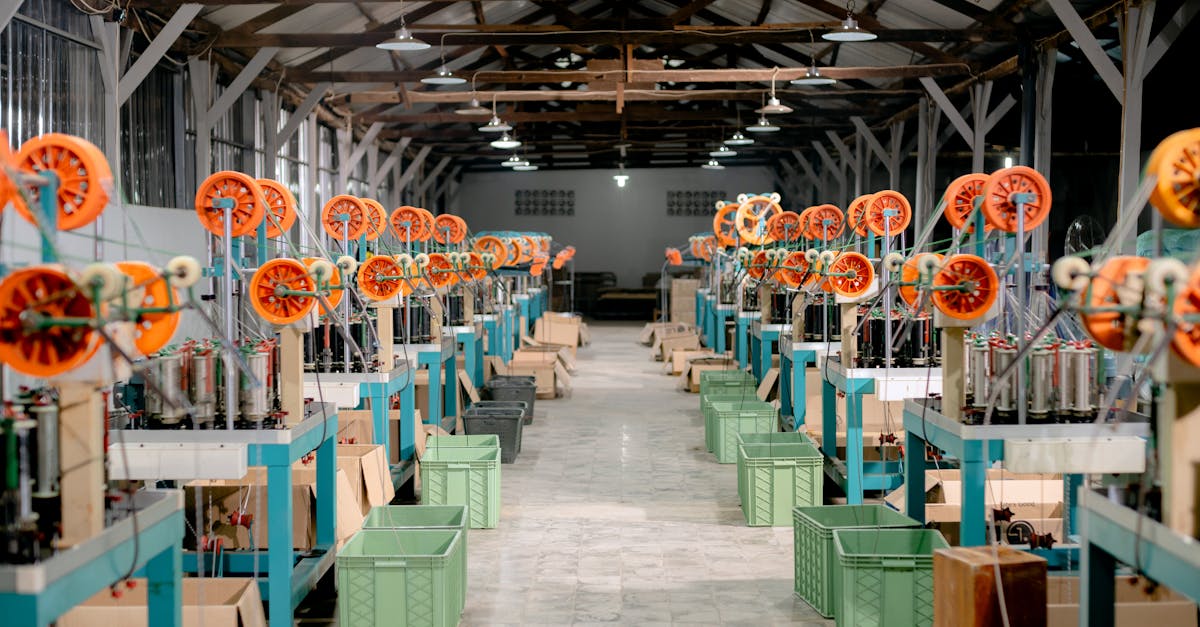
This is the first filter. Asking for a quote on 100 notebooks gets one response. Asking for 10,000 gets a completely different conversation – if the supplier doesn’t hang up. A real manufacturer talks capacity. They’ll tell you about their daily output (for us, it’s 30-40,000 notebooks). They’ll ask about page count, ruling, binding type. A reseller just talks price and gets nervous about specifics.
Is the quality consistent?
This is the silent killer. Order one sample, it’s perfect. The bulk order arrives, and the covers are slightly off-color, the stitching is loose on a batch, the paper feels thinner. Quality control isn’t a checkbox; it’s a culture. You’re looking for someone who cares about GSM, about stitch tension, about the glue in perfect binding not giving up in the summer heat. This is where forty years of doing the same thing actually matters. You get good at it. Or you go out of business.
What happens when something goes wrong?
Because something always does. A truck breaks down. A printing plate cracks. The question is: does your supplier see it as your problem or our problem? The answer separates a vendor from a partner. It’s the difference between an excuse and a solution already in motion.
Local Reseller vs. Direct Manufacturer: The Real Breakdown
Everyone says they’re a supplier. Let’s cut through it. This table isn’t about good vs. bad; it’s about understanding what kind of relationship you’re actually signing up for.
| Factor | The Local Stationery Reseller / Shop | The Direct Notebook Manufacturer |
|---|---|---|
| Primary Role | Retailer / Middleman. Buys from others to sell to you. | Producer. Makes the product from raw paper. |
| Core Strength | Convenience, small quantities, immediate pickup. | Scale, customization, consistency, bulk pricing. |
| Pricing on Bulk | Marked up. You pay their margin plus the manufacturer’s margin. | Direct cost + reasonable margin. You cut out the middle layer. |
| Customization Ability | Limited. Usually pre-set designs/sizes from their own supplier. | High. Can change cover design, logo placement, ruling, page count, paper grade. |
| Quality Control | Relies on their supplier. Little direct oversight. | Direct oversight over every step: paper, printing, binding, finishing. |
| Scalability | Limited by their own supplier’s capacity and their cash flow. | Built for scale. Factories run to fulfill large, timed orders. |
| Problem Resolution | They have to go back to their supplier, adding delay. | Direct access to production floor. Can identify and fix issues at source. |
The choice is obvious for certain needs. Need 50 notebooks by tomorrow? Go local. Need 5,000 by next month, with your college logo, in a specific shade of blue, with 200 pages of four-ruled paper? The reseller can’t help you. They’ll try, but they’ll just be calling someone like me.
Understanding your own needs is the first step. The table just makes it clear which path matches them.
The Expert Insight (That Nobody Wants to Hear)
Expert Insight
I was reading an old trade journal interview with a procurement head for a national school chain. He said something that stuck with me, mostly because it’s painfully true. He said, “In bulk stationery, you don’t pay for the product. You pay for the lack of headaches.”
Think about that. The paper, the ink, the binding – that’s a commodity. The real cost – the value – is in the certainty. It’s in the order arriving complete, on time, exactly as specified, so you can move on to the next fire you have to put out. A cheaper per-unit price that comes with delivery delays, quality arguments, and managerial stress is the most expensive option you can buy. The expert insight is embarrassingly simple: your real purchase is peace of mind. And you can’t Google the price of that.
Your Practical Next Steps
Okay, so you’re convinced you need to look past the “near me” myth. What do you actually do?
- Define Your Specs Precisely: Don’t just say “notebooks.” What size? (King Size? Long? A4?). Page count? (200 pages? 320?). Ruling? (Single Ruled? Four Ruled for accounts?). Binding? (Stitched for durability? Spiral for lay-flat?). Get this down in an email. Clarity here prevents 80% of problems later.
- Ask About Process, Not Just Price: When you contact a potential supplier, ask how they handle a rush order. Ask about their QC checks. Ask to see examples of similar bulk orders they’ve done. Their answers will tell you more than a catalogue ever could.
- Request a Physical Sample: Always. For the love of all that is holy, get a physical sample of the exact spec you want before you approve a bulk order. Feel the paper. Write on it. Try to tear a page out. Test the binding. A sample is your only real insurance policy.
- Think in Terms of Partnership, Not Transaction: You’re not buying a product once. If you’re a school or a business, you’re buying it every year. The goal is to find someone you can work with for the next five years, not just for the next order.
This isn’t procurement theory. This is what works when you have real deadlines and real budgets. It turns a chaotic search into a qualified shortlist.
Frequently Asked Questions
I need stationery fast. Isn’t a local shop always quicker?
For a small, off-the-shelf order, yes. For a customized bulk order, no. A local shop has to order it themselves, adding a middleman delay. A direct manufacturer controls production and can often prioritize your job in the queue, getting it to you faster overall, even with shipping.
How can I verify a notebook manufacturer’s quality if they’re not local?
Three things: 1) Insist on physical samples of their standard and custom work. 2) Ask for client references from similar institutions (schools, corporates). 3) Check their longevity – a company that’s been manufacturing for decades, like us since 1985, has survived by maintaining quality. Fly-by-night operations can’t fake a long track record.
What’s the minimum order quantity for custom stationery?
It varies wildly. A small print shop might do 100. A dedicated manufacturer like us typically has a higher MOQ (often 500-1000 units) because setting up the printing plates and binding for a custom job has a fixed cost. The per-unit price drops significantly above that threshold, which is why bulk orders make sense.
Can I get my school logo printed on notebooks?
Absolutely. This is a core service for direct manufacturers. You provide the high-resolution logo, and we handle the rest – cover design, placement, printing. It’s one of the main reasons businesses and schools come to us instead of a generic stationery shop. You can see some examples of our custom printing capabilities here.
What paper quality is best for school notebooks?
For everyday writing, a 54-70 GSM paper is the sweet spot. It’s opaque enough to prevent ink bleed-through, smooth for writing, but still cost-effective for bulk production. Lower GSM feels flimsy and shows ink. Higher GSM is overkill and makes the notebook heavy and expensive. We standardize on a quality 54 GSM writing paper that’s been tested in classrooms for years.
The Bottom Line
“Stationery near me” is a starting point, not a destination. It’s the symptom of a need for reliability, scale, and a solution that doesn’t create more work. The actual search is for a partner who understands that your order isn’t just a sale; it’s a piece of your operational puzzle.
I don’t think there’s one perfect supplier for everyone. But there is a right type of supplier for your specific need. If your need is bulk, custom, and consistent, then “near me” expands to anywhere with the expertise and infrastructure to deliver on that promise. Geography becomes secondary. Capability is everything.
You already know what you need. The search is just figuring out who’s capable of providing it without the drama. Maybe it’s worth starting that conversation with someone who’s been solving this exact problem since 1985. Even if we’re not right around the corner.