Look, if you’re buying notebooks in bulk for a school, a corporate order, or a government tender, you’re not just picking a size. You’re locking yourself into a cost, a storage headache, and a specific way of working for the next year. I get calls all the time from procurement managers who’ve just realized the A4 diaries they ordered are too big for their executives’ briefcases. Or schools that bought A5 books, only to find the kids need more writing space for long-form answers.
It’s a simple choice, but it trips people up constantly. And honestly? It’s because most guides talk about millimeters and ratios. Nobody talks about what it feels like to use one for eight hours a day, or what it costs to ship 10,000 of them overseas. Let’s cut through the paper-thin advice.
If you’re trying to figure out the real difference between A4 and A5 paper for your bulk order, this is the stuff we talk about every single day on the factory floor.
What Are A4 and A5 Paper Sizes, Really?
Right. Let’s get the basics out of the way. A4 and A5 are part of the ISO 216 standard. That’s the international system most of the world uses. A4 is 210 x 297 millimeters. That’s roughly 8.27 by 11.7 inches. Think of a standard printer paper or a legal pad. It’s the workhorse.
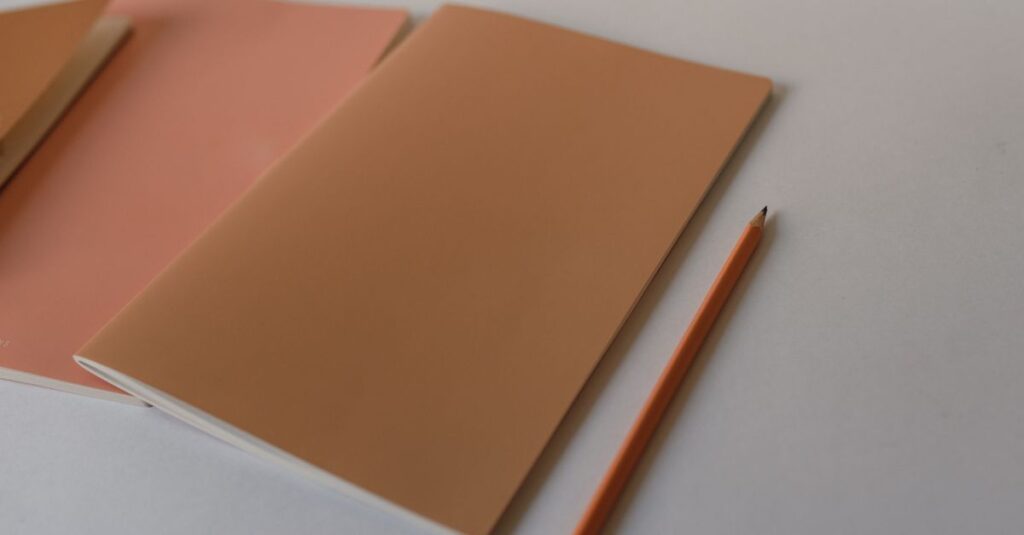
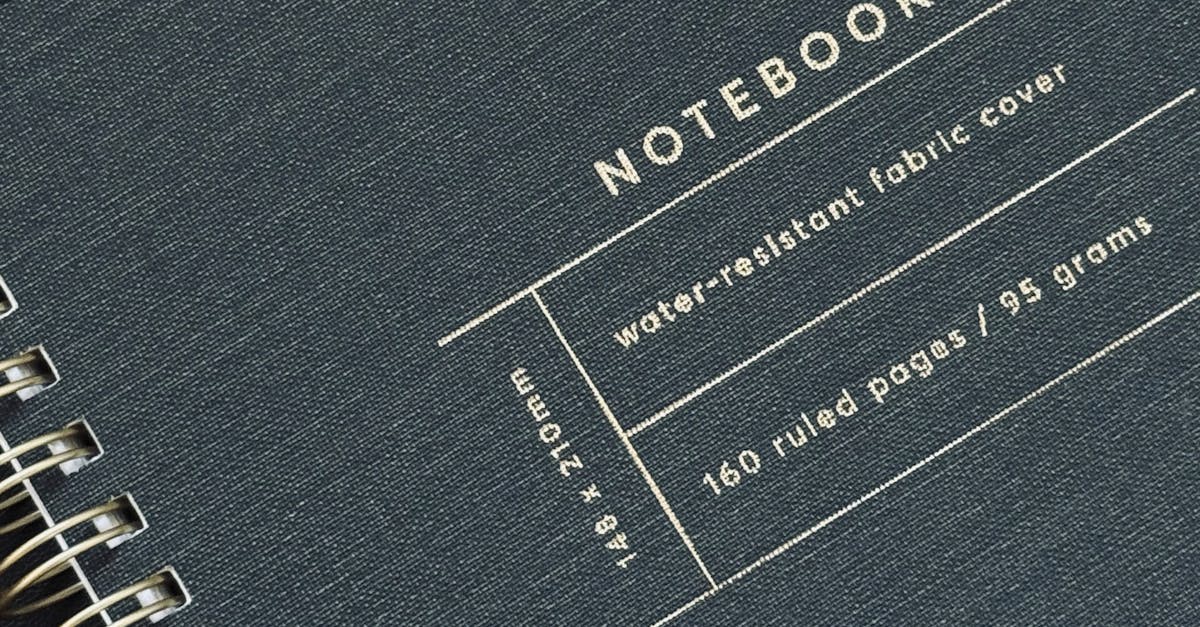
A5 is exactly half of an A4 sheet. Fold an A4 in half, and you’ve got an A5. That’s 148 x 210 mm, or about 5.8 by 8.3 inches. It’s a pocket-sized notebook, a personal diary.
Here’s the thing — the “A” series is beautifully logical. Each size is half the area of the one before it. A3 is twice the area of A4. A4 is twice the area of A5. This matters more than you’d think for manufacturing. When we’re cutting giant rolls of paper down to size, this ratio means almost zero waste. The paper is designed to be folded and cut efficiently. Which, when you’re ordering 50,000 units, translates into a better price for you. It’s one of those small manufacturing efficiencies that most buyers never see, but it’s probably saved our clients lakhs over the years.
Why This Standard Exists
I was reading something about this last month. The whole ISO system was built for this exact reason: consistency and efficiency in printing and documentation. Before it, you’d have one French paper size, one British one, total chaos for international trade. Now, a notebook made in Rajahmundry fits perfectly in a briefcase bought in London or a school bag in Dubai. It’s one less thing to worry about when you’re supplying notebooks internationally. The predictability is everything.
A4 vs A5: The Side-by-Side Comparison for Buyers
You can look at dimensions all day. But what does it mean for your order? Let’s lay it out.
| Factor | A4 Notebooks | A5 Notebooks |
|---|---|---|
| Primary Use | Formal documentation, meeting minutes, client presentations, school answer sheets, accounting ledgers. It’s for work that needs to stay on a desk or be filed. | Personal notes, daily to-do lists, field journals, pocket diaries, quick sketches. It’s for mobility and personal reference. |
| Feel & Portability | Feels substantial, authoritative. Heavy in a bag. Not meant for carrying around all day. You put it on a conference table and it commands attention. | Light, discreet, easy to whip out on a train or in a cafe. Fits in most handbags and jacket pockets. The informality can be a feature. |
| Bulk Order Cost (Per Unit) | Higher. You’re using more paper, more cover material. Binding costs are similar, but material cost is the big one. Shipping cost per unit is also higher due to size/weight. | Lower per unit. Less material, lighter, cheaper to ship in bulk. Often the go-to for large-scale giveaways or student packs. |
| Writing Experience | Ample space for detailed notes, diagrams, large handwriting. Less page-turning. Feels like you have room to think. | Cozy, constrained. Forces conciseness. Can feel cramped for lengthy reports or detailed technical drawings. |
| Perceived Value | High. Clients and employees see an A4 corporate diary as a premium item. It has a formal, institutional weight to it. | Functional and personal. Seen as practical rather than luxurious. Great for branding where you want to be seen as agile. |
The question isn’t which is better. It’s what job you need it to do.
Real-World Use Cases: Who Should Order What?
Let me give you some real-life scenarios from the orders that land on my desk.
Corporate Procurement Managers: You’re ordering executive diaries. Go A4. Every time. I’ve had this argument with cost-conscious buyers. An A5 diary for a senior manager says “budget cuts.” An A4 diary on a mahogany desk says “decision maker.” It’s about the psychology of the tool. For internal team notebooks for daily stand-ups? A5 is perfect. Cheap, portable, and nobody feels bad about filling it with scribbles.
Schools & Colleges: This is where it gets interesting. For main subject notebooks — History, Literature, Science — where students write long answers, A4 is almost non-negotiable. The space matters. For a rough book or a homework diary? A5 saves money, weight in the backpack, and is totally adequate. Most large schools we supply use a mix. They’ll order 10,000 A4s for core subjects and 5,000 A5s for supplementary work. Getting that mix right is where a good manufacturer can really help you optimize your budget.
Government Institutions: Tenders often specify A4. It’s the standard for official record-keeping, meeting minutes, and formal registers. The reasoning is about uniformity and archival. An A4 file folder is designed to hold A4 documents. Stray from that, and your filing system breaks. Don’t fight it. Just make sure you’re sourcing from a supplier who can guarantee the precise GSM and binding durability that tenders demand.
A Quick Story
Rahul, a procurement head for a tech firm in Hyderabad, ordered 500 custom A5 notebooks for a developer conference. They were sleek, branded, perfect. A year later, he called me, frustrated. “They loved them,” he said, “but the devs told me they never used them for actual code architecture. Too small. They just became personal scratchpads.” For their next offsite, he ordered A4 graph-ruled notebooks. The feedback? “Finally, we can actually map things out.” The first order wasn’t a failure. It was just for a different job than he realized.
The Manufacturing & Cost Insight (What Nobody Tells You)
Okay, let’s talk behind the scenes. As a manufacturer, the choice between A4 and A5 changes everything on our end.
Paper Yield: This is the big one. That beautiful A-series ratio means we can plan cuts from master sheets with near-perfect efficiency. But A4 uses double the paper of an A5. So, if your primary concern is unit cost for a massive order — say, notebooks for an entire state’s scholarship program — A5 will let you stretch your budget much, much further.
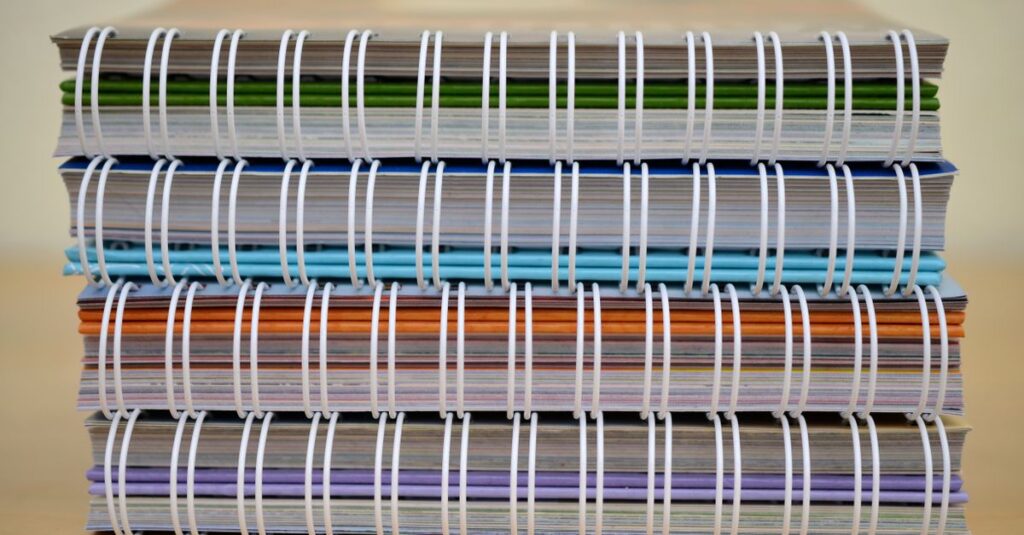
Binding & Cover: A4 perfect-bound notebooks (like a textbook) need a stronger spine adhesive. A4 spiral binding needs thicker wire. The forces on a larger book are greater. This means the margin for error in production is smaller. A poorly bound A5 notebook might last a school term. A poorly bound A4 account book will fall apart in a month under heavy use. When you’re evaluating suppliers, ask about their binding process for the size you need. It’s a huge quality differentiator.
Shipping & Storage: This is the hidden cost. Forty cartons of A4 notebooks take up significantly more warehouse space and container space than forty cartons of A5s. For international buyers, that shipping volume directly hits your landed cost. We often guide export clients on this — sometimes, the savings on freight for A5 can offset a higher per-unit manufacturing price elsewhere. It’s all connected.
Expert Insight
I was on a call with a stationery distributor from Kenya last week. He said something that stuck with me: “In my market, A4 is for the office. A5 is for the street.” He meant that formal education and business use A4 as a standard. But the vast, mobile, entrepreneurial economy—the people selling from kiosks and taking orders in markets—overwhelmingly prefer A5 notepads. They’re cheaper to buy and easier to carry. It’s a stark reminder that your paper size choice isn’t just functional; it’s cultural and economic. You’re choosing a tool for a very specific way of working.
Beyond the Size: Ruling, GSM, and Customization
Choosing A4 or A5 is just the first step. The next layer is what goes on and in that paper.
- Ruling: An A4 sheet can comfortably take double ruling (two columns) or broad ruling for easier reading. A5 can feel crowded with anything more than single ruling. For custom notebooks, we often advise clients to use a simpler layout for A5. Trying to cram a complex corporate template onto an A5 page is a recipe for illegibility.
- Paper Quality (GSM): A higher GSM (thicker paper) in an A4 notebook feels incredibly premium. That same GSM in an A5 can make the book feel oddly chunky and stiff. There’s a balance. Our standard 54-60 GSM writing paper works perfectly for both, but if you’re going for a luxury feel in A4, you can jump to 70-80 GSM. In A5, I’d rarely recommend going above 70.
- Custom Printing: This is where we see a lot of variation. A4 covers are a canvas. You can put detailed artwork, full-bleed photos, intricate logos. An A5 cover needs a stronger, simpler visual. The logo has to be recognizable at a smaller scale. The design has to work when it’s half the size.
Anyway. The point is, the size dictates the possibilities.
Frequently Asked Questions
Is A4 or A5 better for student notebooks?
It depends on the student’s age and subject. For high school and university students writing lengthy notes, A4 provides necessary space. For younger children or for rough work, A5 is lighter and more manageable. Most schools we work with use a combination.
Which size is more cost-effective for bulk corporate gifts?
A5 is almost always more cost-effective per unit. You use less paper and incur lower shipping costs. For a premium executive gift, however, the perceived value of A4 often justifies the higher cost. Think about the message you want to send.
Can you make custom A4 and A5 notebooks with our logo?
Absolutely. Customization is our specialty. We can produce both A4 and A5 notebooks with your logo, brand colors, and even custom page rulings. The process is similar, but the design needs to be optimized for each size’s dimensions.
Are A4 notebooks harder to bind than A5?
They require more robust binding techniques due to their size. A perfect-bound A4 notebook needs a stronger adhesive to withstand frequent use. It’s not “harder,” but it does require precise machinery and experience to ensure durability. It’s a key quality checkpoint in our factory.
We export notebooks. Does size affect shipping?
Massively. A4 notebooks take up about 40% more volume than the same number of A5 notebooks. This directly increases your shipping (freight) costs. When planning an export order, the size decision has a significant impact on your total landed cost, not just the factory price.
Making the Final Decision
So, how do you choose? Don’t just look at a spec sheet. Hold them. Imagine the end user—the student flipping pages during an exam, the sales manager jotting points in a cab, the accountant entering figures for hours. Think about where the notebook will live: on a desk, in a bag, on a shelf? And crucially, run the numbers not just on unit cost, but on total cost, including storage and shipping.
I don’t think there’s one universal answer. Probably there isn’t. But if you’ve read this far, you’re not just buying paper. You’re sourcing a tool for productivity. The right size is the one that disappears, letting the work happen. The wrong size is a constant, nagging inconvenience.
The real difference between A4 and A5 paper isn’t in the millimeters. It’s in the purpose. Get that right, and everything else—the ruling, the binding, the cover—falls into place. If you’re stuck between sizes for a big order, sometimes talking it through with someone who’s seen a thousand variations helps.