It’s just a number. But it can cost you thousands.
You know the feeling. The school year is starting in six weeks, and you’re placing the order for 5,000 student notebooks. The invoice looks good. You sign. A month later, boxes arrive. You open one. And your stomach drops. The notebooks are… off. Too tall. Too narrow. They won’t fit in the standard-issue school bag. Your 5,000 perfect A4 notebooks just turned into 5,000 headaches. Right?
I’ve seen it happen — procurement managers, school principals, distributors — all because of a simple misunderstanding about paper sizes. A4. It sounds technical, but it’s the absolute bedrock of ordering notebooks and stationery in bulk. Get it wrong, and everything downstream falls apart. So let’s cut through the noise. A4 isn’t just a label. It’s a specific, non-negotiable dimension that determines function, cost, and logistics. And nine times out of ten, when someone asks “a 4 size”, they’re really asking: “What am I actually buying, and will it work?”
I’ve been in this business a long time. And if you’re in the market for notebooks in bulk, this is the one piece of knowledge that will save you more time and money than anything else. Let’s get into it.
So, What Exactly Is A4 Size?
Forget the complex ISO 216 standard for a second. Think practically. A4 paper is 21.0 centimeters wide by 29.7 centimeters tall. In inches, that’s roughly 8.27 x 11.69. It’s the most common paper size in the world outside of North America. You’ve held it a thousand times — it’s the default for printer paper, letters, forms, and a huge chunk of the notebooks used in offices and schools globally.
The “A” series is a beautiful piece of design logic, honestly. Start with A0 (a massive sheet). Fold it in half, you get A1. Fold *that* in half, you get A2. Keep going. A4 is that magical middle child — big enough to feel substantial, small enough to be portable. Its proportions are always the same (a 1:√2 ratio), so scaling up or down is seamless. No weird cropping.
But here’s the thing people don’t realize until they’re holding the wrong product: when we talk about an “A4 notebook,” we’re talking about a notebook where the pages *are* that A4 size. The cover will be a few millimeters bigger, but the usable page is that exact 21×29.7 cm rectangle. Not close. Exact. This matters because binders, filing cabinets, and even student satchels are often designed with A4 in mind. A notebook that’s even half a centimeter off can jam a filing system or look sloppy in a corporate gift pack.
Expert Insight
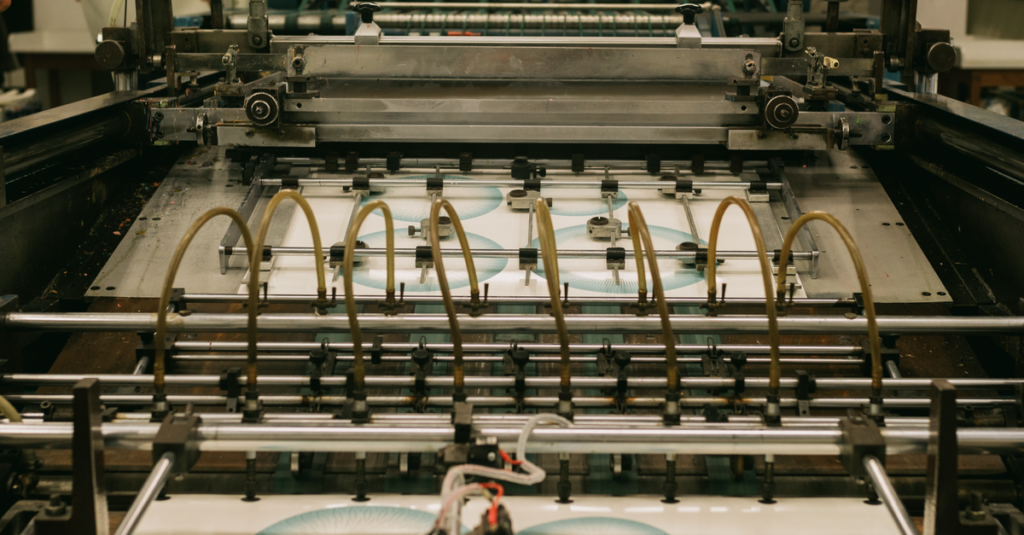
I was on a factory floor last year, watching a huge run of A4 corporate diaries get packed. The production manager, a guy who’s seen millions of sheets go by, pointed at the cutting machine. “People think we’re just cutting paper,” he said. “We’re cutting trust. One bad cut on an A4 order, and a client’s whole branding exercise fails. The diary doesn’t fit the leather cover they bought. It looks cheap.” It’s a tiny tolerance, measured in fractions of a millimeter. That precision is the difference between a product and a problem. I don’t have a cleaner way to put it than that.
A4 vs. The Rest: A Side-by-Side Look
This is where confusion sets in. You’ll hear “Foolscap,” “Legal,” “A3,” “Letter Size” — it’s a alphabet soup of dimensions. Let’s clear it up. The biggest competitor to A4, especially if you’re dealing with international buyers, is the US Letter size. It’s close, but not the same. And “close” doesn’t cut it in bulk orders.
| Feature | A4 Size | US Letter Size | Foolscap |
|---|---|---|---|
| Dimensions (cm) | 21.0 x 29.7 cm | 21.6 x 27.9 cm | 20.3 x 33.0 cm (approx) |
| Dimensions (inches) | 8.27″ x 11.69″ | 8.5″ x 11″ | 8″ x 13″ (approx) |
| Primary Use Region | Europe, Asia, Africa, Australia | United States, Canada | UK (traditional), some Commonwealth countries |
| Shape | Taller and slightly narrower | Shorter and slightly wider | Noticeably taller and narrower |
| Best For | International documents, standard filing, most global corporate stationery | Domestic US business & academic work | Legal drafts, traditional ledger books (less common now) |
Look at that difference between A4 and Letter. A4 is taller. Letter is squatter. Mix them up in a binder, and it’s obvious. For a notebook manufacturer supplying global markets, we have to maintain separate cutting dies, separate cover templates, the whole works. It’s not interchangeable.
Why A4 is the Go-To for Bulk Orders (Schools, Corporates, Government)
Three things happen when you standardize on A4. First, you simplify procurement to an insane degree. A school can order A4 notebooks, A4 textbooks, A4 exam pads, and A4 art paper, and know it will all store together. The principal isn’t managing five different shelf dimensions. Second, it projects professionalism. An A4 proposal or corporate diary just *feels* standard-issue and competent in a way a quirky size doesn’t. And third — this is the big one — it keeps costs down. Because A4 is the global volume leader, the paper is milled in massive quantities for this size. The machinery is optimized for it. That scale translates directly to a lower price per unit for you when ordering 10,000 pieces versus a less common size.
Most people I’ve spoken to in institutional procurement say the same thing: once they locked in A4 as their office or school standard, the logistical headaches dropped by half. The question isn’t whether A4 is versatile. It’s whether you’re ready to stop reinventing the wheel with every stationery order.
The Real-Life Impact: A Quick Story
Meena, 42, is the procurement head for a mid-sized IT firm in Hyderabad. They decided to launch a high-end client gift: a leather-bound notebook. They designed a gorgeous cover in-house. They sourced the leather. They came to us for the notebook insert. Their design file was set to US Letter size. They’re an Indian firm, but their design software defaulted to it. Nobody noticed. We caught it in pre-press. If we’d run it, 500 beautiful leather covers would have been useless — the A4 inserts we normally produce would have been too tall and narrow to fit. A simple question — “Confirming page size is A4?” — saved them a small fortune and a major embarrassment. She told me later, over a very relieved coffee, “I didn’t even know to ask. I just assumed ‘notebook size’ was standard.” It was a Wednesday, I think.
Anyway. That’s the moment it matters.
Ordering A4 Notebooks: What You Actually Need to Specify
Okay, so you want A4 notebooks. Great. But “A4” is just the start of the conversation with a manufacturer. It’s the canvas. Now you have to define the painting. Here’s your checklist:
- Page Count: This is huge. A 52-page A4 notebook is a notepad. A 200-page one is a serious project book. We do everything from 52 to 700 pages. Thicker needs different binding.
- Paper GSM (Grammage): The weight. Standard writing paper is around 54-70 GSM. Good for pens. For markers or heavy ink, you might need 80+ GSM to prevent bleed-through. Heavier paper = higher cost, but better quality feel.
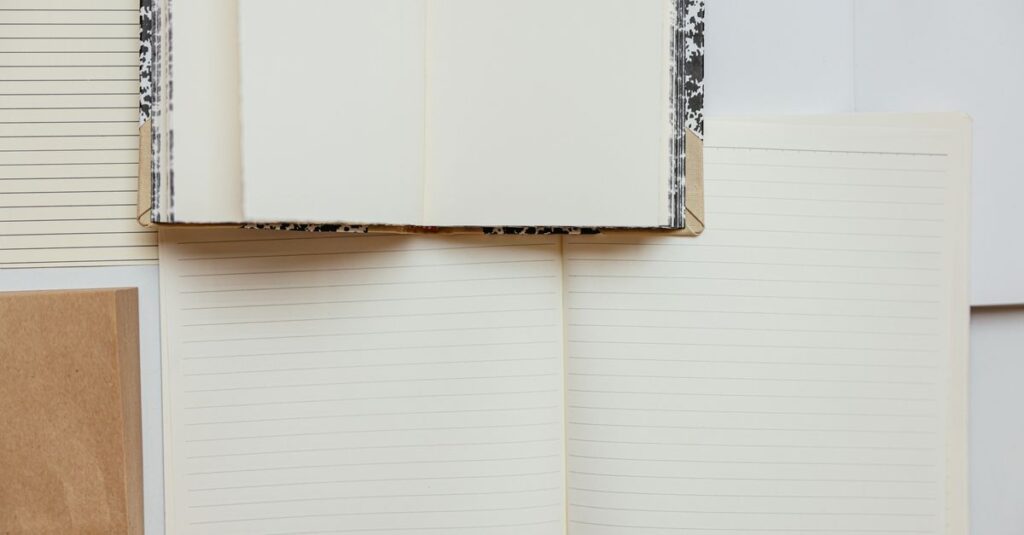
- Ruling: Single Ruled (SR) for writing? Unruled (UR) for sketches? Double Ruled (DR) for accounts? Four Ruled (FR) for younger students? This defines the function.
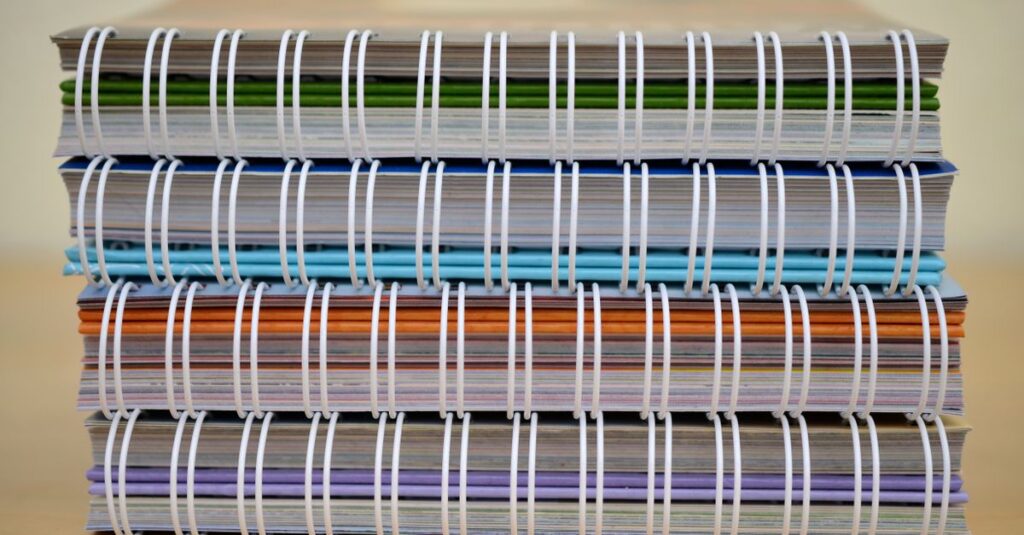
- Binding: Spiral binding lets it lie flat. Perfect binding (glued spine) gives a clean, book-like look. Stitched binding is more durable for thick, heavy-use notebooks. Each has a different cost and lifespan.
- Cover: Art paper, laminated, hardbound, PVC? Custom printed with your logo? This is where branding happens for corporate orders.
Think about it this way. You wouldn’t just order “a car.” You’d specify sedan, color, fuel type. A4 is the sedan. Now choose the options.
Common Mistakes to Avoid (Save This List)
I’ve seen these trip up even seasoned buyers. Let’s just run through them fast.
One: Assuming A4 and Letter are the same. They’re not. If your market is the US, specify Letter. For literally everyone else, specify A4. Two: Not checking the sample for *finished* size. Always, always get a physical dummy before a bulk run. Three: Forgetting about packaging. A4 notebooks pack in specific carton quantities. If your storage space is tight, you need to know how many cartons are coming. And four — this is probably the biggest — choosing paper quality based on price alone. A 40 GSM paper might be cheaper than 54 GSM, but it’ll feel flimsy and show ink. It makes your brand or institution look cheap. A few paisa saved per book, a giant hit to perception.
Don’t quote me on this, but I’d say 70% of post-order complaints stem from one of these four oversights. Which is… a lot to sit with.
Frequently Asked Questions
Is A4 the same as 8.5 x 11?
No, it is not. A4 is 8.27 x 11.69 inches. The standard US Letter size is 8.5 x 11 inches. A4 is slightly taller and narrower. They are not interchangeable for professional printing or binding.
What is A4 size used for most often?
A4 is the default for business correspondence, academic submissions, standard notebooks, photocopy paper, and reports across most of the world. It’s the workhorse size for schools, offices, and government institutions outside North America.
Can I get custom logos printed on A4 notebooks?
Absolutely. This is a core service for corporate clients. You can print your logo, brand colors, and even custom interior layouts (like branded headers) on A4 notebooks. It’s a common request for corporate gifting and internal stationery.
How many pages can an A4 notebook have?
It depends on the binding. With standard stitched or perfect binding, A4 notebooks commonly range from 52 pages to 240 pages. With specialized binding for thicker volumes, you can go up to 700 pages or more, though it becomes less common.
What is the best binding for a thick A4 notebook?
For thick A4 notebooks (over 200 pages), stitched binding (also called Smyth sewn) is the most durable. It allows the book to open flat and withstand heavy use. Perfect binding (glued) can work but may crack on the spine over time if used very aggressively.
Wrapping This Up
So, A4. It’s a measurement. But it’s also a signal. It signals that you understand global standards. It signals you care about compatibility and logistics. For anyone buying notebooks in bulk — whether you’re outfitting a school of 2,000 or creating a corporate gift for 500 clients — getting the size right is the first, most non-negotiable step. It’s the foundation everything else is built on.
I don’t think there’s one answer to every stationery need. Probably there isn’t. But if you’ve read this far, you already know A4 is likely your standard. You’re just figuring out the specs around it. And that’s the part where talking to someone who’s made these for 40 years helps. You can guess. Or you can know.
If you’re planning a bulk order and want to talk specs, paper, binding, or just get a sample in your hands to be sure, that’s what we’re here for. It starts with a conversation.