If you’re ordering notebooks for a school, a corporate training program, or just stocking up your warehouse, you’ve probably skimmed through a catalog and stopped at “Four Ruled” or “Four Line.” And you’ve probably thought… “Okay, so it’s four lines. What’s the big deal?”
Well, it’s a deal. Because if you’re buying in bulk — thousands of units — picking the wrong ruling means you’ve got a warehouse full of notebooks nobody wants to use. Or worse, notebooks that make your staff, your students, or your clients look messy and disorganized. That’s not just a wasted order; it’s a dent in your credibility.
Four line notebooks aren’t a niche product. They’re a specific tool, and knowing why they exist, what they’re for, and when to order them is the difference between a smart procurement manager and someone who just clicks reorder on the same thing every year. I’ve seen this happen. Schools keep ordering single ruled because it’s cheap, even when the curriculum demands four line for younger grades. Corporates order flashy diaries with unruled pages for their finance teams, who then scribble numbers all over the place. It’s a small detail that turns into a big headache.
If you’re here trying to figure out if you should add four line books to your next bulk order, this is probably what you’re looking for. Let’s get into it.
What “Four Line” Actually Means (It’s Not Just Four Lines)
The first thing to clear up — and I have to do this every time I talk to a new buyer — is that “Four Line” or “Four Ruled” (often abbreviated as FR) isn’t just a page with four horizontal lines. It’s a specific ruling pattern designed for a specific kind of writing. Picture a standard notebook page. Now, divide the writing space into four equal horizontal bands. Each band has a top solid line, a bottom solid line, and a dotted line running right through the middle.
So, what you get is four “channels” on the page. Each channel guides the writer to place letters correctly: capital letters or taller letters go above the dotted line, smaller letters stay below it, and the baseline is the solid bottom line of each channel. This creates a uniform, clear, and legible writing structure. It’s not about aesthetics; it’s about discipline and clarity.
Why does this matter for bulk buyers? Because you’re not buying notebooks; you’re buying a workspace. The ruling dictates how that space is used. A single ruled page gives freedom. A four ruled page gives instruction.
Who Actually Uses Four Line Notebooks?
Three main groups, really.
- Primary Schools: This is the biggest market. When kids are learning letter formation, cursive, or even just neat handwriting, the four line system is the training ground. It teaches consistency in size and spacing. Most school boards in India specify four line notebooks for grades 1 through 4 or 5. If you’re supplying to schools, this isn’t a choice; it’s a requirement.
- Language & Calligraphy Institutes: For learning scripts like Arabic, Urdu, or even certain styles of English calligraphy, the four line pattern helps maintain proportional height and baseline alignment. It’s about precision.
- Accounting & Ledger Training: Sometimes, for old-school ledger practice or specific financial record-keeping exercises, the structured columns created by the four lines help in aligning numbers and entries neatly. It’s less common now, but still a request we get.
The question isn’t whether your organization needs them. It’s whether the people using the notebooks need that kind of structured guidance.
The Bulk Buyer’s Dilemma: Specs, Paper, and Binding
Okay, so you know what it is and who uses it. Now, when you’re placing an order for 5,000 or 50,000 units, what do you actually need to specify? This is where most institutional buyers get tripped up. They just ask for “four line notebooks” and get… something. Often the wrong something.
Here’s what you need to lock down.
- Paper GSM: For four line books, especially for schools, the paper can’t be too thin. Kids press hard. They erase. Thin paper (like 40-45 GSM) will tear, show ghosting from the ruling, and just feel cheap. We recommend 54 GSM or higher for durability. It feels substantial, takes pencil and ink well, and lasts the academic year.
- Line Color & Clarity: The ruling print quality matters. Faint, blurred lines are useless. The lines need to be sharp, usually a light blue or grey, distinct enough to guide but not so dark they dominate the page. This comes down to the printing machine and the ink setting — something a good manufacturer controls tightly.
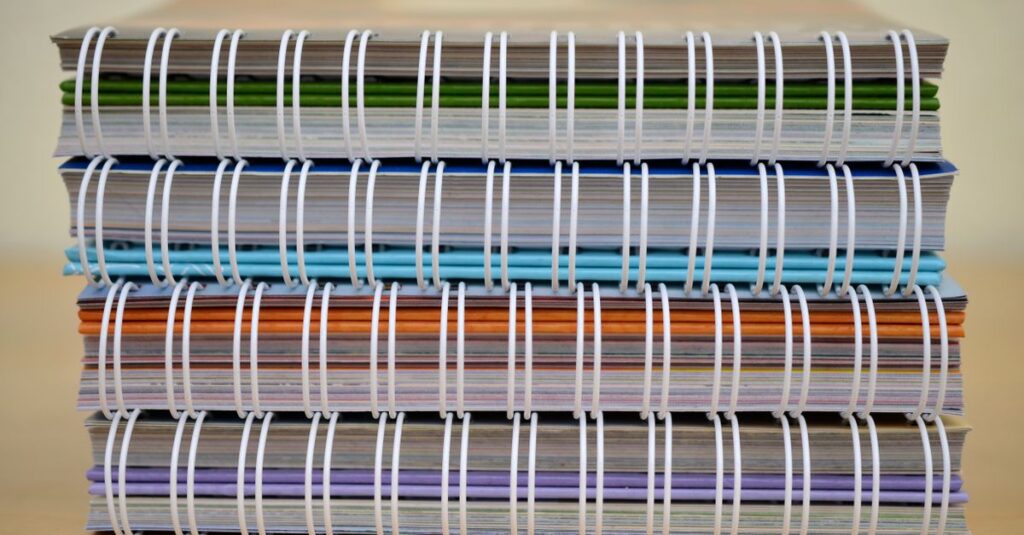
- Binding for Heavy Use: School notebooks get thrown in bags, dropped, opened and closed a hundred times a day. Perfect binding (glued) can fail. Side-stitched binding or spiral binding is more durable. For bulk orders, durability reduces replacement requests and complaints.
I was talking to a procurement manager from a chain of private schools last month — over a very quick phone call, he was multitasking — and he said his biggest pain point was receiving notebooks where the ruling was so faint the teachers complained. His supplier had cut costs on the printing ink. He didn’t know that was even a variable he could specify. Now he does.
Four Line vs. Other Ruling Types: A Procurement Comparison
When you’re evaluating your annual stationery order, you’re probably looking at a list: Single Ruled (SR), Double Ruled (DR), Unruled (UR), Broad Ruled (BR), Four Ruled (FR). It’s easy to just pick the cheapest or the most common. But each serves a different purpose. Getting it wrong means wasted money and frustrated users.
| Ruling Type | Primary Use Case | Typical Users | Bulk Order Considerations | Common Mistakes in Buying |
|---|---|---|---|---|
| Single Ruled (SR) | General writing, notes, essays. | Middle & High School students, office staff, adults. | Most common, lowest cost. Check line spacing (mm). | Ordering SR for primary grades where FR is required. |
| Four Ruled (FR) | Teaching handwriting, letter formation, script practice. | Primary school students, language learners. | Must specify sharp line printing & durable paper (54+ GSM). | Assuming “ruled” means SR and not asking for FR specifically. |
| Unruled (UR) | Drawing, sketching, freeform note-taking, diagrams. | Art students, designers, engineers, creative teams. | Paper quality is critical – thicker, better for ink/ pencil. | Ordering UR for formal report writing – looks messy. |
| Broad Ruled (BR) | For larger handwriting, easier reading. | Younger children, people with visual preferences. | Line spacing wider than SR. Confirm spacing width. | Confusing BR with FR – they are not the same. |
| Double Ruled (DR) | Financial entries, ledger practice, columnar notes. | Accountants, finance trainees, small business owners. | Vertical lines must be precise. Alignment matters. | Using DR for general writing – feels restrictive. |
Look, the table makes it clear. Four line is not a substitute for single ruled. It’s a specialized tool. If you’re supplying to a primary school, FR is probably mandatory. If you’re supplying to a corporate office for general notetaking, FR would be pointless. The cost difference isn’t huge, but the functional difference is.
Expert Insight
I remember reading a study a few years back — I can’t find the exact source now, but the point stuck — about how structured writing environments improve legibility and speed in learning. The researcher said something like: the physical constraint of the four line pattern actually frees up cognitive space for the learner. They don’t have to think about letter size; the page thinks for them. That’s the whole point of specialized ruling. It’s not just lines on paper; it’s a cognitive aid. In bulk manufacturing, we have to get that ruling perfect because if it’s off, the aid becomes a distraction. It’s a tiny detail with a big psychological weight.
The Manufacturing Reality: Why Four Line Printing Is Trickier
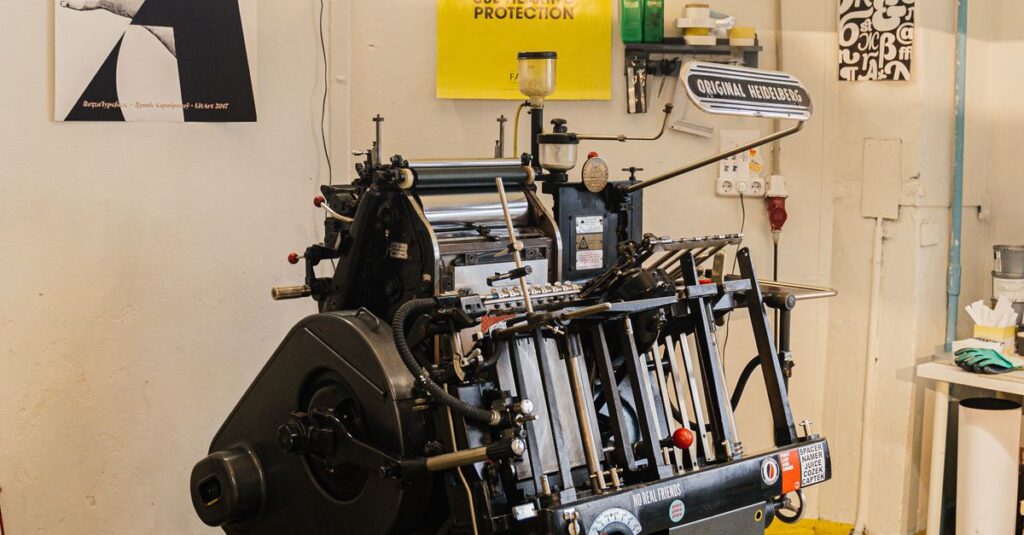
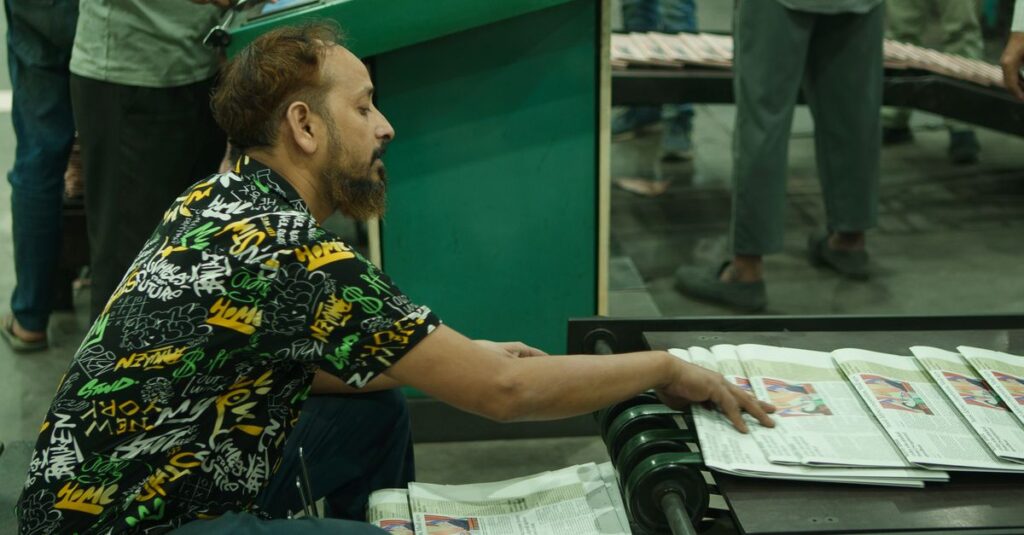
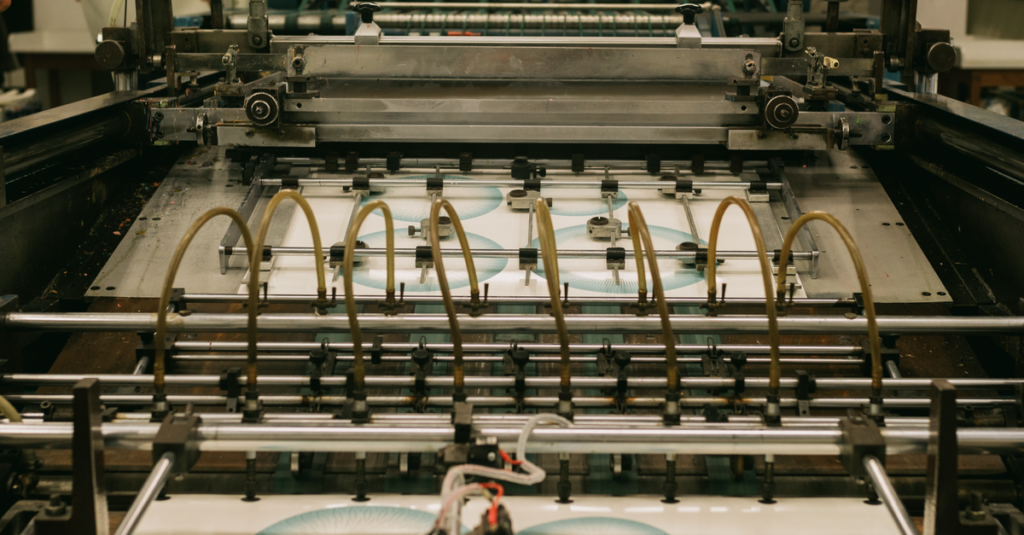
From a factory floor perspective, printing a four line pattern isn’t the same as printing single ruled pages. It’s more precise. You need to align four sets of lines across the page, ensure the dotted mid-lines are consistently spaced and clear, and maintain that precision across tens of thousands of sheets. Any drift in the printing machine, any inconsistency in ink flow, and you get pages where the channels aren’t equal. That’s a rejected batch.
When we run a FR job, we slow the machine down a bit. We check the alignment more frequently. The paper feed has to be flawless because any skew means the lines are skewed. It’s a higher-attention process. That’s why, sometimes, if a supplier offers you FR notebooks at the same price as SR notebooks, you should ask about their printing process. They might be cutting corners somewhere.
And honestly? Most buyers don’t know this. They think ruling is just a simple print. It isn’t.
A Real-Life Order Story (Why Details Matter)
Let me tell you about Ravi. He’s a distributor in Hyderabad, about 45, been in the stationery game for twenty years. Last year, he got a big order from a new cluster of schools – 10,000 four line notebooks, 92 pages, stitched binding. He placed the order with a generic manufacturer, got the delivery, and shipped it to the schools. Two weeks later, the calls started. Teachers were complaining that the dotted lines in the four line pattern were barely visible. The kids couldn’t see the midline guide. The notebooks were essentially useless for handwriting practice. Ravi had to replace the entire order at his cost. He lost money, time, and the school’s trust.
The issue? The manufacturer used a low-density ink for the dotted lines to save cost. The solid lines were fine, but the midlines faded into the page. Ravi didn’t know to specify “sharp, visible midlines.” He assumed “four line” covered it. Now he does. He checks samples physically before bulk orders. He asks about ink density. A small, unseen spec turned into a huge problem.
Anyway. The point is, in bulk buying, the devil is in the details you don’t know to ask about.
How to Specify Your Four Line Notebook Order (A Checklist)
If you’re ready to place an order, here’s a quick list of what to specify beyond just “Four Ruled.” This is what I tell every corporate or school buyer who calls us.
- Product Code or Name: Clearly state “Four Ruled (FR)” notebooks.
- Size: King Size (23.6×17.3 cm), Long (27.2×17.1 cm), Short (19.5×15.5 cm)? Most schools use Long or King Size for FR.
- Page Count: 52, 92, 200 pages? For primary school, 92 pages is typical for a semester.
- Paper GSM: Specify 54 GSM or higher. Don’t just say “good quality paper.”
- Line Color & Visibility: Request a sample to check the clarity of both solid and dotted lines.
- Binding: Side stitching (more durable) or spiral? For heavy-use school notebooks, stitching is better.
- Cover: Standard printed cover, or custom with school/corporate logo? Custom printing adds branding but needs extra time.
- Packaging: Bulk packs (50s, 100s)? Individual poly packing? This affects logistics and storage.
Three things happen when you specify clearly: you get what you actually need, you avoid post-delivery complaints, and you build a relationship with a supplier who knows you’re a informed buyer. That relationship matters for future orders.
Conclusion
So, four line notebooks. They’re a specific tool for a specific job. If that job is teaching handwriting, learning a script, or maintaining precise vertical alignment in writing, then they’re indispensable. If that’s not the job, then they’re a waste of your budget.
For bulk buyers — schools, corporates, distributors — the takeaway is simple: know what you’re buying. Know why it exists. And know how to specify it so you get the right product. A faint line, a thin page, a weak binding — these aren’t small defects in bulk orders. They’re failures that ripple through an entire institution.
I don’t think there’s one perfect supplier for everyone. Probably there isn’t. But if you’ve read this far, you already know what your users need — you’re just figuring out if your current supplier can deliver it. Sometimes, asking the right questions is the first step.
Frequently Asked Questions
What is the main purpose of a four line notebook?
It’s designed for teaching and practicing handwriting, especially for primary school children. The four “channels” with a dotted midline help learners maintain consistent letter size and alignment, making writing neater and more legible. It’s a training tool, not just a notebook.
Can four line notebooks be used for general office notetaking?
Generally, no. The structured lines are restrictive for free-form note-taking. Office staff usually prefer single ruled or unruled pages for flexibility. Using four line for general notes would feel cumbersome and isn’t cost-effective for bulk corporate orders.
What paper quality is best for four line notebooks?
For durability, especially under heavy use by students, 54 GSM or higher is recommended. Thinner paper (like 40 GSM) can tear easily, and the ruling might ghost through the page. Good paper also provides a better writing surface for pencil and ink.
How do I ensure the four line printing is clear and usable?
Always ask for a physical sample before placing a bulk order. Check that both the solid top/bottom lines and the dotted midline are distinct and evenly spaced across the entire page. Faint or blurry lines render the notebook ineffective for its purpose.
Are four line notebooks more expensive than single ruled notebooks?
Usually, there’s a slight cost increase because the printing process requires more precision and attention. However, for bulk orders, the difference is often marginal. The key is not to choose based on minimal price difference, but on the correct functionality for your end-users.