Let’s Get This Straight About Leather Diaries
You hear “leather diary,” and your brain probably jumps to a fancy journal, something personal, maybe a gift. Right? But when you’re sitting there at your desk — procurement manager, school admin, a distributor looking at a 500-unit order — you’re not thinking about one diary. You’re thinking about five hundred of them. And you’re thinking about specs. Grain quality. GSM paper. Binding that won’t fall apart by June.
The term gets thrown around a lot. A lot of it is just marketing fluff. Real leather? Or bonded leather? What does that even mean for durability? I’ve been in this industry for decades — my family’s been making notebooks and diaries in Rajahmundry since 1985 — and I’ve seen the confusion firsthand. People order “leather diaries” expecting one thing and getting something completely different. And that’s the headache nobody warns you about.
Let’s cut through the noise. If you’re buying for your office, for a corporate giveaway, or for a school’s prize distribution, you need to know what you’re actually getting. This isn’t about what looks good on Instagram. It’s about what lasts a full year on an executive’s desk. You can start here if you want the raw details on specs, but first, let’s just talk.
The One Thing Most Buyers Get Wrong
Here’s the mistake I see nine times out of ten: people focus on the cover and forget about the guts. The cover is what gets the oohs and aahs when you hand it out. But the paper, the binding, the layout — that’s what gets used. And cursed at if it’s wrong.
I was on a call with a procurement head from Hyderabad last month. They’d ordered 200 “executive leather diaries” from another supplier. Gorgeous covers. But the paper was so thin you could see the writing from the other side. The binding started splitting after two months. He was frustrated. No, he was embarrassed. He’d handed these out as New Year gifts to their top clients. And now? Now he’s looking for a new supplier. His exact words: “I should have just called you first.”
So, a leather diary is really two separate products fused together:
- The Cover: The prestige, the feel, the brand statement.
- The Book Block: The workhorse — the paper, the ruling, the binding that actually functions.
Fail on either part, and the whole thing is a waste of money. Honestly? Most failures happen with the book block. Because it’s easier to hide a cheap binding than a cheap-looking cover.
Expert Insight
I was reading something last month from a stationery trade journal, and one line stuck with me. An older manufacturer said, “In this business, you’re not selling paper and thread. You’re selling trust. A diary is a promise that the year’s plans won’t fall apart.” I don’t have a cleaner way to put it than that. It’s a physical object that carries someone’s time, their goals. Get it wrong, and it’s more than a product failure. It’s a broken promise. Which sounds dramatic, but in corporate gifting, it’s absolutely true.
Not All “Leather” is Created Equal. Here’s Your Cheat Sheet.
Alright. Let’s get specific. When we talk about the cover, what are we actually talking about? The word “leather” does a lot of heavy lifting, and suppliers love that ambiguity. Here’s a quick breakdown so you know what you’re being quoted on.
| Cover Type | What It Actually Is | Best For | Watch Out For |
|---|---|---|---|
| Full-Grain Leather | The real deal. Top layer of the hide, shows natural grain and marks. Develops a patina. | Premium corporate gifts, executive rewards, high-end brand ambassadors. The “forever” diary. | Cost. It’s the most expensive. Also, variations in grain are natural, not defects. |
| Genuine Leather | This is where it gets tricky. “Genuine” often means the lower layers split from the top grain. It’s real leather, but usually sanded and coated. | Mid-range corporate diaries, bulk institutional orders where a premium feel is needed but budget matters. | Can feel plasticky if the coating is too thick. Durability varies wildly by supplier. |
| Bonded Leather | Leather dust and fibers mixed with polyurethane and bonded to a paper backing. It has a leather smell. | Large-volume giveaways, event souvenirs, lower-tier employee gifts. Looks decent from a distance. | It will not age like real leather. It will crack and peel over time, sometimes within a year. |
| PU Leather / Faux Leather | 100% synthetic. Polyurethane coated fabric. No animal hide involved. | School prizes, large-scale student diaries, budget-conscious bulk orders where the word “leather” is more important than the material. | Don’t pay a leather price for it. It’s plastic. It can be durable, but be clear on what you’re buying. |
The question isn’t which one is “best.” It’s which one is right for your purpose, budget, and the message you want to send. Ordering 2000 diaries for a bank’s New Year customer giveaway? Bonded or high-quality PU might be the smart play. Ordering 50 for your board of directors? You probably need to step up to genuine or full-grain. The key is working with a manufacturer who is transparent about this from the first quote.
The Part Nobody Talks About: The Paper and Binding
Okay, so you’ve picked a cover. Now forget about it for a second. Because the inside is where the diary lives or dies. I’ve seen beautiful leather covers wrapped around paper so bad it feels like blotting paper.
Three things happen when the paper is wrong: ink bleeds, pencils tear through, and people stop using it. It becomes a decorative object. Which, fine, if that’s the goal. But if you want it to be used — and most corporate clients do — you need to get this right.
- Paper GSM (Grams per Square Meter): This is the weight. For a diary that’ll see daily pen use, you want at least 70 GSM paper. 80 GSM is better. Our standard is 75 GSM writing paper — it’s got a nice tooth, takes ballpoint, gel, and fountain pen ink without ghosting. Anything under 70 starts to feel flimsy.
- Ruling: This seems basic, but it’s a minefield. Single ruled? Double ruled? Unruled? Date planners? Corporate buyers often want a week-to-view or day-per-page layout. Schools might want broad ruled. You have to ask the end user, not just guess. I can’t tell you how many times a company has ordered a beautiful diary with the wrong ruling because nobody asked the sales team what they actually needed.
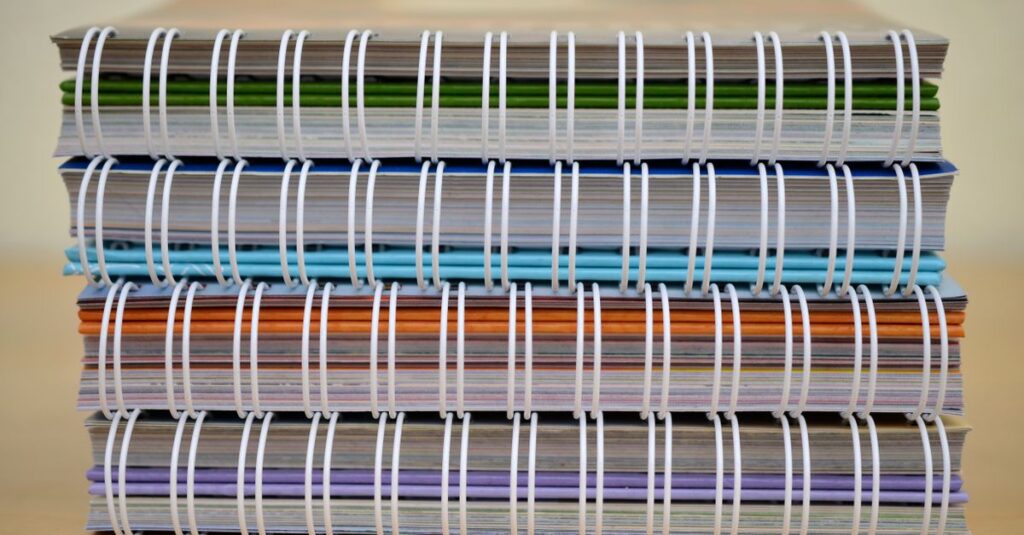
- Binding: This is the engineering. Stitched binding is classic and lies flat if done well. Perfect binding (glued spine) is cost-effective for bulk but can crack. Spiral binding is super functional but feels less premium. For a leather-covered diary, stitched binding is usually the way to go. It says “quality” in a way glue doesn’t.
Look, I’ll be direct. A lot of bulk suppliers cut corners here because they assume you won’t check. You have to ask. Demand a sample. Write in it. Tear a page. See if the binding holds.
A Real Order: What It Actually Looks Like
Let me give you a picture that isn’t from a brochure. Last quarter, we worked with a regional bank in Visakhapatnam. They needed 1500 leather diaries for their premium account holders. Not a huge order, but a high-stakes one. Their brand was on the line.
The process wasn’t just sending a PDF and getting a quote. It was:
- Sample Round 1: We sent three cover options (Genuine Leather in two colors, one Bonded). Three paper samples (70, 75, 80 GSM). Two binding samples.
- The “Destruction Test”: Their procurement guy, Ravi, he took the samples home. He spilled coffee on one. He threw one in his bag for a week. He gave one to his kid to scribble in. He came back with the genuine leather, 75 GSM, stitched binding sample. It was scuffed, had a pen mark, but was completely intact. “This one,” he said.
- Layout Hell: Then we spent a week on the inside layout. They wanted their logo on every page footer, a custom calendar, and specific holiday listings for Andhra Pradesh and Telangana. This is the stuff that takes time. Customization is where a manufacturer proves their worth, not just in pressing “print.”
Three weeks later, we delivered. The cost per unit was higher than the cheapest quote they got. But the feedback six months later? Clients were actually using them. Calling to ask if they could get more. That’s the win. That’s what you’re actually buying.
Who Actually Buys Leather Diaries in Bulk? (It’s Not Who You Think)
You might think it’s all Fortune 500 companies. It’s not. In my experience, the bulk of the business comes from places you don’t see on Instagram.
- Regional Banks & Credit Societies: For their top clients. It’s a relationship tool.
- Universities & Colleges: For graduating students, or as gifts for visiting faculty.
- Pharmaceutical Companies: For their medical reps. They need something durable that survives a bag.
- Government Departments: Sounds old-school, but the demand is steady for office use and presentation gifts.
- Local Chambers of Commerce: For member kits and annual events.
The need isn’t about being fancy. It’s about projecting stability, trust, and attention to detail. A flimsy diary says you cut corners. A solid one says you think things through. It’s that simple.
Anyway. Where was I. Right — the mistake is thinking this is a simple commodity purchase. It’s not. It’s a brand extension. Your company’s name is on it. Your school’s crest is on it. It matters.
So, What Should You Do Next?
If you’ve read this far, you’re probably evaluating an order, or you’re frustrated with a past one. Here’s what I tell everyone who calls us.
First, get clear on the why. Is this a throwaway giveaway or a keepsake? The answer dictates everything — cover, paper, budget.
Second, ask for physical samples. Not pictures. Samples. Of the exact materials. Feel them. Abuse them.
Third, talk to your manufacturer like a partner, not just a vendor. Do they ask questions about the end use? Do they push back on unrealistic specs? That’s a good sign. The yes-men are the ones who’ll deliver a product that fails.
I don’t think there’s one perfect diary for everyone. Probably there isn’t. But there is a right one for your specific need. And honestly? Most of the work is just asking the right questions upfront, before the money changes hands.
Frequently Asked Questions
What is the difference between a leather diary and a normal diary?
It’s all in the cover. A “normal” diary usually has a hardcover, softcover, or plastic cover. A leather diary specifically uses a leather or leather-like material (like bonded leather or PU) for the cover, which gives it a more premium, durable, and traditional feel. The inside pages can be the same, but the cover changes the perception and longevity.
Are leather diaries good for corporate gifting?
Absolutely — they’re a classic for a reason. A well-made leather diary projects quality, stability, and thoughtfulness. It’s a practical gift that gets used daily, keeping your brand in front of clients or employees all year. The key is ensuring the quality matches the promise; a poorly made one has the opposite effect.
What is the best paper for a leather diary?
For a diary that will see daily pen use, aim for paper that is at least 70 GSM (grams per square meter). 75-80 GSM is ideal as it prevents ink bleed-through, feels substantial, and handles different pen types well. Avoid very thin paper (below 60 GSM) as it feels cheap and won’t hold up.
Can I customize the inside pages of a leather diary?
Yes, and you should. Most manufacturers offering bulk orders provide customization. You can add your logo, customize the layout (day-per-page, week-to-view), include custom calendars, and even change the ruling. This turns a generic diary into a powerful branded tool.
How long does it take to produce bulk leather diaries?
It depends on the complexity and order size, but generally, allow 4-6 weeks from final approval of design and samples to delivery. This includes time for sourcing materials, printing, binding, and finishing. Rush orders are possible but can affect cost and quality. Always plan ahead, especially for year-end gifts.