You know the feeling. Monday morning, a fresh week ahead. You open a new diary — the good one, with thick paper that feels solid under a pen. There’s a weight to writing things down that typing just doesn’t have. But what exactly is a pen diary in the business world today? It’s not just a notebook. It’s a tool, a commitment device, and for many procurement managers and businesses, it’s still a non-negotiable part of professional life.
This is about more than stationery. It’s about the tactile process of planning, the authority of a signed page, and the surprisingly durable demand for custom printed diaries from companies like ours. If you’re looking to understand pen diaries for a bulk corporate order, you’re in the right place. You can always see what we make to get a clearer idea.
What Is a Pen Diary, Actually?
Let’s get specific. A pen diary is a bound book, designed first and foremost for handwriting with a pen. The paper quality is different — it’s usually 70 GSM or higher to prevent ink bleed. The ruling is clear and spaced for comfort. It’s built to be opened daily, to last a full year, and to sit on a desk without feeling cheap.
I think the main thing people get wrong is assuming it’s just a fancier notebook. It’s not. The structure is key. You typically find:
- Dated daily/weekly/monthly layouts: Pre-printed calendars for planning.
- Reference sections: Often in the front or back — metric conversions, international dialing codes, travel planners.
- Ribbon markers and foil-stamped covers: Functional and brandable elements.
- Stitched or perfect binding: To lie flat and endure a year of use.
The purpose isn’t just note-taking. It’s systematic tracking. It’s where budgets get scribbled in margins, where client meeting notes live next to appointment times, where goals are written in ink, not pixels. There’s a finality to it. A typed note can be deleted. A penned item in a diary has a kind of weight. You committed.
Expert Insight
I was talking to a procurement head for a large distributor last month. He said something that stuck with me. He orders thousands of custom diaries every year. I asked if digital tools had replaced them. He laughed. “Replaced? No. If anything, they made the diary more important. The screen is for communication. The diary is for intention. You don’t put maybe-tasks in here. You put the things that must happen.” He paused. “It’s a filter. And my clients,” he said, tapping the branded diary on his desk, “they want that filter for their teams.”
Why Do Businesses Still Order Them in Bulk?
This is the real question, right? In an age of apps. The reason isn’t nostalgia. It’s strategy. Bulk diary orders, especially for corporate gifting and internal use, are about three tangible things: brand presence, psychological commitment, and practicality.
Think about it. A branded diary lives on a person’s desk for 365 days. Every time they write a meeting time, they see your logo. It’s subtle, constant advertising. More than a calendar magnet. It’s a tool they choose to use.
Then there’s the commitment part. Writing by hand engages the brain differently. Studies — and look, I’m paraphrasing from memory here — suggest the physical act improves retention. When a sales team writes targets in a company-provided diary, it feels more official. It’s a contract with themselves.
And practicality? Simple. Not everyone is in front of a screen in every meeting. Factory floors, site visits, client lunches. A diary doesn’t need a battery. It just works. For businesses ordering for schools, institutions, or corporate teams, the utility is proven. It’s about giving people a unified, reliable system. If you’re evaluating notebook manufacturers for such an order, you’re looking for durability, clean customization, and on-time bulk supply.
Pen Diary vs. Digital Planner: A Real-World Comparison
It’s not an either-or for most people. It’s a both-and. But for specific business functions, one often has the edge. Let’s break it down.
| Consideration | Pen Diary | Digital Planner/App |
|---|---|---|
| Focus & Distraction | Zero notifications. Pure focus on the task of planning. | Constant potential for alerts, emails, other apps. |
| Custom Branding | Physical, high-quality imprint. Lasts all year on desk. | Logo on an app icon. Easily ignored or unseen. |
| Data Security | Offline. No cloud breaches. But can be lost physically. | Requires cybersecurity measures. Company data policies. |
| Accessibility | Instant access, no login or battery needed. | Requires device, power, sometimes internet. |
| Team Uniformity | Easy. Order 500 identical, custom diaries for the whole office. | Harder to mandate a specific app across all personal devices. |
| Cost Over Time | One-time bulk purchase cost. Predictable. | Subscription fees per user, per year. Adds up. |
The point isn’t that one is better. It’s about fit. A pen diary is a standardized, branded, offline system. For corporate gifting, internal team coordination, or client gifts, that’s precisely what you need. Digital is for sync and share. Pen and paper are for think and commit.
The Manufacturing Process: What Goes Into a Quality Diary
Okay, so you want to order. What should you look for? Knowing a bit about how they’re made helps you spot quality — and negotiate better with suppliers. It’s not just slapping a logo on a book.
First, the paper. This is where cheap diaries fail. You need paper with enough GSM (grams per square meter) to handle fountain pens or gel pens without ghosting. We use paper from 70 GSM to 100 GSM for our premium corporate lines. It feels substantial.
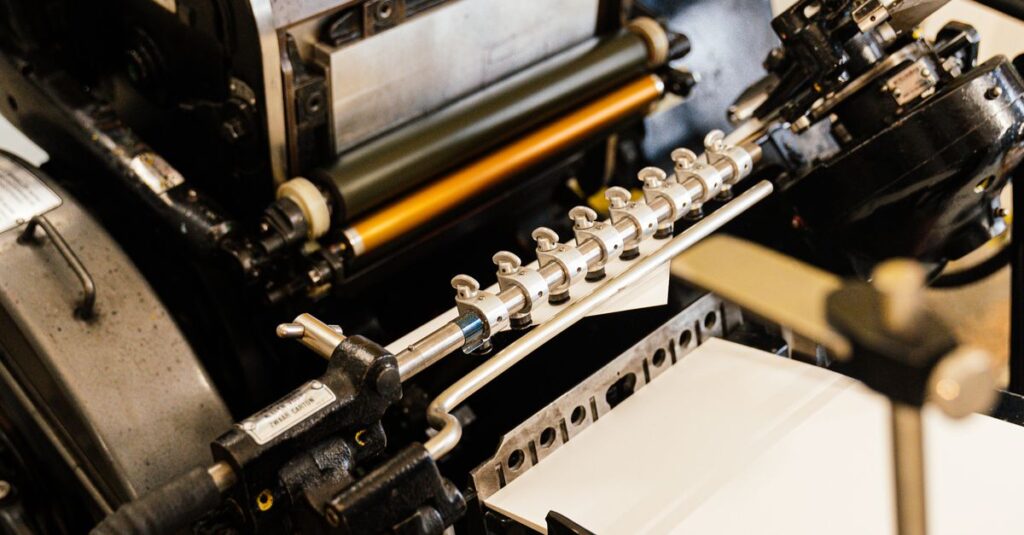
Then, the printing. The date grids, the rulings, the reference pages. This is done on large offset printing machines. Precision matters. A misaligned date box ruins the whole page. The branding on the cover is often done via foil stamping or embossing for a luxury feel. It’s a tactile thing.
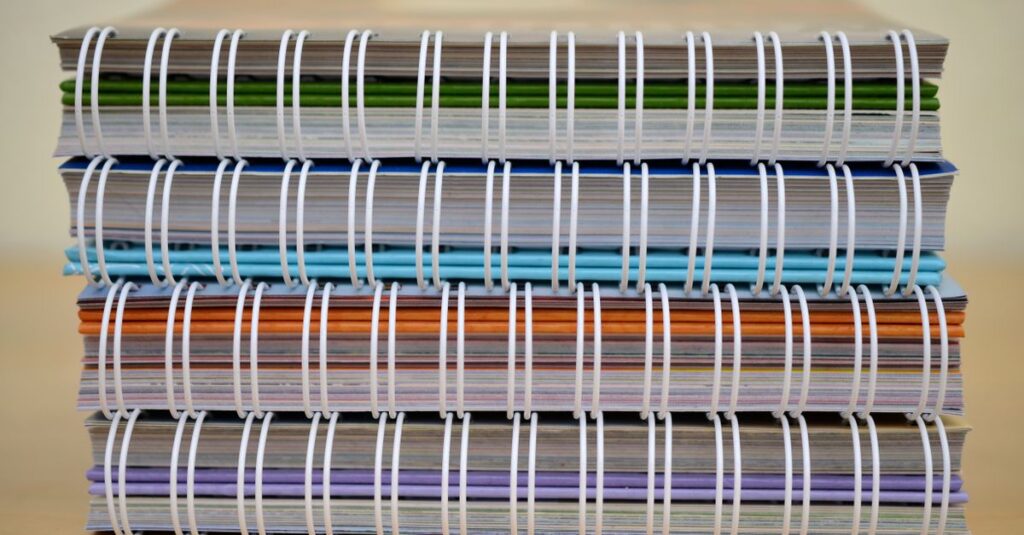
Binding is next. You have options. Perfect binding (like a paperback book) is cost-effective for large runs. Sewn binding is more durable, allows the book to lie perfectly flat. Spiral binding is great for planners that need to fold right back on themselves. The choice depends on use and budget. A diary meant for heavy travel might need a tough, sewn binding. An executive desk diary can use perfect binding.
Finally, finishing. This is the ribbon marker, the headbands, the rounded corners. These aren’t just decorations. A ribbon marker is functional. Rounded corners prevent dog-earing. It’s the difference between a tool that lasts and one that feels battered by March. When we work on custom printing projects, these are the details we go back and forth on with clients. Because they matter in the hand.
A Quick Story About a Bulk Order
Rohit, 42, is a procurement manager for a chain of private schools in Hyderabad. He needed 5,000 student planners for the new academic year. Budget was tight, but quality couldn’t slip — these were for parents and donors too. He told me over the phone, his voice tired. “Every supplier sends the same sample. Shiny cover, thin paper. It feels… disposable.”
We sent him a dummy with a matte finish cover, 92 GSM paper, and sewn sections. He called back a week later. “The principal held it. She didn’t say anything about the price. She said it felt like the school she wants to run.” That was it. The order was placed. The detail wasn’t the logo placement. It was the heft. The quiet confidence of good materials.
How to Choose a Supplier for Custom Pen Diaries
This is probably why you’re reading. You have a requirement, maybe 500 units, maybe 50,000. Here’s what to ask, beyond just the price per piece.
- Ask for paper swatches. Don’t just trust the GSM number. Feel it. Try writing on it with the pen your team actually uses.
- Request a fully custom dummy. Any reputable manufacturer like us will make a one-off prototype with your exact specifications before the full run. This is non-negotiable.
- Check binding strength. Open a sample diary to the middle. Does it lie flat? Does the spine crack when you flex it? A good binding should be silent and smooth.
- Clarify the timeline. Bulk manufacturing isn’t overnight. From final artwork approval to delivery, factor in 4-6 weeks for a complex custom job. Plan accordingly.
- Understand the customization limits. Can they foil stamp your complex logo? Can they print a custom interior layout? Can they match a specific Pantone color for the cover?
The goal is to find a partner, not just a vendor. Someone who understands that this diary is a representation of your company. It needs to be right. Looking at our experience over the years, that’s the only way we’ve built long-term relationships with distributors and corporates.
Frequently Asked Questions
What is the difference between a diary and a notebook?
A diary is typically pre-dated with calendar layouts (daily, weekly, monthly) for planning over a specific period, like a year. A notebook is generally undated, with plain, ruled, or grid pages for free-form notes. Diaries are for structured time management; notebooks are for unstructured information capture.
What paper is best for a pen diary to prevent ink bleed?
You want thicker, smoother paper. Look for a minimum of 70 GSM weight. Opt for papers labeled as “ink-proof” or “bond paper.” Avoid very porous, thin sheets. For fountain pens or heavy gel ink, 90-100 GSM with a slight coating (like cream wove) is ideal to prevent feathering and show-through.
Can I get a custom pen diary with my company logo?
Absolutely. Most manufacturers, including us, specialize in custom printed diaries. You can brand the cover with your logo via foil stamping, embossing, or digital printing. You can often customize interior pages too, adding company information, values, or custom reference data relevant to your team.
What is the minimum order quantity for custom diaries?
This varies by manufacturer. For fully custom designs (unique size, paper, layout), the MOQ can start at 500 pieces to make the setup costs viable. For simpler logo imprinting on a standard diary style, some suppliers might go as low as 100-200 units. Always ask for a quote based on your exact specs.
How long does it take to produce a bulk order of custom diaries?
Lead time depends on complexity. After final design approval, expect 4 to 8 weeks for production and shipping. This includes time for printing, binding, finishing, and quality checks. For very large orders (50,000+), or during peak season (Q3 for year-end diaries), plan for additional buffer time.
The Unspoken Reason They Still Matter
We’ve talked specs, paper, binding, business reasons. Here’s the quieter thing. A pen diary represents a slice of uninterrupted time. In a world of pings and scrolls, it’s a place for consecutive thought. For a business to provide that tool to its people is to silently endorse deep work. It says, “Your planning time matters. Protect it.”
That’s the real value, beyond branding or cost-per-unit. It’s a small signal of respect for focused intention. And maybe that’s why, despite all the apps, the demand hasn’t gone away. It’s shifted. From a generic commodity to a considered, quality tool. People don’t just want a diary. They want one that doesn’t feel cheap, that works with a good pen, that survives the year with dignity. As a manufacturer, that’s the bar. And honestly? It’s the only one worth aiming for.