Here’s What You’re Actually Looking For With Print
You’ve got a logo. You’ve got a message. Maybe you’ve got a design your marketing team spent weeks on. And now you need it on something physical. It’s not about files on a screen anymore — it’s about handing it to a client, putting it on a wall, making it real.
That’s the gap right there. Between the idea and the thing you can hold. And honestly? Most companies selling “print and poster” services don’t get it. They’re printers, not partners. They see a PDF, they hit print. They don’t see the conference booth, the welcome pack for new hires, the branded notebook that sits on a desk for a year.
For us, it’s different. Because we’ve been making the things you print on for four decades. We don’t just print posters. We understand the paper they go on, the binding that holds the notebook together, the way ink sits on a cover. If you need to turn a brand idea into a physical object people actually use, this is where you start.
It’s Not Just Ink on Paper. It’s Your Reputation.
Think about the last cheaply printed poster you saw. The colours were off. The paper felt flimsy. It curled at the edges. You didn’t just see a bad poster — you formed an opinion about the company it represented. Probably not a great one.
Print is tactile marketing. It’s the only marketing channel people can physically touch. And touch tells a story. A heavyweight, matte-finish poster with crisp branding says “we pay attention to detail.” A perfectly centered logo on a corporate diary cover says “we’re professional.” A smudged, pixelated image on thin paper says… well, you know what it says.
The headache most procurement managers face isn’t finding a printer. It’s finding one who understands that the final product is a direct reflection of their company’s standards. I’ve lost count of the times someone has called us, frustrated, because their last supplier sent notebooks where the logo was crooked. Not slightly off. Crooked. And they had 5000 of them.
Right. Let me tell you about Priya.
Priya, 38, handles procurement for a mid-sized tech firm in Hyderabad. They were launching a new product suite. Ordered 2000 custom notebooks and 500 rollout posters from a local shop. The notebooks arrived with the spiral binding chewing into the print. The posters? The blue in their brand hex code came out a weird purple. She showed me a photo. It was bad. Launch was in a week. Panic doesn’t begin to cover it. She found us through a distributor. We reprinted the posters on the right stock, fixed the notebook binding issue, and couriered it. She didn’t need a discount. She needed someone to not let her down. That’s the job.
What “Print and Poster” Really Means for Businesses Like Yours
When you search that term, you’re probably lumping a few different needs together. Let’s break it down.
Corporate Branding & Giveaways
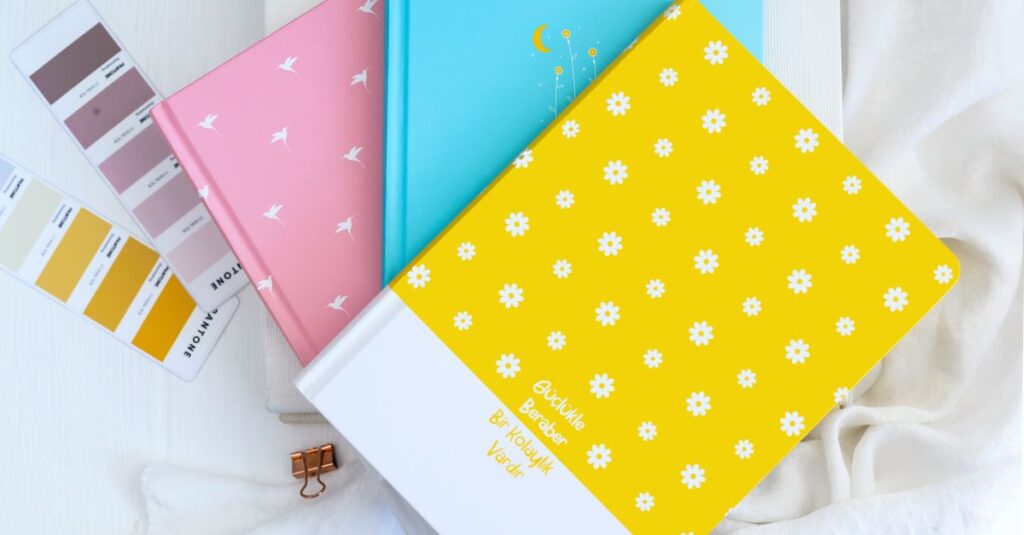
This is the big one. You’re not buying posters; you’re buying visibility. You’re not buying notebooks; you’re buying a daily brand reminder on someone’s desk. The print needs to be durable. The binding needs to survive a year in a bag. The poster paper needs to not tear at the grommets. It’s functional art.
- Logo-imprinted diaries and planners for the new fiscal year.
- Branded notebooks for conference swag bags.
- Motivational or value posters for office walls.
- Product launch posters for retail or partner locations.
Educational & Institutional Material
Schools and colleges need clarity, not gloss. A poster about lab safety needs to be read from across the room. A custom notebook for a science fair needs to lay flat. The print here is about utility and volume. We do a lot of this — think thousands of units, consistent quality, delivered before term starts.
Marketing & Point-of-Sale
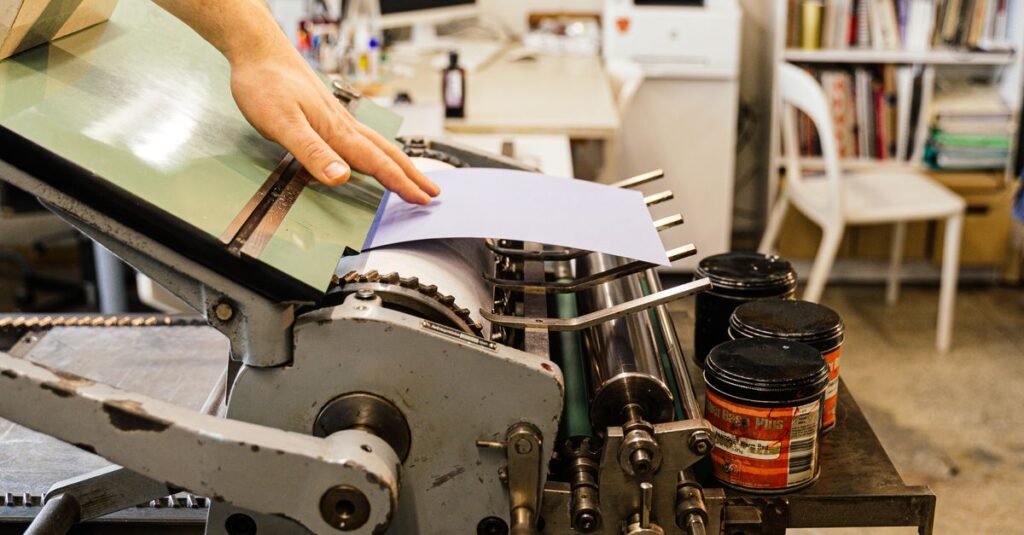
This is where colour matching is non-negotiable. Your brand’s red needs to be your red, every single time, whether it’s on a poster in Mumbai or a notebook cover in Dubai. This is where our offset printing capability matters. Digital is great for short runs, but for bulk, offset gives you that sharp, consistent, cost-effective colour.
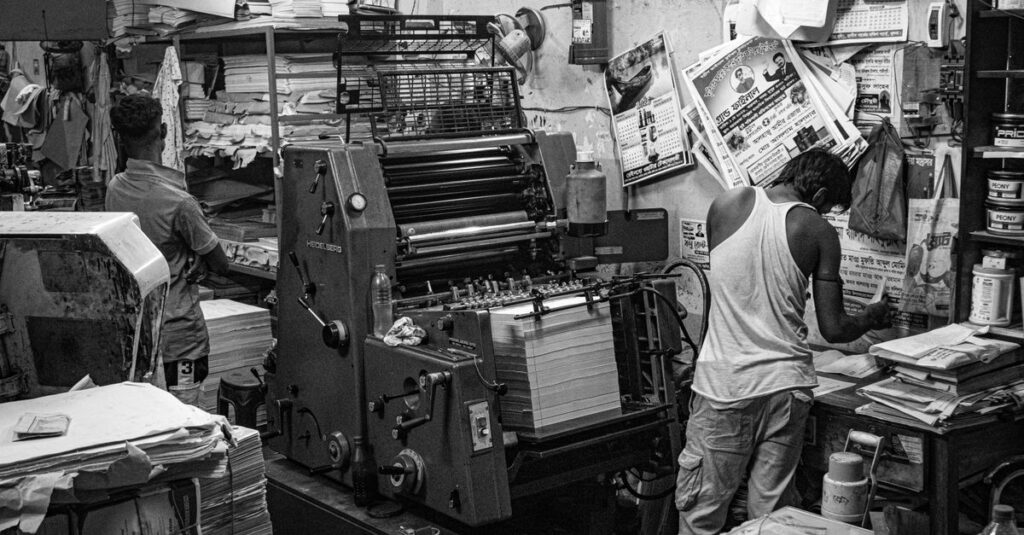
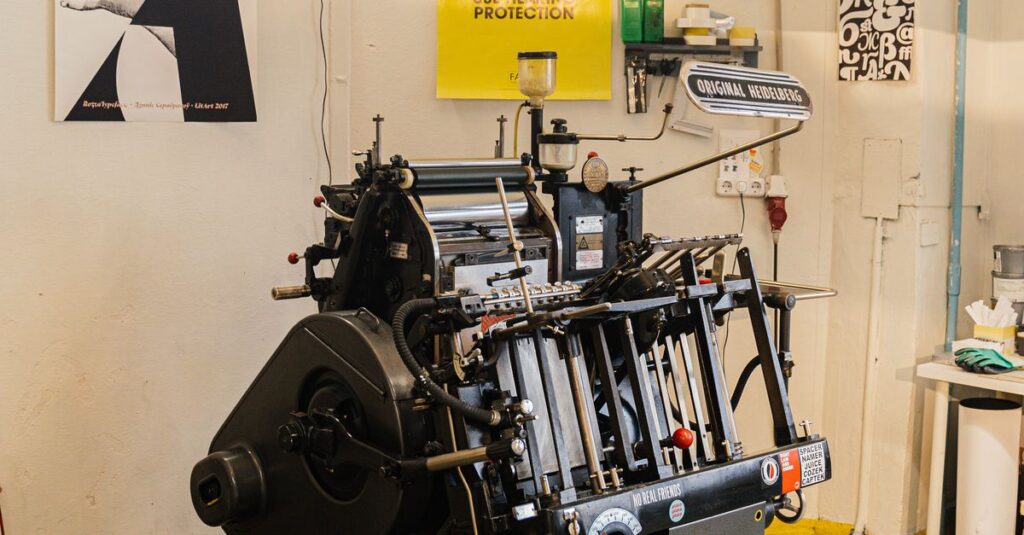
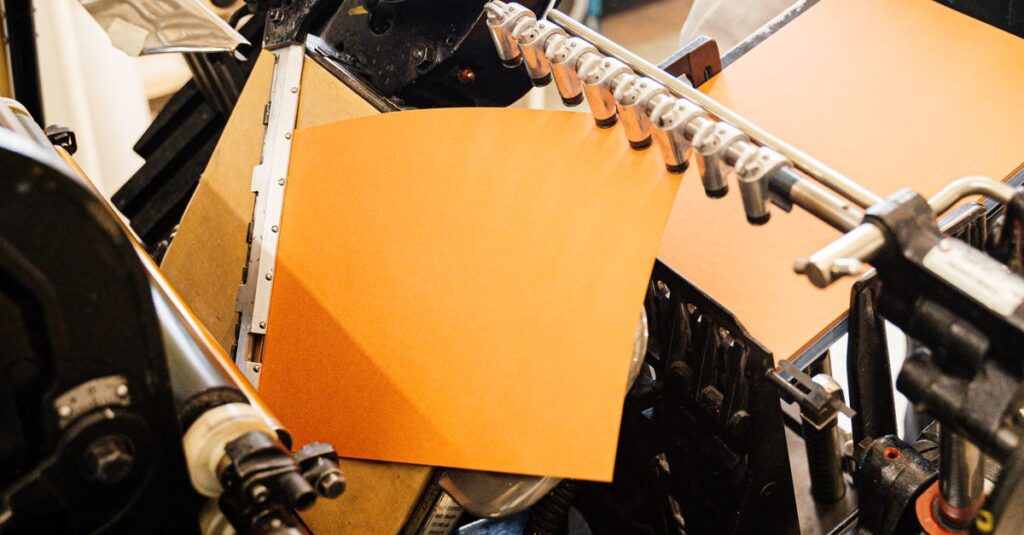
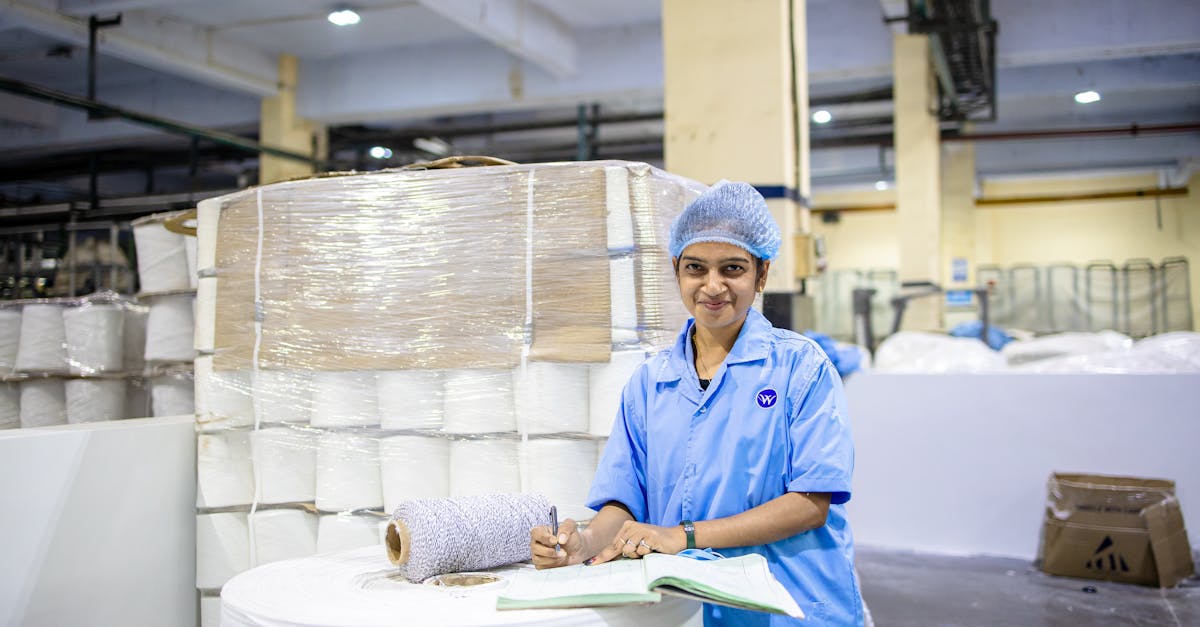
Seeing the whole process, from paper roll to packed box, changes how you think about print. It’s not magic. It’s a machine someone has run for 30 years, knowing exactly how much ink to lay down for a deep black on cream paper.
Poster or Notebook? How to Choose Your Canvas
This is the quiet question. You have content — an annual report summary, a new slogan, a technical diagram. Do you make a poster or a notebook? Sometimes the answer is both. But here’s how to think about it.
| Consideration | Poster | Custom Notebook |
|---|---|---|
| Primary Goal | Broadcast a message to many at once. Decoration, instruction, inspiration. | Provide a utility item that enforces brand connection through repeated, personal use. |
| Lifespan | Medium to long. On a wall for months/years, but static. | Long. Used, carried, referenced over its entire page count. |
| Interaction | Passive viewing. Glanced at. | Active, tactile use. Written in, flipped through, kept. |
| Customization Depth | Mainly front/back print. Paper weight, finish, coating. | Cover, back, spine. Inside pages (ruling, headers/footers). Binding type. Paper quality throughout. |
| Best For… | Announcements, motivational decor, instructional charts, event promotion. | Corporate gifting, training programs, conference kits, student kits, branded daily-use products. |
| Cost Per Impression | Lower initial cost, but seen by many. | Higher unit cost, but far more prolonged and intimate exposure. |
The real trick? Integration. A poster announces the new company initiative. The custom notebook given to each employee is where they jot down their ideas for it. The print style should match.
How It Actually Gets Made: The Messy Truth
I want to pull back the curtain a bit. Because understanding this saves you time and hassle.
It starts with your file. Please, for the love of all that is holy, send a print-ready PDF. Not a Word doc. Not a low-res JPG from your website. A PDF with fonts embedded and crops marks. If that sounds like jargon, just ask us for the specs. We’ll send them. This one step prevents 80% of delays.
Then we look at the substrate — that’s just a fancy word for what we’re printing on. Poster paper comes in weights (like 150 GSM, 200 GSM) and finishes (gloss, matte, satin). Notebook covers are different. They need to be durable. We might use art card, or laminate a printed sheet for protection. The inside pages? That’s our bread and butter. We know which 54 GSM or 70 GSM paper runs smoothly through our presses without jamming.
Expert Insight
I was reading an article by a packaging designer last month. One line stuck with me. He said the most important part of his job wasn’t the design, but specifying the substrate correctly. Because the best design in the world dies on the wrong material. I think about that all the time. A vibrant, glossy poster design will look cheap on thin, uncoated paper. A sophisticated, minimalist logo needs a matte or textured finish to feel premium. The machine operator who’s been with us since the 90s knows this instinctively. He’ll look at a file and say, “This one needs the matte laminate. The ink’ll sit better.” That’s experience you can’t buy.
Then comes the print run. Offset for bulk. Digital for short-run or highly variable stuff (like individual names on diaries). Then cutting, folding, binding. For posters, it’s guillotining to size, maybe adding eyelets. For notebooks, it’s collating pages, stitching or spiraling, adding the cover, trimming the final edge. It’s loud, it’s messy, it smells of paper and machine oil. And it’s beautiful when it all comes together.
And honestly? The biggest mistake buyers make is not asking for samples. Don’t just approve a digital proof. Ask for a physical dummy. Feel the paper. Check the colour. Test the binding. We do it all the time. It’s the only way to be sure.
Your Checklist Before You Place a Bulk Print Order
Look, let’s be practical. Before you send that PO, run through this.
- Purpose: Is this for impression, information, or utility? (Answer dictates everything else).
- File: Do you have a high-resolution, print-ready PDF? Are brand colours in CMYK?
- Material: Have you decided on paper weight/cover stock? If not, ask for swatches.
- Proof: Are you getting a digital and a physical hard-copy proof before full production?
- Timeline: Have you built in time for proofs, corrections, production, and shipping? (Add 25% buffer).
- Logistics: Where is it shipping to? Who receives it? Are the boxes labelled for easy distribution?
Get these six things sorted, and your project goes from being a source of stress to a box-ticking exercise. Which is how it should be.
Frequently Asked Questions
What’s the minimum order quantity for custom print and poster work?
It depends. For custom printed notebooks, we can start at 500 pieces. For posters, it’s around 100. The reason is setup cost for plates and machine time. Smaller than that, and the cost per unit gets high. We’re always honest about it — if you only need 50, we’ll tell you it’s probably not economical with us and might suggest a local digital printer.
Can you match my specific brand colours (Pantone)?
Yes, absolutely. This is crucial for corporate work. Send us the Pantone codes. We use them to mix ink for offset printing, ensuring an exact match. For digital printing, we get as close as the machine gamut allows. We always recommend a press proof for colour-critical projects.
What’s the difference between offset and digital printing for posters?
Offset is for larger quantities (think 500+). It uses plates, has a higher setup cost, but a lower cost per piece and excellent colour consistency across the run. Digital is for shorter runs or variable data. Faster setup, but a higher cost per piece. We guide you based on your quantity and quality needs.
Do you handle the design, or do I need to provide finished artwork?
We can do both. We have basic design services for layout and typesetting if you have the concept and assets (logo, text). But if you need full creative design from scratch, we recommend working with a designer first. We’re manufacturers at heart — we excel at turning a good design into a perfect physical product.
How long does a typical bulk order of custom notebooks take?
From final approved proof to dispatch, allow 3-4 weeks for an order of several thousand notebooks. This includes paper sourcing, printing, binding, and quality checks. Rush jobs are possible but cost more. The key is getting the proof approved quickly — that’s where most delays happen.
Wrapping This Up
Good print work should feel invisible. The notebook opens flat. The poster colour pops just right. The logo is where it’s supposed to be. You shouldn’t have to think about it.
But getting there requires thinking about it a lot on the front end. Paper, process, proofing. It’s not glamorous. It’s logistics with a creative bent. The goal is for your team to open the delivery, see the finished product, and just nod. “Yep. That’s it.”
I don’t think there’s one perfect supplier for everyone. But if your needs involve volume, consistency, and a product that has to stand up to real use, then the conversation is different. It’s less about the cheapest price and more about the total cost of not having a problem. You’re not just buying print. You’re buying peace of mind that your brand looks the way it should, in hand.
If you’ve got a project in mind, even just vaguely, it helps to talk early. Even if we just point you in the right direction.