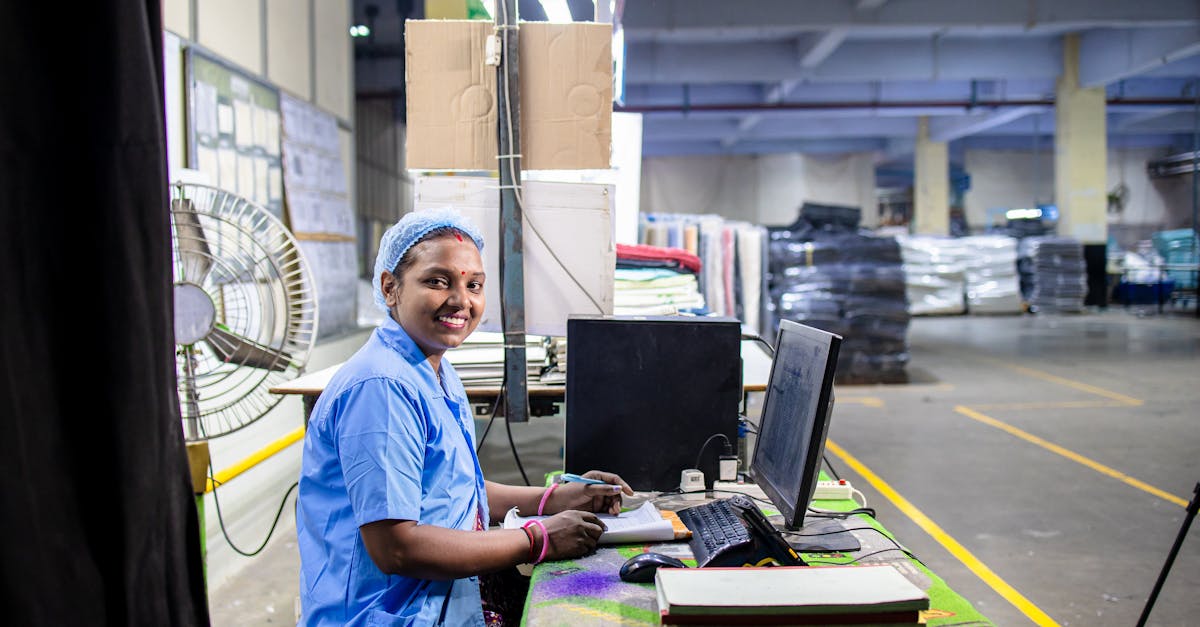
The Paper: It All Starts Here
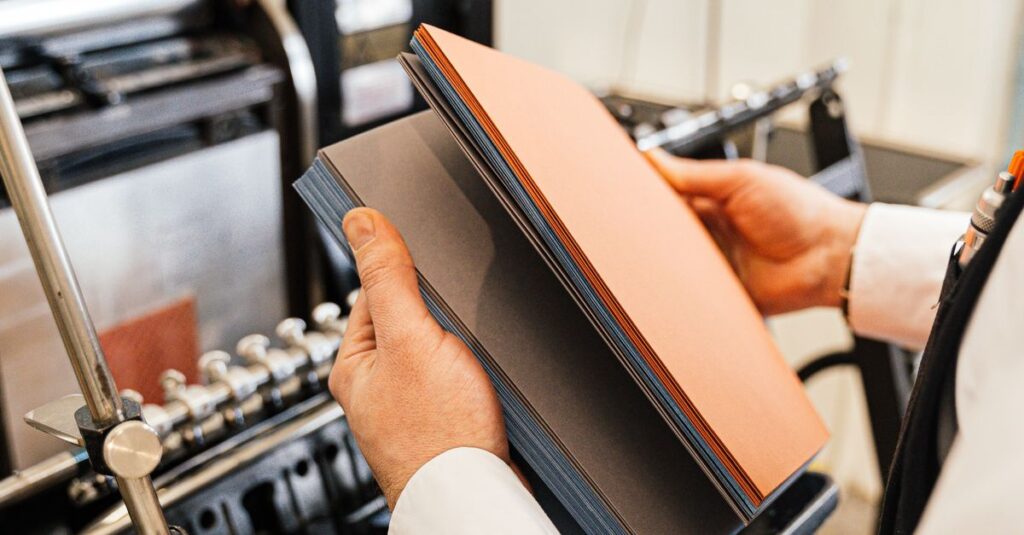
You’d think all paper is the same. It’s not. I remember a buyer once told me he ordered 10,000 notebooks from somewhere and the paper was so thin you could see the next page through it. That happens when manufacturers cut corners on GSM (grams per square meter). For bulk notebooks, standard is 54 to 70 GSM. Anything less and you’re basically writing on tissue.
Most Indian mills supply these grades — ITC, JK Paper, BILT — but the trick is consistency. A good manufacturer tests each lot. I’ve seen reject piles that would make you cry. Because if the paper curve — that’s the actual term — has to match the ruling type. School notebooks use single rule, account books use double rule, drawing books need thicker stock. If you get a batch where the paper is off, your whole print run is wasted.
So the first question to ask any manufacturer: What GSM does your standard bulk notebook use? If they don’t know or dodge the answer, walk away.
Once the paper passes inspection, it goes to the guillotine. Massive stacks cut down to size — King, Long, Short, A4, A5. Not a single page is wasted. Or at least, not much. Our cutting machine is older than me, but it still does the job. Width tolerance: under 1 mm. Anything more and the binding puckers.
Listen, if you’re ordering bulk, the paper is where you save or lose money. Don’t let price-shop on paper. You’ll regret it. Sri Rama Notebooks has been doing this since 1985 — we know which mills deliver.
Printing: Offset vs Digital — What Works for Bulk
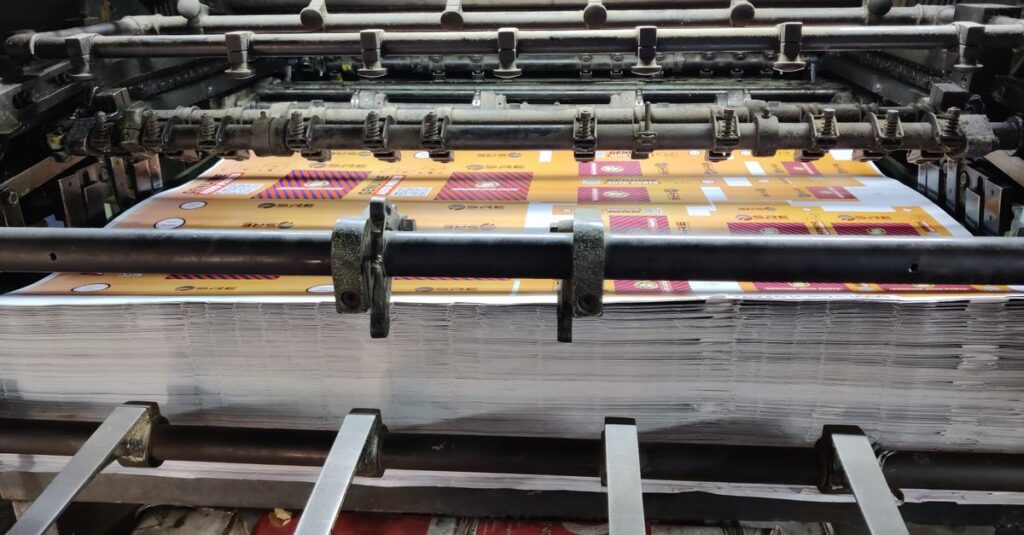
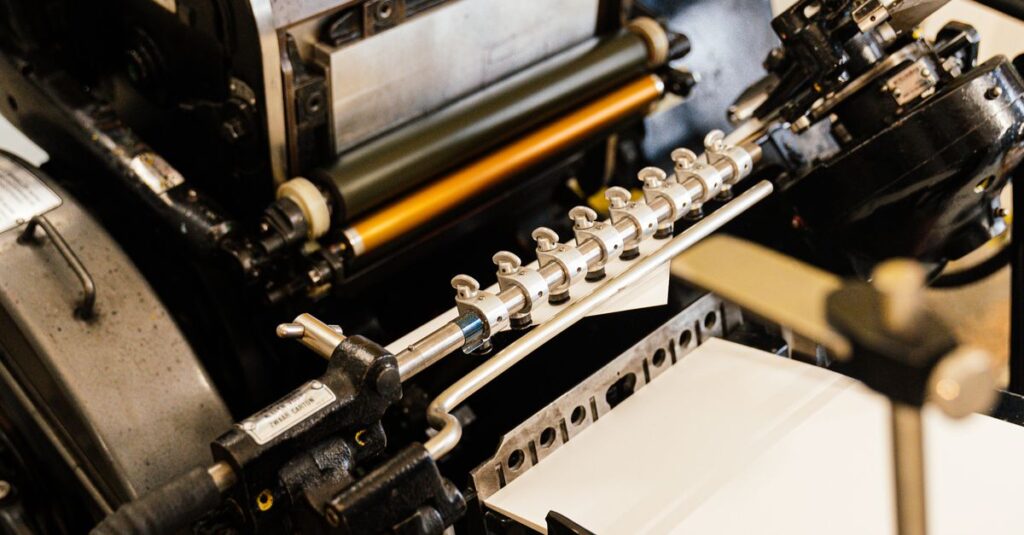
Here’s the thing most people don’t think about. Printing a notebook isn’t like printing a brochure. You’re printing on both sides, on folded sheets, and the registration — the alignment of print lines — has to be dead perfect. For bulk orders, offset printing is the standard. Why? Speed and cost. Once the plates are made, you can run 10,000 sheets an hour.
Digital printing works for short runs — under 500 notebooks — but for bulk, offset gives you sharper lines and better ink holdout. I’ve seen digital prints where the ink smudges after a month. With offset, the ink dries into the paper. It stays.
What Gets Printed?
- Inner pages — ruled lines, margins, headers
- Cover — artwork, school name, logo, year
- Back cover — usually blank or with index
One mistake buyers make: they assume the printer will handle everything. You need to send a print-ready file. Or at least a clear brief. We’ve had clients send photos of their old notebook — and we match it. But it’s faster if you have a PDF.
And the ink? We use vegetable-based inks now. Not because we’re fancy. Because it’s easier to clean and the colors don’t fade. That’s the honest reason.
Anyway. Where was I. Right — after printing, the sheets go to folding. Huge machines fold each signature (that’s a group of pages) into a booklet. Then they collate them into the right order. If the page numbering is off, trust me, someone will notice.
I once caught a batch where page 23 and 24 were swapped. That’s a whole order ruined. We caught it because we check every 100th notebook during production. That’s our rule.
Binding: Stitched, Spiral, or Perfect — Which One Holds Up?
| Binding Type | Best For | Strength | Bulk Cost | Our Opinion |
|---|---|---|---|---|
| Stitched | School notebooks, exercise books | High — pages won’t fall out | Low | Most durable option for daily use |
| Spiral | Corporate diaries, spiral notebooks | Medium — can bend if mishandled | Medium | Great for lying flat, but coil can pop |
| Perfect | Hardcover notebooks, premium diaries | High if glue is good, but can crack | Higher | Looks clean, but needs quality adhesive |
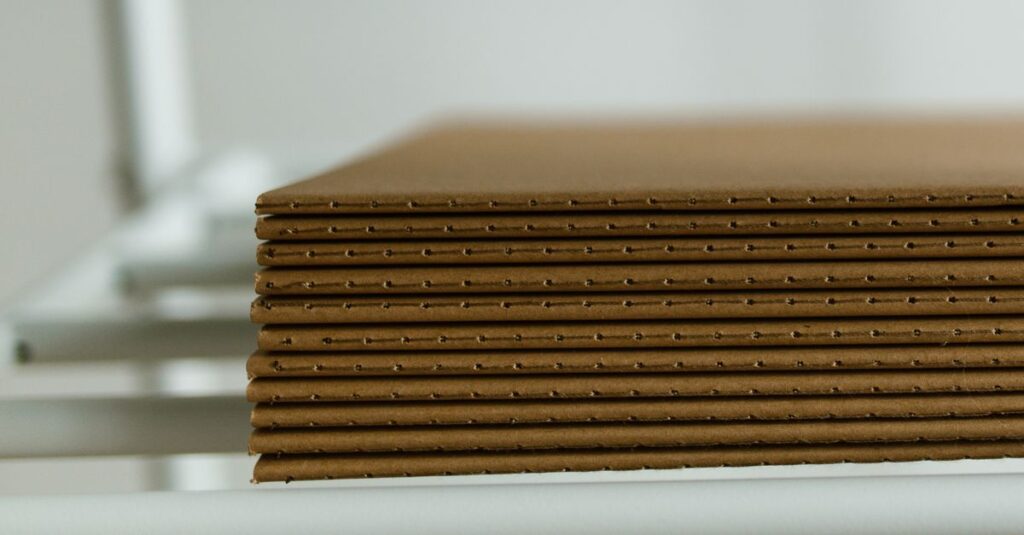
I’ll be blunt — for bulk orders many buyers focus on cover design and forget the binding. Then six months later, pages start falling out. Stitched binding is the workhorse. For school notebooks, it’s the only choice. Spiral is fine for diaries that stay on a desk. Perfect binding is tricky — if the glue isn’t strong, the spine fails. We use a PUR glue that’s far stronger than standard EVA. Don’t ask me the chemistry — I just know it works.
One more thing: the wire for spiral binding. Indian manufacturers often use cheap Chinese wire that rusts. We use coated steel. It costs a bit more, but it doesn’t rust. That matters for notebooks sent to humid countries like the Gulf or parts of Africa.
Custom Printing and Private Label: What You Need to Know
Most buyers ordering bulk want their brand on the cover. That could be a logo, a school crest, or full color artwork. The process is: we print the cover separately on a card stock (250-300 GSM), then laminate or UV coat it. Then we attach it to the notebook block.
Foil stamping and embossing add a premium feel — I’ve seen corporate buyers go crazy for gold foil on diaries. It’s not cheap, but it makes the notebook look like a gift.
Here’s a real story: I worked with a procurement manager named Ravi, 42, from Bangalore. He needed 5,000 custom diaries for a tech company. They wanted a matte cover with a subtle logo. Simple, right? But they wanted the logo to appear only on the bottom right corner — specific size. We had to make a separate die for that. Took two extra days. He called me worried — but it came out perfect. The lesson: allow 7-10 days for custom dies and proofs.
Expert Insight: Why Private Label Is Harder Than You Think
I remember talking to a friend who runs a paper mill — he said something I keep thinking about. He told me that most private label failures happen because the buyer doesn’t understand the difference between a notebook for kids and one for executives. Kids need sturdy covers and big lines. Executives want thinner, elegant, smooth paper. If you mix those up in a bulk order, you get returned stock. It’s not a manufacturing problem — it’s a design problem. The best solved before production even starts.
The question isn’t whether a manufacturer can print your logo. It’s whether they can execute it consistently across 10,000 units. We can. Because we check every batch.
If you need custom printed notebooks in bulk, our printing services cover offset, foil, and private label.
Quality Control and Packaging: The Unsung Steps
Nobody thinks about packaging until boxes arrive damaged. For bulk orders, we use 5-ply corrugated boxes with internal partitions. Each box holds 24 or 48 notebooks, depending on size. We shrink-wrap bundles of 12. Why? Because humidity. A notebook sitting in a warehouse in Mumbai or Dubai can warp if moisture seeps in.
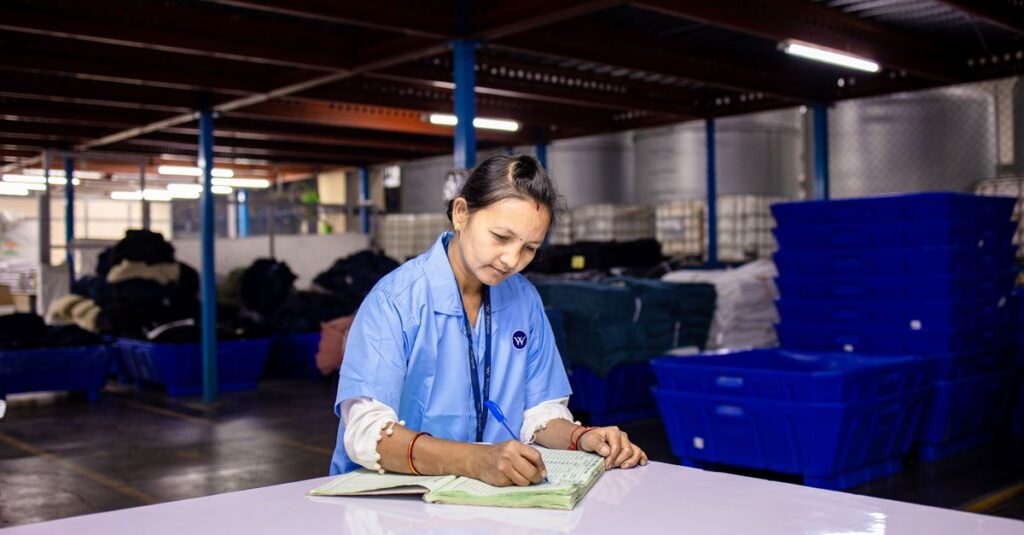
We also spot-check randomly during production. Our QC team pulls samples every hour: they check page alignment, binding strength, cover adhesion, print clarity. If a sample fails, we pull the entire batch since the last good check. It hurts our output — 30,000 notebooks a day suddenly become 28,000 — but it saves a reputation.
I saw a QC guy once reject 200 notebooks because the cover had a tiny scratch. The sales guy was furious. The QC guy wasn’t wrong. That scratch would amplify in the customer’s mind. So we reprinted. That’s the reality of bulk manufacturing: you can’t rush quality. Not if you want repeat orders.
For export, we triple-check inside boxes and out. Customs inspections can be brutal. We’ve had containers delayed because of packaging labels. Now we pre-ship photos and documentation to every international buyer. It’s extra work, but it avoids phone calls at 2 am.
So how are bulk notebooks manufactured in India? It’s a process that blends old-school craftsmanship with modern checks. And the best manufacturers make it look easy. But it isn’t.
Frequently Asked Questions
What paper GSM do bulk notebooks typically use in India?
Standard bulk notebooks use 54 to 70 GSM paper for school and office use. Higher GSM (80-100) for premium diaries. Avoid below 50 GSM — it’s too thin for writing on both sides.
How long does it take to manufacture 10,000 notebooks?
Depending on customization and type, usually 10 to 15 days. Stitched notebooks are faster; custom covers or spiral binding can add time. Always factor in 7 days for proofs and die-making.
Can I get my logo printed on the cover?
Yes. Most manufacturers offer offset, screen printing, foil stamping, or embossing. Provide a vector logo file for best results. Setup cost is usually one-time per design. See our customization options.
What binding is best for bulk supply?
Stitched binding is most cost-effective for bulk school notebooks. For corporate diaries, spiral or perfect binding is preferred. Mixed orders can combine both.
How do I ensure quality when ordering bulk notebooks from India?
Ask for samples before full production. Request a QC checklist. Work with a manufacturer with ISO or a documented quality process. Always get photos or video of the actual run.
Final Thoughts
Here’s what I’ve learned after seeing thousands of bulk orders go out the door. The process isn’t magic. It’s paper, ink, glue, and steel wire — applied consistently. The manufacturers who do it well are the ones who care about the little things: the paper grain direction, the drying time, the glue temperature, the packing tape. I don’t have a fancy conclusion for you.
What I can say? If you’re bulk ordering for your school or company, find a partner who’s been around long enough to know where the corners get cut — and doesn’t cut them. That’s what we do at Sri Rama Notebooks. Reach out when you’re ready.