Look, You’re Not Asking The Right Question
Here’s the thing — when businesses and schools search for “classmate notebook,” they’re usually not hunting for a single branded notebook off a retail shelf. I’ve had this exact conversation, what, ten times last month? A procurement manager calls us. They need 5000 notebooks for their corporate training program, or a school principal needs a fresh supply for the next academic year. They mention “Classmate” because it’s the name they know. The reliable one. The one that feels sturdy and lasts.
But what they’re really asking for is something more specific. They want that level of quality. That durability. That clean, professional look. But in bulk quantities, often with their own logo, their own rules, their own specifics. They need a supplier, not a shop. A manufacturer, not a middleman. The real question hiding behind that keyword isn’t “where to buy one,” it’s “who can make thousands of these for me, consistently, and maybe put my name on it?” Right?
If you’re ordering for a school, a company, or as a distributor, that’s the shift you need to make. Stop thinking like a shopper. Start thinking like a partner. You need to know what goes into a notebook that stands up to daily use, how the supply chain actually works, and what you should really be comparing when you’re spending that budget. This is the part we’ve been doing since 1985 — and it’s less about stationery and more about solving a logistical headache before it starts.
The Anatomy of a “Good” Notebook: It’s Not Just Paper
Let’s break down what you’re actually paying for. Because a notebook isn’t just paper glued together. It’s a series of small, critical decisions that add up to something that either falls apart in a month or survives a full year in a student’s backpack.
Three things matter more than anything else: the binding, the paper weight, and the cover stock. Get one wrong and the whole thing feels cheap.
The Binding: The Spine of the Whole Operation
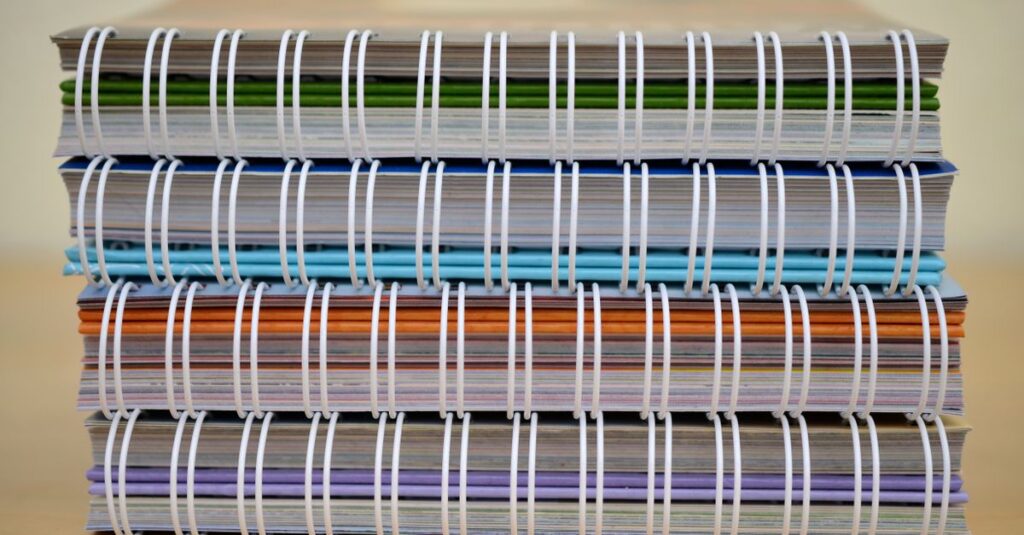
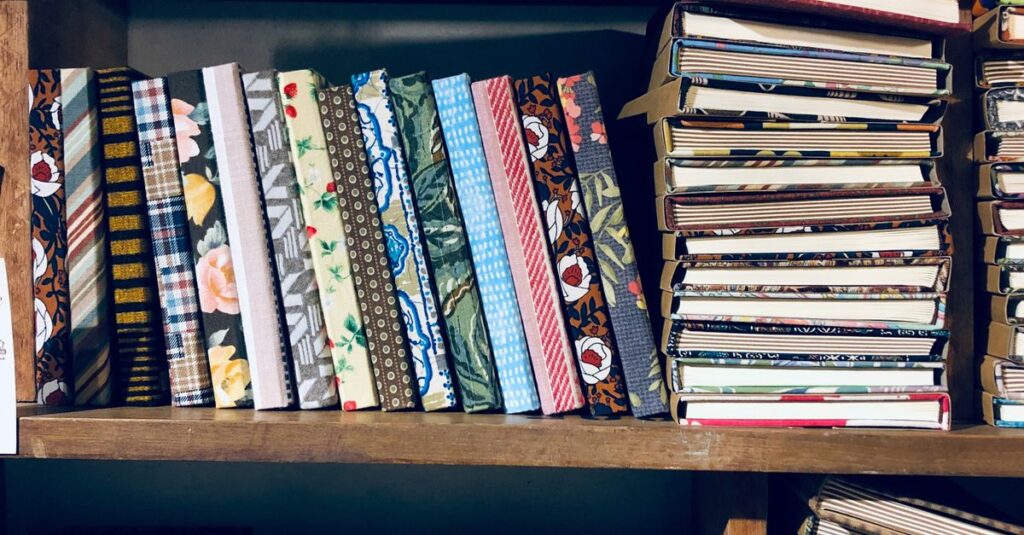
You’ve got a few options here, and they tell you everything about the notebook’s lifespan. Spiral binding (wire-o) is great for laying flat, but those coils can get crushed and snag. Perfect binding (where pages are glued at the spine) looks clean and is cost-effective for bulk, but it doesn’t open fully. Then there’s stitched binding — signatures of pages sewn together and then glued. This is the workhorse. It’s what gives a notebook that solid, durable feel. It opens reasonably well and can handle being thrown around. Most of the notebooks you think of as “premium” daily drivers? They’re stitched.
The Paper: GSM is Everything
Paper weight is measured in GSM (grams per square meter). Talk to any manufacturer and this is the first spec they’ll ask about. Standard notebook paper is around 54-70 GSM. Lighter than that (like 40-50 GSM), and you get see-through, ink bleed, and a flimsy feel. Heavier paper (80 GSM+) is luxurious but drives the cost up fast. For a school or office workhorse notebook, 60-70 GSM is the sweet spot. Smooth enough for writing, opaque enough to use both sides, and strong enough not to tear easily. The ruling — single, double, broad, graph — that’s the easy part. The weight is non-negotiable.
I was visiting a school in Vijayawada last year, and the principal showed me a stack of notebooks from a past supplier. The pages were practically translucent. You could read the writing from the other side. The kids hated using them. It wasn’t just a bad product; it was demotivating. The silence in that storage room had weight. That’s what happens when you focus only on the cheapest price per unit.
Bulk Buying: The Real Game is in the Thousands
This is where the perspective flips. Buying retail, you look at the price on the sticker. Buying bulk as a business, you look at the cost per unit, the lead time, the minimum order quantity (MOQ), and the customization overhead. The sticker price becomes almost irrelevant.
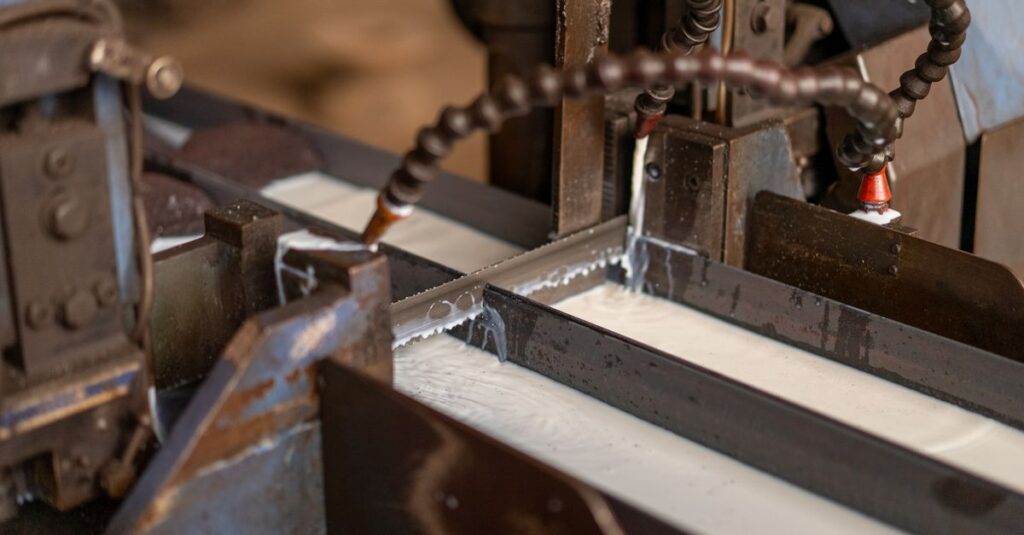
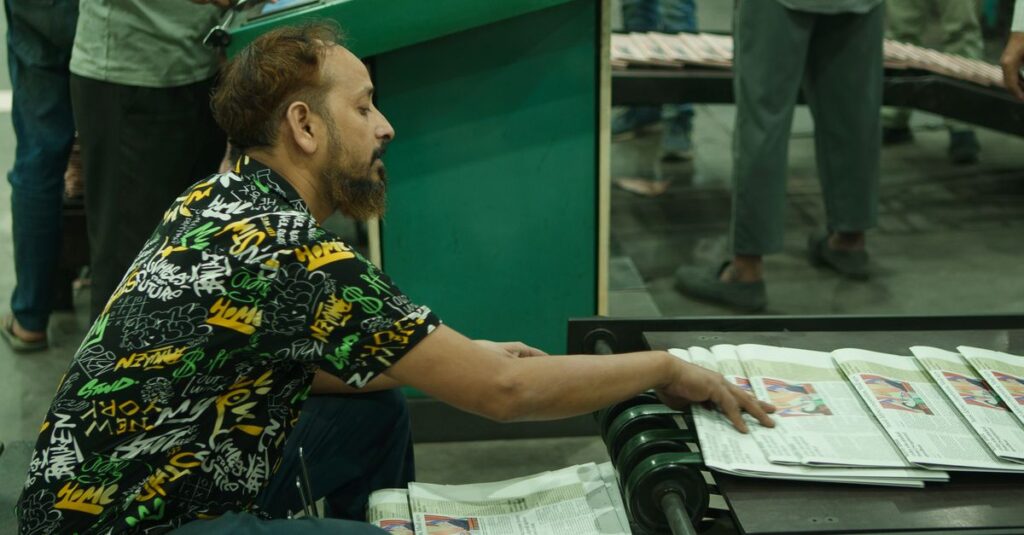
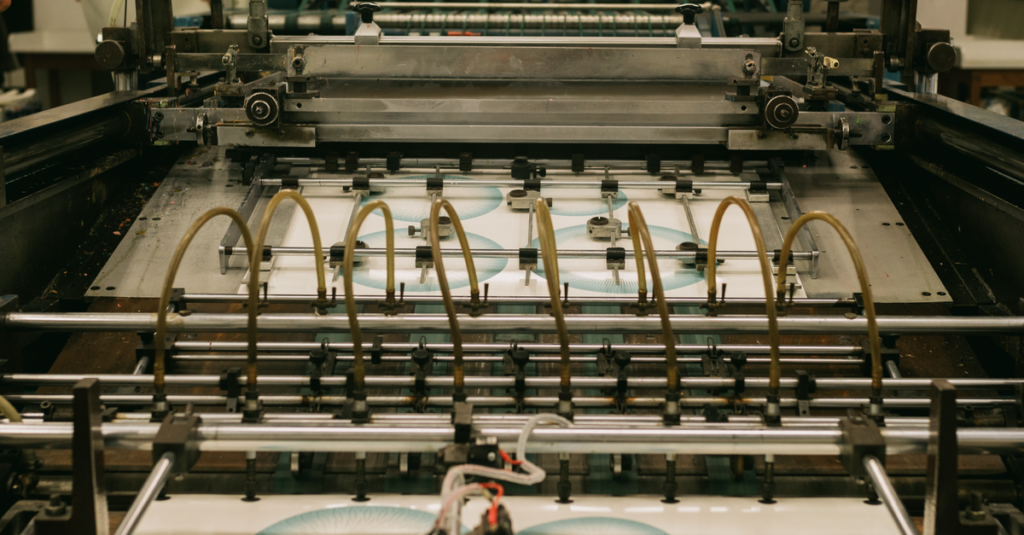
Most dedicated manufacturers (like us) have MOQs that start around 500-1000 pieces for custom jobs. Why? Because setting up the print plates, adjusting the binding line, and doing a quality run takes time and calibration. It’s not efficient to do it for fifty notebooks. For standard, non-customized notebooks, you can order in the tens of thousands. Our factory, for instance, runs at a capacity of 30,000 to 40,000 bound notebooks per day. That scale is what brings the unit cost down for schools and large corporations.
The timeline is the other beast. Need 10,000 custom diaries for a corporate new year gift? That’s not a next-week job. A realistic timeline for a bulk, customized order is 4-6 weeks from final sign-off on the design. That includes production, quality checks, and packing. Anyone promising it drastically faster is either cutting corners or isn’t being honest about their queue. Planning is the most important, and most overlooked, part of the process.
Honestly? The logistics are the real product. Making the notebook is the easy bit. Getting the right quantity, with the right specs, to the right place, at the right time — that’s what you’re actually paying a good supplier to manage.
Customization & Private Label: Your Brand, Your Rules
Expert Insight
I was talking to a distributor from Coimbatore a while back — over chai, not some formal meeting — and he said something obvious that most people miss. He said, “When I put my own label on the notebook, it stops being a commodity. It becomes my product. My reputation is in that binding.” He wasn’t wrong. That’s the leap from being a reseller to building a brand. The manufacturing process is the same, but the intent changes completely. You’re not just buying notebooks; you’re investing in a touchpoint with your own customers or employees.
For corporate gifts, the cover becomes a branding canvas. Foil stamping your logo, using specific Pantone colours, even the texture of the cover stock — it all communicates something. For schools, customization might be simpler: the school crest on the cover, specific ruling patterns inside for different grades, or even printed guidelines on the first page.
The point is, working directly with a manufacturer opens this up. You’re not limited to a catalogue. You can specify:
- Exact dimensions (King Size, Long, A4, A5)
- Page count (92, 200, 240 pages)
- Paper GSM and quality
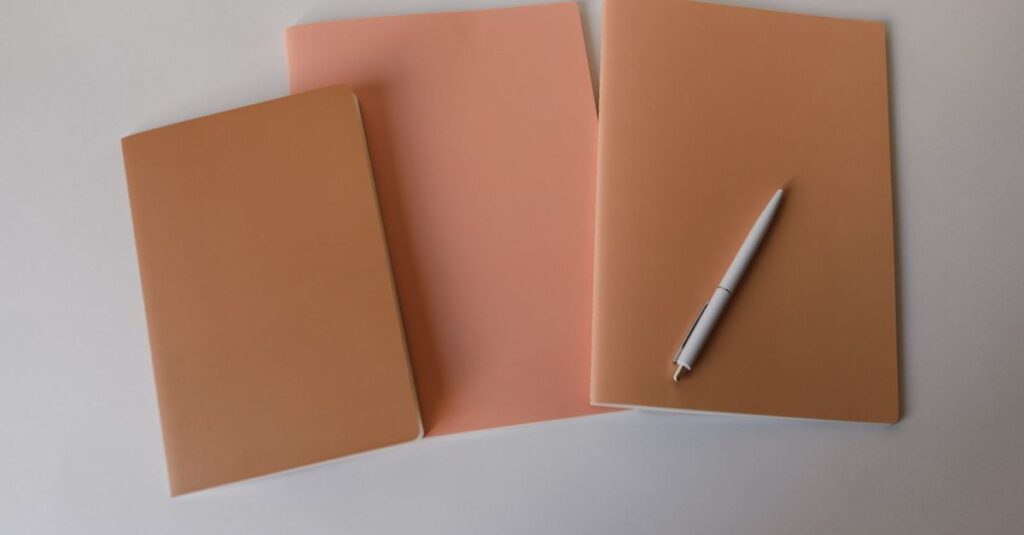
- Cover material (hardbound, soft-touch laminate, premium cardboard)
- Binding type (stitched, spiral, perfect)
- Fully custom interior layouts
It sounds complex, but a good manufacturer guides you through it. They’ll tell you when a design choice might weaken the binding or spike the cost unnecessarily. It’s a partnership.
Supplier Showdown: Brand vs. Manufacturer
Let’s be clear about the landscape. When you want “Classmate notebooks,” you’re often looking at two very different paths.
| Factor | Branded Retail Supplier (e.g., ITC Classmate) | Direct Manufacturer / OEM (e.g., Sri Rama Notebooks) |
|---|---|---|
| Primary Focus | Consumer retail market | B2B, institutional, bulk supply |
| Customization | Zero. You get the standard product. | Full customization. Logo, design, paper, binding, size. |
| Pricing Model | Fixed Retail Price (high margin) | Bulk wholesale pricing. Cost drops with volume. |
| Order Quantity | Any quantity, from 1 notebook upwards. | Minimum Order Quantities (MOQs) apply, typically 500+ for custom. |
| Lead Time | Immediate (from stock). | 4-6 weeks for custom orders; stock items faster. |
| Relationship | Transactional. You are a customer. | Collaborative. You are a client/partner. |
| Best For | Buying small quantities for personal use or tiny offices. | Schools, corporations, distributors, government tenders, anyone needing 1000+ units. |
The table makes it obvious, I think. If you need 50 notebooks tomorrow, go retail. If you need 5000 notebooks for the next school term or a corporate event, and you want control over quality and branding, you go direct to a manufacturer. The goals are completely different.
The Micro-Story: Why Specs Matter
Anita, 42, is the procurement head for a chain of coaching centres in Hyderabad. Last April, she ordered 20,000 “short notebook” from a new online B2B portal. The price was unbeatable. The notebooks arrived. The covers were flimsy, already curling at the edges. The paper was so thin that pens leaked through. By the mid-term exams, over a third of the notebooks were coming apart at the seams. Parents complained. Students were frustrated. The cost of replacing them, managing the complaints, and the hit to the centre’s reputation far outweighed the few rupees saved per book. She told me she spent more on couriers and apology emails than on the original order. Now she asks for paper samples and a physical prototype before every bulk order. Every single time.
That’s the risk. Bulk buying without vetting is a gamble.
How to Actually Vet a Notebook Manufacturer
So, you’re convinced you need to go the manufacturer route. Great. How do you pick one that won’t leave you with 10,000 unusable notebooks? It’s not just about the website.
First, ask for physical samples. Don’t accept just PDFs of the cover. Get the actual notebook in your hand. Write in it. Tear a page out (from the middle, not the end) and see how it responds. Check the stitching. Does the cover align perfectly with the pages?
Second, ask about their paper source. Do they mill their own? Do they have a reliable, named supplier? Consistency in paper is 80% of the quality battle. One bad batch can ruin an entire order.
Third, talk timeline and transparency. A good manufacturer will be upfront about their current capacity and give you a realistic production schedule. They’ll also have a clear process for quality checks at different stages — after printing, after binding, after packing.
Finally, look at their client history. Do they supply to other schools, government institutions, or known corporations? That’s a good signal. It means they’re used to meeting strict tender specifications and delivering at scale. It’s one thing to make nice notebooks; it’s another to reliably make 50,000 identical ones.
The product list is just the starting point. The real test is in the conversation that follows.
Frequently Asked Questions
Can I get notebooks exactly like Classmate?
Yes, and often better. We, and manufacturers like us, can produce notebooks with equivalent or superior specifications in terms of paper quality (GSM), binding durability, and cover strength. The difference is we can do it in your chosen size, page count, and with your custom branding on it. You’re not limited to their standard catalogue.
What is the minimum order quantity for custom notebooks?
It varies, but for fully custom jobs (your logo, your design), MOQs typically start at 500 to 1000 pieces. This is because of the setup time for printing plates and binding adjustments. For standard, non-customized notebooks, you can order much smaller quantities, sometimes as low as a carton (50-100 units), especially if it’s a size and ruling we keep in stock.
How long does production take for a bulk order?
For a customized bulk order (say, 10,000 pieces), you should plan for a 4 to 6 week timeline from the final approval of your design. This includes production, binding, quality control, and packing. Rush jobs are possible but cost more and can risk quality. Always plan ahead.
Do you export notebooks internationally?
Absolutely. We regularly supply bulk notebooks to markets in the Gulf, Africa, the USA, UK, and other parts of Europe and Asia. We handle the export packaging, documentation, and can work with your shipping agent or arrange freight. The process is standard for us.
What’s the difference between 54 GSM and 70 GSM paper?
It’s about weight and feel. 54 GSM is a standard, lighter writing paper. It’s functional but can have some show-through with darker inks. 70 GSM paper is noticeably thicker, more opaque, and feels more premium. It resists bleed-through better and is more durable. For heavy daily use or a corporate gift, 70 GSM is worth the slight increase in cost.
Wrapping This Up
The search for “classmate notebook” is, at its core, a search for reliability. You want a product that won’t fail. A supply chain you can trust. A partner who understands that your order isn’t just a transaction, but a piece of your own operation — whether that’s educating students or equipping a workforce.
The shift is simple but powerful: from buying a product to sourcing a solution. It means focusing on specs over brand names, on partnerships over one-time purchases, on total value over just the sticker price. It means knowing what questions to ask about binding and GSM, and knowing that the lead time is as important as the logo.
I don’t think there’s one perfect supplier for everyone. Probably there isn’t. But if you’ve read this far, you’re not just looking for a notebook. You’re looking for the confidence that comes with a thousand moving parts working exactly as they should. You’re just figuring out who to trust with that.
If the idea of cutting out the middleman and dealing directly with the factory floor makes sense for your next big order, it might be worth starting a conversation. We can at least get you the right samples to hold in your hand. That’s always the best first step.