So, Your Business Needs Stationery
You’ve got a budget. You need to order for your team, or a whole school, or a year’s worth of supplies. You sit down to create a list and your brain hits a wall. Right in that spot where you write ‘diaries and notebooks.’
You pause. Is there a difference? Should there be? Or are you just ordering the same thing with two different names because that’s what you’ve always done? Here’s the thing — most people in procurement have this exact moment of hesitation. The words get used interchangeably, but for a manufacturer, for a bulk buyer, they represent two completely different beasts with different jobs, different builds, and honestly, different price points.
And if you’re ordering thousands of units, getting this wrong isn’t just a small mistake. It’s a waste of money and a logistical headache. This isn’t about stationery semantics; it’s about getting what you actually paid for. If this sounds familiar, knowing the details might be worth a look.
The Heart of the Matter: What They’re For
Let’s start simple. A notebook is a tool for capturing. A diary is a tool for organizing.
Think about how you use them. A notebook is your blank slate. It’s where the meeting notes go, the brainstorm sketches, the random calculations on the margin, the to-do list you scribble and then lose. It’s chronological only in the sense that you write in it as things happen. It’s reactive. Messy. Essential.
A diary is proactive. It’s structured before a single word is written. Its primary function is to map time — days, weeks, months of a specific year. You open a diary to schedule a future meeting, to log what you did on a past Tuesday, to see your quarter at a glance. The blank space around the dates is for notes, sure, but the spine of the thing is the calendar.
I was talking to a procurement manager from a college last week — over a very quick phone call, actually — and she put it perfectly: “We give notebooks to students to learn in. We give diaries to staff to run the place.” She wasn’t wrong.
The Physical Difference: How They’re Built
This is where the manufacturing intent becomes obvious. You can’t just slap a calendar in the front of a notebook and call it a diary. The whole architecture is different.
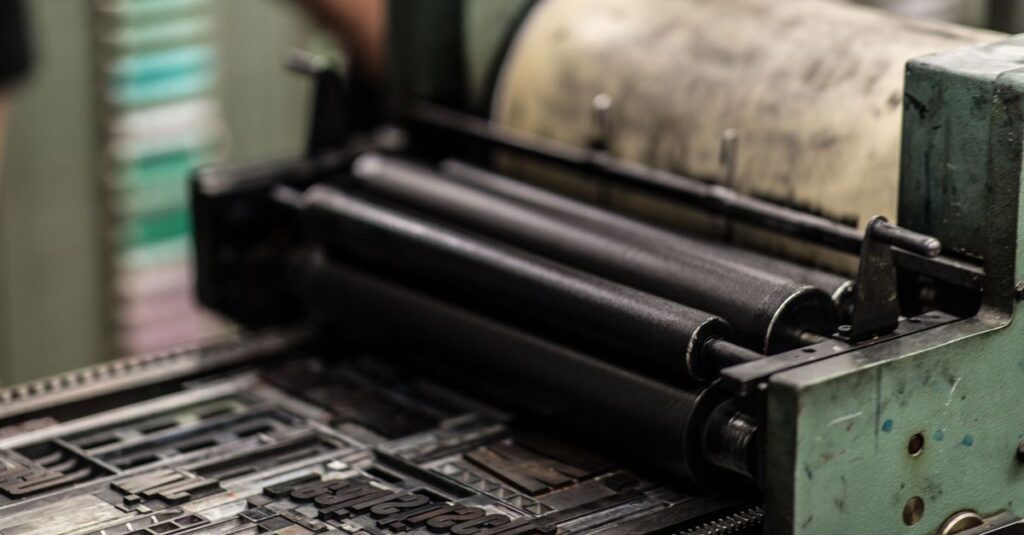
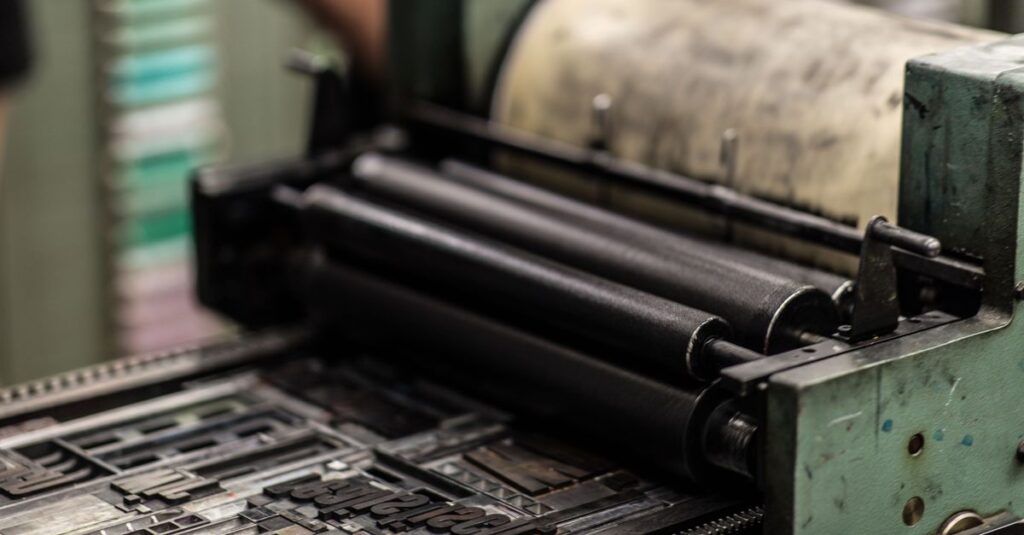
Notebook Construction: It’s built for volume and durability of writing. The focus is on the paper block — the GSM (that’s grams per square meter, basically the thickness), the ruling (single, double, unruled), the page count. The binding — stitched, spiral, perfect — is chosen to lay flat and survive being stuffed in a bag. The cover is often simpler, designed to protect. At our factory, a notebook line is about speed and consistency: high-quality paper, clean ruling, solid bind. That’s the core promise.
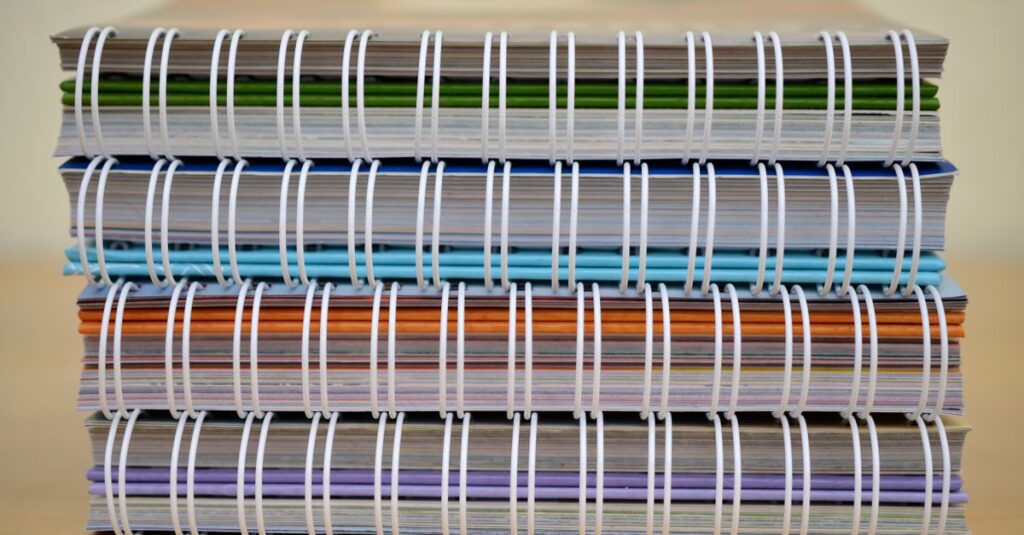
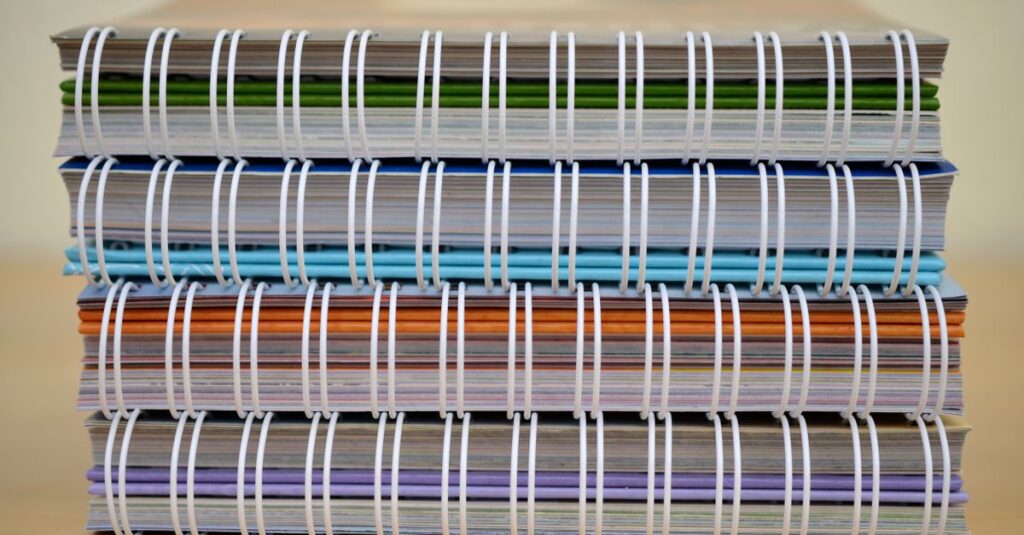
Diary Construction: Here, the print work is king. Before binding even starts, you’ve got complex, precise calendar printing. Month-to-view, week-to-view, maybe even hour-by-hour scheduling blocks. Then you add the extras: reference pages (holidays, metric charts, phone codes), maybe tabbed sections, often a ribbon marker. The cover isn’t just protection; it’s branding. It’s the thing that sits on a desk all year. The binding has to be extra robust because it’ll be opened and closed daily. It’s a more complex, layered product.
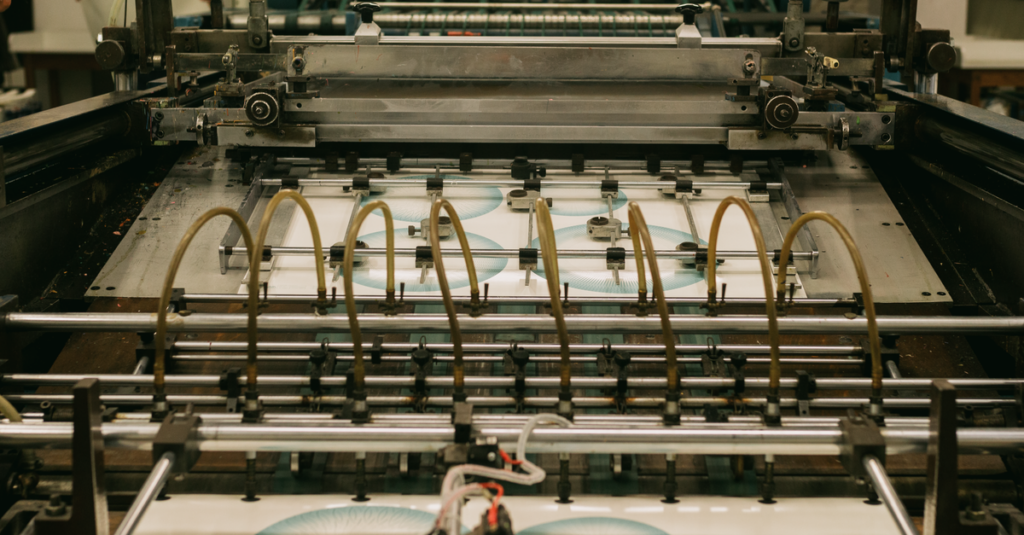
The silence in a factory changes between these lines. Notebooks have a rhythmic, pulsing sound. Diaries have more focused, precise bursts.
A Side-by-Side Look for Buyers
Okay, let’s make this practical. You’re comparing two quotes. This table breaks down what you’re actually comparing.
| Feature | Notebook | Diary / Planner |
|---|---|---|
| Primary Function | General writing, notes, sketches | Time management, scheduling, annual planning |
| Core Structure | Blank or ruled pages in sequence | Pre-printed calendar for a specific year |
| Page Layout | Uniform (e.g., all single-ruled) | Mixed (calendar views, notes pages, reference) |
| Branding Focus | Cover & maybe header/footer | Cover, calendar pages, dividers – high visibility |
| Production Emphasis | Paper quality & binding durability | Print precision & complex binding |
| Use Case | Students, training, meeting notes | Executives, managers, promotional gifts |
| Order Timing | Anytime (non-date specific) | Q3/Q4 for the following year |
The Real-World Choice: Who Needs What?
So how does this translate to your order list? Let’s walk through it.
For Schools & Colleges: Your bulk need is notebooks. Lots of them. Different sizes (Long, Short, Crown), different rulings (Four-ruled for young kids, single-ruled for older). You’re buying writing tools. Diaries here are a niche product — maybe for faculty or as a prize. The budget focus is 95% on notebooks.
For Corporate Offices: This is the split. You need notebooks for everyone — for meetings, trainings, desk notes. Standardized, branded, functional. But you also need diaries for managers, executives, clients. The diary becomes a premium item. It’s a daily brand reminder. I’ve seen companies spend more on 500 custom diaries than on 5000 standard notebooks. Because the perceived value is different.
For Distributors & Wholesalers: You need to stock both, but understand the cycle. Notebooks sell year-round. Diaries have a sharp seasonal peak. You place your huge diary order with a manufacturer like us in August, for delivery by October. Miss that window, and you’re stuck with stock labeled for the wrong year.
Expert Insight
I was reading an industry report last month and one line stuck with me. It said that for bulk buyers, the biggest cost isn’t the unit price — it’s the cost of wrong application. Giving a beautiful, expensive desk diary to a field engineer who needs a rugged, pocket-sized notebook to scribble measurements is a waste. Giving a flimsy notebook to a CEO for their annual planning makes your brand look cheap. The expert insight isn’t a fancy manufacturing stat; it’s this: match the tool to the task. It sounds obvious. In 40 years, I’ve seen it ignored more often than you’d think.
A Quick Story About Getting It Right
Priya, 28, is a procurement officer for a chain of private schools in Hyderabad. Last July, she ordered 10,000 “premium notebooks” for the new academic year. The sample was gorgeous — thick paper, leather-look cover. They arrived in August. By October, the teachers were complaining. The books were too heavy for schoolbags, the fancy covers got scuffed instantly, and the pages were so thick they ran out of them too fast. She’d bought diaries dressed as notebooks. Priya didn’t make that mistake again. She learned that for a 5th grader, durability and page count trump premium feel every time.
Customization: Where Intent Gets Amplified
This is where the diary vs. notebook conversation gets critical. When you put your logo on it, you’re locking in the intent.
Customizing a notebook is often about utility branding. Your logo on a cover, maybe your colors on the header. It says, “We provide the tools to get the work done.” The value is in the daily use.
Customizing a diary is prestige branding. It’s a gift. It sits on a desk for 365 days. You’re not just putting your logo on a notepad; you’re putting it on someone’s schedule, their plan for the year. The customization is deeper — logo on the cover, on the calendar pages, maybe even on the pen loop. The paper might be higher GSM, the binding more luxurious.
The manufacturing process for each is different, too. A custom notebook run might be about changing cover stock and a print plate. A custom diary run involves messing with the entire interior print template. It’s a bigger conversation, and it starts much earlier. If you’re thinking about custom printing for your business, knowing which product you really need is the first, non-negotiable step.
Frequently Asked Questions
Can a notebook be used as a diary?
Sure, you can use anything to write down appointments. But it’s inefficient. You’d have to manually draw out calendars, and you lose the at-a-glance planning that a pre-printed diary gives you. For personal use, go for it. For a business supplying staff, it looks unprofessional.
Why are diaries often more expensive than notebooks?
Two reasons: complexity and content. The printing is more intricate (all those calendar grids), there are often more components (tabs, markers, extra pages), and they’re tied to a yearly cycle, which involves more planning and risk for the manufacturer. You’re paying for that structure.
Should we give diaries or notebooks to employees?
Depends on the role. Give notebooks to most staff for general notes and meetings. Give diaries to those who need to manage schedules, deadlines, and appointments — managers, project leads, salespeople. Many companies do both: a standard notebook and a desk diary for planning.
What’s the best time to order custom diaries?
If you want them by January, you need to be speaking to your manufacturer by July or August at the latest. Design, proofing, production, and shipping take months. The good manufacturers’ slots fill up fast. Ordering notebooks is more flexible — you can usually turn those around much quicker.
Are there products that are a hybrid of both?
Yes, sometimes called “notebook planners” or “weekly notebooks.” They might have a few calendar pages in the front followed by mostly blank pages. They try to bridge the gap. In my experience, they often end up being a compromise that doesn’t excel at either job perfectly, but they can work for people who want minimal structure.
Wrapping This Up
Look, at the end of the day, paper is paper. But intention isn’t. A diary and a notebook serve two different masters. One masters time, the other masters thought.
When you’re spending company money, or planning a school’s annual stationery, that distinction matters. It matters for your budget, for your logistics, and for how your brand is perceived when that item is used every single day. I don’t think there’s one perfect answer for every business. Probably there isn’t. But if you’ve read this far, you already know the difference — you’re just figuring out how to apply it to your next purchase order.
And sometimes, the best next step is just to talk to someone who’s been making both for four decades. That conversation often clarifies things faster than any blog post can.