You need cheap notebooks. I get it. Your budget is tight, and you’ve got a spreadsheet open right now, trying to make the numbers work for a school, a corporate giveaway, or a massive government order. But here’s the thing that hits you after the third quote comes in: “cheap” can mean two wildly different things. It can mean a lower price, or it can mean a massive headache. Thin paper, covers that curl, bindings that give up after a week. The real question isn’t just about finding a supplier. It’s about finding a supplier who understands that your reputation is on the line with every book you hand out. You’re not just buying notebooks; you’re buying peace of mind. If this sounds familiar, then the way manufacturers think about cost might surprise you.
The Real Math Behind “Cheap” Notebooks
Look, I’ve been in too many meetings where the only number that matters is the unit price per notebook. It’s a trap. It feels logical, right? You divide the total cost by the number of units. Lowest number wins. Except it doesn’t. Not really. The hidden math starts after delivery. It’s the reprints because the logo is off-center. The complaints from teachers because the paper is so thin ink bleeds through. The 20% of a shipment you have to write off because the spines cracked in transit. That’s not cheap. That’s expensive. So the first thing you need to do is stop thinking about price. Start thinking about cost-per-use. A notebook that costs 15 rupees but falls apart after a month of student use is a worse investment than one that costs 20 rupees and lasts the whole term. It’s not a stationery purchase; it’s a procurement strategy. And most people get the strategy wrong from the start.
Paper, Binding, and the Stuff Nobody Talks About
Let’s get specific. Why do some notebooks feel flimsy and others don’t? It’s usually three things.
- Paper GSM (Grams per Square Meter): This is the weight of the paper. Standard writing paper is around 54-58 GSM. Go below 50, and you’re basically buying tracing paper for writing. It ghosts, it tears. A manufacturer cutting costs here is a red flag. Ask for a sample. Hold it up to the light.
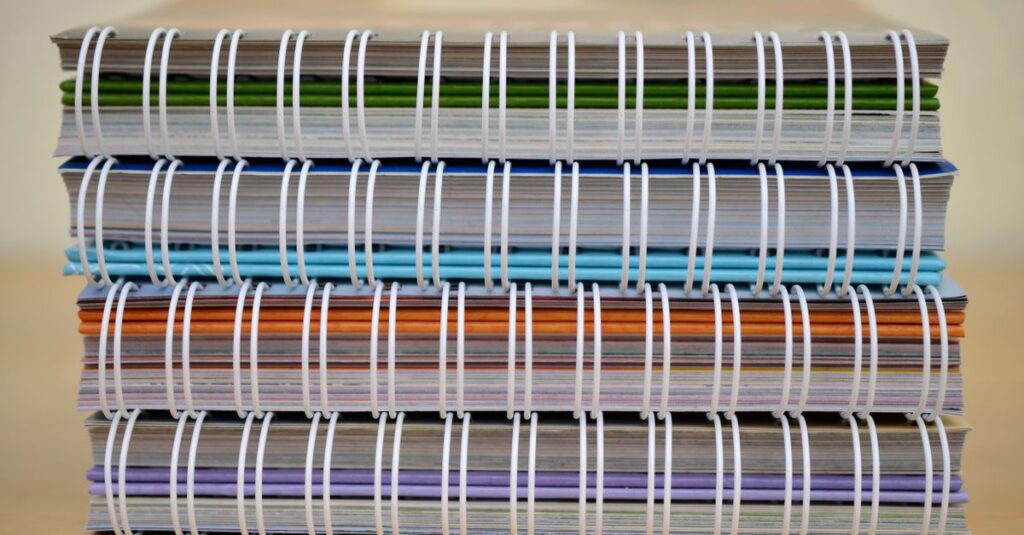
- Binding Type: Stitched binding is classic and durable. Spiral binding lays flat, which is great for students, but the wire can get bent. Perfect binding (glued spine) is cost-effective for thicker books but can crack if the glue is poor. The binding choice should match how the book will be used, not just what’s cheapest that day.
- Cover Stock: That floppy, glossy cover? That’s often 180-200 GSM art paper. It looks shiny but offers zero protection. A slightly thicker, matt-finished cover (say, 250+ GSM) costs a fraction more but makes the book feel—and be—infinitely more durable.
The point is, a good manufacturer doesn’t just pick the cheapest option for each part. They balance them. They know that a slightly better cover can compensate for a standard-weight paper, keeping the overall book cost-effective but still sturdy. It’s a puzzle. And if your supplier isn’t talking to you about this puzzle, you’re just getting a quote, not a solution.
A Quick, Real Story About Getting It Wrong
I was talking to a procurement manager for a chain of coaching institutes last month — over a very rushed coffee, actually. Let’s call him Vikram. He’d switched to a new, “cheaper” supplier for their annual student kits. The unit price was 12% lower. Win, right? Fast forward two months. His office was flooded with calls. Parents complaining that pages were falling out of the notebooks, that the ruled lines were faint and uneven. The supplier’s response? “That’s within tolerance for the price point.” Vikram had to do a partial refund to thousands of students. The “savings” evaporated, along with a chunk of trust. He looked tired. Not just long-day tired. I’ve-screwed-up-and-everyone-knows-it tired. The silence after he told me that was heavy. He didn’t need me to tell him he’d messed up. He just needed to know it wouldn’t happen again.
Bulk vs. Custom: Where the Real Savings Hide
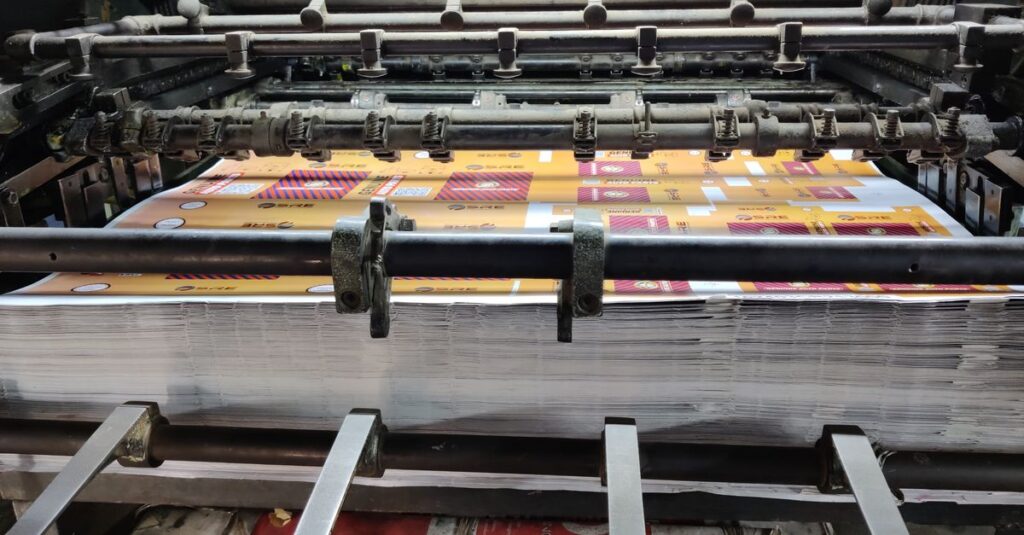
Okay, so you want cheap notebooks. The most powerful lever you have isn’t haggling over paise. It’s volume and simplicity. Manufacturers like us run on efficiency. A long, uninterrupted print run of one standard notebook is the cheapest thing we can produce. Every change — a new cover design, a different ruling, a special page count — costs money. It stops the machine, changes the plates, recalibrates. So here’s the expert insight you didn’t ask for: your biggest savings come from standardizing. Can all your schools use the same ruling? Can your corporate diaries for five departments share one cover template with just a logo swap? The closer you can get to our standard catalog—like our Long or Crown size notebooks in 92 or 200 pages—the more that “cheap” price becomes a real, sustainable number. Customization is fantastic for branding, but it’s a premium. If cheap is the goal, start with the standard stuff and customize only what you absolutely must.
Expert Insight
I was reading an industry report last year, and one line stuck with me. It said that for bulk buyers, the single biggest predictor of total cost wasn’t the paper market price. It was the number of change orders after the initial specs were locked in. Every “just one more tweak” email adds cost. I don’t have a cleaner way to put it than that. The most cost-effective clients are the organized ones. They know what they need, they send clear, final artwork, and they trust the process. That relationship, more than any commodity price, is what keeps costs down year after year. It turns a transaction into a partnership. And that’s the only way “cheap” lasts.
Comparison: Standard Bulk Order vs. Fully Customized
Not sure which path saves more? Let’s break it down.
| Factor | Standard Catalog Notebooks | Fully Customized Notebooks |
|---|---|---|
| Unit Cost | Lowest possible. Economies of scale on fixed designs. | Higher. Includes setup fees, plate costs, and shorter print runs. |
| Lead Time | Short (often 2-3 weeks). Inventory or fast production. | Longer (4-6+ weeks). Design, proofing, and setup add time. |
| Minimum Order Quantity (MOQ) | Lower. Can be as low as a few hundred for some standards. | Higher. Often 1000+ units to justify setup costs. |
| Branding | Limited or none. May have generic or manufacturer cover. | Full control. Your logo, colors, and custom cover design. |
| Best For | Internal use, student supplies, giveaways where brand isn’t key. | Corporate gifts, branded merchandise, premium client offers. |
| Hidden Cost Risk | Low. Proven, tested product with known quality. | Higher. Proofing errors or design flaws can ruin a batch. |
The table makes it obvious, right? If your primary need is functional, durable notebooks at the best price, the catalog is your friend. Use customization for where brand impact matters most. Trying to make a fully custom notebook “cheap” is where most projects go over budget.
How to Actually Talk to a Manufacturer (Without Wasting Time)
Right. You’re ready to get a quote. Do NOT just email saying “We need cheap notebooks.” You’ll get a dozen generic replies and waste a week. Be specific. It helps us help you faster and gets you a comparable quote.
- Quantity: Give a real range. “Around 10,000 units” is better than “bulk.”
- Size: Know your size. Long (27×17 cm)? Short (19×15 cm)? A4? If you don’t know, say what it’s for — student notes, account ledgers — and we can suggest.
- Page Count: 92 pages? 200? This is a huge cost driver.
- Ruling: Single Ruled (SR)? Unruled (UR)? Four Ruled (FR) for younger students?
- Customization: Do you need a logo printed? A full custom cover? If yes, have your print-ready artwork (high-res PDF) ready to share.
- Deadline: When do you physically need them delivered?
Armed with that, a real manufacturer can give you a real price in hours, not days. It also shows you know what you’re doing, which… well, it means we take you more seriously. And that often leads to better service. It’s the unspoken rule of this business. Anyway. The ball is in your court. You can keep searching for the magic low number, or you can start a conversation that might actually solve the problem for good.
Frequently Asked Questions
What is the cheapest type of notebook to manufacture in bulk?
Hands down, a standard-sized, single-ruled notebook with a basic colored cover and stitched binding. Think a classic 92-page Long notebook. No custom design, standard paper. The manufacturing process is streamlined, so the per-unit cost is lowest. This is the baseline for cheap notebooks that are still functional.
Can I get custom logo printing on cheap notebooks?
Yes, but there’s a trade-off. Adding a logo means a custom print run, which has setup costs. To keep it cheap, you need a high order volume (usually 5000+ units) and a simple, single-color logo. The more complex the print, the higher the cost. It’s often more cost-effective to order standard notebooks and use custom stickers or stamps for very small batches.
How does paper quality affect the price of cheap notebooks?
Massively. Paper is the single biggest material cost. Dropping from 58 GSM to 50 GSM paper can cut the price noticeably, but the writing experience suffers — ink may bleed, pages tear easily. A good manufacturer for bulk school notebooks will use a reliable 54-58 GSM paper. It’s the sweet spot between durability and cost. Always ask for the paper GSM in the quote.
What’s the typical lead time for a bulk order of cheap notebooks?
For a standard, in-stock item from a manufacturer’s catalog, 2-3 weeks for production and packing. For a fully customized order with new design proofs, allow 4-6 weeks minimum. Rush orders are possible but will always incur a significant cost premium, which defeats the purpose of finding cheap notebooks. Plan ahead.
Is it better to buy directly from a manufacturer or a wholesaler?
For true bulk (think thousands of units), go direct to a manufacturer like us. You cut out the middleman margin. For smaller quantities (a few hundred), a wholesaler might be easier as they consolidate stock from multiple factories. But if cheap price per unit at scale is your goal, manufacturers are the only way.
The Part Nobody Says Out Loud
Here’s the uncomfortable truth. Everyone wants cheap notebooks. But very few people are willing to accept the limitations that come with that low price. You have to choose: ultimate low cost, or specific branding and premium features. You rarely get both. The real skill in procurement isn’t finding a miracle supplier with magic numbers. It’s clearly defining what “cheap and good enough” means for your specific need — for your students, your employees, your clients — and then communicating that clearly to a partner who can execute it reliably. That’s it. The search for the perfect, dirt-cheap, gorgeous, indestructible notebook is a fantasy. The search for a trustworthy partner who makes a durable product at a fair price for your volume? That’s just good business. And if you’ve read this far, you’re not just looking for a product. You’re looking for that partner. The question is whether you’re ready to build that relationship instead of just chasing a quote.
If figuring out that balance for your next order sounds like a conversation worth having, we should probably talk.