Look, you’ve typed “copy shop near me” into Google a dozen times. You’ve walked into a few places with the same fluorescent lights and the smell of toner. You’re trying to get a thousand branded notebooks for your office, or five thousand for a school. And every time, you get the same look from the guy behind the counter — the ‘you’re asking for something I can’t do’ look.
Right. That’s the problem. Because you’re not actually looking for a copy shop. You’re looking for a notebook manufacturer. But nobody tells you that. So you keep searching for the wrong thing. If this sounds familiar, understanding what you’re really looking for might help.
The Copy Shop — What It Actually Does (And What It Doesn’t)
Here’s the thing. A copy shop is a retail service. It’s built for one-offs. A few flyers. A bound report. Maybe laminating something. It’s a great solution for small, immediate needs. But the moment you walk in with a bulk order request — like, “I need 2,000 notebooks with our logo by next month” — the entire system falls apart.
Their machines are designed for short runs. Their paper stock is generic. Their binding options are limited to what fits on a tabletop machine. The real headache? Their entire pricing model is retail. Which means per-unit costs that make a bulk order financially absurd. I’ve seen procurement managers get quotes for corporate diaries from copy shops and just laugh — it’s not even a viable option.
So why do people keep searching for “copy shop near me” for bulk work? I think — and I could be wrong — it’s because the word “copy” feels familiar. It feels local. It feels accessible. Manufacturing sounds big, industrial, far away. But that’s where the solution actually lives.
Expert Insight
I was talking to a school administrator last week — over coffee, actually — and she said something I keep thinking about. She’d been trying to get custom notebooks for her students for months, bouncing between local print shops. The quote she finally got was so high her principal told her to forget it. Then she found us. The line that stuck with me was: “I didn’t know I was looking for a factory. I thought I was just looking for a printer.” That gap in understanding is the whole problem.
What You’re Actually Looking For: Bulk Notebook Manufacturing
When you need notebooks in quantity — whether it’s 500 or 50,000 — you need a manufacturing operation. The difference isn’t just scale. It’s everything.
- Paper sourcing: Manufacturers buy paper in rolls or large sheets directly from mills. Copy shops buy pre-cut, retail-packaged paper.
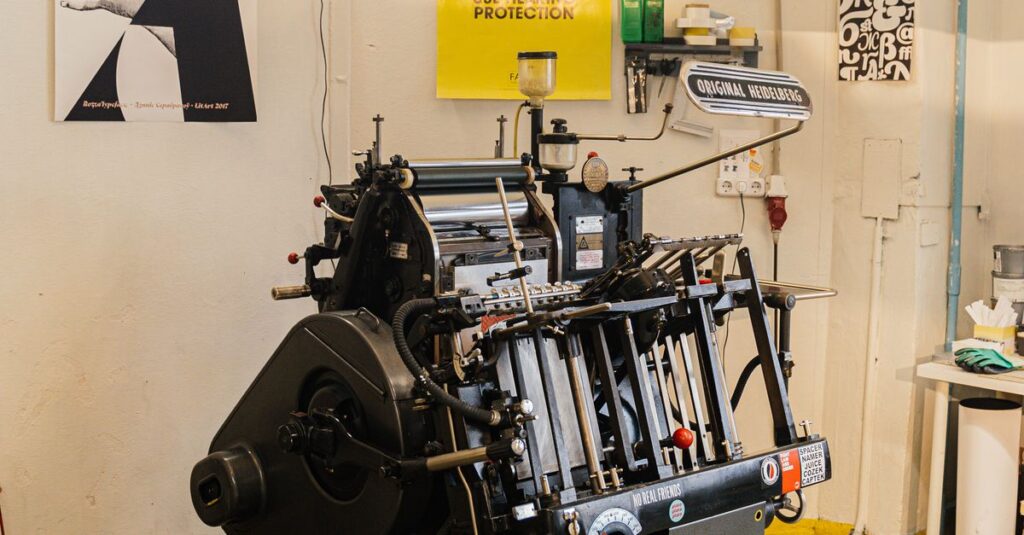
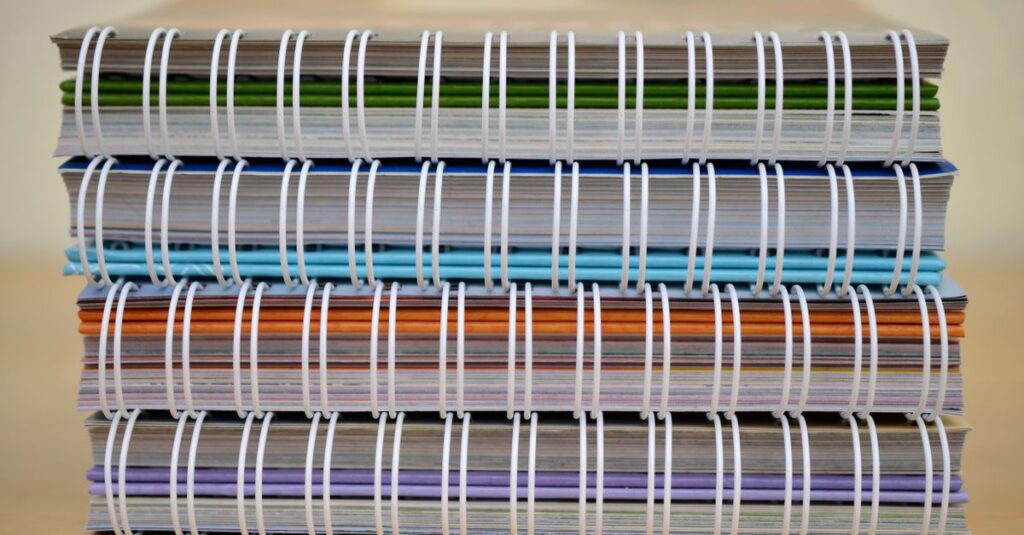
- Binding machinery: Industrial stitching machines, automated spiral binding lines, perfect binding stations. Not a single desktop unit.
- Printing method: Offset printing for large runs, which is cheaper per unit and higher quality for covers and branding.
- Production flow: An assembly line. Cutting, ruling, printing, binding, packing — all in one continuous process.
And honestly? The cost difference is not even subtle. It’s dramatic. A copy shop might charge you ₹50 per notebook for a simple 100-page book. A manufacturer, for the same quality, might charge ₹15. For bulk, that’s the only number that matters.
This is the part nobody says out loud: most local copy shops will outsource your bulk job to a manufacturer anyway. They become a middleman. And you pay for that.
The Real-Life Choice: A Quick Story
Anita, 42, procurement manager for a mid-sized corporate office in Hyderabad. She needed 1,500 branded notebooks for an annual conference. She searched “copy shop near me,” visited three in her neighborhood, got three quotes. All were between ₹65-₹80 per book. The budget was ₹40 per book. She spent two weeks stressed, thinking she’d have to cancel the order.
Then she emailed us. We quoted ₹22 per book for a 92-page, spiral-bound, logo-printed notebook. She ordered them. They arrived in 10 days. She told me later she felt almost embarrassed — she’d been looking for the wrong thing the whole time. I don’t think she was. She just didn’t know the industry terms.
Anyway.
Notebook Manufacturing vs. Copy Shop Services: A Clear Breakdown
| Factor | Notebook Manufacturer | Local Copy Shop |
|---|---|---|
| Primary Function | Bulk production of notebooks, diaries, stationery from raw materials. | Retail printing, copying, small binding jobs. |
| Scale Capacity | Thousands to hundreds of thousands of units per order. | Usually under 100 units per job. |
| Paper Source | Direct from paper mills; custom GSM and ruling. | Pre-cut retail stock; limited variety. |
| Binding Options | Industrial stitching, spiral binding, perfect binding, side stitching. | Usually only spiral or basic glue binding. |
| Printing Method | Offset printing for covers/branding; cost-effective for bulk. | Digital printing; high per-unit cost. |
| Customization Depth | Full control: cover design, paper type, page count, ruling, size, packaging. | Limited to logo placement on pre-made blanks. |
| Cost Structure | Per-unit cost drops significantly with volume. | Retail pricing; volume discounts minimal. |
| Lead Time | Set production schedules; predictable bulk delivery. | Variable; often delayed for outsourced bulk work. |
The table makes it obvious. If your need is more than a few dozen items, you’re in the wrong place searching “copy shop near me.” You need a different kind of supplier.
So, Who Actually Needs a Notebook Manufacturer?
Three main groups. And I see this pattern every single day.
Schools & Colleges: Annual notebook requirements. Thousands of units. Specific rulings (single ruled, four ruled for younger kids), specific page counts. They need consistency, durability, and a price that fits a tight educational budget. A copy shop can’t touch this.
Corporate Offices & Government Institutions: Branded diaries, custom notebooks for employees, training materials, conference kits. The branding isn’t just a logo stamp — it’s full cover design, inside pages with company information, specific quality paper. This is a branding exercise, not a printing job.
Distributors & Wholesalers: They’re buying to sell. Their entire business is margin. They need the lowest possible cost per unit, reliable supply, and the ability to private label. A copy shop is a retail outlet — it’s the opposite of their supply chain.
I’ll just say it. If you belong to any of these groups, your search should shift from “copy shop near me” to “bulk notebook manufacturer,” “custom diary supplier,” or “private label notebook production.”
How to Actually Find the Right Supplier (The Real Search)
Okay, let’s talk about the practical steps. Because knowing you need a manufacturer is step one. Finding the right one is step two.
First, forget local search. A notebook manufacturing unit isn’t typically in a city center. It’s in an industrial area. Rajahmundry, for example, has clusters of paper and printing units. So your search needs to be regional or national.
Second, look for specific capabilities. Can they do the ruling you need? Can they offer the binding you want (stitched vs. spiral)? What’s their daily production capacity? A factory like ours can do 30,000–40,000 bound notebooks a day. That’s the kind of number that matters for a school ordering 50,000 books before term starts.
Third, ask about paper. This is probably the biggest reason to go direct. Manufacturers control paper GSM quality. Standard notebook paper is around 54 GSM — smooth, bleed-resistant. Copy shops often use whatever multipurpose paper they have in stock.
Fourth — and this is critical — talk about customization depth. Can you change the cover completely? Can you have different rulings inside? Can you add your brand’s colors, messaging, even internal pages? For corporate orders, this is the only thing that matters.
The question isn’t whether you need this. It’s whether you’re ready to admit that what you’ve been searching for isn’t what you need.
The Part Everyone Misses: The Supply Chain
I think most people imagine a notebook appearing magically on a shelf. But the chain is long. Paper mill → converter → printer → binder → packager → distributor. A copy shop sits at the very end of that chain, buying finished blanks and maybe adding a print. A manufacturer sits at the middle, controlling the conversion, printing, and binding.
When you go direct, you cut out multiple mark-ups. You also get control over timing. Manufacturing has a schedule. You place an order, it goes into the production queue, it comes out. Retail printing is reactive — your job waits until the machine is free.
And for international buyers — Gulf countries, Africa, even the US and UK — this is the only way it works. You can’t ship retail-priced notebooks across oceans and still make a profit. You need the factory price.
Which is… a lot to sit with. But it’s the reality.
Conclusion
The search “copy shop near me” makes sense on the surface. You want something printed, you think of a printer. But the moment your need scales — into hundreds, thousands — you’re not in the retail world anymore. You’re in the manufacturing world.
The shift isn’t just about finding a different supplier. It’s about understanding what your project actually requires: bulk production, cost control, deep customization, and supply chain reliability. A local shop can’t provide that. A factory can.
I don’t think there’s one answer here. Probably there isn’t. But if you’ve read this far, you already know what you’re looking for — you’re just figuring out if it’s okay to want it. And it is.