So, What Is a Spiral Notebook, Really?
Look, you’ve probably held one. A hundred times. But when you’re the person in charge of ordering thousands of them for a school district or a corporate team-building event, the question gets bigger. You’re not just buying a thing to write in. You’re buying a tool. A piece of equipment. And you need to know what you’re getting.
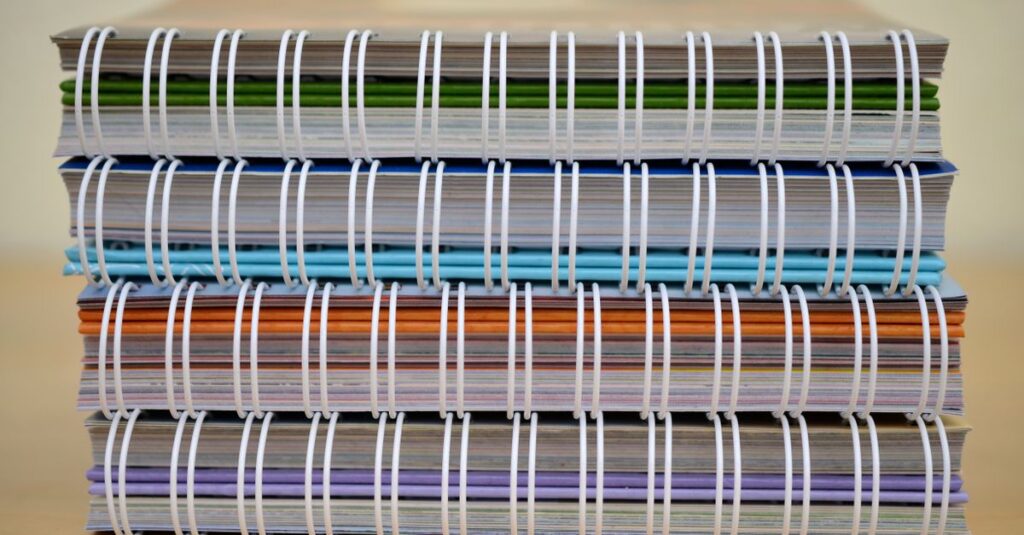
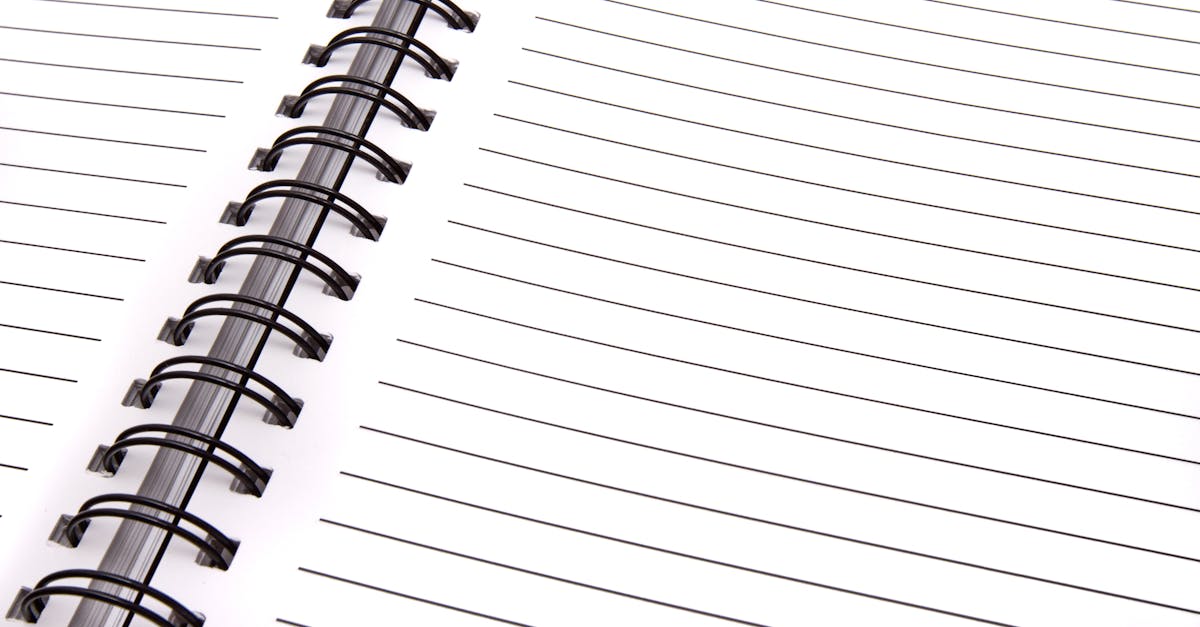
At its core, a spiral notebook is any notebook held together by a continuous coil of wire or plastic that’s threaded through pre-punched holes along the binding edge. The coil lets the pages lay completely flat — which is the whole point, right? No wrestling with the spine. You can fold it back on itself. It’s functional. That’s it.
But here’s where people get tripped up. They think “spiral” is one thing. It’s not. The type of coil, the paper weight, the cover stock, the ruling… these aren’t minor details. They’re the difference between a notebook that lasts a semester and one that falls apart in a month. They’re the difference between a cheap-looking giveaway and a premium branded product that actually makes your company look good. If this sounds familiar, and you’re sourcing for an institution, you might want to see how we build them from scratch. It changes how you buy.
Why It Works: The Psychology of the Flat Lay
Let’s talk about the coil for a second. Why does this matter so much? It’s not just about mechanics. It’s about friction — or the lack of it. When someone opens a book and has to press down on the pages to keep them open, there’s a tiny resistance. A stitched or perfect-bound notebook fights you, just a little. A spiral notebook gives up. It lays flat. It says, “Go ahead, write. I’m not in your way.”
This is why you see them everywhere from architecture studios to lab settings. The user needs the entire page, edge to edge. They need to sketch, diagram, take rapid-fire notes without the book fighting back. For students, it means being able to write comfortably on the left-hand page. A small thing. But when you’re doing it for hours, it’s the only thing.
I was talking to a procurement manager for a chain of coaching institutes last month — over a very bad coffee in their office, actually — and she said something obvious that most suppliers miss. “We order spirals not because they’re the cheapest,” she said. “We order them because when a kid’s notebook falls apart in week three, the parent calls us. Not the manufacturer. Us. The coil is a durability feature.” She’s right. The right binding isn’t an upgrade. It’s a preventative measure.
Anatomy of a Spiral: Breaking Down the Specs
Okay, let’s get into the weeds. If you’re evaluating suppliers or placing a bulk order, these are the parts you need to ask about. Every single time.
The Coil: Metal vs. Plastic
This is the first decision. Metal coils (usually steel, sometimes aluminum) are the classic. They’re rigid, they hold shape under heavy use, and they have a professional, industrial feel. They can be color-coated to match your branding, which is a nice touch. The downside? If they get bent, they’re a pain to fix and can snag on bags.
Plastic coils (PVC) are lighter, more flexible, and come in every color imaginable. They’re great for younger students — safer, less likely to get mangled into a sharp hook. They also feel “softer.” But. They can crack in very cold temperatures, and a cheap plastic coil will look… cheap. It’s a vibe thing.
Most manufacturers, including us, offer both. The choice isn’t about good vs. bad. It’s about who’s using it and where.
The Paper: It’s All About the GSM
This is where bulk buyers get quiet. They know they should ask, but they’re not sure what the numbers mean. GSM stands for Grams per Square Meter. It’s the weight of the paper. Thicker paper = higher GSM.
- 50-60 GSM: Your standard notebook paper. It’s fine for pencil and ballpoint pen. If someone uses a gel pen or a fountain pen, it’ll likely ghost (show through) or even bleed.
- 70-80 GSM: The sweet spot for most professional and academic use. Handles most pens without issue, feels substantial, and reduces ghosting significantly.
- 90+ GSM: Premium territory. This is for sketchbooks, high-end corporate diaries, or any situation where you’re making a statement about quality. The paper has a real heft to it.
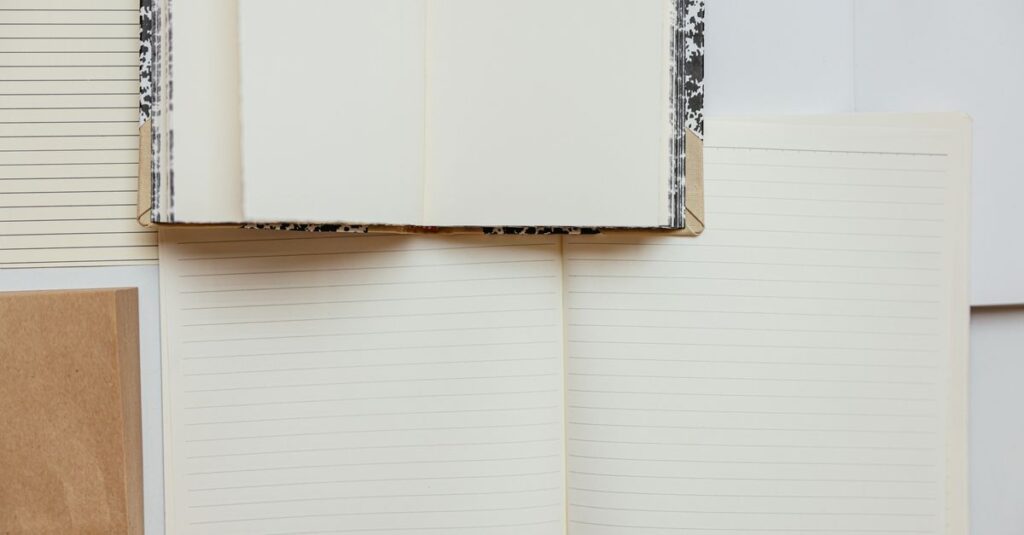
The ruling matters too. Single-ruled (SR), double-ruled (DR), unruled (UR), quadrille (cross-ruled) for accounting or graphing… it dictates the notebook’s function. A center-broad-ruled (CBR) notebook is built for specific ledger work. You wouldn’t give a graph book to a poet.
The Cover: More Than Just a Pretty Face
The cover is the armor. For school notebooks, it’s often a 250-300 GSM cardstock, laminated for spill resistance. For corporate notebooks, you’re looking at thicker board, sometimes with a soft-touch laminate or even a fabric cover for that premium feel. This is where custom printing comes alive — your logo, your colors, your messaging. It’s the first thing people see. Don’t cheap out on the first impression.
Expert Insight
I was reading a trade journal a while back — can’t remember which one, it was in a waiting room — and an industrial designer was talking about product interaction. He said the most successful tools are the ones that disappear in your hand. The user focuses on the task, not the tool. I think about that with spirals. A perfectly bound notebook reminds you it’s a book. A well-made spiral notebook just becomes an extension of your hand. The coil disappears. The page is just… there. We try to build to that feeling. It’s harder than it looks.
The Corporate vs. School Spiral: A Side-by-Side Look
You wouldn’t buy the same fleet vehicle for a sales team and a construction crew. Same principle here. Let’s compare what each use case typically needs.
| Feature | Corporate / Branded Notebook | Institutional / School Notebook |
|---|---|---|
| Primary Goal | Brand reinforcement, premium feel, longevity. | Durability, cost-effectiveness, standardization. |
| Cover Stock | Heavy board (300+ GSM), soft-touch lamination, foil stamping. | Stiff cardstock (250-300 GSM), basic lamination for wipeability. |
| Paper Quality | 70-80 GSM minimum, smooth finish, minimal ghosting. | 54-70 GSM, balanced for cost and pencil/pen use. |
| Coil Type | Color-matched metal coil for a professional look. | Durable plastic or coated metal coil for safety and rough handling. |
| Customization | Full custom cover design, branded header/footer on pages, specific rulings. | Standard rulings (SR, DR), simple cover imprint with school logo & name. |
| Order Driver | Perception, client gifting, employee onboarding. | Bulk pricing, contractual supply, annual procurement cycles. |
See? Different worlds. A procurement manager for a tech startup is solving for “brand feel.” A buyer for a municipal school board is solving for “unit cost per student per year.” Both are right. They just need different tools.
Real Life: The 10,000-Notebook Order
Let me tell you about Anika. She’s 34, handles procurement for a network of private schools in Hyderabad. Her office is on the second floor of an old building, and the AC is always a bit too cold. Last July, she had to replace their notebook supplier. The old one was late, the quality was slipping, and the principal’s were complaining. She needed 10,000 spiral-bound, 200-page, single-ruled notebooks for the upcoming academic year. Standard stuff.
But here was her unexpected detail: she wanted reinforced cover corners. The kids stuff these into overfull bags, and the corners get dog-eared and torn in the first month. It makes the whole school look shabby. It wasn’t on the spec sheet. It was something she noticed, walking the halls. A good manufacturer listens for that. A great one asks about it. We added a simple rounded, reinforced corner. Tiny cost increase. Massive difference in perceived quality. She re-ordered the next year without even putting it out to tender.
The point isn’t the corner. It’s the listening. Bulk buying isn’t about widgets. It’s about solving a hundred tiny, unspoken problems before they happen.
How Spiral Notebooks Are Actually Made (The Short Version)
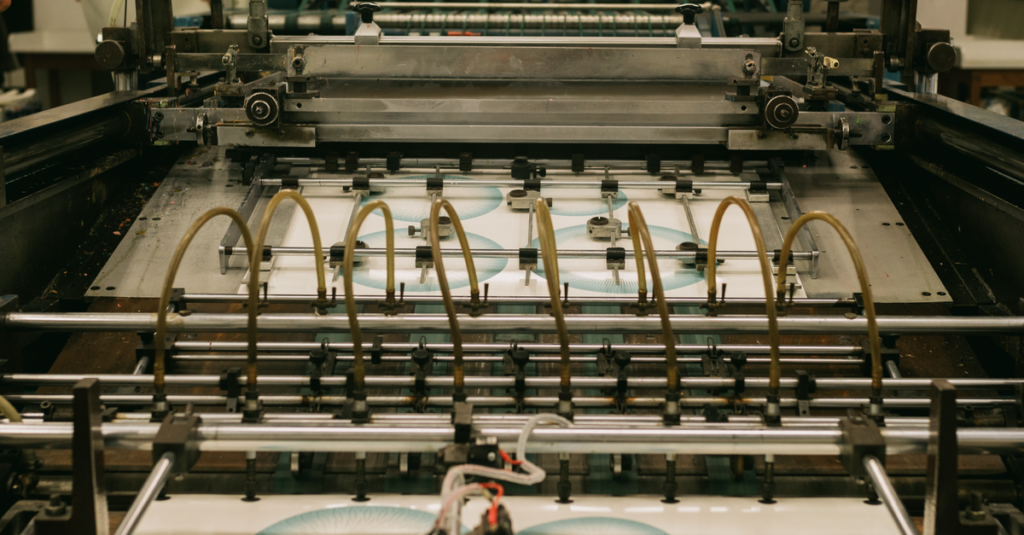
People think manufacturing is a black box. It’s not magic. It’s a process. For a spiral notebook, it goes like this:
- Paper Cutting & Ruling: Huge parent reels of paper are cut down to the notebook size — say, Long Size (27.2 x 17.1 cm). Then, they run through a ruling machine that prints the lines (single, double, etc.) on every sheet.
- Collating & Stapling: The printed sheets are gathered into sets (52, 92, 200 pages) and often stapled together at the spine in smaller “signatures” for stability. This is the inner block.
- Punching: This is the critical step for spirals. The entire inner block goes into a punching machine that punches a row of square or round holes along the binding edge. The precision here defines the entire product. Bad punching means a wobbly coil.
- Coil Insertion: A machine spins the metal or plastic coil and threads it through the holes. The ends of the coil are then crimped so it can’t unwind. This is where you see the difference between a smooth, even coil and a crooked one.
- Cover Application & Closing: The covers (already printed and cut) are placed on, and the entire notebook goes through a final press that closes the cover around the coil ends, giving it a clean, finished look.
It sounds straightforward. And it is, when you have the right machinery and, frankly, the experience to know where the process can drift. A machine running for 40 years teaches you things a new factory can’t know. We’ve seen every possible paper jam.
What to Ask Your Spiral Notebook Supplier
Don’t just ask for a price list. Have a conversation. Here’s what matters:
- Lead Time: “What’s your realistic turnaround for 5,000 units with custom printing?” Account for shipping, especially if you’re exporting.
- Minimum Order Quantity (MOQ): For custom work, there almost always is one. It’s how they cover setup costs. Know yours.
- Sample Policy: Always, always get a physical sample before you commit to a bulk order. A digital mockup tells you nothing about paper feel or coil quality.
- Paper Source: Ask about the paper mill. Consistent paper sourcing is the foundation of consistent quality.
- Packaging: How are 500 notebooks bundled? How are they palletized? Bad packaging leads to damaged goods, which leads to angry emails.
Right. If a supplier can’t answer these clearly, or gets defensive, that’s your answer. Move on.
Frequently Asked Questions About Spiral Notebooks
What is the difference between spiral binding and comb binding?
Spiral binding uses a continuous coil threaded through round or square holes. Comb binding (or Cerlox) uses a plastic “comb” with teeth that open and snap into rectangular holes. Spirals are more durable and lie flatter for writing. Combs let you easily add/remove pages, so they’re common for reports or manuals you might update.
Are spiral notebooks better for students?
It depends. For younger kids, plastic spirals are safer and more durable against rough handling. The flat lay is definitely better for writing. But for very young children learning to write, a stapled book can sometimes feel more stable on a desk. For middle school and up, spirals are almost always the better functional choice.
Can you print custom logos on spiral notebooks?
Absolutely. This is a huge part of the business. The cover is fully customizable with offset or digital printing. You can even print branded headers or footers on the interior pages. It’s the best way to turn a commodity into a branded asset for your company or school.
What is the most common spiral notebook size for offices?
It varies, but A4 (roughly similar to our Long Size at 27.2 x 17.1 cm) and A5 (close to Crown Size) are the international standards for professional use. A4 fits standard printed handouts neatly, while A5 is more portable for meetings. It comes down to how the notebook will be used in the workflow.
How many pages should a good spiral notebook have?
Again, use case. 70-100 pages is a sweet spot for a semester-long subject notebook for a student. 200-240 pages is common for a year-long project or corporate notebook. For a lab notebook or master log that needs to last, you can go up to 300+ pages, but the coil and cover need to be robust enough to support that thickness.
Look, It’s Not Just a Notebook
I think that’s the takeaway. When you’re buying one for yourself, you pick the color you like. When you’re buying ten thousand for an institution, you’re not buying stationery. You’re buying a user experience. You’re buying durability. You’re buying a silent representative of your brand or your school’s standard of quality.
The coil, the paper, the cover — they’re not specs. They’re promises. A promise that the pages won’t fall out. A promise that the pen won’t bleed through. A promise that it’ll survive a year in a backpack. Get those promises right, and the notebook disappears. It just works. Get them wrong, and it’s a constant, nagging problem.
There’s no single “best” spiral notebook. There’s only the right one for the job in front of you. And figuring that out is the whole game. If you’re trying to figure it out for a big order, and you want to talk to a manufacturer who’s been in the weeds for four decades, that’s what we’re here for. No magic. Just answers.