The 6 Subject Notebook: Why It’s the Go-To Choice for Schools and Businesses
You’re staring at a spreadsheet – or a list of stationery for the next school term – and you need notebooks. Lots of them. Not just any notebooks, but the ones that actually work. The kind that don’t fall apart in a student’s backpack by mid-term or look cheap in a corporate welcome kit. You know the feeling: you want durability, you want organization, and you need a price that doesn’t make the finance department wince. That’s the headache. It’s not about finding a notebook. It’s about finding the right tool for the job. And nine times out of ten, for people doing this in bulk, the right tool is a 6 subject notebook.
If you’ve been down this road before, you know the frustration of mismatched supplies. Maybe you’ve even thought about getting them custom-made, but figured it was too complicated or expensive. I’m here to tell you it doesn’t have to be.
So, What Exactly Is a 6 Subject Notebook?
Let’s get this out of the way first. It’s exactly what it sounds like: a single, bound notebook divided into six separate sections. Usually, you’ll find colored divider pages or tabs – think Maths, Science, English, History, etc. – keeping everything in one place. It replaces six individual notebooks. The magic isn’t in the idea, which is pretty straightforward. The magic is in the execution. How it’s bound. The paper quality. How those dividers are attached. That’s where a good manufacturer makes all the difference and a bad one creates a year’s worth of complaints.
You know what most people don’t realize? It’s not just about saving space. It’s about saving mental energy. For a student, it’s one item to remember, not six. For a teacher, it’s one item to check. For a business handing them out at a conference, it projects a sense of thoroughness and organization. It sends a message: we’ve thought about the details.
Why Schools and Businesses Keep Coming Back to This Format
Look, I’ll be direct. Nobody switches to a multi-subject notebook format on a whim. There’s always a reason. A pain point. And after 40 years of making these things, I’ve heard them all. The reasons usually boil down to three things: logistics, cost, and the simple fact that people lose stuff.
- Logistical Simplicity: Ordering, storing, and distributing one SKU is infinitely easier than managing six. Your warehouse manager will thank you. Your procurement process gets cleaner.
- Per-Unit Cost Efficiency: Manufacturing one larger, more complex notebook is often more cost-effective per usable page than producing six separate, smaller books. The binding, the cover – it’s all consolidated.
- The “One and Done” Factor: Students lose notebooks. Employees misplace them. When everything is in one book, the chance of losing an entire subject goes way down. It’s a simple, psychological win.
The real question isn’t whether the format is useful. It’s whether the specific notebook you’re buying is built to last. Because a flimsy multi-subject notebook is worse than six cheap ones – it’s a single point of failure for everything.
A Real-Life Snapshot
I was talking to a procurement manager for a chain of private schools in Hyderabad last month. Let’s call her Priya. She was tired – you could hear it over the phone. Tired of parents complaining that the branded notebooks the school supplied had pages falling out by October. Tired of teachers reporting that the plastic divider tabs snapped off. She needed a solution for the next academic year, for over 5,000 students, and she needed it to be bulletproof. Not fancy. Bulletproof. “The kids are not gentle,” she said, and laughed a tired laugh. That sentence stuck with me. It’s the whole job, right there.
Beyond the Classroom: How Businesses Use Them
Okay, so schools are the obvious fit. But here’s where it gets interesting. The corporate world has co-opted the 6 subject notebook in a big way. And it’s not for noting down six different subjects. It’s for project management, training, and brand building.
Think about it. You’re running a week-long training for new hires. Instead of handing them a stack of loose handouts and a generic notepad, you give them a custom-printed 6 subject notebook. Each section is pre-labeled: Company Values, Product Overviews, Role-Specific Notes, Goals, Q&A, Contacts. Immediately, you’ve structured their learning. You’ve elevated your brand. That notebook goes home with them. It sits on their desk. It’s a daily reminder of the investment you made.
Or take conferences. A custom notebook in the welcome bag is a tangible, useful item that doesn’t get thrown away like another flyer. I’ve seen companies use the six sections for different tracks of the conference, notes for different speakers, or even as a networking log. It becomes part of the experience. The benefit for you, as the buyer, is that you’re ordering a premium product that serves a genuine function. It’s not swag. It’s a tool with your logo on it.
Anyway. The point is, the use case has exploded. Which means the manufacturing needs to be just as versatile.
Making It Right: The Manufacturing Details That Actually Matter
This is the part most buyers don’t see, but they absolutely feel. You can’t just stitch six sections into a cover and call it a day. How it’s put together is the only thing that matters. Here’s what I tell people to look for – the non-negotiables.
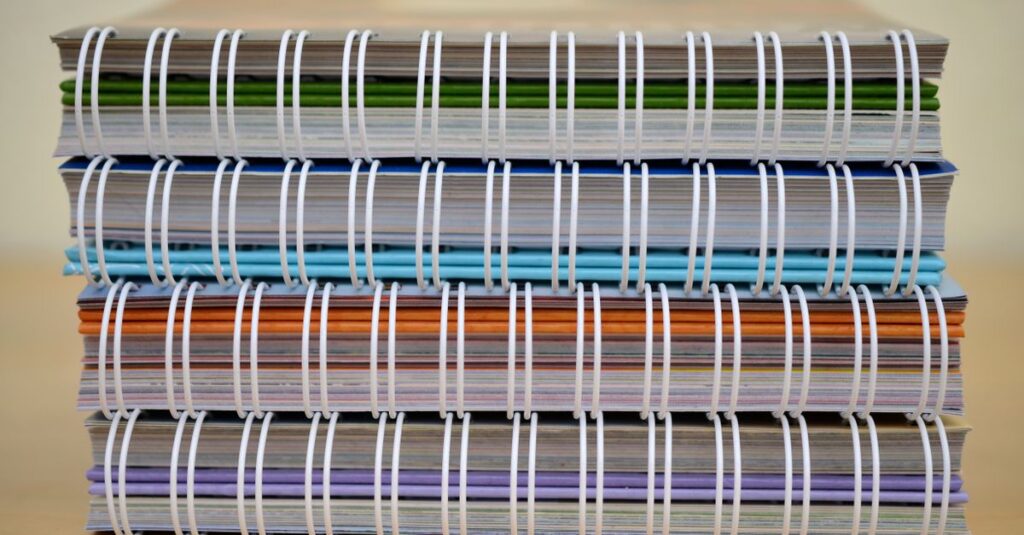
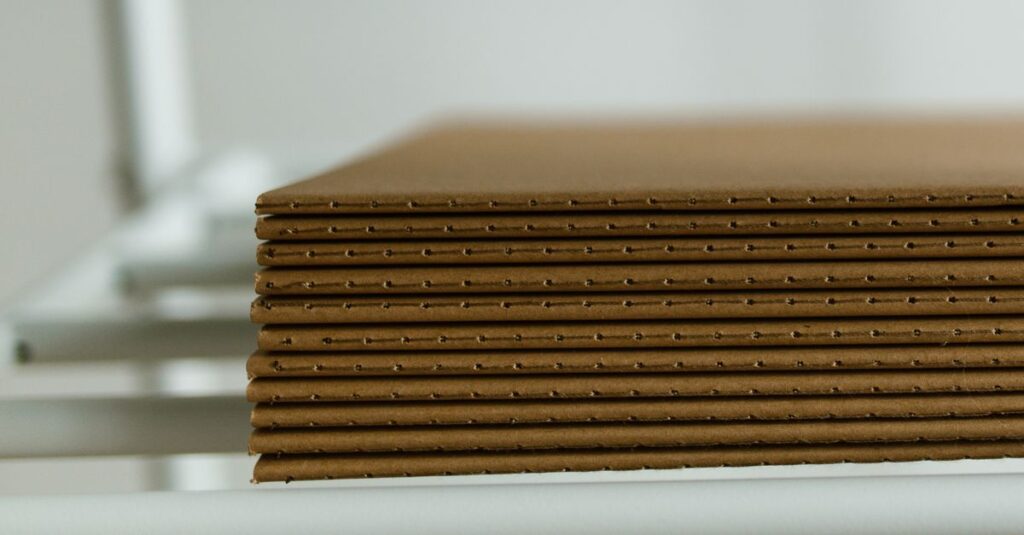
- Binding: This is the heart of it. Spiral binding (wire-o or plastic coil) is the most common and practical for a 6 subject notebook because it lays flat. But the coil gauge matters. A thin, flimsy coil will bend and warp. Perfect binding (glued spine) looks sleek, like a book, but can crack if the notebook is forced to lay flat constantly. Stitched binding is the gold standard for durability, but it’s a more involved process. For a school notebook that gets thrown in a bag? I’d lean towards a heavy-duty spiral every time.
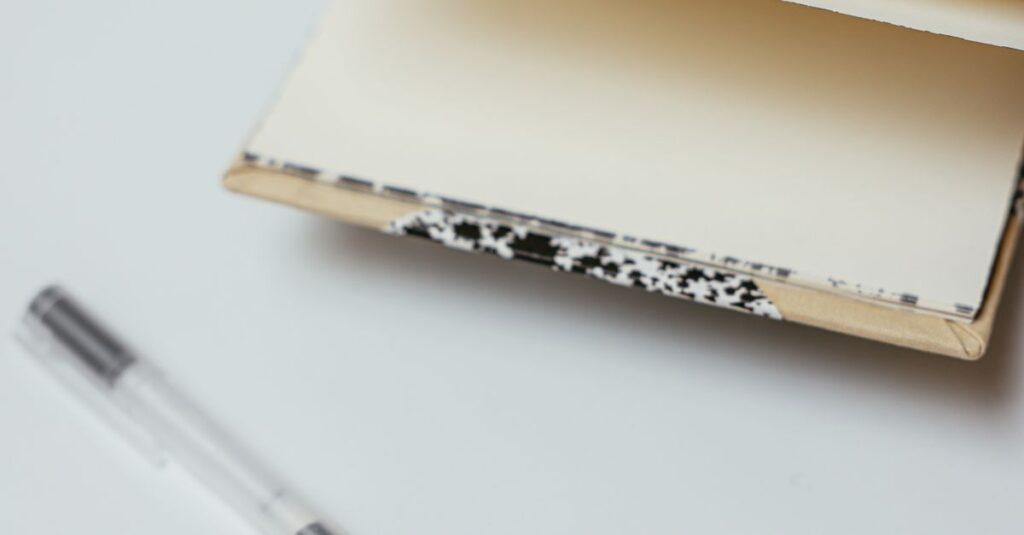
- Divider Attachment: The dividers can’t just be heavier paper. They need to be reinforced at the binding edge, often with a fabric tape or a special laminate. If they’re just glued or stapled, they’ll be the first thing to tear out. It’s a tiny cost addition in manufacturing that prevents a huge complaint later.
- Paper Quality (GSM): This is where cost-cutting happens, and it’s a terrible idea. For a multi-subject notebook that might hold notes, diagrams, and pasted-in printouts, you need paper that won’t ghost (show writing from the other side) or bleed through with a pen. In our shop, we won’t go below 70 GSM for this type of book. 54 GSM might be fine for a single-use scribble pad, but not for this. The writing experience has to be smooth across all 6 sections, or the whole product feels cheap.
I think the worst mistake a buyer can make is prioritizing the lowest price per unit above all else. You’ll get a notebook. It just won’t be a good one. And then you’ll be buying again next year, dealing with the same frustration. The slightly higher initial cost of a well-made book pays for itself in longevity and absence of headaches.
Expert Insight
I was reading an industry report last year – one of those dry, technical ones – and a line from a materials engineer jumped out. He was talking about binding fatigue, and he said something like: “The stress isn’t applied evenly. It concentrates at the point where organization meets utility.” He was speaking technically, but it’s the perfect metaphor for a 6 subject notebook. The stress point is literally where the divider meets the binding. That’s where every user interaction happens, flipping from section to section. If that junction isn’t engineered to handle repetitive stress, the entire organizational premise of the product fails. First. Every single time. Don’t quote me on the exact phrasing, but that idea – that the most useful feature is also the greatest point of failure – has guided our production for years.
6 Subject Notebook vs. 6 Single Notebooks: A Side-by-Side Look
Let’s make this concrete. Is it better to buy one 6-subject or six individuals? Here’s a blunt comparison.
| Factor | 6 Subject Notebook | 6 Single Notebooks |
|---|---|---|
| Procurement & Logistics | One SKU to order, track, and store. Massively simpler. | Six SKUs. Inventory management becomes complex. |
| Cost Per Page | Generally lower. Economies of scale in one cover, one binding. | Generally higher. You’re paying for 6 covers, 6 bindings. |
| Durability Risk | Consolidated. If the binding fails, all subjects are affected. | Distributed. One notebook can fail without impacting the others. |
| Portability for User | Superior. One item to carry, less to forget. | Six items to manage, higher chance of loss. |
| Customization Potential | High-impact. One cover design, custom section labels inside. | Limited. Customizing six separate covers is often prohibitively expensive. |
| Perceived Value | Feels organized, intentional, and premium. | Feels standard, like a collection of commodities. |
See the trade-off? It’s all about centralized efficiency versus distributed risk. For most institutional buyers – schools, corporations running training – the efficiency and cost wins are just too big to ignore. You mitigate the durability risk by choosing a manufacturer that knows how to reinforce those critical stress points. Which, if you’re considering it, is something we’ve built our entire process around at Sri Rama Notebooks.
The Customization Question: When Does It Make Sense?
Here’s the thing about custom 6 subject notebooks. Everyone thinks they’re only for massive orders. Ten thousand units. A year’s supply for a whole district. And yeah, that’s where the per-unit price gets really attractive. But it’s not the only time.
I think – and I could be wrong – that the real sweet spot is the mid-sized order where branding actually matters. A corporate order of 500-1000 pieces for a national sales meeting. A university ordering 2,000 for an incoming freshman class. The unit cost is higher than a generic bulk buy, sure. But the impact? It’s not even comparable. You’re not just buying stationery. You’re buying a branded artifact. You’re buying organized thought.
What can you customize? Everything. The cover design, obviously – with your logo, colors, messaging. The inside cover can have useful information printed directly on it. The divider pages can be pre-printed with the sections you need. The paper can have a custom header or footer on every page. The ruling inside each section can be different – maybe one section needs graph paper, another needs wide-ruled lines.
The question isn’t if you can do it. You can. The question is whether the value of having a tool perfectly tailored to your specific need outweighs the extra cost and lead time. For a lot of the businesses and institutions I talk to, once they see the mock-up, the answer is a quick yes.
Frequently Asked Questions
What is the standard page count for a 6 subject notebook?
There’s no single standard, which is why working with a manufacturer is key. For school use, a common setup is 200-240 total pages, divided roughly equally into six sections (about 30-40 pages per subject). For corporate or training use, page counts can be lower (e.g., 120 pages total) as the notes might be more temporary. We typically offer configurations from 120 to 320 total pages.
Can you use different paper types inside the same 6 subject notebook?
Absolutely. This is a major advantage of custom manufacturing. You could have two sections with lined paper, two with blank pages for sketching, one with graph paper, and one with a specific form printed. The manufacturing process sections the paper before binding, so using different stock for different parts is completely doable. It just needs to be planned from the start.
What’s the minimum order quantity (MOQ) for custom 6 subject notebooks?
This varies wildly. For a basic custom print (just your logo on a standard format), MOQs can start around 500 pieces. For fully custom designs with different internal papers and printed dividers, MOQs are usually higher, often 1,000 or more. The reason is setup cost for printing plates and binding jigs. It’s always best to discuss your specific needs directly to get an accurate MOQ.
How long does it take to manufacture a bulk order?
For a standard bulk order of a pre-existing design, lead time is typically 2-3 weeks after final confirmation. For a fully custom job from scratch – including design, sample approval, and production – you should budget 5-7 weeks. Always factor in extra time for shipping, especially for international orders. The key is to start the conversation early, especially before peak seasons like back-to-school.
Are 6 subject notebooks more expensive than buying separate notebooks?
On a per-page basis, usually no – they’re often cheaper because you’re combining materials. The upfront unit price for one 6-subject book is higher than the price of one single subject notebook, of course. But when you compare the cost of one 6-subject book to the total cost of six individual notebooks of equivalent page and quality, the multi-subject book almost always wins. The real value, though, is in the consolidated utility and reduced logistical cost.
Wrapping It Up
The 6 subject notebook isn’t a fancy gimmick. It’s a pragmatic solution to a very real set of problems: organizational chaos, logistical overhead, and budget pressure. For schools, it brings order. For businesses, it brings branded utility. The trick isn’t in deciding you need them. The trick is in finding a partner who understands that the stress point is the binding, that 54 GSM paper is a false economy, and that a divider needs to be more than just a colored page.
I don’t think there’s one perfect notebook for everyone. But if you’ve read this far, you’re probably not looking for just a product. You’re looking for a solution that doesn’t create new problems. You’re figuring out if it’s possible to get durability, organization, and value in one package.
It is. It just needs to be made the right way. If you want to explore what that looks like for your next order, we should talk.