Let’s get something out of the way first. The “A5” thing sounds technical. But it’s not. It’s just a way to talk about size without confusing everybody. Most people ordering notebooks for a school, office, or event don’t know what A5 is. They just need notebooks. That’s fine. But if you’re responsible for buying thousands of them, you should know what you’re getting. Because the size changes everything: how they’re used, how they’re packaged, how they feel in someone’s hand. And I’ll tell you this straight: the A5 notebook is probably the most misunderstood “standard” size out there. It’s the Goldilocks zone. Not too big, not too small. But that’s exactly why people mess up orders for it.
Here’s the thing: most corporate procurement managers think they know. They’ll ask for “A5 notebooks” expecting one thing, and then get something that feels completely different. And the confusion isn’t their fault. It’s ours. The notebook industry. We toss around these ISO terms like “A4” and “A5” without explaining what they actually mean for daily use. So let’s fix that.
If you’re looking to order custom notebooks, corporate diaries, or bulk stationery, understanding this simple size could save you a lot of back-and-forth emails. And maybe some money too. By the end of this, you’ll know exactly what an A5 notebook is, why it’s popular, and whether it’s the right fit for your next order. If this sounds familiar, looking at the actual products might help.
The A5 Notebook Size: What It Actually Means
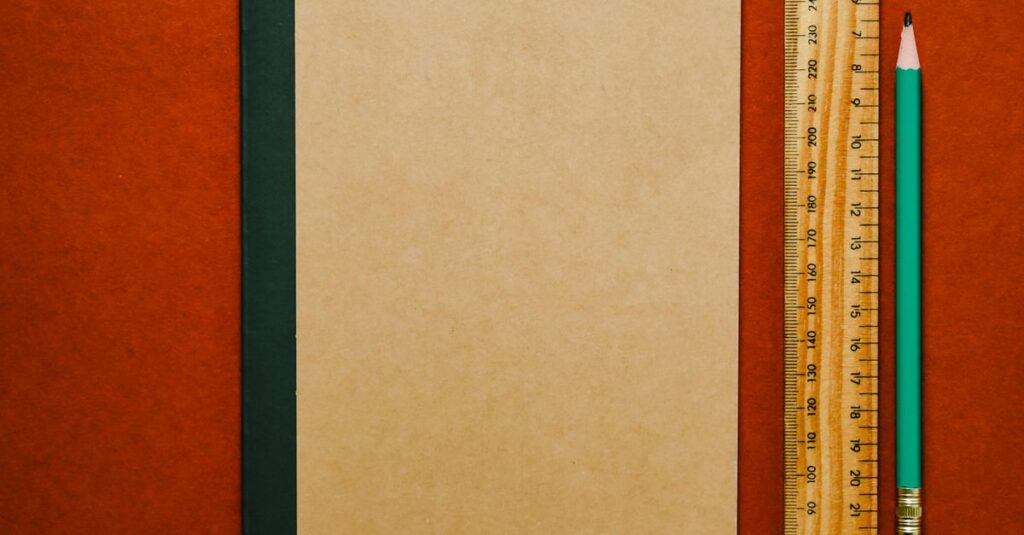
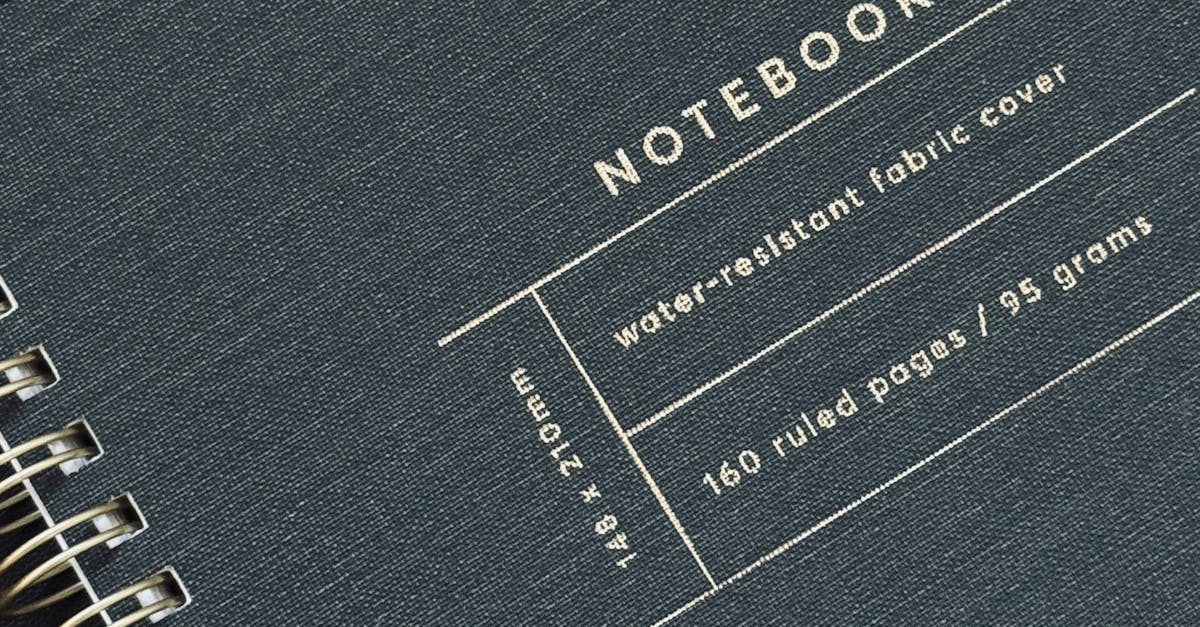
Alright. First, the numbers. In the ISO paper size system – the one used pretty much everywhere except North America – “A5” is half of an A4 sheet. An A4 sheet is the standard printer paper size: 21.0 cm by 29.7 cm. So, cut that in half, and you get A5: 14.8 cm by 21.0 cm.
In inches, that’s about 5.8 inches by 8.3 inches. Right. That’s the official measurement. But in the real world of notebook manufacturing, those numbers can wiggle a little. I’ve seen A5 notebooks advertised at 14.7 x 20.9 cm, or 15.0 x 21.2 cm. It depends on the trimming, the binding, the cover stock. The point isn’t the millimeter precision. The point is the feel. An A5 notebook fits comfortably in a bag, on a small desk, in your hand. It’s substantial enough to feel like a proper notebook, not a tiny notepad. But it’s not overwhelming like an A4 ledger.
Think about it this way: an A4 notebook is for writing reports, taking detailed notes, drawing big diagrams. An A6 notebook (half of A5) is for quick lists, pocket stuff. The A5 sits right in between. It’s for the daily thinker, the meeting note-taker, the planner, the journal writer. It’s the size you give someone when you don’t know exactly what they’ll use it for, but you know they’ll use it.
That’s the real reason schools, corporates, and event organizers keep asking for it. It’s versatile. It’s safe. It’s the notebook you can’t really complain about.
Where A5 Notebooks Actually Get Used
I was talking to a procurement manager from a tech company last week — over a call, actually — and she said something I keep thinking about. She told me they switched from A4 to A5 for their internal training workshops. The reason wasn’t cost. It was psychology. “The A4 felt like a test,” she said. “The A5 felt like a tool.” People opened it and started writing ideas, sketching workflows, without that blank-page intimidation. That’s a use case nobody talks about.
But let’s list the obvious ones.
- Corporate Training & Workshops: As above. Handouts, exercises, personal notes. The A5 is the perfect “participant notebook.”
- Conference & Event Gifts: Branded, custom-printed A5 notebooks are a staple. They’re premium enough to feel like a gift, compact enough to carry around the event.
- School Supplementary Books: Not the main class notebook, but for specific subjects, projects, or lab records. Many schools we work with order A5 for science practicals or art diaries.
- Personal Journals & Planners: For bulk orders by companies as employee wellness gifts or New Year diaries. It’s the classic journal size.
- Field Notes for Professionals: Sales teams, auditors, field engineers. They need a notebook that fits in a laptop bag or briefcase without adding bulk.
And here’s a micro-story that stuck with me.
Rohit, 28, a sales manager in Hyderabad. His company ordered custom A5 notebooks with the company logo and a soft-touch cover. He told me he carries it to every client meeting. He doesn’t use it to take notes about the client — he uses it to jot down his own thoughts right after the meeting, before he forgets the nuance. “The size is just right,” he said. “I can flip it open on the cab ride back. An A4 would need a table.” He didn’t know the dimensions in cm. He just knew it worked.
Which is the whole point. The use case isn’t about the numbers. It’s about the behavior the size encourages.
Expert Insight
I was reading something last month about product design and one line stuck with me. The designer said something like — the best tools don’t feel like tools. They feel like extensions of your intention. A5 notebooks, when done right, hit that spot. They’re not imposing. They’re inviting. The more capable someone is, the less they need a giant canvas to prove it. They need a space that gets the job done without ceremony. I don’t have a cleaner way to put it than that.
A5 vs. Other Common Notebook Sizes
Okay. So you’re thinking about ordering notebooks. Maybe you’ve used A4 before. Or you’ve seen those “Long” and “Short” books common in India. How does A5 stack up? Let’s put them side by side.
| Notebook Size | Dimensions (cm) | Common Use Cases | Feel / Portability |
|---|---|---|---|
| A5 Notebook | 14.8 x 21.0 cm | Corporate gifts, training notes, personal journals, field notes. | Highly portable. Fits in most bags. Comfortable to hold. |
| A4 Notebook | 21.0 x 29.7 cm | Official reports, detailed note-taking, student main notebooks, accounting. | Less portable. Often requires a desk or flat surface. |
| A6 Notebook | 10.5 x 14.8 cm | Pocket notebooks, quick lists, travel diaries, small gift items. | Very portable. Pocket-sized. Can feel too small for substantial writing. |
| Long Notebook (India) | 27.2 x 17.1 cm | Standard school notebooks, subject-specific books, rough work. | Traditional, familiar size for students. Bulkier than A5. |
| Short Notebook (India) | 19.5 x 15.5 cm | Smaller school notebooks, practice books, supplementary notes. | Compact, but proportion is different (more square-like). |
| Account Notebook | 33.9 x 21 cm | Ledgers, financial recording, large format data entry. | Not portable. Desk-bound, formal record-keeping. |
The table makes it obvious, but let me add one thing from experience. When a school or corporate asks for “A5,” they sometimes actually want what we call a “Short Notebook” – because that’s the size they’ve always used. The dimensions are close, but the feel is different. The Short Notebook is more square; the A5 is more rectangular, like a slim book. This matters for binding and printing layouts. So clarifying the exact dimensions you need — not just the name — saves a lot of time. Our printing team always asks for a sample or a drawing if it’s a first-time order. It avoids confusion.
Ordering A5 Notebooks in Bulk: What You Need to Know
If you’re a procurement manager, a wholesaler, or an institution looking to buy A5 notebooks in volume, here’s what you should think about beyond just the size.
Paper Quality: The standard writing paper we use is around 54 GSM. It’s smooth, takes ink well, doesn’t bleed. For A5 notebooks, this weight is important. Thinner paper feels cheap and can tear easily. Thicker paper makes the notebook bulky and expensive. 54 GSM is that sweet spot – durable but not heavy.
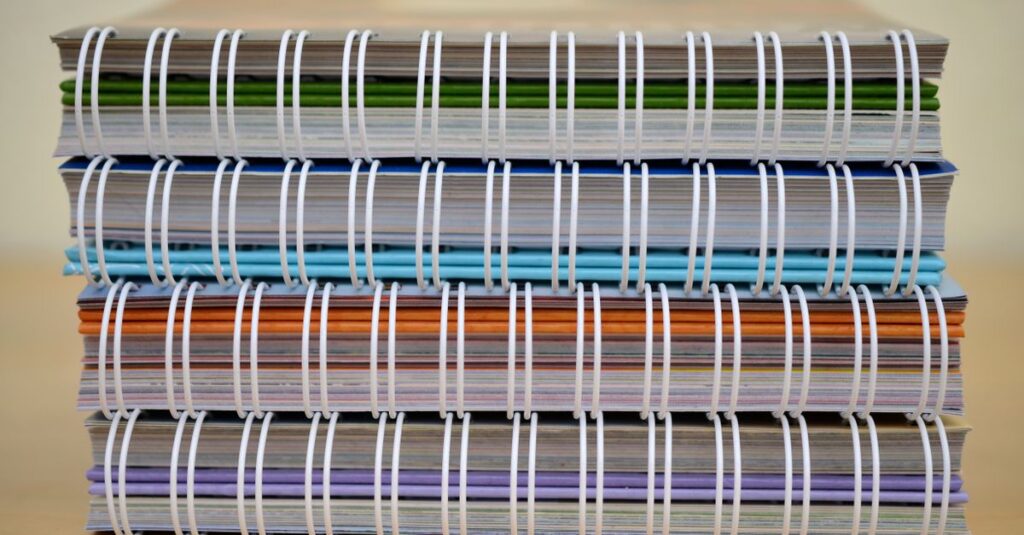
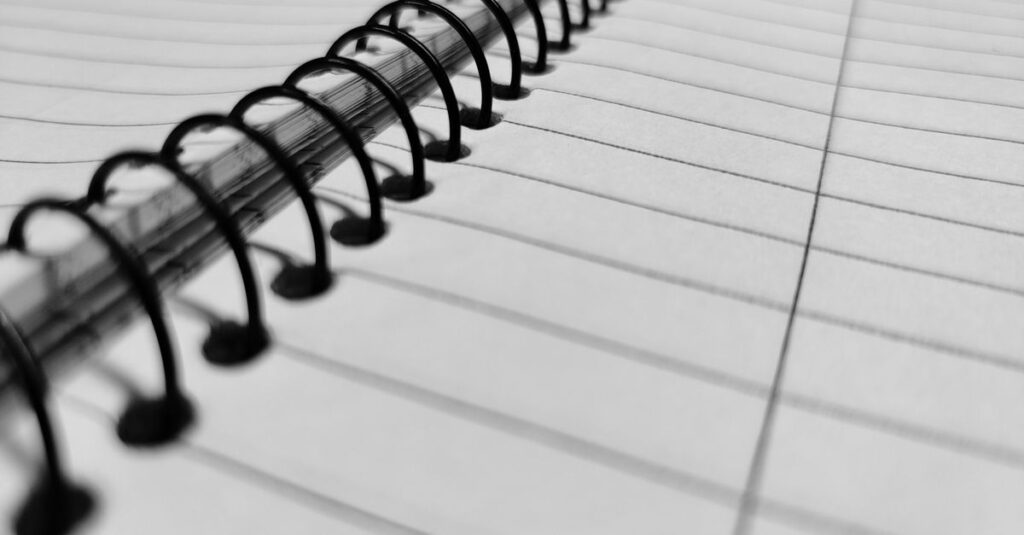
Binding: For A5, you have options. Spiral binding lets the notebook open flat, which is great for workshops where people are drawing or writing across two pages. Stitched binding (like side-stitched) gives a more traditional, professional look — good for corporate diaries. Perfect binding (where pages are glued at the spine) is cost-effective for large runs but doesn’t open flat. Choose based on how the notebook will be used.
Ruling: Single Ruled (SR) is the default for most writing. Unruled (UR) for sketching or free-form notes. Double Ruled (DR) or Four Ruled (FR) for specific school subjects. Center Broad Ruled (CBR) for margin notes. The ruling changes the utility of the notebook completely. An A5 notebook with Unruled pages becomes a designer’s sketchpad. With Four Ruled, it becomes a math or science notebook.
Customization: This is where A5 really shines for businesses. Logo printing, custom cover designs, branded headers on each page. Because the size is standard, the printing plates and setups are easier. We can run thousands of identical A5 notebooks with your branding without much hassle. The question isn’t whether you can customize it. It’s whether you’ve thought about how the customization will look on that specific canvas. An A5 cover has less space than an A4, so your logo and text need to be proportionally designed.
And one thing most people don’t realize: page count. A5 notebooks can come in 52 pages, 92 pages, 200 pages, even 320 pages. A 320-page A5 notebook is thick. It feels substantial, like a proper book. A 52-page one is lightweight, almost a notepad. Decide based on the perceived value you want to give. A training notebook might be 92 pages — enough for a 3-day workshop. A corporate gift diary might be 200 pages — enough for a year.
Manufacturing Insights: How A5 Notebooks Are Made
Look, I’ll just say it. From a manufacturing perspective, A5 is one of the most efficient sizes to produce. Because it’s a standard ISO size, the paper comes pre-cut or is easily cut from larger parent sheets (usually A4 or A3) with minimal waste. The binding machines are calibrated for these dimensions. The printing presses have standard templates.
At our factory, we can produce about 30,000 to 40,000 bound notebooks per day. A5 notebooks are a significant part of that output. The process is straightforward: cut paper to 14.8 x 21.0 cm, collate the pages, add ruling if needed, stitch or bind, attach the cover, trim, pack. Because it’s routine, the quality is consistent. And that consistency is what bulk buyers rely on. You don’t want one batch of notebooks to feel different from the next.
For custom orders, the cover printing is done separately. We use offset printing for large runs, digital for smaller, more complex designs. The cover stock matters — a thicker cover makes an A5 notebook feel more premium, which is often what corporate clients want. A thinner cover keeps costs down for school orders.
The real headache — actually, that’s not the right word. The real nuance is in the finishing. How sharp are the corners? How smooth is the spine? Does the notebook lie flat when open? These small things change the user experience more than the dimensions themselves. And they’re things we check manually at multiple stages. Because an A5 notebook that doesn’t open properly is just frustrating.
Common Mistakes When Ordering A5 Notebooks
I’ve seen this happen enough times now that it’s not coincidence. Three things go wrong most often.
1. Confusing A5 with Similar Sizes: As mentioned, people think “A5” and receive something that’s actually a “Short Notebook” or even an “A6.” Always ask for the exact dimensions in cm or inches from your supplier. Or better, ask for a physical sample before confirming the bulk order.
2. Over-specifying or Under-specifying Paper: Some clients, wanting a premium feel, ask for 70 GSM paper in an A5 notebook. It makes the notebook heavy, stiff, and expensive. Others, trying to cut costs, go for 40 GSM. The notebook feels flimsy, pages tear, ink bleeds. Stick to the industry standard for writing notebooks: 54-58 GSM. It works.
3. Ignoring the Binding for the Use Case: Ordering spiral-bound notebooks for a formal corporate gift where a stitched binding would look more professional. Or ordering perfect-bound notebooks for a workshop where people need to open them flat. Think about how the notebook will be used, not just how it looks.
And a fourth, less common one: forgetting that customization needs space. Trying to print a huge, detailed logo on an A5 cover. It looks crowded. Scale your design appropriately. We often advise clients on this before the printing starts.
Anyway. Where was I.
FAQ: A5 Notebook Dimensions
Frequently Asked Questions
What are the exact A5 notebook dimensions in centimeters?
The standard ISO A5 size is 14.8 cm by 21.0 cm. In notebook manufacturing, the actual trimmed size might vary slightly — say 14.7 x 20.9 cm or 15.0 x 21.2 cm — depending on the binding and cover. Always confirm the exact dimensions with your supplier before ordering.
Is an A5 notebook the same as a “Short Notebook”?
No. A “Short Notebook” in the Indian market is typically 19.5 cm by 15.5 cm. It’s more square-shaped. An A5 is more rectangular (14.8 x 21.0 cm). They feel different in hand and use. Many bulk buyers confuse them, so it’s important to specify which one you need.
What is the best binding for A5 notebooks?
Depends on use. Spiral binding allows the notebook to open flat, great for workshops and sketching. Stitched binding looks more formal and durable for corporate diaries. Perfect binding is cost-effective for large runs but doesn’t open flat. Choose based on how the end-user will interact with the notebook.
Can A5 notebooks be customized with logos?
Absolutely. A5 is a popular size for custom printing because it’s standard and efficient. You can print logos on the cover, add branded headers on pages, even choose custom rulings. Because the size is smaller than A4, design elements need to be scaled appropriately to look clean.
How many pages should an A5 notebook have?
Common options are 52, 92, 200, 240, and 320 pages. For a lightweight notepad (quick notes), 52 pages works. For a workshop notebook, 92-120 pages is typical. For a yearly diary or journal, 200+ pages gives a substantial feel. Consider the intended use and perceived value.
Conclusion
The A5 notebook isn’t a mystery. It’s a specific size that happens to fit a specific need: the need for a notebook that’s useful without being cumbersome, professional without being intimidating, customizable without being complicated. If you’re ordering in bulk — for a school, a corporate event, a conference, or as gifts — understanding these dimensions and their implications saves you time, money, and a lot of back-and-forth.
Three things to remember: confirm the exact dimensions with your manufacturer, match the binding and paper quality to the actual use case, and scale your customization design to fit the A5 canvas properly. That’s it.
I don’t think there’s one perfect notebook for every situation. Probably there isn’t. But if you’ve read this far, you already know what you’re looking for — you’re just figuring out if the A5 is the right shape for it. And if you need to see some actual options, looking at what we make might give you a clearer idea.