Look, I’ll just say it.
You’re not just buying notebooks. You’re buying a specific problem-solver: a customised diary with a name on it. It sounds simple, right? Stick a logo and a person’s name on a book. But that’s where most procurement managers, school principals, and HR folks get a headache. You start digging online and get lost between ‘minimum order quantities,’ ‘lead times,’ and ‘pantone matching.’ It feels less like ordering stationery and more like launching a satellite.
And that’s the real problem: nobody talks about the messy middle part of this process. The part where you realize that the diary you want for your sales team is not the same diary a school needs for its teachers. The part where you worry if the binding will last a year, or if the gold foil will flake off after a month.
I’ve been on the other side of this conversation for years. We’ve made millions of these things. Let me just tell you what it actually looks like from inside the factory, and what you need to think about before you send that email. If you’re trying to find the right manufacturer, this might be a good place to start.
What a Customised Diary with a Name Actually Is (And Isn’t)
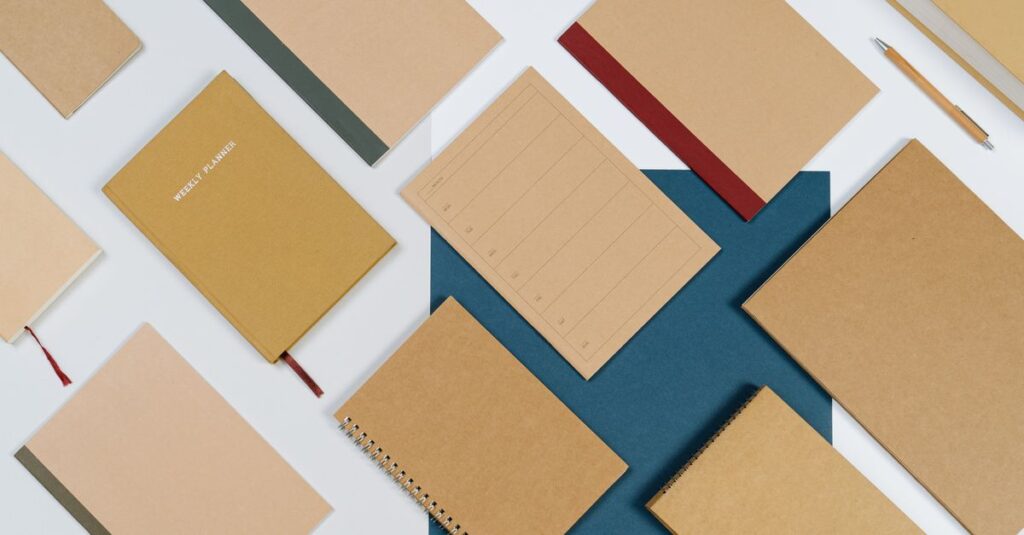
Here’s the thing. People hear ‘customised diary’ and think it’s just a cover design. It’s not. It’s a completely tailored product. At its core, it’s a diary manufactured from scratch — or heavily modified from a standard line — to include unique identifiers like an individual’s name, an employee ID, a department, and a corporate logo. It’s a tool for branding, organization, and a bit of corporate morale, all bound together.
But it’s also not magic. There are limits. You can’t order five of them and expect a factory to be thrilled. The real work happens in the setup: the printing plates, the foil stamping dies, the perfect binding glue setup for your specific page count. That’s where your cost goes. After that, printing the 300th name is barely more expensive than the 10th.
The main types we see are:
- Corporate Gifting Diaries: High-end, often with foil-stamped logos and names, quality paper, maybe a ribbon bookmark. For clients or top-tier employees.
- Internal Staff Diaries: Functional, durable, with company info pre-printed. Names are often added digitally. The workhorse.
- School & College Diaries: Different ruling (maybe timetable pages), school crest, student name and class. Needs to be cost-effective in bulk.
- Promotional Diaries: For distributors or events. Branding is the star, name personalisation is the nice touch.
Right. So you’ve got your type. Now what?
The Real-World Mess: How a Big Order Actually Happens
I want to tell you about Priya. She’s a 38-year-old procurement lead for a mid-sized tech firm in Bangalore. Last November, she needed 800 customised diaries for the new year. She had the design — a sleek, dark blue cover. She had the budget, sort of. What she didn’t have was clarity.
Her first quote was shockingly low. Turns out, it was for a flimsy perfect-bound book that would crack if you looked at it sideways. The second quote was astronomical because they wanted to charge per-name setup. She was on her third coffee of the day, staring at a spreadsheet, when she called us. Her voice had that specific tiredness — not sleepy-tired, but vendor-management-tired.
We talked for 20 minutes. Not about price first, but about paper. About how her sales team actually uses them (thrown in bags, scribbled in on planes). About whether foil stamping was worth it over embossing (depends on the logo detail). The price came almost as an afterthought. It was in the middle of the other two. The relief in her voice was audible. This is the part nobody talks about: the sheer energy drain of not knowing what you’re really buying.
Anyway. Where was I.
The process, stripped of the jargon, goes like this:
- You send your idea. (Logo, name list, page count preference, deadline).
- We send back options. Not just a price, but 2-3 tangible mock-up specs: “Option A uses this paper, this binding, costs X. Option B is more basic, costs Y.”
- You approve a physical proof. This is non-negotiable. You have to see and feel a single, perfect copy before we run 10,000.
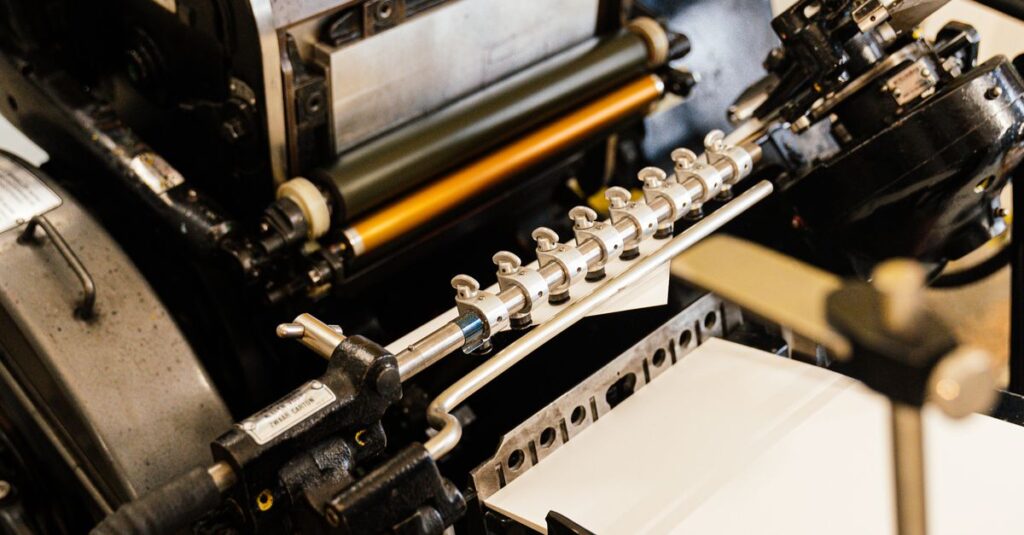
- Production runs. This is where our factory in Rajahmundry hums. Printing covers, collating pages, binding, adding names, quality checking each batch.
- Packing & Shipping. Do you want them boxed by department? Shrink-wrapped in tens? We’ll do it.
The timeline? For a standard order of a few thousand, from final approval to dispatch, give it 3-4 weeks. Rushed jobs are possible but, honestly, they cost more and everyone gets stressed. Don’t do it to yourself in December.
Expert Insight
I was reading an industry report last month — one of those dry, expensive ones — and one line stuck with me. It said that for bulk buyers, the single biggest point of failure isn’t quality or price. It’s communication breakdown at the proofing stage. The buyer OKs a digital file that looks fine on screen, but doesn’t realize how different a matte lamination feels versus a gloss, or how a specific red ink can look orange under office lights. The researcher’s point was that the more complex the customisation, the more you need to trust your senses, not your monitor. I don’t have a cleaner way to put it than that. Insist on a physical proof. Every time.
Customised Diary vs. Standard Corporate Diary: What You’re Really Paying For
Let’s break this down. Is a customised diary with a name just a fancy version of a standard corporate diary? No. It’s a different product with a different purpose and cost structure. Here’s a quick look at why.
| Feature | Standard Corporate Diary | Customised Diary with Name |
|---|---|---|
| Primary Goal | Brand visibility, uniform utility | Personal ownership, individual accountability |
| Setup Cost | Lower (one design setup) | Higher (design + variable data setup for names) |
| Per-Unit Cost | Lowest | Higher, but drops significantly with volume |
| Lead Time | Shorter (2-3 weeks) | Longer (3-5 weeks for data processing & proofing) |
| Minimum Order (MOQ) | Can be low (500 units) | Usually higher (1000+ units) to justify setup |
| Impact | “Company gave this.” | “This was made for me.” |
| Best For | General staff, promotional giveaways | Key employees, management, client gifting, students |
See the difference? It’s not just about adding a name field. The entire economics and psychology of the product shift. A standard diary is a commodity. A customised diary with a name is a bespoke item. You’re paying for the feeling it creates as much as the function.
How to Talk to a Manufacturer (Without Wasting Time)
Based on everything I’ve seen go right and wrong, here’s what you need to have ready when you first reach out. This is the list that separates the smooth orders from the month-long email chains.
First, know your numbers:
- Exact Quantity: A rough guess isn’t enough. 1000? 5000? 10,000?
- Deadline: When do they physically need to be in people’s hands? Work backwards from there.
- Budget Range: Be honest. If you have $5 per diary to work with, say so. We can tell you what’s possible instead of pitching a $20 leather-bound version.
Second, have your assets — but know they might not be perfect.
- Logo: Send the highest resolution vector file you have (.ai, .eps, .pdf). Not a JPEG from the website header.
- Name List: A clean Excel/CSV file. Column 1: Name. Column 2: Optional (Department, ID). Spelling is your responsibility. Triple-check it.
- Cover Idea: Even a sketch or a photo of a diary you like helps. “Like this, but in green with our logo” is a great starting point.
Third, ask the right questions. Don’t just ask “how much?” Ask:
- “What’s included in the price? (Proof, shipping, tax)?”
- “Can I see samples of your standard paper and binding?”
- “What happens if there’s a printing error in the batch?”
- “What is your production capacity per day for an order like this?”
This last one is important. You need to know if they’re a small shop that will be overwhelmed or a factory that does this daily. Our place, for instance, can run 30,000 to 40,000 bound notebooks a day. That means your order of 5,000 isn’t a mountain — it’s a scheduled slot. That reliability is what you’re buying as much as the diary itself.
The Unspoken Benefit: It’s Not Just a Notebook
Earlier I said you’re paying for the feeling. That’s not quite fair — it’s more that you’re investing in a signal. A generic diary says, “Here’s a tool.” A customised diary with your name on it says, “You are seen. You are expected to be here for the year. This is yours.”
For a school, it builds a sense of belonging from day one. For a corporation, it subtly reduces the chance that diary gets left in a drawer or, worse, tossed out. People tend to keep things with their name on it. They use them more. And every time they open it, they see your logo, your values, your brand. It’s the quietest, most constant marketing you can do.
But — and this is a big but — it only works if the quality is there. If the cover peels, the pages fall out, or the name smudges, the signal flips. It becomes, “They cheaped out on this too.” The quality of the gift reflects the perceived value of the relationship. That’s the hidden weight of your decision.
I think about this a lot. We could use cheaper paper, thinner covers, and offer a lower price. And we’d probably get some orders. But the people who come back, year after year — the big schools in Hyderabad, the corporate clients from Mumbai — they don’t come back for the price. They come back because the diaries lasted. Because the teacher or the employee didn’t have a reason to complain. Because it just… worked.
Frequently Asked Questions
What is the minimum order quantity (MOQ) for customised diaries with names?
It varies, but realistically, most manufacturers need at least 500-1000 units to make the setup for personalised printing worthwhile. For smaller quantities, you might look at digital printing services, but the per-diary cost will be much higher. For true economy of scale, think in thousands.
How do I provide the list of names for personalisation?
Send a clean, well-formatted Excel or CSV file. One column for the name (exactly as you want it printed), and separate columns for any other details (department, employee ID). We’ll handle the rest. And please, proofread it twice. We print what you send.
What are the main binding options, and which is best?
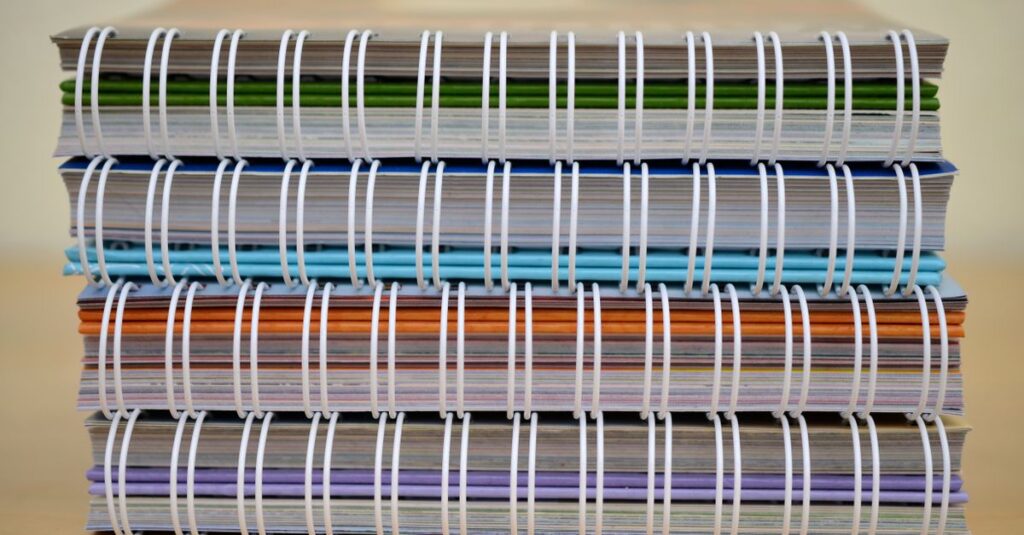
You’ll typically choose between Spiral Binding (lays flat, very durable), Perfect Binding (clean, book-like look, but can crack if abused), and Stitched Binding (traditional, very strong for thick page counts). For a daily-use corporate or school diary that needs to last a year, spiral or stitched binding are your safest bets.
Can you include custom pages inside the diary?
Absolutely. That’s a big part of true customisation. Common additions are company organograms, holiday lists, key policy pages, product catalogs, or for schools, timetables and rules. We can mix ruled, unruled, and even printed pages in any configuration. Just discuss it during the quote stage.
How long does the entire process take from order to delivery?
Once the final design and name list are approved, allow 3 to 5 weeks for production, quality checks, and shipping. This includes time to create and send you a physical proof, which you should always insist on. Rushing it is possible, but it adds stress and cost for everyone involved.
Wrapping This Up
So, the decision to order customised diaries with names comes down to a few things. It’s about knowing your numbers, understanding the trade-off between cost and perceived value, and finding a manufacturer who talks about paper and binding before they talk about price. It’s about planning far enough ahead that you’re not forcing a rushed job. And it’s about seeing that diary not as a stationery item, but as a year-long touchpoint with your team, your students, or your clients.
I don’t think there’s one perfect supplier for everyone. Probably there isn’t. But if you’ve read this far, you already know what you need — you’re just figuring out how to get it done right, without the headache. The next step is usually a conversation with a few specifics in hand.
If you’re evaluating manufacturers and want to see what a 40-year-old factory in Rajahmundry can do, we should talk. You can see our standard products and get a clearer idea of our capabilities on our products page.