The Real Search Behind “Diaries Near Me”
Look — I get it. You’re not just googling for a diary to write your secret thoughts in. You’ve probably got a list. A budget to meet. A deadline that’s getting closer. You need corporate diaries for your sales team, branded notebooks for a conference, or maybe a bulk order for the entire school district starting next term.
And you want them nearby. You want to talk to a human. See samples. Maybe even visit the place. That search for “diaries near me” is about control. It’s about cutting out the uncertainty of overseas shipping and wanting someone accountable, right there, in your timezone.
The thing is, most search results for that phrase will show you retail shops. Office superstores selling one-off planners. That’s not what you need. You need a manufacturer. A local supplier who can handle 500, 5,000, or 50,000 custom diaries. If that’s the hole you’re trying to fill, this is probably worth a look.
What “Local” Really Means for Bulk Diaries
Here’s where it gets tricky. When you need hundreds of identical, custom-printed diaries, “local” takes on a different shape. It’s less about physical proximity and more about supply chain proximity. Can they get you proofs in two days? Can you get them on the phone at 10 AM on a Tuesday? Will they understand what you mean when you say “corporate blue” or “school crest embossing”?
I was talking to a procurement manager from a Hyderabad-based tech firm last month — over a very bad video call, his connection kept dropping — and he said something that stuck. “The guy in China might be cheaper per unit. But the guy in Rajahmundry saves me three weeks of panic and two years off my life.” He was joking. Mostly.
The real value of a local manufacturer isn’t just geography. It’s about shared context. They know the paper grades available here, the binding methods that hold up in our humidity, the delivery networks that actually work. They’ve seen the same problems you’re trying to solve.
The Hidden Checklist (What No Website Tells You)
Okay. So you’ve found a few “diary manufacturers near me.” Their websites all say “high quality” and “timely delivery.” Great. Now what? You need to dig deeper. Most people just compare price and page count. That’s how you end up with diaries that fall apart by March.
You need to ask about things nobody puts in a brochure:
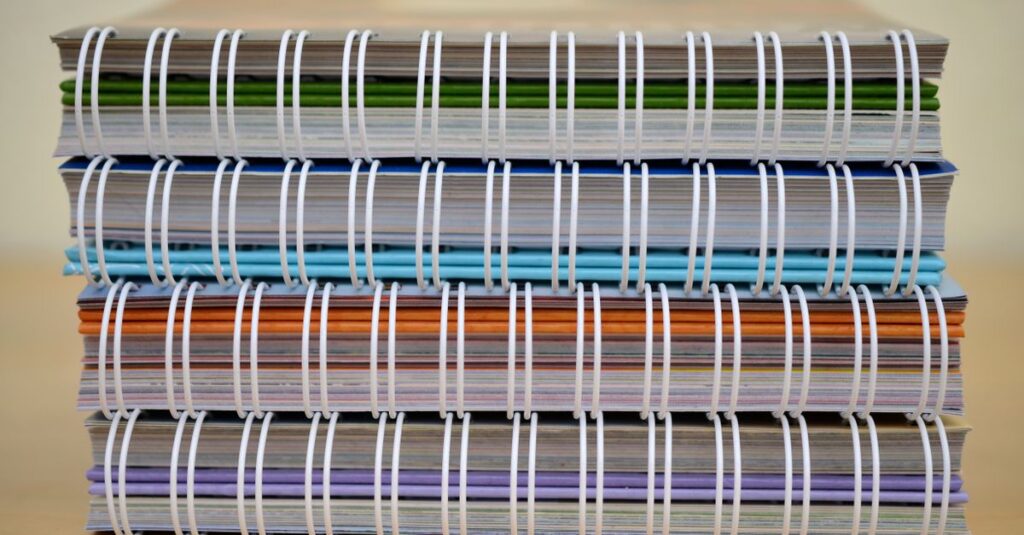
- The Stitch Test: Not all stitching is equal. Ask about the thread type and stitch density. A flimsy stitch means pages start falling out after a few opens. For a daily-use corporate diary, this is everything.
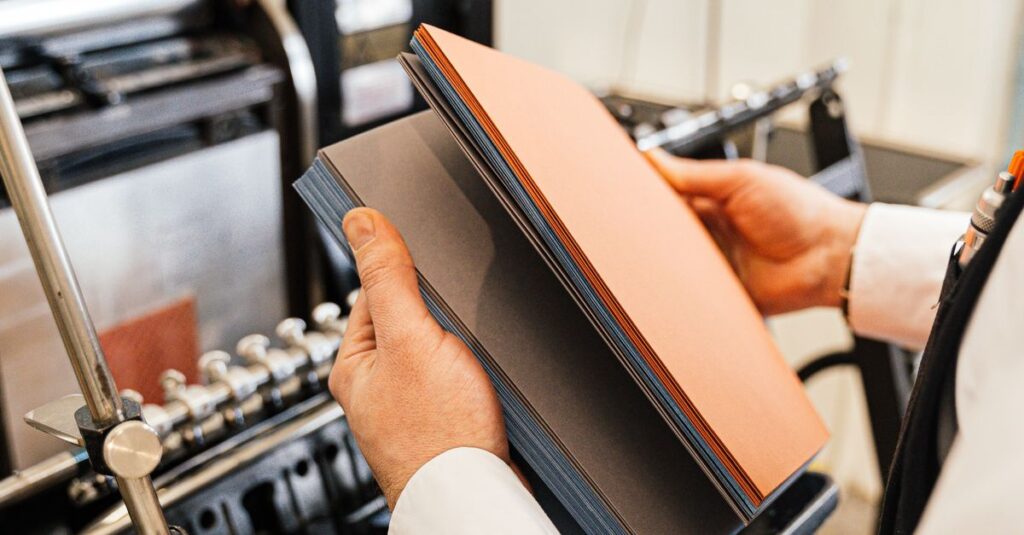
- The Paper Promise: 70 GSM paper sounds good. But is it *writing* paper or cheap, porous paper that bleeds with every fountain pen? Ask for a sample you can actually scribble on.
- The Cover Reality: A glossy finish looks smart until it’s covered in fingerprints. A matte or textured finish often wears better in a briefcase or a student’s bag. Think about the life this diary will live.
And the biggest one? Ask about their busiest month. If they say “March” for financial year diaries, or “December” for New Year diaries, you know their seasonal rhythm. Place your order well before that. It’s the single best way to avoid delays.
Expert Insight
I was reading an industry report a while back — can’t remember which one, it was one of those PDFs you download at 2 AM — and a line from a veteran binder stuck with me. He said the difference between a diary that lasts a year and one that lasts a month isn’t the materials. It’s the tolerance. The machine tolerances during cutting, the glue temperature during binding, the time pressure is set under. It’s all the invisible, unsexy process stuff that you never see on the final product. The good manufacturers are obsessive about it. The bad ones? They just hope you don’t notice.
A Tale of Two Diaries: Custom vs. Off-the-Shelf
Let’s make this practical. Say you’re ordering 1,000 diaries for your company. You have two paths: buying standard diaries and stamping your logo on them, or going fully custom. The choice seems obvious based on cost. But is it?
| Consideration | Off-the-Shelf (Branded) | Fully Custom |
|---|---|---|
| Upfront Cost | Lower. Much lower. | Higher. Setup & design costs apply. |
| Uniqueness | Looks like every other company diary. | Your brand, your layout, your rules. |
| Lead Time | Short. If stock is available. | Longer. 4-6 weeks for first batch. |
| Internal Impact | It’s a diary. People use it. | It’s a brand tool. People remember it. |
| Long-term Value | Disposable. Replaced next year. | Often kept. Becomes a reference piece. |
| The Hidden Bit | You compromise on every detail. | You control every detail. It’s exhausting and worth it. |
The table makes it clear, but the real decision is emotional. Are you giving a utility, or are you making an impression? I’ve seen companies spend lakhs on a conference and then cheap out on the delegate notebook. It’s the one thing people take home and use daily. Makes no sense.
Micro-Story: Priya’s Procurement Panic
Priya, 38, is the admin head for a chain of coaching centres in Vijayawada. Her boss told her on December 10th to source 2,500 branded diaries for the new academic year starting June. “Find someone good,” he said. “Nearby.” She called six places from Google. Three didn’t answer. Two quoted astronomical prices for the rush. The last one, a smaller factory in Rajahmundry, picked up on the second ring. They talked paper, they talked dates. They sent a courier with five different sample diaries the next day. Priya chose one, tweaked the cover color, and they locked it in. She told me later the relief wasn’t just about getting the order placed. It was about hearing someone on the other end of the phone who wasn’t panicking. Who had done this a thousand times. Who said “we can handle that” and actually meant it.
That’s the search, right there. It’s not for a product. It’s for that voice on the phone.
How to Actually Vet a Local Diary Supplier
Forget the glossy PDFs for a minute. Here’s what you do. First, call them. Don’t email. Call. See how long it takes to get to someone who can answer a technical question about binding or pantone colors. If you get passed around four times, that’s a red flag.
Second, ask for physical samples of *different* products. Not just their best-seller. Ask for their cheapest notebook and their most expensive diary. Compare the feel. The gap between those two tells you more about their quality range than any sales pitch.
Third — and this is the real test — ask for a reference from a client who had a problem. How was it resolved? Every manufacturer has a delayed shipment or a printing error at some point. The good ones fix it fast and eat the cost. The bad ones disappear into a fog of excuses.
I think the most common mistake I see is businesses treating this like buying a commodity. It’s not screws or bolts. It’s paper and glue and thread and ink. It’s a tactile product that people will use every day for a year. The relationship with the maker matters. Probably more than you think.
If you’re at this stage, wondering how to start that conversation with a real manufacturer, their page on custom printing breaks down the process without the fluff.
Why “Near Me” Sometimes Means “In My Country”
Let’s be honest. You might not find a giant diary factory in your specific city. The infrastructure for bulk paper, printing, and binding is concentrated in specific industrial areas. In India, that often means places like Rajahmundry, Chennai, or parts of Gujarat. So “near me” evolves. It becomes “within my country.” Within my regulatory zone. Within a shipping timeline that doesn’t involve customs drama.
This is actually an advantage. You get the resilience of a domestic supply chain — no port delays, no currency fluctuations — with the cost benefits of a specialized manufacturing hub. You can still visit. It might be a flight, not a drive, but you can see the operation, meet the team, and shake hands. That still counts. It still builds a different kind of trust than an email chain with a faceless trading company.
The core of it is this: you’re not just buying diaries. You’re buying certainty. Or at least, you’re trying to.
Frequently Asked Questions
What should I look for in a local diary manufacturer?
Look beyond the price. Ask for physical samples, check their binding and paper quality. Most importantly, test their communication — call them with a specific question. A reliable local supplier for diaries near you should be accessible, knowledgeable, and willing to show you their process.
How far in advance should I order custom corporate diaries?
For a fully custom design, start the process at least 3-4 months before you need them. This allows time for design, proof approval, production, and any unexpected hiccups. For standard branding on existing diary styles, 6-8 weeks is safer. Rush jobs are possible, but they cost more and limit your options.
Can I get a small sample order before committing to bulk?
Any reputable manufacturer will provide a “dummy” or sample diary based on your specifications, often for a small fee. This is non-negotiable. You need to feel the paper, test the pen bleed, and see the print quality in person before you order a thousand.
What’s the minimum order quantity (MOQ) for custom diaries?
It varies wildly. For simple logo stamping on existing stock, MOQs can be as low as 100 pieces. For fully custom diaries with unique size, paper, and layout, MOQs often start at 500 or 1,000 units. Always ask upfront — it’s one of the first questions you should have.
Are local manufacturers more expensive than importing?
Not necessarily. While the unit cost from an overseas wholesaler might look lower, you have to add shipping, import duties, insurance, and the hidden cost of longer lead times and communication barriers. A local diary supplier often provides better overall value through speed, flexibility, and easier problem-solving.
The Takeaway
Searching for “diaries near me” is a search for reduced friction. You want fewer unknowns, shorter feedback loops, and a sense that someone has your back. That’s a smart way to buy. The key is to understand that the best “local” option might be a specialist manufacturer a state away, not a retail shop around the corner.
Focus on the partnership, not just the product. Ask the messy questions. Demand samples. The right supplier won’t be intimidated by that; they’ll respect it. In the end, a diary is a promise of a year’s worth of plans, notes, and meetings. It makes sense to put that promise in the hands of people you trust.
I don’t think there’s one perfect supplier for everyone. But there is a right way to look. If you’re ready to start that search with a manufacturer who’s been doing this since 1985, their contact details are here.