Let’s get this out of the way: it’s not the same thing.
Right. If you’re a procurement manager or a stationery distributor looking for a ‘diary and planner’, I think you already know this on some level. You’re not shopping for yourself. You’re trying to solve a problem for hundreds or thousands of people at once. And the problem is this: everyone calls them different things, but the supply chain treats them as completely different products. It’s messy. And it makes your job harder.
I was talking to a buyer from a large bank in Hyderabad last week. He needed 5,000 custom diaries for their branch managers. Simple, right? He sent me a reference image of a ‘planner’. It had monthly tabs, goal-setting pages, a financial calendar. That’s not a diary. That’s a specialized product. The entire manufacturing process – the paper, the ruling, the binding, the cost – shifts. Most people don’t realize that shift until they get a quote that’s 30% higher than expected. The search for a ‘diary and planner’ isn’t about finding one thing. It’s about untangling two.
If you’re sourcing for a business or institution, this is the stuff that matters. Not the inspirational quotes on the cover. The stuff underneath.
What you’re actually buying: intent vs. inventory
Here’s the thing. When you type ‘diary and planner’ into a search bar, you’re probably not looking for a comparison article. You’re looking for a supplier who gets it. You need someone who understands that a school’s ‘planner’ is a homework tracker, a corporate ‘diary’ is a branding tool, and a government office’s ‘record book’ needs to survive a decade. The intent is commercial – you need to buy. But the information you need is practical. How are these things made? What should you look for? How do you not get ripped off on a bulk order?
Think about it this way. A classic diary, the kind we’ve made since 1985, is about recording what happened. Date on top, lines below. A planner is about controlling what will happen. It needs structure – monthly views, weekly spreads, task lists, maybe even motivational sections. That difference isn’t just content. It’s engineering.
Expert Insight
I was reading an industry report last month – one of those dry PDFs only people in our line of work open – and one point stuck with me. The researcher said the demand for ‘planners’ in corporate gifting has grown about 18% year-on-year, while basic diaries are flat. But here’s the catch: most of that ‘planner’ demand is actually for hybrid products. A diary with a few planning pages up front. Companies want the perceived value of a planner without the full cost of its complex layout. I don’t have a cleaner way to put it than that: everyone wants the upgrade, but they’re budgeting for the standard model. It creates a weird tension in the factory.
The Manufacturing Floor: Where Your Order Actually Lives
Let me walk you through what happens when an order for 10,000 units lands. This isn’t theory. This is the Tuesday morning I’m picturing right now.
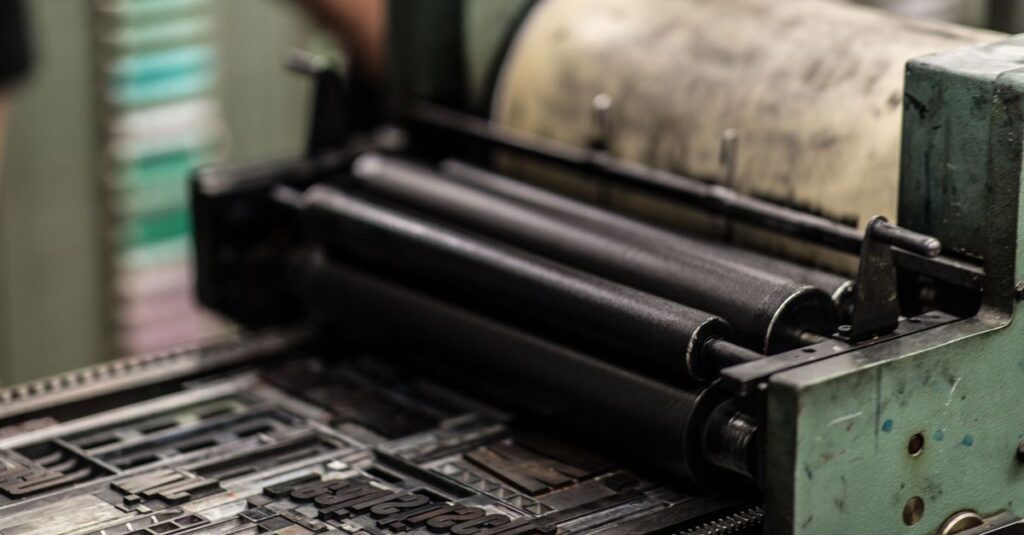
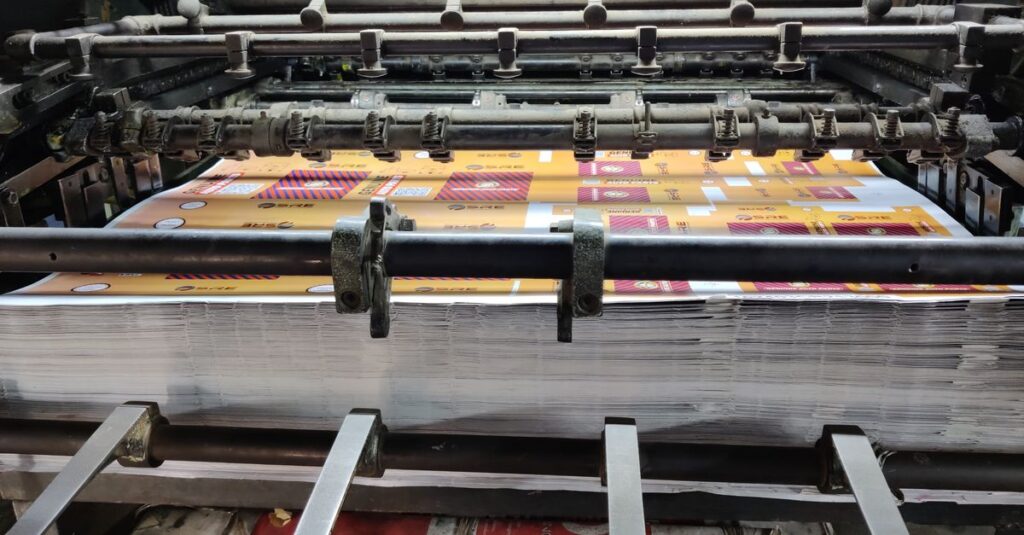
First, the paper. Diary paper and planner paper can be the same GSM, but the ruling is different. A diary is usually single-ruled (SR) or double-ruled (DR). A planner? It might need four-ruled (FR) for financial sections, unruled (UR) for notes, and broad-ruled (BR) for headers. That means multiple printing plates, multiple setup runs. The machine has to stop and reset. Time is money, and that cost gets passed down.
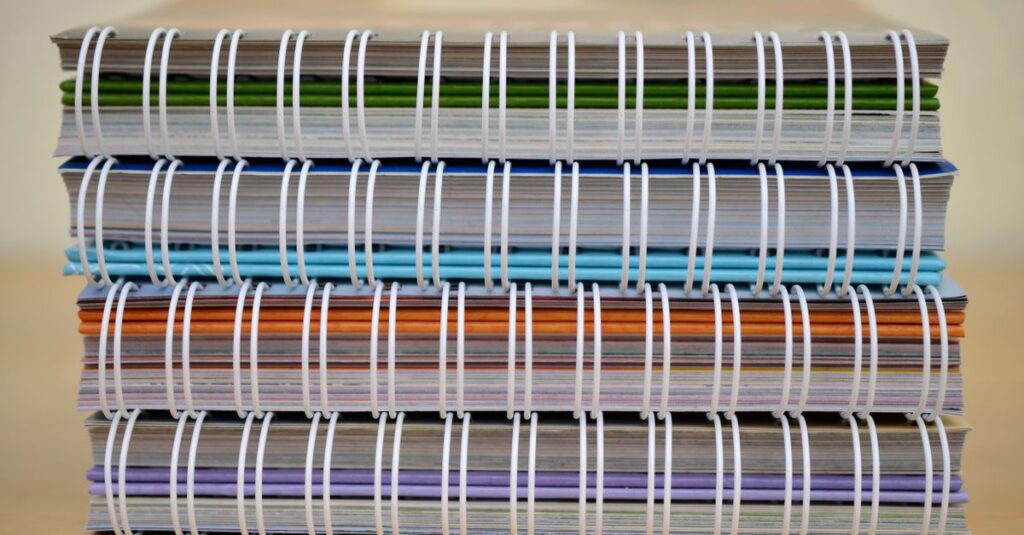
Then, the binding. A 200-page diary can be perfectly bound – that clean, glued spine. It looks professional. But a planner that needs to lay flat? That’s often spiral binding. Different machine, different crew. Spiral binding is more labor-intensive. Each coil has to be cut and threaded. It’s a slower process.
Finally, the cover. A corporate diary cover is often about branding – a crisp logo, maybe a foil stamp. A planner cover is about function and feel. It might need a pocket in the back, an elastic closure, a thicker board for durability. Two different design and production paths.
See the pattern? One product, ‘diary and planner’, branches into two separate production lines almost immediately. Most bulk suppliers who aren’t manufacturers themselves gloss over this. They’ll quote you for a diary and then act surprised when you ask for planner features. We’ve had to explain this so many times it’s now the first thing we clarify.
The Real Cost Breakdown (Why Some Quotes Are Suspiciously Low)
Okay. Let’s talk numbers. Not specific ones, because every order is different. But the structure.
When you get a quote, you’re paying for:
1. Paper: Quality (GSM), quantity, and type of ruling.
2. Printing: Cover printing (colors, foil), internal page printing (rules, dates, pre-printed sections).
3. Binding: Stitched, perfect, or spiral.
4. Customization: Logo placement, unique page layouts, special sections.
5. Packaging: Individual polybagging, boxing, palletizing for shipment.
A low quote usually cuts one of three corners: paper GSM (they’ll use 50 instead of 54), binding strength (weak glue), or they’ll treat a planner as a diary, using a standard layout and just calling it a planner. You’ll get a product that disappoints the end-user. The person who opens it on New Year’s Day feels the flimsy paper, sees the misaligned printing. That reflects on you, the buyer.
I remember a distributor from Bangalore. He’d been getting diaries from a cheaper supplier for years. Then he switched to a planner model for his corporate clients. The first batch from his old supplier arrived – the spirals were plastic, not metal, and they snapped within a week. He lost three accounts. He called us, frustrated, saying ‘But it was supposed to be a planner!’ The supplier had just put a spiral on a diary. That’s not how it works.
| Feature | Standard Corporate Diary | Executive Planner |
|---|---|---|
| Primary Use | Daily record-keeping, appointment logging | Forward planning, goal tracking, project management |
| Internal Layout | Day-per-page or week-per-spread, uniform ruling | Mixed layouts: monthly calendar, weekly tasks, notes pages, trackers |
| Paper Quality Focus | Smooth writing surface, bleed-resistant ink | Thicker paper often needed for heavy pen use, multiple sections |
| Typical Binding | Perfect binding (glued spine) | Spiral or twin-wire binding (lays flat) |
| Customization Complexity | Logo, cover design, maybe printed dates | Fully custom page designs, section tabs, branded inserts |
| Bulk Cost Driver | Volume of paper, cover finishing | Complex printing setups, multiple binding steps |
Who Actually Needs These Things? (The Real-World Orders)
Let’s get specific. It’s not just ‘businesses’.
Corporate Procurement: This is the biggest chunk. Year-end gifts, onboarding kits, conference swag. They want their logo prominent, a quality feel. The diary is a brand ambassador sitting on a desk for 365 days. They often think they want a planner because it sounds more premium, but they need guidance on what that actually entails. The printing service conversation happens here.
Schools & Colleges: They call them ‘student planners’. Homework diaries, assignment trackers. Durability is key – it’s in a backpack all year. The layout is simple but non-negotiable: period schedules, term dates, parent-teacher communication logs. Bulk orders are in the tens of thousands. Price sensitivity is high, but so is the need for consistency.
Government & Institutions: Record-keeping. These are less about planning and more about official documentation. The paper quality needs to be archival, the binding extremely durable. These orders move slowly, have tons of specifications, but are incredibly steady. We’ve supplied the same account books to a state department for 20 years.
Stationery Distributors: You’re the middlemen. You need a manufacturer who can give you both a reliable diary and a trendier planner line to offer your retail shops. You need private labeling, flexible minimum order quantities (MOQs), and on-time shipping so you don’t miss the back-to-school or New Year season. Your headache is inventory risk. A good manufacturer should help you mitigate that.
Take Arjun, 42, who runs a wholesale stationery business in Chennai’s Ritchie Street. His clients are a mix of small businesses and local colleges. Last July, he wanted to stock a ‘premium planner’ for the first time. He got a sample from a fly-by-night operator – the pages were out of order. March came before February. He showed it to me, laughing but stressed. ‘How do I sell this? They’ll think I’m foolish.’ He wasn’t. He was just sold a product by someone who didn’t understand the sequence of months matters. We fixed it, but the season had already started.
How to Talk to a Manufacturer (The Questions That Matter)
Look, if you’ve read this far, you’re probably serious about placing an order. Here’s how to not waste your time or theirs.
Don’t start with ‘What’s your price for a diary?’. That’s like walking into a car dealership and asking ‘What’s your price for a car?’. It tells them nothing.
Start with specifics:
1. ‘I need a [quantity] order of [diaries/planners] for [use case: corporate gift, student use, official records].’
2. ‘Our must-haves are: [lay-flat binding, custom logo on cover, specific page layout, pocket in back].’
3. ‘Our deadline is [date], and shipment needs to go to [city/country].’
Ask them:
– ‘Can I see physical samples of your standard diary AND planner?’
– ‘What’s your MOQ for custom printing?’
– ‘What’s the lead time from approved design to shipped pallet?’
– ‘Do you handle export documentation if we’re shipping overseas?’
Their answers will tell you if they’re a real manufacturer or just a reseller. A reseller will hesitate, check with ‘the factory’. A manufacturer will know immediately. ‘Our spiral line is booked three weeks out, but perfect binding we can start next Monday.’ That clarity saves you weeks.
Wrapping This Up
I don’t think there’s one perfect answer for every ‘diary and planner’ search. Probably there isn’t. The market is too fragmented. But the core need is the same: you want a physical product that fulfills a function for many people, represents a brand well, and doesn’t fall apart. And you want a supplier who understands that your reputation is tied up in that product’s spine and paper.
It’s not about finding the cheapest option. It’s about finding the correct one. The one where the person on the other end of the phone knows that a planner isn’t just a diary with a different cover. They know it’s a different beast on the production floor. And they plan for it.
If you’re evaluating suppliers, that’s the distinction to look for. Everything else is just paper and ink.
Frequently Asked Questions
What is the minimum order quantity (MOQ) for custom diaries and planners?
It varies wildly. For standard custom imprinting (just your logo on our stock design), MOQ can be as low as 500 pieces. For a fully custom planner with unique page layouts, it’s usually 2,000+ units. Always ask. A supplier with no MOQ is often just dropshipping from someone else.
What is the main difference between a diary and a planner in manufacturing terms?
The biggest difference is in the internal printing and assembly. A diary has a repeating page structure. A planner has multiple, non-repeating sections (monthly, weekly, notes). This requires more printing plates, more machine setups, and often a different binding method, which increases time and cost.
How long does production take for a bulk order of 5,000 diaries?
For a standard custom diary? Once the design is finalized, expect about 4-6 weeks for production and packing. This includes paper sourcing, printing, binding, and quality checks. Rush orders are possible but will cost a premium and depend on factory capacity. Always get a written timeline.
Can you source both diaries and planners for a corporate gifting package?
Yes, absolutely. Many companies do a ‘suite’ – a planner for managers and a standard diary for staff. The key is to work with a single manufacturer who produces both. It simplifies logistics, ensures quality matches, and often gets you a better combined price. Just be clear about the different specifications for each product from the start.
What paper quality (GSM) is best for a corporate planner?
For a planner that will see heavy pen use, highlighters, maybe even sticky notes, don’t go below 70 GSM paper. 80 GSM is ideal. It feels substantial and prevents bleed-through. Standard diaries often use 54-60 GSM, which is fine for writing but can feel flimsy under a planner’s multi-functional use. Specify the GSM you need.