Here’s the thing about diary price
If you’re a procurement manager or a business looking to order corporate diaries, you’ve probably gotten a dozen quotes. And I bet they’re all over the place. One says 80 rupees a piece, another says 130, and a third — for some reason — is quoting 200. You sit there staring at your screen, thinking, ‘What am I actually paying for? Am I getting ripped off?’
Right. That’s the feeling. You’re not comparing apples to apples. You’re comparing a carefully built notebook from a factory that’s been doing this since 1985, to someone slapping a cover on cheap paper and calling it a diary.
So let’s talk about diary price. Not the sales pitch. The real stuff. The paper, the glue, the man-hours, the headache of making 10,000 identical books that won’t fall apart in someone’s briefcase. I’m going to break down where every rupee of your order actually goes. If you’ve ever felt confused by the quotes you get, this might clear a few things up.
The Paperweight (literally) of Your Quote
This is where the magic — and the cost — begins. You can’t see it in a PDF quote, but the paper GSM is probably the biggest single factor in diary price. Most corporate diaries use between 70 GSM and 100 GSM paper.
Think about it this way. 70 GSM feels decent. It’s professional. A pen writes on it without bleeding through to the other side. 100 GSM? That’s premium. It has a heft. It sounds different when you turn the page. It makes a statement.
But here’s the kicker: the price jump isn’t linear. Going from 70 to 80 GSM might add 10% to your paper cost. Going from 80 to 100 GSM can add another 25%. And if someone is quoting you a shockingly low price, I can almost guarantee they’re using sub-70 GSM paper. It’ll feel flimsy. It’ll show the print from the other side. It’ll tear if someone’s writing gets a little… enthusiastic.
What most people don’t realize is that paper isn’t just about thickness. It’s about sourcing, consistency, and finish. We use a 54 GSM writing paper for our standard notebooks because it’s smooth and reliable. For diaries, we step it up. Because nobody wants their annual plan written on paper that feels like it came from a newspaper.
Real-Life Micro-Story: Priya’s Procurement Headache
Priya, 38, a procurement lead for a mid-sized IT firm in Hyderabad. She needed 5000 corporate diaries for the new year. Got three quotes. The lowest was 30% cheaper. She went with it. The diaries arrived in December. The covers were fine. But the paper… it was so thin you could see the next month’s calendar faintly ghosted behind the current page. The HR head complained. The CFO asked why they felt ‘cheap’. Priya spent two weeks in damage-control mode, her vendor nowhere to be found. She told me later, over the phone, her voice tired: “I saved 50,000 rupees and cost the company ten times that in perception.”
You don’t get a second chance with a New Year diary.
Binding: The Silent Cost of Not Falling Apart
Okay, let’s talk binding. This is the spine of your diary — literally. And it’s another massive hidden variable in diary price.
You’ve got three main types:
- Stitched Binding: The classic. Thread sewn through the folios. Durable, lies flat. Costs more in labor. Adds to the diary price.
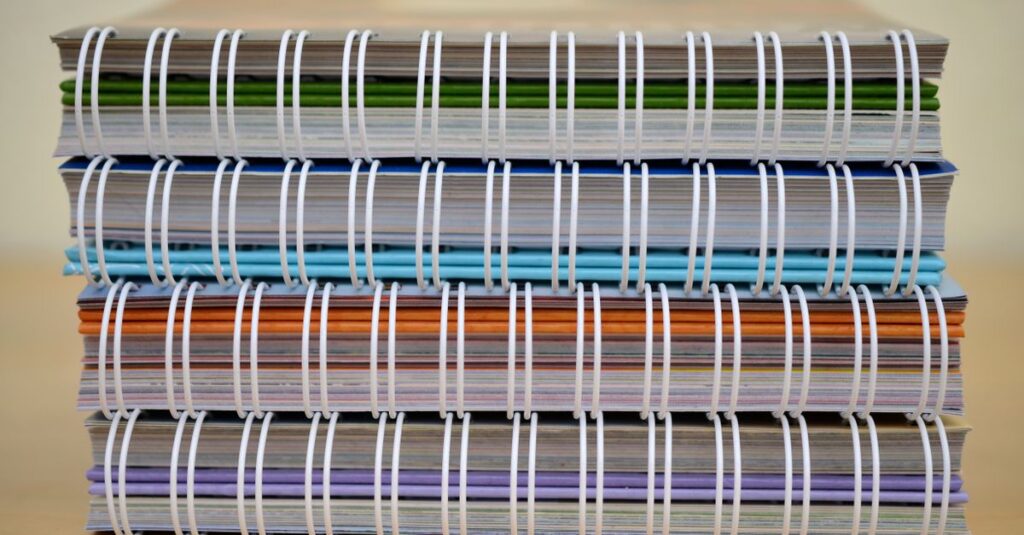
- Spiral Binding: The metal or plastic coil. Lets the diary fold back completely. Great for notetaking. The coil itself is a cost, and punching all those holes is an extra step.
- Perfect Binding: Like a paperback book. Pages glued to the spine. Looks clean, modern. The cheapest option for high page counts, but can crack if abused.
The choice here isn’t just aesthetic. It’s functional and financial. A stitched binding for a 240-page diary might cost us 15% more to produce than a perfect binding. That gets passed on. But that diary will last the whole year. The perfectly bound one? It might not survive a monsoon-season bag.
I think — and I could be wrong — that most businesses underestimate binding. They look at the cover design and the page count and call it a day. The binding is what you’re paying for when you want a tool, not just a promotional item.
Customization: Where Your Brand Lives (And Where Costs Can Spiral)
This is the fun part, and the part that can wreck a budget if you’re not careful. Customization. It’s why you’re buying a corporate diary and not just picking up generic ones from a store.
Every custom element adds to the diary price. It’s not a markup. It’s a process.
- Logo on the Cover: Simple stamp vs. full-color UV coating vs. embossing. Each step up in complexity needs a new plate, a new setup on the machine, a different material.
- Custom Page Layouts: You don’t just want ruled pages. You want your company’s values printed at the bottom of each page. Or a special project planning section. That’s not just printing. That’s design time, proofing, and setting up the press for a unique run. That’s time the machine isn’t printing something else.
- Inside Cover Printing: CEO’s message, company map, emergency contacts. More pages, more ink, more passes through the binder.
Look, I’ll be direct. This is where a good manufacturer talks you through the cost-to-impact ratio. A foil-stamped logo feels incredible, but it triples the cover cost. A two-color print inside might give you 90% of the effect for half the price. Our job is to guide that, not just say ‘yes’ to every request and hand you a shocking final quote. If you’re looking for that kind of partnership, our printing services page lays out how we approach it.
Expert Insight
I was reading an industry report last quarter — one of those dry, expensive ones — and one line stuck with me. It said that for bulk corporate stationery, the perceived quality is 70% determined by touch and heft, 20% by visual design, and 10% by actual function. I keep turning that over. It means your diary’s price isn’t just about it working. It’s about it *feeling* like it works. The paper weight, the binding tightness, the cover’s resistance to a fingernail scratch. That feeling is what you’re really investing in. It’s what makes someone keep it on their desk all year instead of ditching it in March. Don’t quote me on the percentages, but the core idea is dead right.
The Volume Equation: Why 1000 Costs More Per Unit Than 10,000
This seems backwards to a lot of new buyers. They think, ‘I’m ordering a thousand, that’s a lot!’ In manufacturing terms, it’s a warm-up. Here’s how diary price scales, and why.
The fixed costs are the same whether you make 100 or 10,000: The design proofing. The machine setup. Creating the binding plates or cutting dies. Cleaning the presses for your specific ink colors. These are ‘one-time’ charges that get *amortized* across your total order.
So, if setup costs 5000 rupees, and you order 1000 diaries, that’s 5 rupees added to each diary just for setup. Order 10,000? That’s 0.50 rupees per diary. See the difference?
Then there’s the paper. We buy paper in massive, economy-sized rolls. Cutting them for a small run is inefficient. We waste more at the edges. The larger the run, the more efficiently we can use every square inch of that roll.
It’s the same with binding, with packing, with shipping. Efficiency scales. That’s why the per-unit diary price drops significantly as volume goes up. It’s not us being nice. It’s math.
Stitched vs. Spiral Binding: A Cost & Use Comparison
| Factor | Stitched Binding | Spiral Binding |
|---|---|---|
| Perceived Quality | High. Traditional, ‘book-like’ feel. | Functional. Common for notepads, student books. |
| Durability | Excellent. Sewn threads rarely fail. | Good, but spiral can bend/ snag. |
| Lay-Flat Ability | Lies flat well. | Lies completely flat or folds back 360°. |
| Cost Impact | Higher labor cost. Adds to diary price. | Cost in coil + hole punching. Often mid-range. |
| Best For | Executive diaries, formal gift diaries, records. | Project diaries, creative notebooks, heavy daily use. |
| Page Limit | Very high (700+ pages possible). | Practical limit based on coil size. |
| Customization Ease | Standard. Cover and internals. | Can be tricky near spiral edge. |
So, what should you look for in a quote?
Don’t just look at the bottom-line diary price. A good, transparent quote should almost act as a spec sheet. It should tell you:
- Paper GSM: Specifically. Not ‘premium paper’.
- Binding Type: Exactly. Stitched, perfect, spiral, and if spiral, metal or plastic.
- Cover Material: Art card weight, lamination type (matte, gloss, soft-touch).
- Breakdown of Custom Charges: Separate line for setup, for special inks, for extra design hours.
- Page Count & Ruling: Obvious, but sometimes missed.
If a quote is vague, that’s a red flag. They’re either hiding something or they don’t know. Both are bad.
And honestly? Ask for samples. Not just a fancy mock-up. A real, physical sample of what you’ll get. Hold it. Write in it. Try to tear a page. The truth is in your hands, not in the email.
Frequently Asked Questions
What is the typical price range for bulk corporate diaries?
It’s a huge range, but for context: a basic 240-page, perfectly bound diary with a standard printed cover might start around 80-100 INR per piece for 5000 units. A premium version with 100 GSM paper, stitched binding, and foil-stamped logo can easily reach 180-250 INR per piece. The diary price depends entirely on your specs.
Why is the per-unit diary price so much lower for larger orders?
Manufacturing has high fixed ‘setup’ costs (plates, machine configuration, design). These costs are spread across the entire order. With 10,000 diaries, that setup cost per book is tiny. With 500, it’s a big chunk of each book’s cost. Efficiency in material use and labor also increases with volume.
Does paper quality really make that much difference in cost?
Yes. It’s often the single largest material cost. Upgrading paper GSM by 10 points can increase the total diary price by 15-20%. It also affects the feel, durability, and writing experience, which directly impacts how your brand is perceived.
Can I get a lower diary price by sourcing my own materials?
You can try, but it rarely saves money. Manufacturers buy paper, glue, and board at massive volume discounts you can’t access. We also know exactly which materials work with our machines. Bringing your own can lead to production issues, delays, and no real savings. It’s usually a headache for everyone.
How far in advance should I place a bulk diary order?
For a smooth process and the best price? Minimum 8-12 weeks before you need them. This allows time for design, proofing, production, and shipping. Rush orders (4-6 weeks) are possible but often incur a 10-20% premium on the diary price due to overtime and disrupted production schedules.
The bottom line on diary price
You’re not buying a commodity. You’re commissioning a branded tool. The price isn’t arbitrary — it’s the sum of a hundred small decisions about paper, glue, thread, ink, and time.
The cheapest quote is often the most expensive mistake. It sits in a storeroom, or worse, in the hands of an employee who thinks the company cheaped out on them.
I don’t think there’s one perfect price. But there is a right value. Value is a diary that lasts the year, that feels good to use, that makes your team — and your clients — feel considered. That’s what you’re really investing in. The number on the quote is just how you get there.
If you’ve read this far, you’re probably looking for a partner who explains the costs, not just sends an invoice. Maybe it’s time we talked about what you actually need.