You know that feeling when you’re ordering notebooks for your school or office, and you see “DR – Double Ruled” on the spec sheet? And you think — what exactly does that mean, and more importantly, is it the right thing for what I need? Nine times out of ten, you just click it because it’s an option. But there’s a reason double ruled notebooks exist, and it’s not just to fill out a dropdown menu. It solves a very specific problem for a very specific set of people. And if you’re ordering in bulk, getting this wrong is… a headache, honestly. A costly one. I’ve seen schools order thousands of the wrong ruling, and by the time the notebooks land, it’s too late. The teachers are frustrated, the kids can’t use them properly, and someone’s getting an earful. If you’ve ever stared at a product list and felt lost, this might be worth a look.
Okay, So What Is a Double Line Notebook?
Let’s cut through the jargon. A double line notebook, or double ruled notebook (we usually mark it as DR on our order sheets), is exactly what it sounds like. Each horizontal line on the page is actually a pair of lines — two thin, parallel lines running across the page, with a small, consistent gap between them. Think of it as a writing channel. It’s not a single bold line or a wide space. It’s a guide. The top line of the pair is where the lowercase letters like ‘a’, ‘c’, ‘e’ sit. The bottom line is where the descenders of letters like ‘g’, ‘p’, ‘y’ go. The space in between? That’s for the bodies of the lowercase letters. It creates a structured lane for handwriting, especially cursive or any script where letter height and alignment matter. It’s different from single ruled (just one line) or broad ruled (a wider, single line). This is precision. This is for control.
The Real-World Use Case: It’s Not for Everyone
Here’s the thing — most adults in an office don’t need double ruled paper. Their handwriting is set. They’re jotting meeting notes, making lists. A single line or even a blank page works. The double line notebook has a primary, almost singular mission: teaching and practicing handwriting. I was talking to a principal from a school in Hyderabad last month — over a very rushed phone call, actually — and she put it perfectly. “We switched to double ruled for grades 1 to 4,” she said. “The difference in how the kids form their letters? It’s night and day. The notebook does half the teacher’s work.” The notebook does half the teacher’s work. That line stuck with me. It’s not just stationery; it’s a teaching aid. It silently enforces consistency where a teacher can’t watch every single hand at once.
Who Actually Buys These? (The Bulk Order Reality)
This is where it gets practical. If you’re a procurement manager, you’re not buying one. You’re buying a pallet. So who’s driving this demand? It breaks down pretty clearly.
- Primary & Middle Schools: This is the big one. Foundational handwriting years. They order by the thousand, often at the start of the academic year. It’s a standardized requirement in many CBSE, ICSE, and state board syllabi for younger grades.
- Language Training Institutes: Think calligraphy classes, English language labs, or even regional script coaching. When you’re learning a new alphabet’s proportions, that double guide is non-negotiable.
- Special Needs Education Centers: For students who need extra motor skill support, the clear, bounded space of double lines provides a physical constraint that helps regulate letter size and spacing. It’s a form of passive assistance.
- Certain Government Departments: You’d be surprised. Some offices that require meticulous, uniform handwritten registers or ledgers — for archival or legal clarity — still specify double ruled books. It ensures every entry looks the same, which matters more than you’d think.
Anyway. The point is, the demand is institutional. It’s planned. It’s bulk. And it’s incredibly sensitive to getting the specifications right. A millimetre off in the gap between those lines, and the whole batch is useless for its purpose. I think — and I could be wrong — that this is why so many bulk buyers stick with a manufacturer they know. The risk of a specs error is too high.
Single Ruled vs. Double Ruled: A Procurement Comparison
Don’t just take my word for it. Let’s lay it out. If you’re deciding what to order for your institution, this table is probably the only thing you need. Print it out. Stick it on your desk.
| Feature | Double Ruled (DR) Notebook | Single Ruled (SR) Notebook |
|---|---|---|
| Primary Purpose | Handwriting instruction & practice | General note-taking & writing |
| Ideal User | Students (Grades 1-6), handwriting learners | Older students, college-goers, office professionals |
| Visual Guide | Two parallel lines forming a ‘channel’ | One single horizontal line |
| Effect on Writing | Enforces uniform letter height & alignment | Provides a baseline only |
| Bulk Order Pattern | Large, seasonal orders for specific grades | Steady, year-round orders for general use |
| Cost Implication | Slightly higher due to precise printing alignment | Standard, most economical option |
| Common Mistake | Ordering them for older students (waste of money) | Ordering them for young learners (frustrates teachers) |
See? It’s not about which is better. It’s about which is right. Ordering single ruled for a second-grade class is just creating a problem for the teachers. Ordering double ruled for your sales team is burning money on a feature they don’t need and won’t use. The choice is that specific.
The Manufacturing Headache No One Talks About
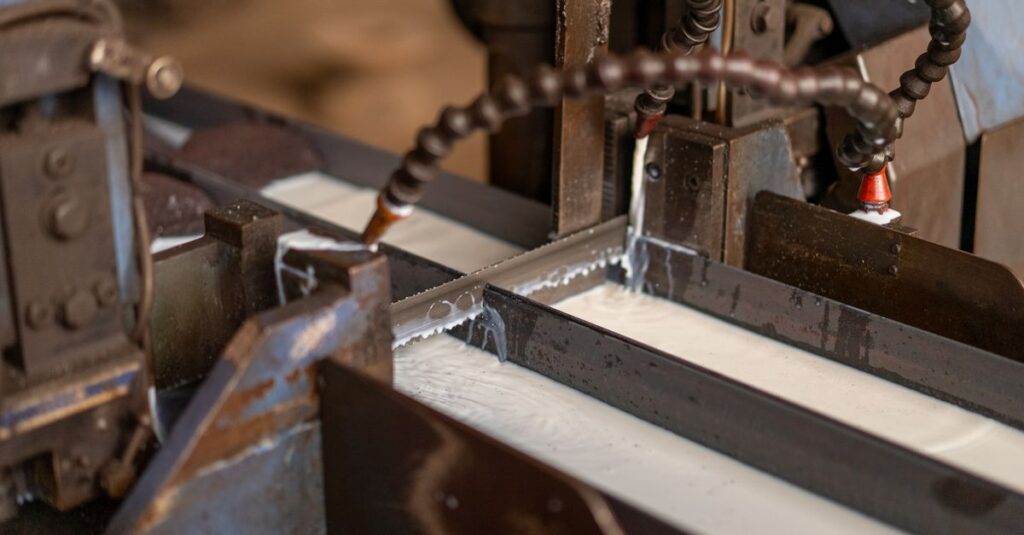
Right. This is the part most buyers never see, but it’s the only thing that matters if you care about quality. Printing double lines isn’t just running a page through a machine. The consistency of that gap between the two lines — across 52, 100, or 200 pages, across 10,000 notebooks — is a technical challenge. If the printing cylinder is even slightly misaligned, the gap widens or shrinks. Page to page. And I’ll be direct — if that happens, the notebook fails at its one job. It’s supposed to be a reliable guide. An inconsistent guide is worse than no guide at all. It confuses the hand. So, what do you look for in a supplier? Ask about their print alignment checks. A serious manufacturer will have a QC station that literally measures the line gap on random pages from every batch. They should be able to tell you their tolerance level in millimetres. If they can’t, or if they brush off the question? Red flag. You’re not buying paper; you’re buying precision.
I remember visiting our factory floor last year during a big double-ruled run for a Gujarat-based school chain. The machine operator had a simple gauge — a piece of clear plastic with the perfect double line etched into it. He’d slap it on a page from the stack every fifteen minutes. No numbers, no digital readout. Just light and his eyes. “If the shadow is even,” he said, “it’s good. If I see a shadow on one side, the machine gets stopped.” That’s the kind of obsessive detail that separates a notebook from a teaching tool. It’s not in the brochure. But it’s the only thing that guarantees the notebook in a child’s hand is the same as the one in the sample you approved.
How to Source Them Right (A Buyer’s Checklist)
Look, you’re busy. You’ve got ten other things to order. So here’s a stripped-down list. Nail these four points, and your order won’t come back to bite you.
- Specify the Gap: Don’t just say “double ruled.” Specify the distance between the two lines. 8mm is a common standard for young learners. 6mm might be for older students practicing smaller script. Confirm this.
- Paper GSM is Everything: These notebooks get erased. A lot. If the paper is too thin (below 50 GSM), it’ll tear or ghost. Go for at least 54-60 GSM paper. It feels like a small cost increase, but it prevents the paper from becoming a translucent mess after the first mistake. This is where working with a specialist manufacturer makes the difference.
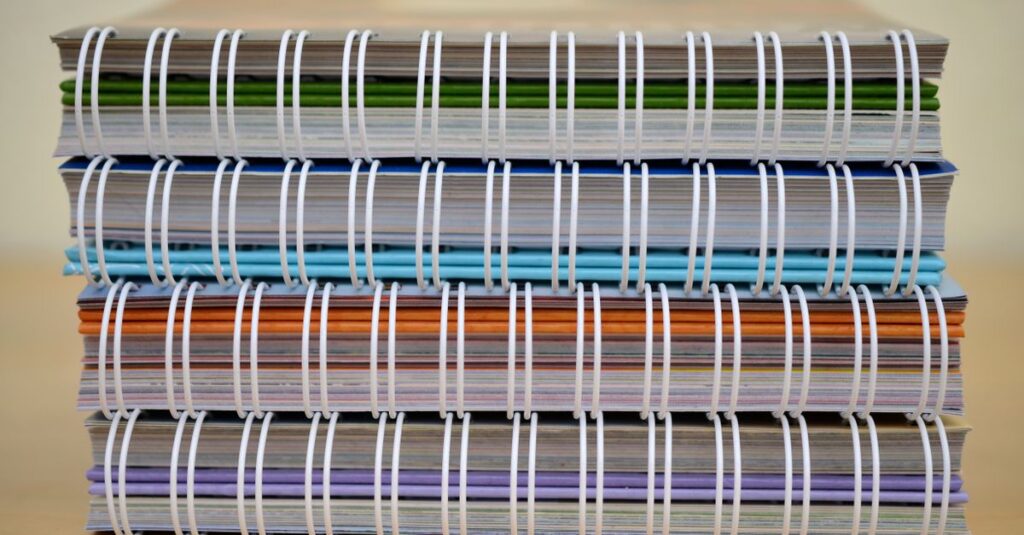
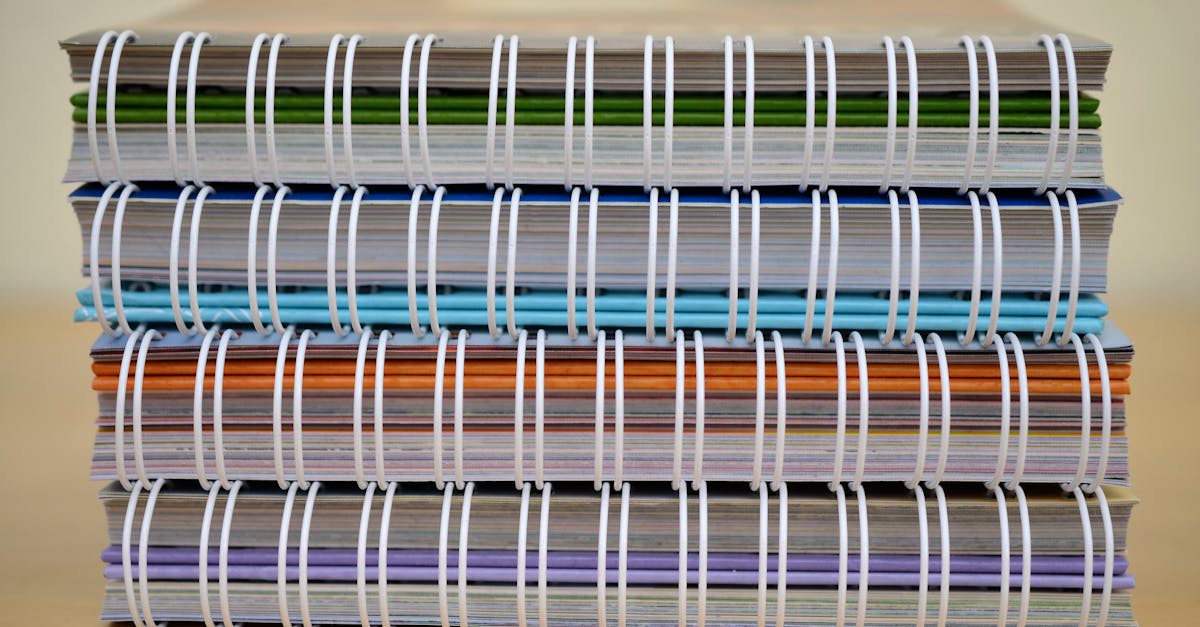
- Binding for Heavy Use: Kids press hard. Teachers stack them. Perfect binding (glued spine) can crack. For double ruled workbooks that are opened and flattened constantly, stitched binding is more durable. It lies flat. Always.
- Get a Physical Sample. Always. I don’t care how trusted the supplier is. Before you confirm 5,000 pieces, get one notebook. Write in it. Erase in it. Give it to a colleague with terrible handwriting and see if it helps. The sample is your only real insurance policy.
And honestly? Most people skip step four. They see a PDF mockup and sign the PO. The PDF won’t show you how the paper takes pencil lead, or if the binding strains when opened to the middle. The physical sample will. It’s the single most important step in the whole process, and it takes three days. Just do it.
Beyond the Classroom: Unexpected Uses
Earlier I said these are mostly for schools. That’s not quite fair — it’s more that schools are the bulk of the volume. But I’ve seen some clever adaptations.
There was a boutique architecture firm in Bangalore that ordered custom double ruled notebooks for their drafters. They used the two lines as a quick, built-in scale for sketching initial proportional concepts before moving to CAD. The gap between the lines was 5mm, representing half a centimetre at their chosen scale. They didn’t need the lines for writing; they needed them for measuring. A stationery store in Chennai told me they sell them to older adults re-learning writing after health issues, because the guide rebuilds muscle memory faster. The use case is “guided precision.” Anytime that’s the goal, the double line notebook quietly does its job. It’s a simple tool used in smart ways.
Frequently Asked Questions
What is the difference between single line and double line notebook?
A single line notebook has just one horizontal rule per line, giving you a simple baseline to write on. A double line notebook has two closely-spaced parallel lines that create a channel. This channel helps control the height of lowercase letters and the placement of descenders (like in ‘g’ or ‘y’), making it essential for teaching proper handwriting form.
What are double line notebooks used for?
Their primary use is in early education (Grades 1-6) for handwriting instruction. They’re also used in language training, calligraphy, and by anyone needing to practice or maintain consistent letter size and alignment. In bulk, they’re almost always purchased by schools and training institutes.
What age group are double ruled notebooks for?
Typically, children aged 5 to 10 (Grades 1 through 4 or 5). This is the critical period for developing fine motor skills and establishing handwriting habits. Using them beyond this age is usually unnecessary unless for specific remedial or artistic practice.
Can I get custom double line notebooks printed?
Absolutely. Many manufacturers, including us, offer custom notebook printing. You can specify the exact gap between the lines, the paper weight, cover design, and binding. This is common for schools wanting their logo or for institutions with specific pedagogical requirements.
What should I check when buying double line notebooks in bulk?
First, the consistency of the line gap across pages. Second, the paper GSM (aim for 54+ for durability). Third, the binding (stitched is best for workbooks). And fourth, always, always get a physical sample before confirming the full order to test writing and erasing.
Wrapping This Up
So here’s the takeaway. A double line notebook isn’t a fancy version of a regular notebook. It’s a different tool for a different job. If your job involves teaching someone how to shape letters, it’s probably the most important tool on the list. If your job is anything else, you’re better off with single ruled or unruled. The whole decision boils down to intent. Are you guiding a hand, or are you just giving it a place to write? Most of the confusion in procurement comes from mixing up those two goals. I don’t think there’s one universal answer here. Probably there isn’t. But if you’ve read this far, you already know which category your order falls into — you’re just figuring out how to specify it so you get exactly what you need, and nothing you don’t.