

Look, Someone Finally Asked About the Four Ruled Book
You know, I was talking to a school principal last week — in Rajahmundry, actually — and he said something that stuck with me. He was ordering notebooks, hundreds of them, and he just sighed. “We just need the four ruled ones. The proper ones.” He didn’t say “proper”. He said it with a kind of tired, knowing look. Like if I got it wrong, the first standard teacher would have my head. And honestly? She’d be right.
That’s the thing. When you’re a procurement manager for a school, or a buyer for a stationery distributor, you don’t just order “notebooks.” You order tools. Specific tools for a specific job. And the four ruled book is one of the most specific, misunderstood, and absolutely critical tools in early education. It’s not just lines on a page. It’s scaffolding. It’s the training wheels for a child’s handwriting. Get it wrong, and you’re not just wasting money — you’re making a teacher’s job ten times harder.
If you’ve landed here searching for “four ruled book”, you’re probably not a casual shopper. You’re someone who needs to get this right, in bulk, and from someone who actually knows what they’re talking about. I’ve been making these things for decades, and I’ll tell you exactly what you need to know — the what, the why, and the how to buy them without the headache. If you need to see what proper four ruled manufacturing looks like, it’s here.
What Actually *Is* a Four Ruled Book? (Beyond the Obvious)
Okay, let’s break this down because even the name can be confusing. A four ruled book — sometimes called a “four line” book — is a notebook where each writing line is actually a set of four horizontal rules. Think of it as a channel. You have a top line, a bottom line, and two dashed or solid lines in the middle, creating three distinct spaces.
The whole point is to teach letter proportion. The child learns to write smaller letters (like ‘a’, ‘c’, ‘e’) in the middle space. Letters with ascenders (like ‘b’, ‘d’, ‘h’) go up to the top line. Letters with descenders (like ‘g’, ‘p’, ‘q’) go down to the bottom line. It gives a visual boundary that single or double ruled pages just can’t. It’s control. It’s structure.
Most people only see the lines. But in manufacturing, the devil’s in the details:
- The Gap Between the Sets: You need enough blank space between one four-line set and the next for the child to understand where one line of writing ends and the next begins. Too close, and it’s a visual mess.
- Line Weight & Clarity: The lines must be printed clearly, in a colour that’s visible but not distracting (usually a light blue or green). Faint, broken printing is a nightmare for little eyes.
- Paper Quality: This is the big one. You need paper around 54-60 GSM that doesn’t allow ink to bleed through. Kids press hard. If they write on one side and can’t use the back because of ghosting, you’ve just doubled the cost of the notebook for the school. I’ve seen it happen with cheap imports. It’s a false economy that drives teachers mad.
A Tuesday in a First-Grade Classroom (The Micro-Story)
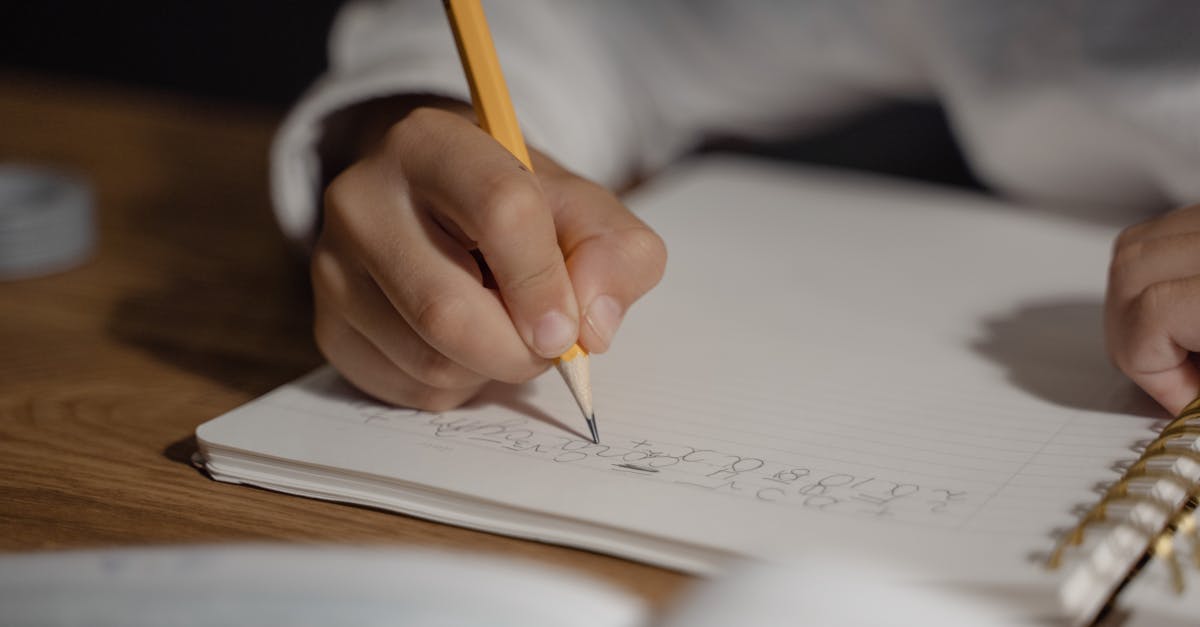
Meena, 28, is a first-grade teacher in a Chennai primary school. It’s 10:15 AM on a Tuesday. Handwriting practice. She passes out the new four ruled books. A boy in the second row, Arjun, immediately frowns. He presses his pencil down to start a ‘g’. The line on the page is so faint he can barely see it. He presses harder. The paper dimples. He looks up, confused. Meena has to walk over and trace the line with her finger to show him where it is. That’s 30 seconds times 40 kids. That’s 20 minutes of teaching time, gone. Because someone saved three rupees on printing clarity. That’s the real cost.
Anyway. The point is, it’s a precision instrument. Not a commodity.
Four Ruled vs. All the Other Rulings: A Quick, Honest Comparison
Schools ask for different rulings for different stages. It’s a progression. Here’s how the four ruled book fits in, and why you can’t just swap it for something else.
| Feature | Four Ruled (FR) Book | Single Ruled (SR) Book | Double Ruled (DR) Book |
|---|---|---|---|
| Primary Use | Foundational handwriting (LKG, UKG, Class 1-2) | General writing for older students & adults | Often used for vernacular language practice (like Telugu, Hindi) |
| Visual Guide | Four lines creating three spaces for letter proportions | One baseline only | Two lines (baseline + a top line for height control) |
| Learning Stage | Beginner. Teaches letter formation from scratch. | Intermediate/Advanced. Assumes consistent letter size. | Intermediate. Good for controlling the height of specific scripts. |
| Common Mistake | Buying these for older kids – it’s infantilizing. | Giving these to beginners – leads to messy, uneven writing. | Using them for English without need – can be restrictive. |
| Procurement Tip | Order exact class-wise quantities. Don’t lump with other rulings. | Bulk staple. Order higher page counts (92, 200 pages). | Check specific language requirements with the school. |
See the difference? It’s not interchangeable. Ordering single ruled for a first-grade class because it’s cheaper or more available is like giving a toddler a full-size bicycle. The tool doesn’t match the task.
Why Bulk Buyers & Schools Keep Coming Back to the Same Supplier
Let me be direct. When you’re ordering 5,000 or 50,000 notebooks, price per unit matters. Of course it does. But it’s not the only thing that matters. It’s probably not even the most important thing.
I’ve heard this enough times from procurement managers: the biggest headaches come from inconsistency and surprises. One batch has bright white paper, the next is greyish. The ruling alignment is off by a millimeter on 10% of the books. The stitching comes loose after a week. Suddenly, you’re dealing with complaints, returns, and lost trust. You’re not buying notebooks; you’re buying reliability.
Here’s what you should actually look for — the stuff they don’t put in the glossy brochure:
- Consistent Paper Sourcing: A good manufacturer sources paper from the same reliable mills. The GSM and finish should not vary batch to batch. Ask about it.
- Printing Registration: This is technical, but crucial. It means the ruling lines are printed in exactly the same position on every single page. If the printing plates are misaligned, the lines will “walk” up or down the page as you flip through. It’s visually jarring and looks cheap.
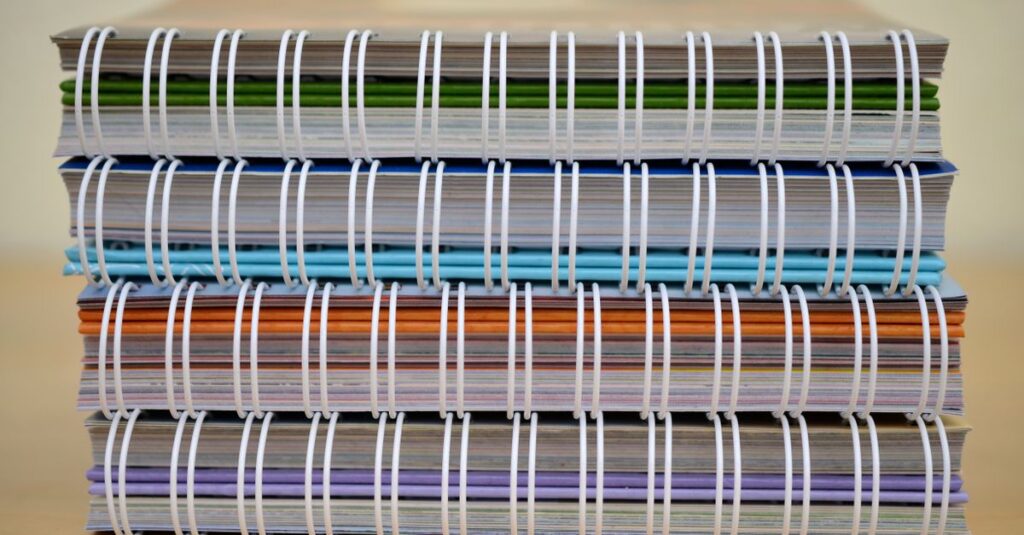
- Binding for Heavy Use: These books get thrown in bags, dropped, and opened roughly. Side-stitched binding with strong thread is non-negotiable. Perfect binding (glued spine) can crack. Spiral binding gets bent. Stitched lasts.
The silent benefit of finding a long-term manufacturer? You stop worrying about the product. You just order. And that peace of mind, for a school buyer or distributor, is worth more than a 2% discount. That’s the kind of relationship we try to build from the first enquiry.
Expert Insight
I was reading an old industry journal a while back, and an education specialist said something I keep thinking about. She called the four ruled notebook a “cognitive externalization of motor skill development.” Fancy words. What she meant was this: it takes the incredibly complex task of training fine motor muscles to form shapes, and gives it a physical, visual track to run on. The lines are the guardrails. Without them, the child’s brain is doing two hard jobs at once — figuring out *what* the letter should look like and *how* to make their hand do it. The four rules take the “what” off the table. They let the kid focus on the “how.” I don’t have a cleaner way to put it than that. It’s not stationery. It’s pedagogy on paper.
How to Place a Bulk Order for Four Ruled Books (Without Losing Your Mind)
Right. You know what it is, why it’s important, and what to look for. Now, the practical part. If you’re ready to order, here’s the checklist. Get these details locked down, and you’ll get exactly what you need.
First, specifications are everything. You can’t just say “four ruled books.” You need to define:
- Size: Short notebook (19.5 x 15.5 cm)? Long notebook (27.2 x 17.1 cm)? This matters for little hands and school bag sizes.
- Page Count: 52 pages for a term? 92 for a full academic year? Thicker isn’t always better for young kids.
- Cover: Standard printed cover with a generic design? Or do you need custom printing with the school’s logo and name? (This is where you build school identity, by the way.)
- Packaging: How are they bundled? In 10s? 50s? Shrink-wrapped? This affects your storage and distribution.
Second, ask for a physical sample. Always. Don’t rely on a PDF or a photo. Hold it. Write in it with a pencil and a ballpoint pen. Check the bleed-through. Feel the binding. Show it to a teacher — their instinctive reaction will tell you everything.
Third — and I can’t stress this enough — talk timeline. Good manufacturing isn’t instant. Factor in production time, drying time, binding, and packing. If you need 30,000 books for the new academic year in June, you should be placing the order in April. Late March, even. The good factories are booked up. The last-minute scramble leads to compromises. Always.
This is the part nobody says out loud: the cheapest quote often comes with the most expensive hidden costs. Delays. Rejections. Angry parents. Choose the supplier who asks you the most questions about your specs. They’re the ones who care about getting it right.
FAQs About Four Ruled Books (The Real Questions We Get)
Frequently Asked Questions
What age group is a four ruled book for?
Primarily for children in LKG, UKG, Class 1, and Class 2 — basically, the very beginning of formal handwriting. Some schools use them for remedial practice in Class 3. Once a child has consistent letter size and proportion, they graduate to single or double ruled.
Can we get custom four ruled books with our school logo?
Absolutely. We do this all the time. You can customize the cover design, add the school logo, name, and even a specific design or motto on the front and back. It builds a sense of pride and uniformity. The ruling inside remains the standard four ruled pattern.
What’s the minimum order quantity for custom four ruled notebooks?
It varies, but for a custom printed cover, most serious manufacturers will have an MOQ around 500-1000 pieces to make the plate setup viable. For standard four ruled books with a generic cover, you can often order smaller quantities, but the real bulk pricing kicks in at higher volumes.
Is four ruled the same as “broad ruled”?
No. Not at all. Broad Ruled (BR) usually refers to single ruled lines that are spaced further apart, often for younger kids or those with larger handwriting. Four Ruled is a specific four-line pattern. They serve different purposes. Always specify “FR” to avoid confusion.
Why does the paper quality matter so much for a simple four ruled book?
Because poor paper shows ghosting (ink showing through) and allows pencils to tear through easily. Kids apply uneven pressure. Durable, opaque 54-60 GSM paper ensures both sides of the page are usable and the book withstands a full school year of rough handling. It’s the difference between a tool and a disposable.
The Unresolved Truth About Ordering Notebooks
Look, I’ll just say it. Buying notebooks in bulk seems simple. It’s not. It’s a decision that touches budgets, logistics, teacher satisfaction, and literally, the way a generation learns to write. The four ruled book is a tiny, specific cog in that massive machine, but if it’s the wrong shape or made of cheap metal, the whole thing grinds a little harder.
I don’t think there’s one perfect supplier for everyone. Probably there isn’t. But if you’ve read this far, you already know what matters — consistency, clarity, and a manufacturer who treats your order like it’s going to a child’s desk, not just a warehouse shelf. You’re not just figuring out a price. You’re figuring out whose attention to detail you can trust for the next three years of orders.
That’s it. The rest is just conversation. If you want to have that conversation about your specific four ruled book needs, the easiest way is to just ask.